

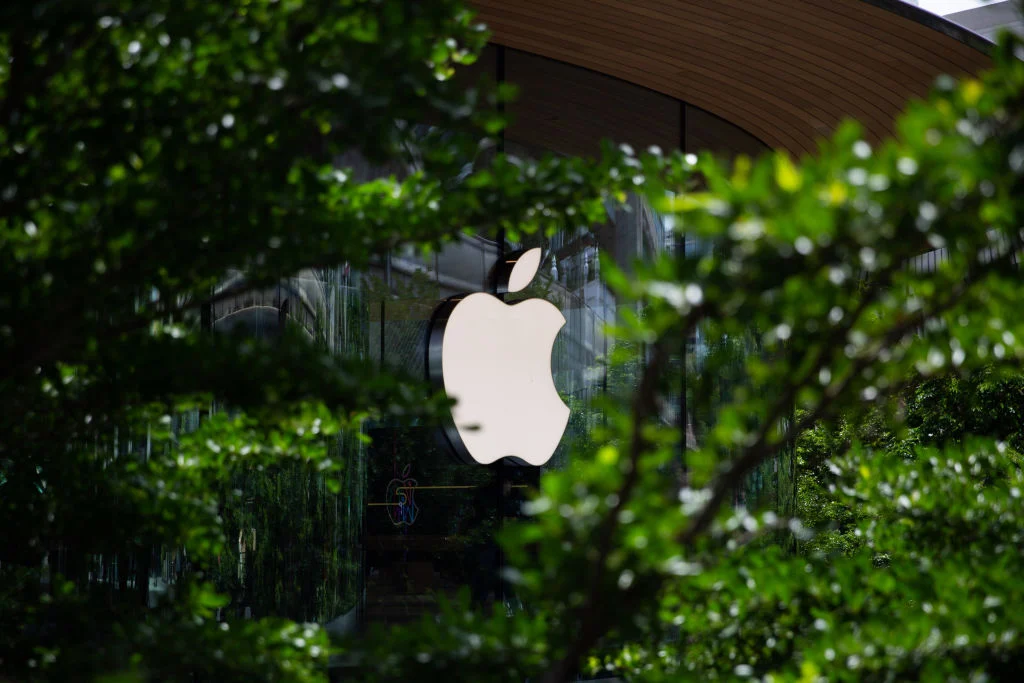
While Silicon Valley pours billions of dollars into the pursuit of automated shopping, betting that autonomous software can completely streamline our consumer lives, the architect behind Apple’s legendary retail empire is pushing back. Ron Johnson, the 66-year-old visionary who built the Apple Store network alongside Steve Jobs, argues that the tech industry is severely overestimating how much shopping humanity is willing to hand over to machines.
As "agentic commerce" dominates venture capital pitches and big-tech roadmaps, Johnson insists that physical retail is not dying—and that humans will always want to feel, touch, and test before they buy.
Main Facts: The Clash Between Agentic Commerce and Brick-and-Mortar Retail
The retail industry stands at a philosophical crossroads. On one side are the world’s most powerful technology companies, investing massive resources into "agentic commerce"—a paradigm where autonomous AI agents do the heavy lifting of product discovery, research, comparison, and checkout on behalf of the consumer.
- The Tech Giants’ Push: Google has introduced the Universal Commerce Protocol, an open standard built specifically to facilitate AI-driven transactions from discovery to final payment. Meanwhile, OpenAI has aggressively integrated shopping features directly into ChatGPT, transforming the conversational chatbot into a destination where users can research and purchase goods without ever opening a traditional web browser or stepping foot in a store.
- The Skeptic’s Stand: Ron Johnson views these developments with a pragmatic eye. While acknowledging that AI will inevitably refine and speed up the digital discovery phase, he firmly rejects the notion that consumers are ready to delegate high-stakes purchases to algorithms.
- The Limit of Automation: Asked whether a modern consumer would realistically allow an AI agent to select and purchase a $1,000 to $2,000 laptop without ever visiting a website or walking into a physical store, Johnson was unequivocal: "Honestly, nobody’s going to do that."
According to Johnson, buying decisions—especially for expensive, complex personal electronics—are deeply tactile. Buyers want to experience the weight of a device, evaluate the clarity and vibrancies of a display, and judge ergonomics firsthand. "AI will never be able to have you physically experience a product," Johnson noted. Instead of replacing the shopping journey, he believes AI will simply create more educated, well-informed consumers when they finally cross the threshold of a physical store.
Chronology: A Career Forged in Retail Innovation and Transformation
To understand Johnson’s skepticism toward fully automated retail, one must look at his decades-long career operating at the cutting edge of consumer commerce, marked by historic triumphs, high-profile stumbles, and entrepreneurial risks.
2000: Building the Apple Store Empire
When Johnson joined Apple in 2000, the mainstream retail landscape was shifting rapidly toward e-commerce, and many analysts viewed brick-and-mortar investments as an expensive relic of the past. Working closely with Steve Jobs, Johnson helped design a physical store network that fundamentally redefined how consumers interacted with technology. Rather than keeping products locked behind glass counters, Apple stores invited open interaction. They were structured as community hubs where users could learn, explore, and receive hands-on technical assistance.
2011–2013: The J.C. Penney Turnaround
Following his massive success at Apple, Johnson accepted a high-profile challenge in 2011: taking the helm of struggling traditional department store chain J.C. Penney to spearhead a radical transformation. Attempting to apply the disruptive, startup-like velocity that worked at Apple, Johnson rolled out sweeping changes too quickly, alienating the company’s core demographic and confusing long-time shoppers. Plunging sales led to his ouster less than two years later. Reflecting on the misstep years later, Johnson admitted his error: "I applied a startup mentality to what needed to be a turnaround transformation," failing to bring existing customers and employees along for the journey.
2015–2022: The Rise and Fall of Enjoy Technology
Never one to shy away from structural reinvention, Johnson returned to the startup ecosystem by founding Enjoy Technology in 2015. The e-commerce venture took a hybrid approach, delivering premium technology products and personalized in-home setup services directly to consumers. Despite initial optimism and funding, economic headwinds and logistical complexities caught up with the firm. Enjoy Technology filed for Chapter 11 bankruptcy in 2022, eventually selling its assets to Asurion.
Present Day: Reflection and Re-evaluating the Digital Age
Today, Johnson has distilled his lifetime of operational wisdom into a new book, Shop Different: How Retail Revealed Apple’s Genius, co-authored with Zander Nethercutt. The book revisits the foundational philosophies that made Apple Stores a global cultural phenomenon—and serves as a warning to modern tech executives who think software can completely substitute for physical human connection.
Supporting Data and Observations: The "Secret Sauce" of Retail
While many competitors attempted to copy Apple’s retail blueprint—replicating the minimalist glass-heavy architecture, sleek open layouts, and even the concept of technical assistance bars—Johnson points out that most missed the single most critical ingredient.
- The People Factor: "The secret sauce for Apple has always been its people, the people in the store, and how they treat the customer," Johnson explained.
- Commission-Free Sales Culture: Unlike standard department stores or electronics retailers where floor staff rely heavily on sales commissions, Apple explicitly structured its compensation model to remove aggressive selling pressure. Employees were measured instead on customer satisfaction and problem-solving, freeing them to help users find what they actually needed rather than what carried the highest margin.
- The Limitations of the Digital Screen: Data across the retail sector consistently shows that while e-commerce continues to capture a substantial percentage of global retail transactions, categories involving high emotional or financial investment—such as apparel, luxury goods, and high-end electronics—consistently see higher conversion rates and customer satisfaction when paired with physical touchpoints. Showrooms continue to act as crucial trust-builders for modern consumers.
Official Responses and Industry Perspectives
The debate over agentic commerce has polarized retail analysts, software engineers, and veteran executives alike.
Tech companies pushing autonomous shopping agents argue that friction is the ultimate enemy of consumer satisfaction. By deploying LLMs and specialized purchasing protocols (such as Google’s Universal Commerce Protocol or OpenAI’s ChatGPT shopping suite), tech giants believe they can eliminate repetitive search queries, filter out marketing noise, and secure the best deals instantaneously. Proponents of agentic commerce view the technology as the natural evolution of online shopping—moving from passive directories to active, personalized purchasing assistants.
Conversely, veteran operators like Johnson maintain that technology companies often mistake utility for intimacy. While an AI agent can successfully reorder household staples, subscribe to software, or book standardized airline tickets, it cannot replicate the emotional resonance of discovering a new brand or evaluating a physical device.
Despite his pushback against automated purchasing, Johnson is far from a technophobic reactionary. "I’m a real believer in AI. I’m an AI optimist," he noted, expressing admiration for the underlying capabilities of modern machine learning models. He believes that Steve Jobs, too, would have embraced artificial intelligence as a powerful tool for productivity and data analysis. However, Jobs’ former retail chief is certain that his old mentor would have drawn a firm line at automation replacing human intuition: "There’s no substitute for human intuition."
Implications: What This Means for the Future of Commerce
The friction between Silicon Valley’s automated ambitions and physical retail realities carries profound implications for brands, investors, and everyday consumers.
1. The Redefinition of Physical Stores
Rather than fading into irrelevance, successful physical storefronts will increasingly lean into experiential retail. Stores will no longer function merely as warehouses for inventory; they will transform into showrooms, community spaces, and brand-building anchors where customers come specifically for sensory validation and human-guided service.
2. AI as a Pre-Shopping Tool
Instead of autonomous agents checking out carts independently, AI’s primary role in commerce will likely stabilize as an advanced research layer. Consumers will leverage conversational agents to build comparison shortlists, verify specifications, and read localized reviews before venturing into physical locations to make the final transaction.
3. The Enduring Power of Human Empathy
As automated bots flood digital channels with hyper-targeted ads and synthetic recommendations, authentic human interactions inside physical stores will become a premium differentiator. Brands that prioritize empathetic, commission-free customer service—much like Apple did two decades ago—will likely find that consumers place an even higher value on trustworthy human advice in an increasingly automated world.
Ultimately, Ron Johnson’s perspective serves as a grounded reminder to the tech sector: while software can optimize logistics and accelerate discovery, the fundamental human desire to see, touch, and experience the physical world cannot be coded away.
 rifanmuazin
 Nana Muazin
