

By Global Technology Correspondent
Published: February 2026
Main Facts
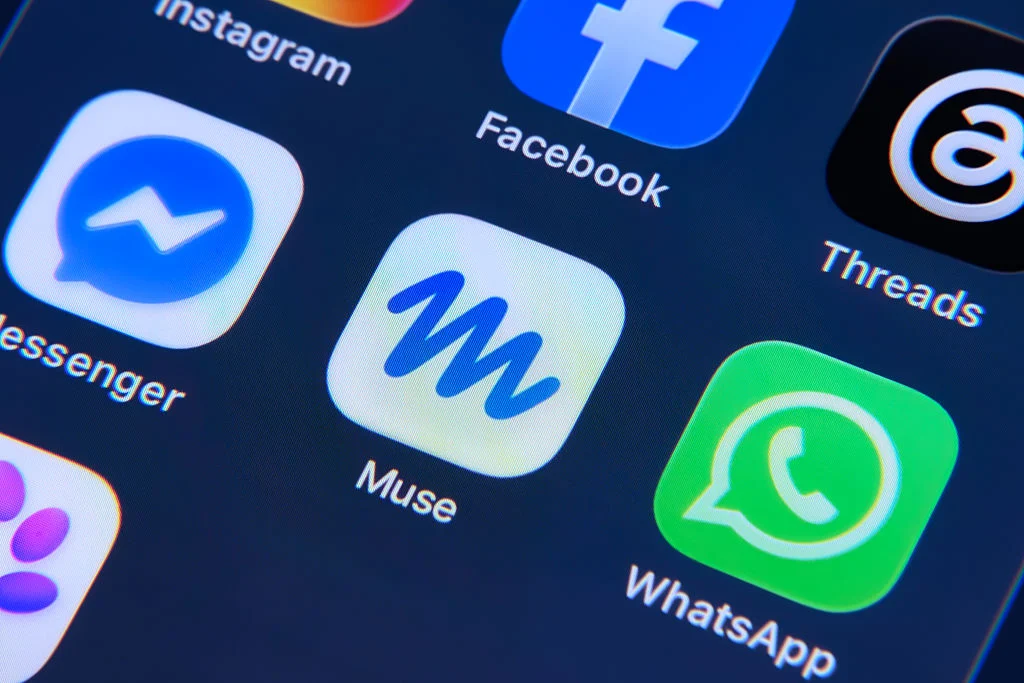
The modern digital marketplace is undergoing a profound structural shift, transitioning from human-driven search-and-click interfaces to autonomous, AI-driven "agentic" commerce. However, this evolution has hit a major roadblock. On Sunday night, users attempting to purchase goods on Amazon through Meta’s advanced AI assistant, Muse, encountered a sudden and explicit system block.
Instead of completing transactions, users were greeted with a stern error message that laid bare the escalating tensions between Silicon Valley’s largest conglomerates. As first reported by GeekWire, the notification read:
“Continued access by an unauthorized AI agent violates Amazon’s Conditions of Use, to which our customers have agreed.”
In practical terms, this development means that Amazon has drawn a hard line in the sand: Meta’s Muse is barred from acting as a proxy shopper on its platform. Consumers hoping to leverage Meta’s AI to streamline their online shopping routines, compare prices, and execute purchases seamlessly on the world’s largest e-commerce site are now forced to navigate Amazon’s proprietary interface manually.
This blockade is far more than a minor technical dispute; it represents a foundational conflict over who controls the digital consumer relationship. As autonomous agents become more capable of executing real-world tasks—ranging from booking flights to purchasing household goods—incumbent platforms like Amazon are fiercely defending their turf against disintermediation. By shutting out Muse, Amazon is signaling that the monetization of consumer data, interface control, and transaction security remain strictly under its domain.
Chronology of the Standoff
To fully understand how this high-stakes confrontation unfolded, it is necessary to examine the timeline of events leading up to Amazon’s Sunday night enforcement action.
- Late 2024 to 2025: The Rise of Agentic AI. Throughout the preceding year, major technology companies pivoted aggressively toward "agentic workflows." Rather than merely answering text prompts or generating creative content, AI models were increasingly designed to execute multi-step digital actions on behalf of users. Meta positioned Muse as a versatile, all-in-one assistant capable of managing personal productivity, digital organization, and consumer commerce.
- Early 2026: Muse Integrates E-Commerce Capabilities. Meta rolled out enhanced shopping integrations for Muse, allowing users to connect their digital wallets, state preferences, and authorize the AI to browse major web retailers—including Amazon—to purchase goods autonomously.
- Sunday, February 2026: The Enforcement Wave. Late Sunday evening, users attempting to complete Amazon transactions via Muse experienced widespread failures. Rather than standard network errors, automated requests from Meta’s infrastructure were explicitly flagged and intercepted by Amazon’s anti-bot and security architecture.
- Immediate Aftermath and Public Discovery: Tech-industry watchdogs and eagle-eyed users quickly noticed the breakdown. By Monday morning, GeekWire published the exact wording of Amazon’s block, bringing the standoff into the public eye and forcing both companies to address the underlying architectural and policy friction.
Supporting Data and Technical Context
The confrontation between Amazon and Meta is underpinned by complex economic incentives, infrastructural competition, and the hard realities of artificial intelligence reliability.
1. The Ecosystem Competition
Amazon is not merely a retailer; it is a foundational pillar of modern cloud computing and AI infrastructure. Through its AWS (Amazon Web Services) division, the company has cultivated a massive ecosystem. This includes:
- Amazon Nova: Amazon’s proprietary cohort of foundational AI models designed to compete directly with offerings from Meta, OpenAI, and Google.
- Amazon Bedrock: One of the most widely adopted enterprise inference platforms on the internet, allowing businesses to build and scale generative AI applications.
Given these massive investments in its own AI stack, Amazon has little commercial incentive to roll out the red carpet for competing ecosystems like Meta’s Muse. If consumers grow accustomed to shopping through Meta’s interface, Amazon risks losing its direct touchpoint with the consumer, effectively reducing its vast retail ecosystem to a mere backend utility provider for a rival tech giant. From a corporate strategy perspective, blocking unauthorized AI agents is a logical defense of Amazon’s proprietary ecosystem.
2. The Hallucination Problem and Liability Realities
Beyond corporate rivalry, substantive operational and liability concerns provide a powerful justification for Amazon’s caution regarding agentic commerce.
While Meta’s Muse boasts one of the lowest hallucination rates in the industry compared to contemporary language models, its error rate is still far from zero. In conversational AI, a hallucination might mean generating an incorrect historical fact or misremembering a movie title. However, in agentic commerce, a hallucination carries severe financial and legal consequences.
Consider the potential failure modes of an autonomous shopping agent:
- Incorrect Product Selection: An AI might misinterpret a user’s prompt ("buy a heavy-duty garden hose") and purchase an industrial-grade commercial irrigation system instead.
- Pricing and Quantity Errors: A glitch or misinterpretation could lead an agent to order multiple expensive items or complete a transaction at an unintended price point.
- Data Mismatches: Shipping addresses, payment credentials, or customization options could be incorrectly parsed.
When an automated transaction goes wrong, the aggrieved consumer does not direct their anger at the AI developer; they turn to the merchant. Amazon is acutely aware that it would bear the operational burden of cleaning up the mess. Customer service teams would be forced to handle a surge of returns, refund requests, and chargebacks, while vendor relations would be strained by erroneous order spikes and cancellations. Even if Amazon recognizes the inevitable future of agent-driven commerce, industry analysts note that the company has valid reasons to exercise extreme caution, preferring to wait through several more software release cycles before permitting third-party agents loose on its transactional infrastructure.
Official Responses and Industry Reactions
As news of the block spread across digital forums and financial markets, analysts, developers, and industry stakeholders weighed in on the implications of the Amazon-Meta standoff.
Neither Amazon nor Meta has released a comprehensive joint statement detailing private negotiations, but their public-facing postures make their respective positions clear.
Amazon’s updated error messaging serves as its definitive official stance: unauthorized AI agents violate the platform’s Terms of Service. By framing the block around existing user agreements, Amazon is seeking to preempt legal challenges, asserting its right to protect its servers from automated scraping and unauthorized transactional bots. Under current U.S. and international legal frameworks, platform operators retain broad latitude to restrict automated access to their web properties, provided those restrictions do not violate specific antitrust or open-access mandates.
Meta, meanwhile, faces a strategic dilemma. The company has heavily marketed Muse as a frictionless lifestyle companion. The inability to complete transactions on the world’s largest online retailer exposes a glaring capability gap in Meta’s consumer value proposition. Industry insiders suggest that Meta may seek to open formal partnership dialogues with Amazon—akin to search engine indexing agreements or API partnerships—though whether Amazon would be willing to negotiate terms remains deeply uncertain.
Independent technology analysts have offered mixed reactions:
- The Protectionist View: Some commentators argue that Amazon is acting purely out of self-preservation, weaponizing its terms of service to stifle innovation and maintain a monopoly over the e-commerce customer journey.
- The Pragmatic View: Other security and e-commerce experts defend Amazon’s move, pointing out the absolute necessity of robust authentication, fraud prevention, and liability safeguards before letting autonomous scripts spend consumer money at scale.
Implications for the Future of Agentic Commerce
The standoff between Amazon and Meta over Muse is not an isolated incident; it serves as a bellwether for the future of the internet. As artificial intelligence transitions from an analytical tool to an active participant in digital economies, fundamental questions regarding access, ownership, and liability must be answered.
1. The Death of Universal Openness?
For decades, the web operated on a baseline assumption of openness: if a human could visit a webpage or complete a transaction, automated software (such as web scrapers, aggregators, and browser extensions) could generally do the same, subject to basic rate-limiting. The rise of generative AI shatters this paradigm. Because AI agents consume vast amounts of resources and execute complex, high-stakes financial transactions, traditional web platforms are erecting digital fortress walls. We are likely entering an era where access to major digital marketplaces will be strictly bifurcated between whitelisted, revenue-sharing partners and blocked interlopers.
2. The Rise of API-Driven Ecosystems vs. Autonomous Scraping
Amazon’s action highlights the urgent need for standardized protocols governing agent-to-merchant interactions. Rather than relying on AI agents to mimic human browsing behavior through standard web interfaces—which is fragile, error-prone, and easily blocked—the industry may need to develop secure, API-driven commerce standards. Under such a framework, merchants like Amazon could expose controlled, secure endpoints specifically designed for verified AI agents, ensuring proper authentication, clear transaction parameters, and shared liability frameworks.
3. What This Means for Consumers
For the everyday consumer, the immediate impact is frustration. The vision of a unified AI assistant managing every aspect of daily life—from drafting emails to ordering groceries—hits a wall when corporate titans refuse to interoperate. Consumers will likely find themselves navigating a fragmented landscape where certain AI assistants work with specific retailers while remaining entirely locked out of others.
Conclusion
Amazon’s decision to block Meta’s Muse AI marks a pivotal turning point in the commercialization of artificial intelligence. It underscores the reality that technological capability alone is not enough to reshape the economy; it must navigate a labyrinth of corporate self-interest, security protocols, liability concerns, and legal boundaries. As the dust settles on this latest tech-giant skirmish, one thing is abundantly clear: the battle for control of the digital shopping cart has only just begun, and the rules of engagement are being written in real-time.
 Siti Muinah
 Ali Ikhwan
