

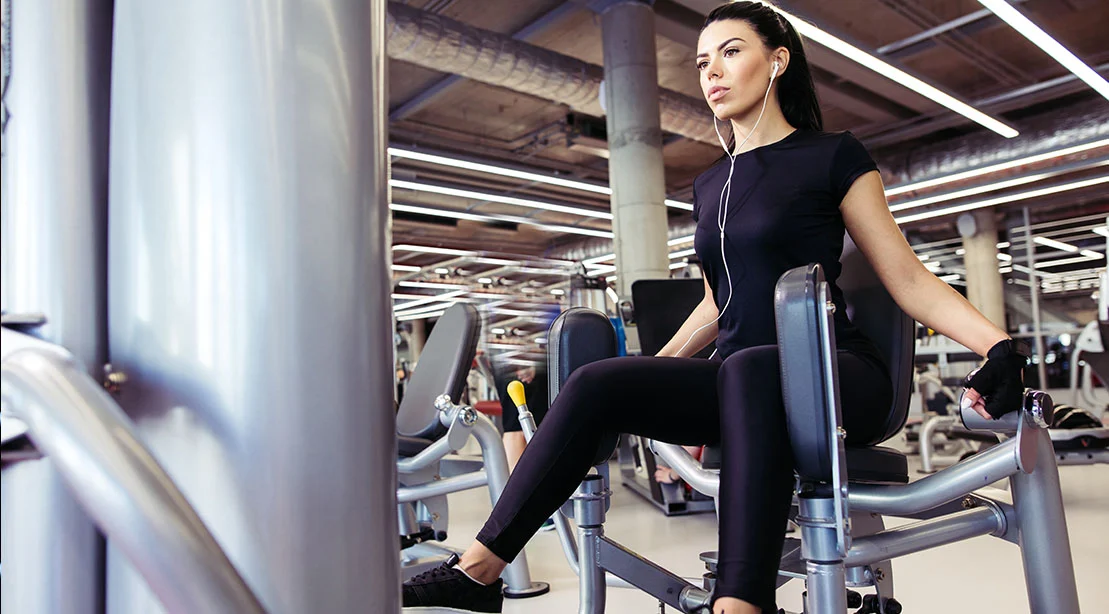
In the landscape of modern fitness, few pieces of equipment are as polarizing as the hip adduction machine. Often relegated to the darker corners of the gym, the machine—frequently dubbed the “Yes/No machine”—is met with a trifecta of criticism: it is a machine (lacking the “authenticity” of free weights), it is dismissed as a remedial rehab tool, and, perhaps most tellingly, it creates an awkward social dynamic regarding where one should direct their gaze while performing the movement.
Despite these hurdles, industry experts are beginning to reconsider the utility of this oft-maligned apparatus. While gym culture often prioritizes the "hardcore" aesthetic of heavy barbells, the adductor group represents a significant, yet frequently neglected, component of human movement. To understand why this machine deserves a second look, we must peel back the layers of gym floor vanity and examine the physiological reality of the adductors.
Main Facts: The Anatomy of the Inner Thigh
The adductor muscle group, located on the medial aspect of the thigh, is far more than a vanity muscle for "inner-thigh toning." The group consists of the adductor longus, brevis, and the massive adductor magnus.
The adductor magnus, in particular, is a powerhouse. Research has increasingly highlighted that this muscle functions significantly as a hip extensor, playing a crucial role in heavy compound movements like the squat and deadlift. When we dismiss the adduction machine, we are essentially ignoring the direct, isolated loading of a muscle group that provides structural stability to the pelvis and acts as a secondary engine for lower-body power.
The primary contention against the machine is its "lack of functionality." Critics argue that since the movement is seated and fixed, it fails to replicate real-world biomechanics. While this is true, it misses the purpose of an accessory tool: to provide a high-stimulus, low-fatigue environment for muscle hypertrophy and strength development.
A Chronology of the Machine’s Reputation
The rise and fall of the adduction machine’s reputation mirror the evolution of fitness trends over the last 50 years.
- The 1970s – The Bodybuilding Era: The machine gained popularity as a staple in bodybuilding routines, designed to isolate and sculpt the medial thigh. It was viewed as an essential component for achieving a complete, aesthetic leg physique.
- The 1990s – The Functional Training Shift: As the fitness industry pivoted toward "functional movement," popularized by experts like Gray Cook and the movement toward training "patterns" rather than "muscles," the machine was branded as non-functional. Because it lacked the balance requirements of lunges or the systemic load of squats, it was cast aside as a waste of time.
- The 2020s – The Data-Driven Resurgence: With the rise of evidence-based fitness, practitioners have begun to look past the "functional vs. non-functional" binary. Coaches are realizing that while free weights are superior for overall movement integration, machines offer unmatched opportunities for mechanical tension and volume, leading to a measured rehabilitation of the machine’s reputation.
Supporting Data: Why Strength Matters
The scientific literature provides a compelling case for prioritizing adductor strength, even if the method of training is debated.
A 2025 study published in the Journal of Applied Physiology revealed that the torque-producing capacity of the adductor magnus for hip extension is more than double its capacity for pure adduction. This shifts the narrative from "toning" to "performance." If a muscle is responsible for such a large share of hip extension, neglecting it in a training program is a missed opportunity for total lower-body development.
Furthermore, injury prevention data is striking. Research has consistently shown that strengthening the adductors is a primary intervention for reducing groin-related injuries. For instance, in professional soccer, programs incorporating the Copenhagen side plank have demonstrated a 41% reduction in groin-related issues over a single season. While the machine does not mimic the Copenhagen plank, it serves as a gateway to loading the adductors, building the necessary baseline strength for more advanced, high-tension exercises.
Official Responses: Expert Perspectives
We consulted with top physical therapists and strength coaches to get their take on the machine’s place in a modern program.
Dan Swinscoe, Physical Therapist:
"People criticize the machine because it was born in the era of bodybuilding, and there is a stigma that if it’s ‘bodybuilding-style’ training, it isn’t ‘real’ training. That’s a mistake. The adductors are a massive muscle group. If your goal is to build a robust, injury-resistant lower body, isolating those muscles—even in a seated position—is a logical step."
Dr. Justin Farnsworth, Physical Therapist:
"The criticism that it’s not functional is only half the story. Yes, you aren’t training the hip to stabilize against external forces in a dynamic environment, but that’s not the machine’s job. Its job is to isolate. Stronger muscles are generally more capable muscles. If you can move more weight on the adduction machine, you are likely improving the capacity of the tissue to handle the demands of your more ‘functional’ lifts."
Gareth Sapstead, Strength Coach:
"It’s an easy-to-use, low-risk, high-reward accessory. For the average gym-goer who struggles with the complexity of Cossack squats or the intensity of lateral lunges, the adduction machine offers a clear, linear path to progressive overload. You can track your weight, your reps, and your progress. That is invaluable for growth."
Implications for Your Training Program
If you decide to integrate the hip adduction machine, it should be treated as an accessory, not a cornerstone. The implications for your program are as follows:
1. Strategic Placement
The machine should always follow your primary compound movements. Do not use it as a pre-workout warm-up, as you want to save your CNS energy for heavy squats or deadlifts. Perform it at the end of your session to add volume to your adductor group without overtaxing your lower back or central nervous system.
2. Volume and Load Management
Because the machine is stable, it is tempting to go extremely heavy. Avoid this. The groin is a delicate area prone to strain. Aim for a hypertrophy-focused rep range—typically 12 to 25 repetitions—to maximize time under tension while minimizing the risk of a connective tissue tear.
3. The "Hybrid" Approach
Don’t rely on the machine alone. The machine provides the isolation, but you still need movement-based training. A well-rounded program should combine:
- Isolation: The hip adduction machine for volume.
- Dynamic Stability: Cossack squats to improve mobility.
- Force Transfer: Lateral step-ups or Copenhagen planks to teach the muscles how to stabilize the pelvis during real-world movement.
Who Should and Who Should Not Use It?
Who It’s For:
- Bodybuilders: Anyone looking to maximize hypertrophy in the medial thigh.
- Post-Rehab Patients: Those returning from injury who need to slowly increase load to the adductors in a controlled environment.
- The Busy Lifter: Someone who wants to add leg volume quickly without the systemic fatigue associated with more complex movements.
Who Should Skip It:
- Athletes with Acute Groin Strains: If you have active pain, the fixed range of motion of the machine may exacerbate the issue. Consult a physical therapist first.
- Those with Limited Time: If you only have three days a week to train, your time is better spent on compound, multi-joint movements.
Conclusion: Reclaiming the Machine
The hip adduction machine is a tool. Like any tool, its effectiveness is determined by the user’s intent. When used to supplement a solid foundation of squats and lunges, it acts as a force multiplier for lower-body strength and development.
The "reputation problem" of the machine is rooted in an outdated cultural bias that confuses simplicity with uselessness. By ignoring the machine, you aren’t being "functional"; you are simply neglecting a significant portion of your musculature.
So, next time you are at the gym, feel free to walk over to the “Yes/No machine.” Load up the weight, focus on the squeeze, and build those adductors. Just remember: it’s a standard gym rule—look at the ceiling, look at your phone, or look at the weight stack. Anywhere but at the person on the machine next to you.
 Nana
Nana
 Iffa Jayyana
 Reynand Wu
