

Main Facts
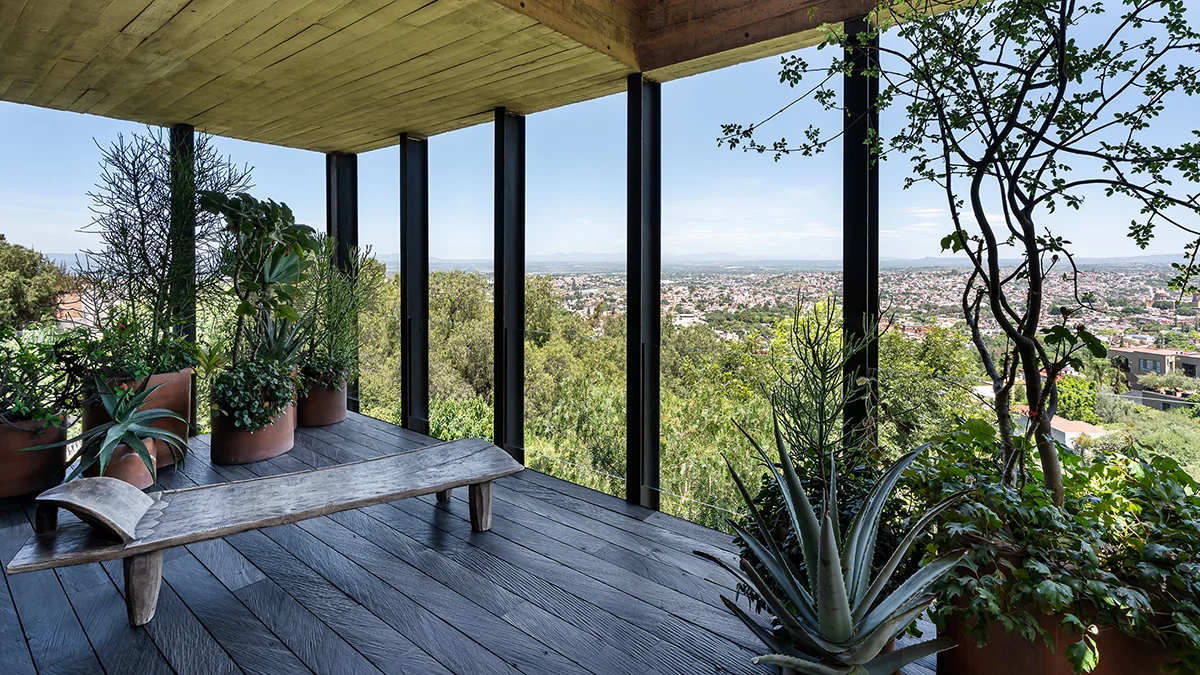
Nestled within the lush, undulating hills of the tranquil Ojo de Agua neighborhood in San Miguel de Allende, Mexico, stands Cajas de Luz—a breathtaking open-air contemporary residence that redefines luxury mountainside living. Celebrated globally for its thriving arts scene, vibrant culinary culture, and iconic neo-Gothic landmark, the Parroquia de San Miguel Arcángel, this central Mexican enclave in the state of Guanajuato is now drawing high-end architectural praise for its cutting-edge modern estates.
Spanning an expansive 11,500 square feet, Cajas de Luz is the visionary product of renowned Mexican architect Manuel Cervantes. Cervantes collaborated closely with landscape designer Hugo Sánchez and interior design studio Habitacion116 to conceive a structure where the traditional boundaries between indoor and outdoor environments are virtually dissolved. Built from an uncompromising palette of board-formed concrete, structural steel, expansive architectural glass, and raw natural stone, the home is an exercise in sculptural minimalism and ecological integration.

Priced at $6.9 million, the property is currently hitting the open market for the very first time by its original owners. The listing is jointly managed by Nancy Almodovar of Nan & Company Properties, representing the U.S. market, and Ann Dolan of CDR San Miguel, handling local representation. Comprising a four-bedroom, 4.5-bathroom main house alongside a thoughtfully integrated separate guest house, the estate offers an unparalleled synthesis of artistic design, functional sustainability, and panoramic vistas of the historic city below.
Chronology
The Evolution of a Modern Sanctuary
- Design and Conceptualization: Conceived by architect Manuel Cervantes in collaboration with landscape architect Hugo Sánchez and interior design firm Habitacion116, the project was mapped out to master the challenging topography of the Ojo de Agua hills while maximizing natural light and ventilation—hence the name Cajas de Luz ("Boxes of Light").
- Construction and Material Sourcing: The construction phase prioritized durability and sustainability, utilizing board-formed concrete, steel, and natural stone. Crucially, approximately 90 percent of the interior wood used throughout the estate was sourced as reclaimed Borneo ironwood, celebrated for its exceptional resilience against termites, rot, and fungi.
- Completion and Occupancy: The original owners took possession of the custom-built estate, using it as a private retreat that seamlessly blended the rugged natural beauty of Guanajuato with ultra-luxury contemporary living.
- September 2026: The property officially lists for $6.9 million, marking the first time the architectural masterpiece has been offered to the public market.
Supporting Data
- Property Price: $6.9 million USD.
- Total Living Space: More than 11,500 square feet of indoor-outdoor architectural design.
- Accommodation: 4 bedrooms and 4.5 bathrooms, distributed between the primary residence and a detached guest house.
- Material Composition: Board-formed concrete, structural steel, architectural glass, natural stone, and roughly 90% reclaimed Borneo ironwood.
- Key Design Features: A floating fireplace in the main living room, perimeter greenery wrapping interior spaces, flowing indoor-outdoor water features and reflection pools, a massive primary suite dressing room, a private terrace overlooking San Miguel de Allende, and a cantilevered, partially sheltered heated swimming pool suspended between two cubic volumes.
- Global Portfolio Context: The listing arrives closely on the heels of Cervantes’s recent U.S. residential debut—a sprawling Montecito, California estate initially listed in February for just under $20 million, which has since been adjusted to $18 million.
Official Responses and Representation
The debut of Cajas de Luz onto the luxury real estate market has mobilized a bi-national brokerage team equipped to handle international high-net-worth buyers.

Nancy Almodovar, founder and CEO of Nan & Company Properties, who is managing the U.S. marketing efforts for the property, emphasized the rare nature of the offering. "Properties of this caliber—where globally recognized architecture meets the historic charm of San Miguel de Allende—are extraordinarily scarce," Almodovar notes. "Cajas de Luz is not merely a home; it is a habitable sculpture that appeals directly to sophisticated collectors of contemporary design."
Locally, Ann Dolan of CDR San Miguel highlights the estate’s seamless integration into the Ojo de Agua landscape. "San Miguel is internationally beloved for its colonial architecture, but homes like Cajas de Luz prove that the city is equally a canvas for forward-thinking, modern design," Dolan states. "The craftsmanship, particularly the extensive use of reclaimed Borneo ironwood and the mastery of natural light, places this residence in a league of its own."

Implications
Architectural Significance and Market Trends
The listing of Cajas de Luz carries profound implications for the luxury real estate market in central Mexico and highlights the growing global footprint of Mexican contemporary architecture.
For decades, San Miguel de Allende’s luxury real estate market was dominated by restored colonial-era haciendas, Spanish-colonial villas, and traditional adobe-style estates. However, the arrival of world-class contemporary works by architects of Manuel Cervantes’s stature signals a significant structural shift in buyer demand. High-net-worth purchasers—frequently migrating from major metropolitan hubs in the United States, Europe, and Mexico City—are increasingly seeking out minimalist, open-concept, and environmentally conscious sanctuaries that honor the local landscape without sacrificing modern amenities.

Furthermore, Cervantes’s simultaneous presence in the U.S. luxury market—highlighted by his newly minted $18 million Montecito, California residential project—underscores a broader trend: Mexican architectural talent is commanding international prestige on par with European and American master designers. Cajas de Luz serves as a tangible blueprint for this movement, demonstrating how sustainable building practices, such as the extensive use of reclaimed Borneo ironwood, can be harmonized with high-end luxury.
As global appreciation for San Miguel de Allende deepens beyond its culinary and artistic festivals, properties like Cajas de Luz are expected to redefine the upper echelon of the city’s property values, establishing a new benchmark for contemporary design in Guanajuato and cementing the region as a premier destination for architectural connoisseurs.
 Sagoh
Sagoh
 Reynand Wu
 Siti Muinah
