

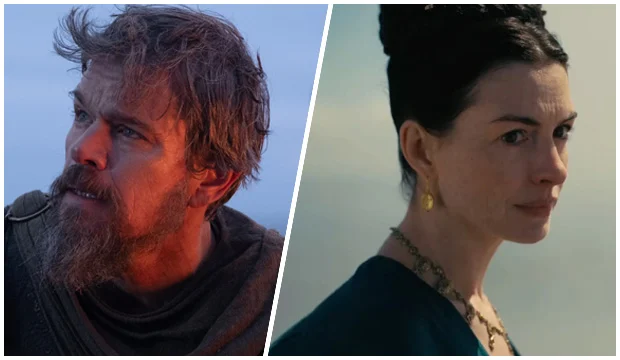
As the cinematic landscape pivots toward the prestigious winter awards season, the early projections from Gold Derby have begun to solidify, painting a compelling picture of the upcoming SAG-AFTRA Actor Awards. At the center of this narrative is Christopher Nolan’s latest epic, The Odyssey, which is currently positioning itself as a juggernaut of the season. With a star-studded cast and a grand narrative scope, the film is dominating the leaderboard, setting a high bar for its competitors in one of the most anticipated industry events of the year.

Main Facts: The Frontrunners and the Field
The SAG Awards occupy a unique position in the awards circuit. Unlike the Academy Awards, which are voted on by the broader motion picture industry, the SAG Awards represent the collective voice of the acting branch—a massive voting bloc that often serves as the most accurate bellwether for the eventual Oscar acting winners.

Currently, The Odyssey stands as the definitive favorite. Gold Derby’s early prognosticators are forecasting a clean sweep of nominations for the film, including:

- Outstanding Performance by a Cast in a Motion Picture: The film’s ensemble, featuring a high-wattage roster of talent, is the current frontrunner for the guild’s top honor.
- Lead Actor: Matt Damon is firmly planted at the top of the conversation.
- Supporting Actor: John Leguizamo is garnering significant momentum for his transformative role.
- Supporting Actress: The film is uniquely positioned to potentially secure two nominations in this category, with both Anne Hathaway and Samantha Morton drawing heavy praise.
However, the field is far from settled. While The Odyssey leads, it remains unclear if any production can challenge the record-breaking seven nominations achieved last year by One Battle After Another. To beat that mark, a film would need to secure nominations in nearly every major category, a feat that currently seems unlikely given the distributed strength of this year’s contenders.

Chronology: Navigating the Awards Calendar
The journey to the SAG stage is a calculated process. The awards cycle is currently in its "prediction phase," where industry experts and savvy prognosticators analyze social sentiment, critic reviews, and historical voting patterns.

The next critical juncture for the industry will be the official opening of the voting window, which is set to commence on December 14. This period will be a high-stakes sprint for studios, who must ensure their campaigns remain top-of-mind for the 100,000+ members of SAG-AFTRA. The voting window will close on January 3, followed by the highly anticipated announcement of the nominations on January 6.

This timeline creates a pressurized environment. As evidenced by Digger, which has seen a 15% drop in its ensemble odds since the lifting of the social sentiment embargo, even early favorites can suffer from shifting public perception. Conversely, films like La Bola Negra (up 6%) and Being Heumann (up 9%) are currently capitalizing on late-year momentum, proving that the race remains fluid.

Supporting Data: Analyzing the Categories
To understand the trajectory of this year’s awards, one must look at the specific dynamics within each category.

The Ensemble Powerhouse
The category for Best Film Ensemble remains the most competitive. The Invite, helmed by Olivia Wilde, is proving to be a formidable challenger to The Odyssey. With a cast that includes Penélope Cruz and Edward Norton, the film is hitting all the right notes for the acting guild. Meanwhile, Martin McDonagh’s Wild Horse Nine is anchored by the reliable prestige of John Malkovich and Sam Rockwell, both of whom are currently projected to secure individual acting nominations alongside their ensemble nod.

The Lead Actor Landscape
The Best Film Actor category is a study in contrasts. John Malkovich is currently the favorite for Wild Horse Nine, reflecting a career-long respect from his peers. Matt Damon follows closely in the second position, capitalizing on the massive marketing push behind The Odyssey. A notable point of tension in the data is the performance of Tom Cruise, who sits at the third position but has seen a 9% dip in his standing. His absence from the nomination circle for the last 25 years—since Magnolia—creates a narrative of "overdue recognition" that voters often find compelling.

The Actress Category and the "Hüller Factor"
The Best Film Actress category presents an interesting case study in historical bias. Julianne Moore, a perennial favorite of the actors’ guild, is all but locked in for a nomination for The Debut. However, the field behind her is volatile. The discussion regarding Sandra Hüller is particularly illuminating; despite being an Oscar favorite for Rose and Fatherland, she was previously snubbed by SAG for Anatomy of a Fall. Current forecasts suggest that the guild may once again overlook her in favor of rising stars like Ruth Madeley, whose performance in Being Heumann has been described as a "revelation."

Official Responses and Industry Sentiment
The internal mechanics of the SAG Awards are specific and, at times, exclusionary. While the eventual winners are decided by the full membership of over 100,000, the nominations are filtered through a smaller, randomly selected committee of 2,500 members. This committee acts as the primary gatekeeper, often prioritizing "actor-centric" films—projects where the craft of acting is the primary driver of the narrative.

Industry insiders note that films like The Debut are gaining traction precisely because they tap into this ethos. "Actors love actors playing actors," is a long-standing adage in Hollywood, and Paul Giamatti’s performance in the Jesse Eisenberg-directed film is being touted as a direct beneficiary of this sentiment.

Conversely, the drop in support for Digger suggests that even a stellar cast cannot save a film if the narrative fails to resonate with the specific sensibilities of the guild. The "social sentiment" data provided by industry trackers shows that when the embargoes lift and the general public begins to engage with a film, the internal support from the guild can shift rapidly based on whether the film is perceived as a "critics’ darling" or an "actors’ vehicle."

Implications for the Oscars
The most significant implication of the upcoming SAG Awards is their predictive power for the Academy Awards. Historically, the individual acting categories at the SAGs show an extremely high correlation with the Oscars. Last year, the four SAG acting winners—Michael B. Jordan, Jessie Buckley, Sean Penn, and Amy Madigan—went on to win their respective categories at the Academy Awards. This creates a feedback loop: a SAG win is often viewed as the final "seal of approval" that guarantees an Oscar.

However, the Best Ensemble category tells a different story. It is a frequent point of divergence. Last year, the SAG ensemble winner, Sinners, failed to take home the Best Picture Oscar, which went to One Battle After Another. This highlights a crucial distinction: the SAG Awards reward the collective craft of the cast, whereas the Academy Awards are influenced by broader industry factors, including directing, screenplay, and technical production.

As we look toward January 6, the industry is bracing for a series of potential upsets. If The Odyssey secures the nominations that current odds suggest, it will enter the final stretch of the awards season with the momentum of a runaway train. But if the 2,500-member nominating committee chooses to elevate smaller, character-driven pieces like Wild Horse Nine or The Debut, the narrative of the season could shift overnight.

The coming months will be a test of endurance for the studios and a test of discernment for the actors. With voting opening in mid-December, the campaign season is entering its most critical phase. The question remains: will the guild favor the grand, epic spectacle of The Odyssey, or will they turn their attention to the intimate, nuanced performances that have historically defined their most cherished selections? For now, the odds favor the epic, but in the volatile world of Hollywood awards, the final act is rarely written until the envelopes are opened.
 Asep Darmawan
 Reynand Wu
 Layla Zulfa
