

Role-playing games have long relied on a comfortable, if well-worn, narrative blueprint: the introduction of an off-stage, shadow-dwelling antagonist who has been pulling the geopolitical and supernatural strings all along. Typically manifesting as a malevolent cosmic entity with a deep-seated disdain for humanity, this archetype spends a considerable amount of in-game dialogue pontificating on the illusory nature of free will. In the end, players and their band of companion characters must dismantle this grand design using the classic triumvirate of narrative solutions: the power of friendship, an exceptionally sharp legendary sword, and gravity-defying protective armor.
Nintendo’s latest tactical role-playing venture, Fire Emblem: Fortune’s Weave, leans heavily into this very trope. Yet, it manages to execute the formula with a punchy, jarring efficiency that leaves a lasting impression. After spending the entirety of Act 1 engaged in leisurely campus-style management, rapport-building, and gift-giving, Act 2 of Fortune’s Weave grabs the player by the collar and hurls them headfirst into absolute chaos. It serves as a masterclass in pacing, proving that traditional storytelling tropes are far from obsolete—they simply require a sharp execution to remain compelling.
Main Facts: The Awakening of Emperor Dagda
To initiate Act 2 of Fortune’s Weave—officially dubbed the "War Arc"—players must interact with the ominous Strife Obelisk. While the vast majority of the player base reaches this narrative junction naturally after completing at least one of the four distinct socio-political routes available in Act 1, speedrunners and completionists have discovered it is technically possible to trigger this sequence directly after the prologue.
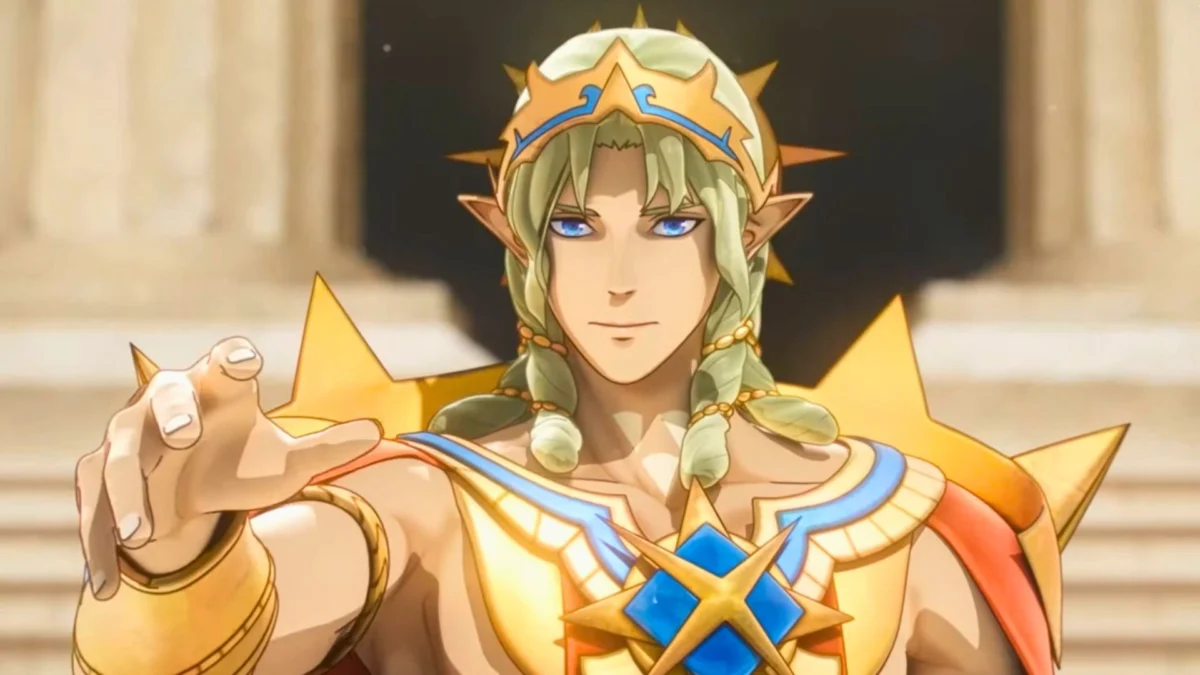
From this juncture, the narrative fast-forwards several months past the pomp and pageantry of the Heroic Games. It is revealed that Raksha, the enigmatic, green-haired schemer who previously operated behind a veil and a wooden mask, has successfully resurrected her father, Emperor Dagda, following a half-millennium slumber.
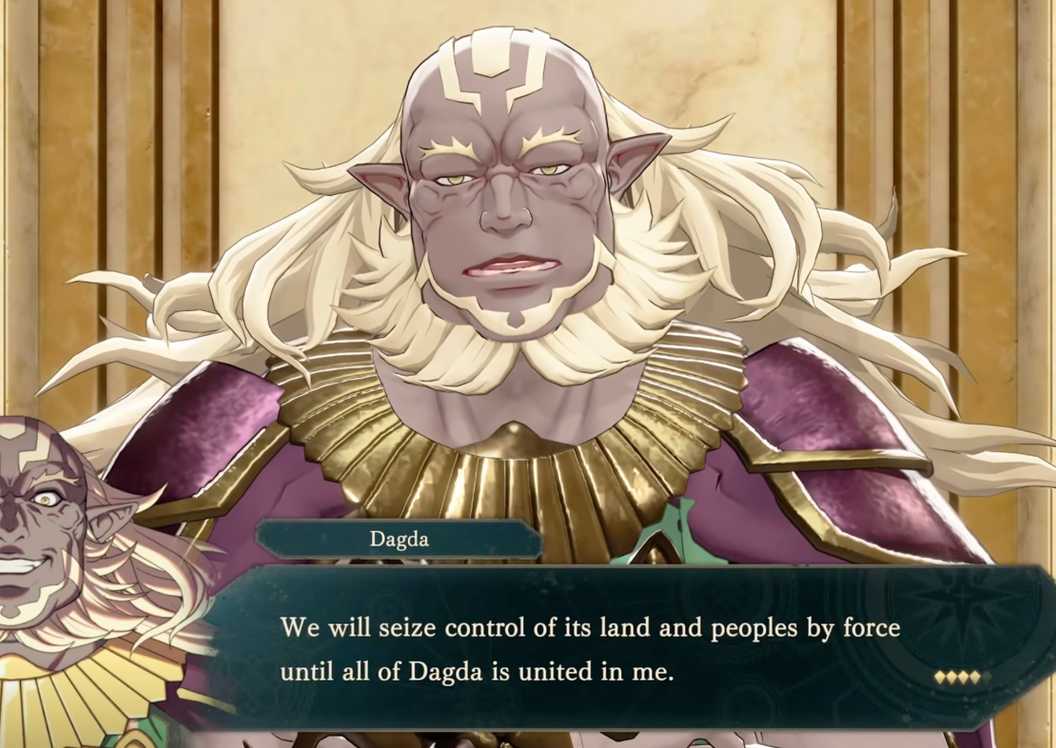
Dagda’s re-emergence instantly shatters any illusions of political nuance. Unlike his modern ideological peers or even complex antagonists from past entries like Fire Emblem: Three Houses—where figures like Edelgard operated under a misguided sense of utilitarian righteousness—Dagda makes zero pretense of being a fair, just, or even rational leader. He is unabashedly, cartoonishly villainous, immediately setting a tone of visceral cruelty that redefines the stakes of the continent.
Chronology of Terror: From Resurrection to Ruin
The timeline of Dagda’s brief yet devastating reign over the continent of Dagsion is marked by a relentless escalation of atrocities.
The Early Atrocities of the Restored Empire
Immediately upon reclaiming the imperial throne, Dagda wastes no time consolidating absolute power through bloodshed. His first recorded act as revived emperor is the cold-blooded execution of his own son, Solel—affectionately dubbed a "himbo" by the community for his bronze-skinned physique and simple-minded loyalty.
With internal dissent instantly paralyzed by fear, Dagda declares a total "war of annihilation" against Saramis. This southern continental region happens to be home to a diverse demographic, heavily concentrating many of Fortune’s Weave’s marginalized and non-white communities. Simultaneously, he orders the immediate demolition of Dagsion’s beloved central arena—a cultural hub of bread-and-circuses for the common folk—replacing it with a massive industrial installation known ominously as "the cauldron."
Within weeks, the vibrant, bustling capital city transforms into a dystopian nightmare. Imperial troops occupy public squares, routinely terrorizing citizens, requisitioning private food stores, and confiscating personal wealth to feed the war machine of their tyrannical patriarch.
The Escalation to Atrocity: The "Soul Slurpees"
Dagda’s extremist policies and unyielding cruelty soon alienate even long-standing allies of the Empire. Several regional factions defect, choosing to cross enemy lines and pledge their allegiance to Theodora’s resistance forces stationed in Saramis.

Faced with unexpected military setbacks and humiliating defeats on the southern front, Dagda abandons all conventional military strategy. In a staggering display of megalomania, he issues a decree condemning the entire civilian population of Dagsion—numbering approximately one million souls—to be cast into his newly constructed cauldron.
While the harrowing process itself occurs off-screen, spared from the player’s direct view, the macabre results are made abundantly clear. The bodies and essences of one million citizens are liquefied into a mystical, soul-infused slurry known in-game as flamma. Dagda consumes this horrific concoction by the bowlful, using the concentrated life force of his former subjects to artificially sustain and enhance his divine strength, or simply as a remedy for his frequent, violent mood swings.
Supporting Data and Community Parallels
The introduction of Emperor Dagda has sparked extensive commentary across gaming forums, cultural analysis blogs, and social media platforms. Critics and fans alike have noted the unmistakable structural and behavioral parallels between the fictional emperor and various contemporary political figures.
Parallels to Modern Autocracy
- Rhetorical and Ideological Extremism: Dagda’s policy of total annihilation mirrors historical and modern fascist rhetoric, prioritizing total subjugation over diplomacy.
- Whimsical Belligerence: The ease with which he declares total war without strategic provocation echoes volatile geopolitical leadership styles.
- Unbounded Greed: His governance is entirely self-serving, stripping public infrastructure (the arena) to build personal vanity projects (the cauldron).
- Nepotism and Ineptitude: His inner circle consists of offspring and loyalists who scheme behind closed doors yet prove strategically inept—culminating in the tragicomic elimination of his own bloodline.
- Aesthetic and Behavioral Cruelty: Complete lack of empathy combined with an abrasive public persona that makes his ultimate downfall profoundly satisfying for the player base.
Official Responses and Critical Reception
Nintendo and the development teams behind Fire Emblem: Fortune’s Weave have remained relatively tight-lipped regarding specific real-world inspirations for Emperor Dagda, maintaining the standard corporate stance that characters within the franchise are fictional representations set within a high-fantasy framework. However, lead scenario writers have previously noted in post-launch interviews that Act 2 was deliberately designed to disrupt player complacency.
The gaming press and community reviewers have largely lauded this narrative pivot. Critics point out that while RPGs frequently struggle to make players care about late-game villains who appear out of nowhere, Dagda’s sheer, unfiltered malice makes every tactical encounter feel intensely personal. The combat maps in this specific arc feature elevated difficulty curves and extended turn counts, which, combined with the psychological weight of fighting an irredeemable tyrant, elevate the gameplay loop far above standard tactical genre tropes.
Implications for the Narrative Arc of the Franchise
Dagda’s inclusion and subsequent elimination carry significant implications for how future entries in the Fire Emblem franchise may handle mid-game escalation.
- Subversion of Sympathetic Antagonists: While recent franchise entries like Three Houses and Engage heavily favored morally gray antagonists with tragic backstories, Dagda proves there is still immense narrative value in a purely, unapologetically evil antagonist who serves as a lightning rod for player animosity.
- Pacing and Stakes Reset: By introducing a colossal threat that dominates the narrative center of the game—only to be defeated before the true final act—Fortune’s Weave demonstrates how a game can feature multiple rising and falling actions without fatiguing the player. The sudden defeat of Dagda—punctuated by a legendary intervention from Eshmel and a literal blow to the antagonist’s defenses—clears the board for a new, even more complex faction to emerge.
- Emotional Resonance of Victory: The immediate gratification derived from dismantling Dagda’s regime proves that tactical RPGs thrive when the player’s efforts are met with visible, societal healing—even if temporary.
Ultimately, though Dagda’s tenure in Fire Emblem: Fortune’s Weave is relatively brief compared to the overarching sprawling multi-route structure of Act 1, his legacy as a soul-guzzling, unremorseful tyrant has permanently cemented his place in tactical role-playing history. He reminds players why they picked up the sword in the first place: sometimes, nothing feels quite as rewarding as watching absolute power crumble into dust.
 Lina Irawan
 Azzam Bilal Chamdy
 Basiran
