

By Brian VanHooker
Published September 29, 2026
Main Facts
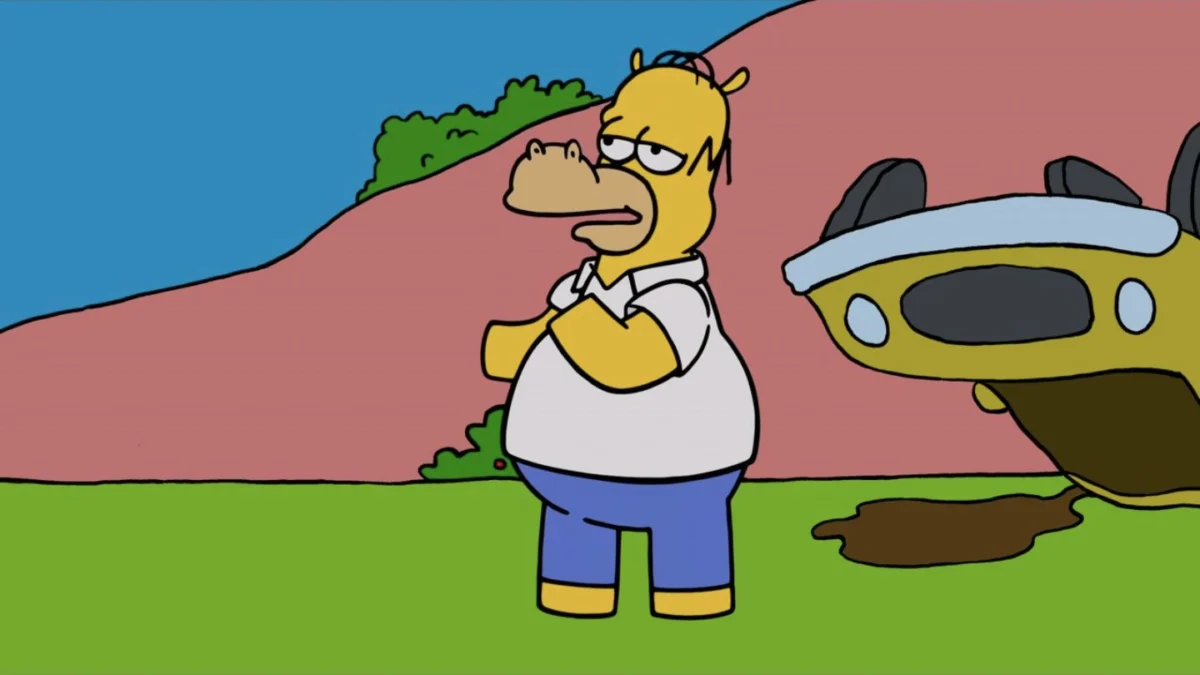
The Simpsons has never shied away from surrealism, but the legendary animated comedy pushed its visual boundaries during this past weekend’s Season 38 premiere. In an episode titled "The Children’s Book Job"—written by Dan Vebber and directed by Matthew Nastuk—fan-favorite patriarch Homer Simpson underwent a bizarre, albeit temporary, transformation into a Peppa Pig-style hippopotamus.
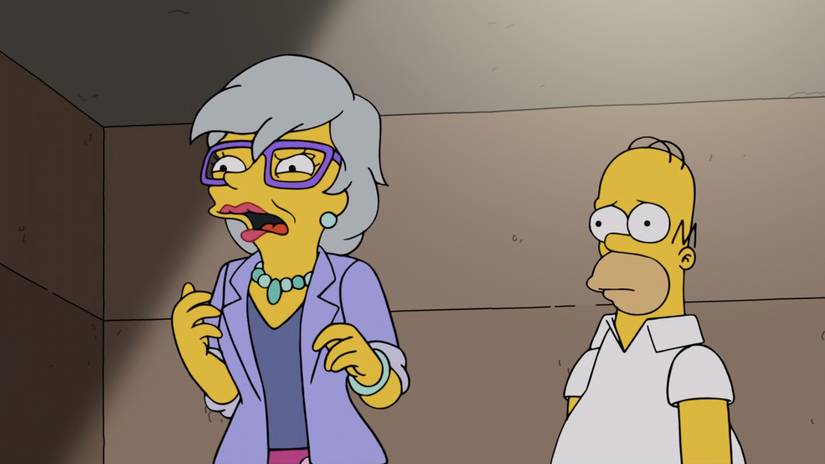
The sequence, which lasts less than a minute, was engineered around a concussive car accident. Homer desperately attempts to stop reclusive children’s book author Constance Clavinger (voiced by guest star Emma Thompson) from killing off her iconic literary creation, "The Plucky Little Goat." The resulting crash leaves Homer with a concussion, plunging him into a vibrant, nightmarish pastiche of classic children’s literature.
Following the broadcast, The Simpsons co-producer Mike Price sat down for an exclusive interview to dissect the genesis of the whimsical sequence, the collaborative writing process behind the season premiere, and what fans can expect from the remainder of Season 38, including a stop-motion "Treehouse of Horror" and high-profile guest stars like Owen Wilson and Meg Ryan.

Chronology: From Airport Chaos to Literary Madness
The genesis of the Season 38 premiere was built brick-by-brick around Homer’s surreal literary hallucination, rather than tacking it on as an afterthought. According to Mike Price, co-writer Dan Vebber initially brought forward the concept of a high-stakes, frantic road trip reminiscent of the 2010 comedy film Get Him to the Greek.
In "The Children’s Book Job," Springfield Elementary plays host to Constance Clavinger, a notoriously reclusive author arriving in town to debut her latest work. Homer is tasked with the seemingly simple assignment of picking her up from the local airport. However, chaos erupts when Clavinger reveals her plans to permanently kill off her beloved character, The Plucky Little Goat.
Panicked at the thought of childhood innocence being shattered, Homer launches into a frantic, high-speed intervention to stop her. The pursuit ends in a violent car crash, leaving Homer severely concussed. It is here that the episode pivots into animation history. Stunned and injured, Homer visualizes himself as an overweight hippopotamus navigating a kaleidoscope of famous children’s book settings.
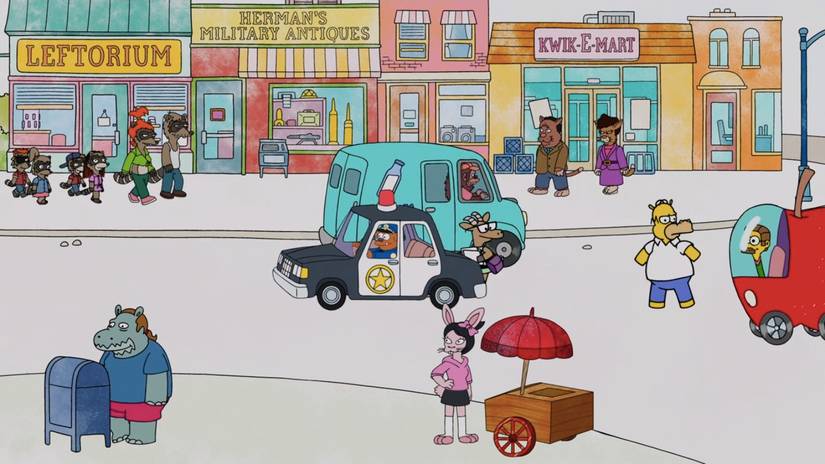
Although production constraints forced the team to trim the sequence down, the final cut serves as a dense, rapid-fire homage to legendary illustrators and authors. Viewers are treated to visual nods and direct parodies of Eric Carle’s The Very Hungry Caterpillar, Richard Scarry’s Busytown universe, Norton Juster’s style, and modern children’s staples.

"That sequence was going to be longer, but we’ve got so many stories going on," Price explained to Polygon. The creative team packed the brief runtime with easter eggs: Moe Szyslak materializes as The Stinky Cheese Man, while Principal Skinner transforms into Captain Underpants. Other shout-outs include Iggy Peck, Architect, Make Way for Ducklings, and Don’t Let the Pigeon Drive the Bus!.
Supporting Data & Production Insights
Entering its monumental 38th season, The Simpsons continues to find critical and creative fuel under the guidance of showrunner Matt Selman. Price highlighted Selman’s leadership style as a driving force behind the series’ enduring longevity.
"Every episode is its own unique thing," Price noted. "Showrunner Matt Selman, I can’t say enough great things about him, he’s so encouraging of us to take the big swings, to do stories that we call ‘format breakers.’"
Rather than mapping out a rigid, overarching narrative arc for the entire season, the writers’ room treats each installment as a blank canvas. This philosophy has allowed veteran scribes and producers to experiment with genre tropes, high-concept premises, and unusual narrative structures.
Highlights of the Season 38 Slate:
- The "Treehouse of Horror" Halloween Special: This year’s spooky anthology features a distinct aesthetic nod to The Nightmare Before Christmas. To pull off the unique intro, the production team partnered with Stoopid Buddy Stoodios to construct a stop-motion recreation of Springfield’s iconic residents. Price promises three distinct stories packed with both "really gory stuff" and "really scary stuff."
- Moe’s Dreamscape Episode: Written by Cesar Mazariegos, this episode focuses on Moe undergoing a routine sleep study. The twist? Moe’s bizarre dreams begin bleeding into the subconscious minds of everyone else in Springfield. The episode serves as a thematic mashup inspired by Nicolas Cage’s Dream Scenario alongside 1980s romantic comedies like Sleepless in Seattle and When Harry Met Sally…. Actress Meg Ryan is slated to guest-star.
- The Adopted Chimpanzee Episode: Homer and Marge take in a chimpanzee from a retirement facility for former showbiz animals. True to classic Simpsons escalation, Homer spirals into panic after learning about the violent, unpredictable nature of captive chimpanzees.
- Krustyland Disaster: Veteran writer Brian Kelley is penning a dark comedy centered around a massive, disastrous incident at Krustyland.
- Fat Tony and the Mob: Joe Mantegna returns as the iconic Springfield mob boss Fat Tony, alongside guest star Owen Wilson. The episode follows Fat Tony launching a new scam: serving as a high-priced production consultant on a prestige Godfather-esque crime film.
Official Responses and Creative Direction
The collaborative nature of The Simpsons writers’ room remains a pillar of its modern success. Price emphasized that the blend of generational influences helps keep the show fresh. While Price brought fond memories of reading Richard Scarry and Eric Carle to his own son, writer Dan Vebber championed newer, culturally significant titles like Iggy Peck, Architect.
This cross-generational exchange of ideas ensures that gags resonate with both long-term viewers who grew up in the golden era of the 1990s and younger demographics familiar with contemporary children’s media.
Furthermore, the willingness to embrace surrealism—such as transforming the series’ anchor protagonist into a flat-out hippopotamus for a visual gag—proves that the animation team is not constrained by traditional sitcom logic, even outside of non-canonical Halloween specials.
Implications for the Longevity of The Simpsons
As The Simpsons marches deeper into its late-30s seasons, industry critics often wonder how a series running for nearly four decades maintains its cultural footprint. The secret, as evidenced by the Season 38 premiere, lies in a hybrid strategy: honoring the show’s rich history while aggressively leaning into unpredictable, high-concept storytelling.
By loosening format constraints, the creative team has freed itself from the traditional suburban domestic sitcom mold that defined the show’s early years. Episodes that venture into psychological dreamscapes, stop-motion animation, and avant-garde literary parodies demonstrate that the series is comfortable utilizing its vast library of characters for unpredictable storytelling.
The inclusion of high-caliber guest stars—ranging from Emma Thompson and Meg Ryan to Owen Wilson—demonstrates that The Simpsons remains a coveted destination for Hollywood A-listers. As long as showrunners like Matt Selman and producers like Mike Price continue to encourage "big swings," Springfield will remain a vibrant, unpredictable landscape capable of surprising audiences well into its fourth decade on air.
 Nana Muazin
 Layla Zulfa
 Basiran
