

The geopolitical landscape of the Middle East remains suspended in a state of volatile uncertainty as diplomatic efforts to stabilize the Strait of Hormuz appear to have collapsed. Following the rejection of a comprehensive peace proposal by U.S. President Donald Trump, the Iranian leadership has adopted a posture of defiant readiness. The impasse, underscored by a cycle of aggressive rhetoric and failed back-channel negotiations, signals a deepening chasm between Washington and Tehran that threatens to ignite a broader regional conflict.
The Current Standoff: A Breakdown in Diplomacy
The latest friction point emerged over the weekend when Iranian Foreign Minister Abbas Araghchi delivered a stark warning during an interview with NBC. Araghchi’s remarks—that Iran is "fully prepared for the war to be resumed"—served as a direct counter-narrative to the White House’s insistence that Tehran is nearing a breaking point.
"We stand firm in the face of any new aggression, even if it comes to a doomsday war," Araghchi stated. "It is up to President Trump to choose."
This ultimatum follows President Trump’s dismissal of a multifaceted peace deal aimed at reopening the Strait of Hormuz, one of the world’s most critical maritime chokepoints. While the President has signaled a lingering desire for a diplomatic breakthrough, his administration has categorized the current Iranian proposal as fundamentally "unacceptable." Trump’s rationale is rooted in the belief that Iran is approaching the negotiating table from a position of weakness, driven by the economic asphyxiation of U.S. sanctions rather than a genuine desire for regional stability.
Chronology of a Collapsing Accord
To understand the current tension, one must look back at the erratic trajectory of negotiations over the past several months.
- June Memorandum: The two nations reached a preliminary memorandum of understanding that briefly signaled a thaw in relations. This document outlined a roadmap for de-escalation, including the easing of oil sanctions and the release of frozen assets.
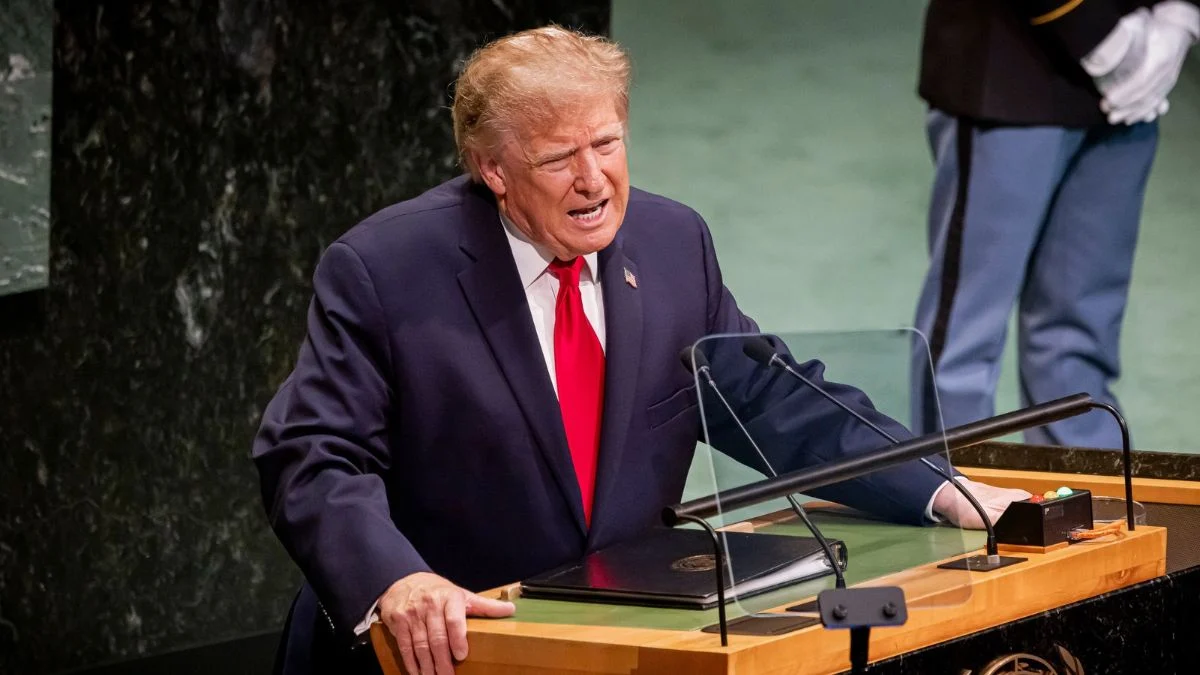
- The UN General Assembly: Tensions flared anew at the United Nations General Assembly in New York. During his address, President Trump’s rhetoric reached a fever pitch, with the President vowing to "annihilate" the Iranian state. The intensity of the rhetoric prompted a walkout by members of the Iranian delegation, a symbolic gesture that underscored the fragile state of the proceedings.
- Back-Channel Efforts: Despite the public hostility, reports emerged that high-level envoys, including Steve Witkoff and Jared Kushner, held a clandestine three-hour meeting with Iranian officials on the sidelines of the UN summit. Following these meetings, President Trump had struck a surprisingly optimistic tone, suggesting that a deal was within reach.
- The Weekend Rejection: The momentum generated at the UN was abruptly halted when the White House formally rejected the specific terms of the proposed deal, leading to the current war of words between Araghchi and the Trump administration.
Supporting Data: The Anatomy of the Proposal
The proposed deal that currently lies in ruins was designed to be a "grand bargain." The primary objective was the restoration of free navigation through the Strait of Hormuz, through which a significant portion of the world’s liquefied natural gas and oil passes daily.
The Iranian proposal requested three primary concessions:
- Economic Relief: The immediate lifting of the U.S.-led blockade on Iranian ports and the removal of sanctions on Iranian oil exports.
- Asset Liquidity: The release of approximately $12 billion in frozen Iranian assets currently held in foreign accounts.
- Regional Ceasefire: A comprehensive regional ceasefire, specifically encompassing the ongoing proxy conflicts in Yemen and Lebanon, which have served as theaters for U.S.-Iranian competition.
For the United States, the proposal represented a reversal of the "maximum pressure" campaign. Washington’s refusal suggests that the White House is unwilling to release the financial leverage of the $12 billion until Iran demonstrates a more significant shift in its regional security architecture, particularly concerning its missile program and proxy support.
Official Responses and Strategic Positioning
The rhetoric emanating from both Tehran and Washington reveals the deep-seated strategic goals that complicate any potential settlement.
The Iranian Perspective
Foreign Minister Araghchi’s messaging is clearly aimed at both domestic and international audiences. By asserting that Iran is negotiating from a position of strength, Tehran aims to project stability despite the harsh realities of its domestic economy. The regime’s willingness to invoke a "doomsday war" suggests a high-stakes gamble: that the U.S. domestic political environment—specifically the looming midterm elections—will prevent President Trump from escalating the conflict into a full-scale kinetic war.
The American Perspective
President Trump’s refusal to sign the deal is framed as a strategic necessity. By claiming that Iran is "losing so badly," the President is signaling to his political base that the current policy of economic strangulation is working. However, the President’s insistence that he would "like to make a deal" indicates a dual-track strategy: maintaining the pressure campaign while keeping a narrow window open for a deal that would be more favorable to U.S. interests, likely involving stricter long-term limitations on Iran’s nuclear ambitions.
Implications for Regional and Global Security
The failure to reach a deal has profound implications for the global economy and regional security.
1. The Energy Markets
The Strait of Hormuz is the world’s most important oil chokepoint. Any sustained threat to shipping in this region carries the risk of a global energy price shock. Investors and energy markets remain on edge, pricing in a "risk premium" that reflects the possibility of a total closure of the strait should military hostilities resume.
2. The Proxy Theater
The conflict is not contained to the Persian Gulf. By tying the deal to ceasefires in Yemen and Lebanon, the negotiators acknowledged that the U.S.-Iran conflict is inherently regional. If the diplomatic process continues to stall, the risk of escalation in these secondary theaters increases. Analysts fear that a miscalculation by either side could turn a contained diplomatic impasse into a direct military confrontation.
3. Domestic Political Calculus
With midterm elections on the horizon in the United States, the "Iran file" has become a political lightning rod. President Trump is under pressure to avoid a protracted military engagement, yet he also faces political backlash if he is perceived as being "soft" on Tehran. This creates a narrow path for diplomacy; any deal must be perceived as a decisive "win" for the White House to be politically viable.
4. The Erosion of Multilateralism
The collapse of the June memorandum and the subsequent breakdown of UN-mediated talks demonstrate the limits of traditional diplomacy in the current climate. As the two sides retreat into their respective camps, the space for neutral mediation—often provided by European powers or regional brokers—is shrinking.
Conclusion: The Path Forward
The situation remains fluid. While the current rhetoric suggests an impending escalation, the fact that both parties continue to speak—even if only to reject one another—suggests that the window for negotiation has not been permanently bolted shut.
However, the fundamental disagreement remains: Iran views the reopening of the Strait of Hormuz as a transactional exchange for economic survival, while the United States views it as a concession that should only follow a fundamental transformation of Iran’s regional posture. Until one side blinks, or a new framework for engagement is established, the Strait of Hormuz will remain the world’s most dangerous maritime corridor, suspended in a precarious balance between fragile diplomacy and the looming specter of war.
 Dwi Wanna
 Iffa Jayyana
