

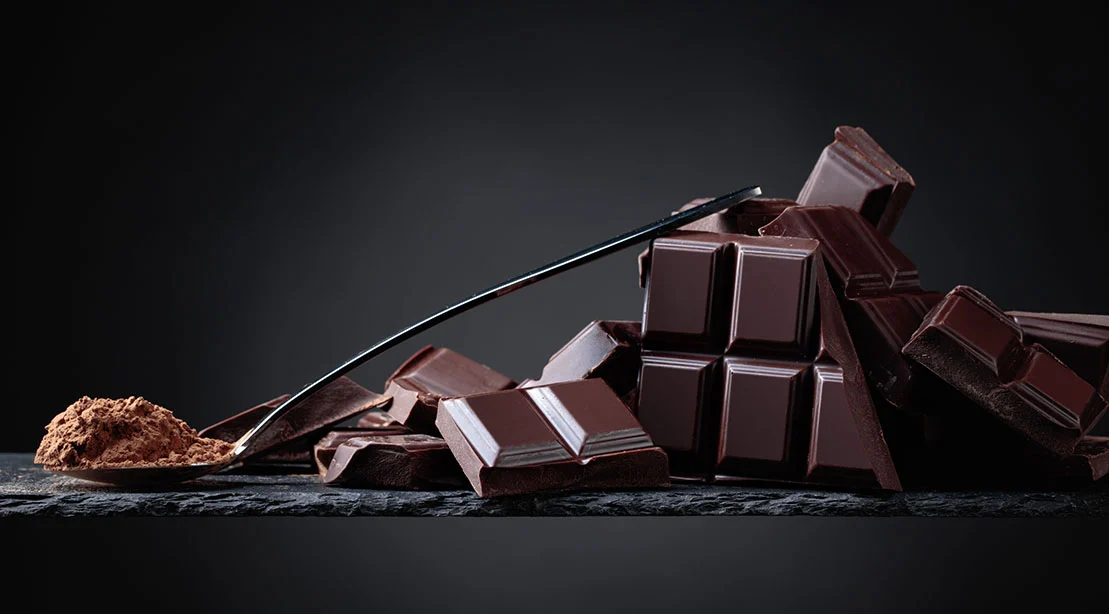
In the quest for the ultimate performance-enhancing aid, athletes have long turned to caffeine, beetroot juice, and complex supplement stacks. However, a groundbreaking study recently published in the journal Frontiers in Physiology suggests that the most effective "pre-workout" might not be a pill or a powder, but a simple sensory trigger. According to researchers, the aroma of chocolate—specifically dark chocolate—can significantly boost physical performance, increasing total training volume without elevating an athlete’s perceived exertion.
While the concept sounds like something plucked from the pages of a Roald Dahl novel, the science behind this phenomenon is rooted in the complex interplay between our olfactory system, the brain’s reward centers, and our evolutionary conditioning.
Main Facts: The "Willy Wonka" Effect in the Weight Room
The study, led by Dr. Mohamed Nashrudin bin Naharudin, sought to determine if the "psychobiological" response to food-related scents could be leveraged to improve athletic outcomes. The findings were startling: participants exposed to the scent of chocolate before and during their sets performed more repetitions than those in the control group, all while reporting that the exercise felt no more difficult than their usual routines.
The key discovery lies in the distinction between different types of chocolate aromas. While both milk and dark chocolate increased the total number of repetitions compared to a water-based control group, dark chocolate was the clear frontrunner. Participants sniffing a 90% dark chocolate scent managed an impressive 18 additional repetitions during leg extensions. In contrast, those exposed to the scent of 60% milk chocolate added about nine repetitions.
Beyond the performance metrics, the dark chocolate aroma had a profound impact on appetite regulation. Despite the participants having fasted for over ten hours, those who inhaled the dark chocolate scent reported suppressed hunger and a greater sense of satiety post-workout—a finding that could have massive implications for athletes looking to manage body composition without succumbing to "post-gym hunger."
Chronology: A Controlled Experiment in Human Performance
To arrive at these conclusions, the research team conducted a rigorous, controlled experiment involving 23 healthy, moderately trained men in their 20s. The methodology was designed to strip away external variables and focus strictly on the olfactory influence.
The 10-Hour Fast
The study began with a baseline requirement: all participants were subjected to a mandatory 10-hour fast. By removing the immediate physiological influence of a recent meal, the researchers ensured that any changes in satiety or performance were driven by the sensory cues provided during the trial, rather than residual energy from food.
The Exposure Protocol
Fifteen minutes prior to the physical exertion phase, the subjects were introduced to their respective scents. The experiment utilized three distinct groups:
- The Control Group: Exposed to the scent of plain water.
- The Milk Chocolate Group: Exposed to a 60% milk chocolate aroma.
- The Dark Chocolate Group: Exposed to a 90% dark chocolate aroma.
This exposure was not limited to the pre-workout period. Researchers maintained the olfactory stimuli throughout the exercise, ensuring that the scent was present during the recovery periods between sets of leg extensions. This continuous delivery was crucial to maintaining the "anticipatory state" that the researchers theorized would drive performance.
Supporting Data: Decoding the Performance Gap
The data collected during the leg extension trials provides a fascinating insight into how different scents manipulate human physiology.
- Dark Chocolate (90%): This group demonstrated the most significant performance gain (+18 reps). Researchers hypothesize that the bitter, complex notes of high-percentage cocoa act as a cognitive cue for a "highly satiating food." The brain, recognizing the scent of a nutrient-dense substance, signals the body to enter a state of anticipatory fullness. This suppresses the ghrelin response (the "hunger hormone") and allows the athlete to focus purely on the task at hand.
- Milk Chocolate (60%): While this group also saw a performance boost (+9 reps), the mechanism was entirely different. The scent of milk chocolate acts as a "hedonic reward cue." Because milk chocolate is associated with pleasure and sweetness, the scent creates a positive emotional environment, which reduces the psychological barrier to exercise. The athlete feels better, and therefore works harder, but the metabolic signals—such as hunger—remain unaffected.
The most compelling data point is the Rating of Perceived Exertion (RPE). Despite the increased workload (more reps), the participants’ RPE remained consistent with their baseline. This suggests that the olfactory stimulation creates a form of "cognitive masking," where the brain is so engaged by the sensory cue that it fails to register the added muscular fatigue.
Official Responses: Insights from Dr. Mohamed Nashrudin bin Naharudin
Dr. Mohamed Nashrudin bin Naharudin, the senior author of the study, views these results as a paradigm shift in sports psychology. In his official commentary on the Frontiers publication, he noted, "Seeing a substantial increase in repetitions without the athletes feeling like they were exerting themselves any harder is a fascinating psychobiological outcome."
Dr. Nashrudin emphasizes that this is not merely about smelling food; it is about how humans have been conditioned to process olfactory information from a young age. "The dark chocolate scent serves as a learned cue," he explains. "It effectively tricks the system into an anticipatory state of fullness."
When asked about the disparity between the two chocolate types, Dr. Nashrudin was quick to distinguish between the metabolic and the hedonic. "The dark chocolate shifts basic metabolic hunger signals, whereas the milk chocolate acts more like a reward, enhancing training volume by creating a pleasant sensory environment."
Implications: The Future of Olfactory Ergogenics
The implications of this study are vast, extending from professional athletics to the general fitness population. If a simple scent can act as a performance enhancer, the sports supplement industry may soon see a move away from chemical-heavy stimulants toward targeted, sensory-based interventions.
Potential for Weight Management
For individuals struggling with the hunger pangs often associated with caloric restriction, the use of dark chocolate aromas could be a game-changer. By mimicking the sensation of having consumed a high-satiety food, the scent could help individuals adhere to diets without the psychological distress of constant hunger.
Enhancing Cognitive and Physical Endurance
While the study focused on resistance training, the potential for endurance sports is equally compelling. If olfactory cues can delay the sensation of fatigue in a gym setting, could they be used by marathon runners or cyclists to push through "the wall"? Further research is required to see if these effects translate to aerobic exercise, where the physiological stress is distributed differently throughout the body.
Limitations and Future Directions
Despite the promising results, the researchers are the first to admit the study’s limitations. The sample size of 23 men is relatively small, and the participants were all in a specific demographic. To establish these findings as a standard practice, future studies must address several key areas:
- Diverse Demographics: Does the "chocolate effect" hold true for women or for athletes of different age groups?
- Biochemical Monitoring: Researchers hope to conduct future projects that include blood analysis, hormonal tracking, and real-time brain imaging. By observing how dopamine, serotonin, and ghrelin levels fluctuate in response to these scents, we can gain a clearer picture of the biological mechanisms at play.
- Long-term Efficacy: Does the brain eventually "habituate" to the scent, or does the performance-boosting effect persist over months of training?
A New Frontier in Human Potential
As we look toward the future of sports science, the study of "olfactory ergogenics" stands out as a unique bridge between biology and psychology. We are moving toward an era where the environment itself—the smells, the sounds, and the visuals of our surroundings—is recognized as an integral part of our physical output.
Whether you are a bodybuilder looking to squeeze out an extra set or someone simply trying to make your morning workout feel a little less grueling, the answer might be sitting in your pantry. As Dr. Nashrudin’s research suggests, sometimes the most powerful tool in the gym isn’t a heavy weight or a sophisticated machine; sometimes, it’s just a matter of taking a deep breath and letting the scent of dark chocolate do the heavy lifting.
 Nana
Nana
 Reynand Wu
 rifanmuazin
