

Introduction: The Philosophy of the Open Road
“All we represent to them, man, is somebody who needs a haircut,” reflects actor Dennis Hopper as the freewheeling hippie Billy, lounging lazily by a campfire in the defining 1969 counterculture classic Easy Rider.
“Oh no,” counters Jack Nicholson’s George Hanson, cutting straight to the core of the American mythos. “What you represent to them is freedom.”
That single exchange captures the cinematic watershed moment that propelled the motorcycle—and its devoted, rebellious subculture—into the mainstream consciousness of the late 20th century. While the film’s depiction of mid-century counterculture may seem dated through a modern lens, its emotional center remains timeless. It understood a fundamental truth that transcends eras: the profound, multifaceted relationships riders form with their machines, the open road, and each other.

This delicate juxtaposition of radical independence and deep communal belonging is explored in Motorcycle Life: Stories, Wisdom, and Obsession from Riders Around the World. Released on September 29 by Artisan Books, the 352-page coffee-table compendium is written by author, journalist, and lifelong rider Eric Hendrikx. Rather than serving as another spec-sheet-heavy catalog of chrome and horsepower, the book serves as a cultural study of what it truly means to live on two wheels.
Main Facts: A Cultural Snapshot of Modern Motorcycling
Motorcycle Life breaks away from the traditional motorcycle publishing playbook. Instead of focusing heavily on craftsmanship, technical components, displacement metrics, and the historical provenance of specific models, Hendrikx’s work places the human subject front and center.
- Motorcycle Life: Stories, Wisdom, and Obsession from Riders Around the World
- Author: Eric Hendrikx
- Publisher: Artisan Books
- Publication Date: September 29
- Format: 352-page coffee-table compendium laden with evocative, international photography
- Scope: Features interviews and portraits of 107 riders, including professional racers, custom builders, everyday enthusiasts, and Hollywood icons such as Jason Momoa and Keanu Reeves.
- Philanthropy: All preorder royalties have been entirely donated to the Distinguished Gentleman’s Ride and Movember foundations to support mental health initiatives and prostate cancer research.
Chronology: The Making of an Anthropological Perspective
The conceptual roots of Motorcycle Life stretch back decades, grounded in Hendrikx’s lifelong immersion in motorcycle culture. Long before he picked up a journalist’s notebook or a camera, his affinity for two wheels began quite literally in the passenger seat. As he recalls in the book’s introduction, his initiation into the lifestyle occurred when he was just a child, “perched in front of my dad on his 1978 Yamaha DT250 Enduro.”

As Hendrikx grew, so did his multifaceted career. He built a reputation as a respected journalist and author, but he also pursued formal academic training, ultimately earning a master’s degree in anthropology. This educational background heavily influences his approach to storytelling. Rather than viewing motorcycles simply as motorized transport, Hendrikx approaches them through an anthropological lens, recognizing them as cultural artifacts that shape human behavior, identity, and ritual.
In conceptualizing Motorcycle Life, Hendrikx recognized a gap in contemporary motored media. Most literature caters strictly to gearheads, focusing on mechanical specs rather than emotional resonance.
“I wanted to take a real cultural snapshot of what motorcycling is like today,” Hendrikx explains. “Not like what the brands tell us it is, or what it should be like, but who’s really riding, and so I was looking at it through that lens.”

To achieve this, Hendrikx spent years traveling, photographing, and interviewing a diverse cross-section of the global riding community. The culmination of this extensive fieldwork resulted in the 352-page volume published in late September by Artisan Books.
Supporting Data and Diverse Perspectives: Breaking the Mold
A core achievement of Motorcycle Life is its accurate and deliberate reflection of the modern riding demographic. For decades, mainstream media perpetuated a narrow, monolithic stereotype of the motorcyclist—typically depicted as a hardened, leather-clad outlaw or a reckless speed demon. Hendrikx actively sought to dismantle this outdated archetype.
Representation and Demographics
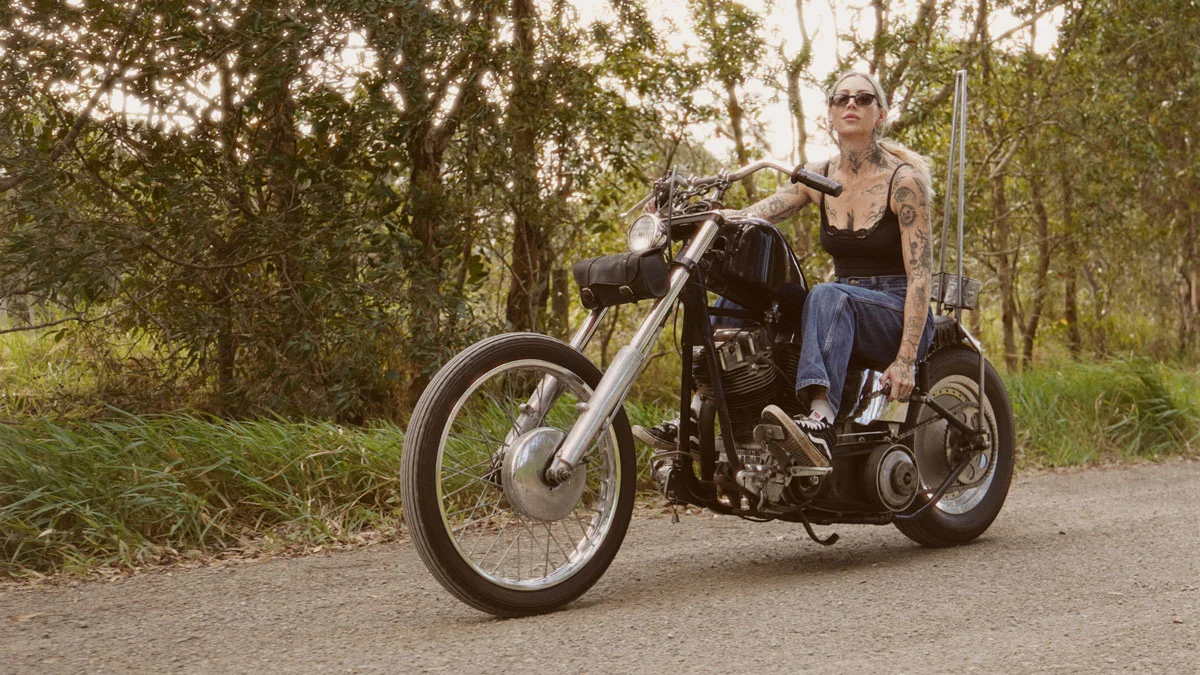
Drawing on contemporary statistics, Hendrikx notes that women account for roughly 20 to 25 percent of all motorcyclists in North America today. Ensuring that the book mirrors this reality was a primary objective. The pages of Motorcycle Life are populated by an inclusive spectrum of riders, spanning various ages, cultural backgrounds, and walks of life. From Australian musicians and coffee-tech entrepreneurs like Mel Wonder to world-renowned custom builders like Maxwell Hazan of Hazan Motorworks, the book highlights how the motorcycle acts as an equalizer across diverse vocations.

“Obsession is a wonderful way into someone’s character,” Hendrikx states. “Ask an actor about their latest film and they’ve probably answered those questions a hundred times. Ask about the first motorcycle they loved, and suddenly they’re talking about their father, the kid they were at fifteen, fear, independence, friendship, or an adventure that changed their life.”
The Hollywood Contrast: Momoa and Reeves
Among the 107 subjects interviewed are high-profile celebrities whose public personas are often overshadowed by their private passions. Hendrikx admits that two of his famous subjects—Jason Momoa and Keanu Reeves—surprised him with the depth and divergence of their philosophies regarding motorcycles.
- Jason Momoa: The actor approaches motorcycle culture with the meticulous eye of a historian and preservationist. According to Hendrikx, Momoa possesses an extraordinary, encyclopedic knowledge of prewar Harley-Davidsons. Rather than merely accumulating vintage iron for shock value, Momoa is deeply invested in provenance, honoring the craftsmen who built them, and safeguarding the heritage of American motorcycling.
- Keanu Reeves: Best known to the motorcycling world as both an avid rider and the co-founder (alongside Gard Hollinger) of Arch Motorcycle, Reeves offered Hendrikx a deeply philosophical perspective. Having ridden together on California’s legendary Angeles Crest Highway, Hendrikx gained insight into how motorcycling shapes Reeves’ worldview. Their discussions centered on acknowledging the inherent dangers and real-world consequences of riding, and using that awareness to fuel a fundamental question: How do you actually want to live your life?
“Jason is interested in what deserves to be preserved from the past; Keanu, in how we choose to live in the present,” Hendrikx observes. “I loved that contrast.”

Official Responses and Philanthropic Impact
For Hendrikx, Motorcycle Life is not merely a commercial publishing project; it is a labor of gratitude directed toward a community that has sustained him throughout his life.
“A motorcycle is a very emotional machine for everybody,” Hendrikx notes. “Whether people have used a motorcycle to process grief, or find connection, or make deep bonds with friends—it’s an emotional experience.”
In keeping with this ethos of community care, Hendrikx made a significant philanthropic commitment prior to the book’s release. He donated the entirety of his preorder royalties directly to two prominent global organizations: the Distinguished Gentleman’s Ride and Movember. Both charities focus heavily on critical men’s health issues, including prostate cancer research, suicide prevention, and mental health awareness programs.

Furthermore, industry leaders and featured creators have rallied behind the book’s message. Figures like motocross pioneer and Good Ride charity founder Carey Hart—also featured in the book—have praised the project for celebrating the communal goodwill, charity work, and shared camaraderie that define modern motorcycle clubs and gatherings.
Implications: Changing the Narrative of Two-Wheeled Culture
The publication of Motorcycle Life arrives at a pivotal time for personal mobility and recreational sports. As urban environments shift, autonomous vehicles loom on the horizon, and screen-based isolation grows increasingly prevalent, the tactile, analog nature of motorcycling offers a powerful antidote.
By framing the motorcycle as an emotional machine and a vehicle for self-discovery, Hendrikx achieves several important cultural outcomes:

- Destigmatizing the Subculture: By showcasing everyday riders, artists, women, and professionals alongside celebrities, the book humanizes the riding community, breaking down archaic stereotypes of lawlessness and danger.
- Encouraging New Entrants: Hendrikx’s ultimate hope is that readers will open the book to any page, connect with the human stories, find inspiration, and perhaps visit a local training course to earn their motorcycle license.
- Deepening the Discourse: The book shifts the conversation within automotive and motorcycling journalism away from consumerism and spec-chasing, proving that objects of mechanical engineering can serve as profound catalysts for psychological growth and human connection.
Conclusion
Ultimately, Motorcycle Life: Stories, Wisdom, and Obsession from Riders Around the World transcends the boundaries of standard coffee-table literature. It functions as an anthropological field guide to a global tribe united not by a specific brand or demographic, but by a shared yearning for liberation, presence, and authenticity.
In the words of its author, the motorcycle provides a rare, direct path past professional titles and societal expectations to answer a much more compelling question: Who are you outside of your career? For anyone willing to listen—or twist the throttle—the answer awaits on the open road.
 Reynand Wu
 Siti Muinah
 Azzam Bilal Chamdy
