

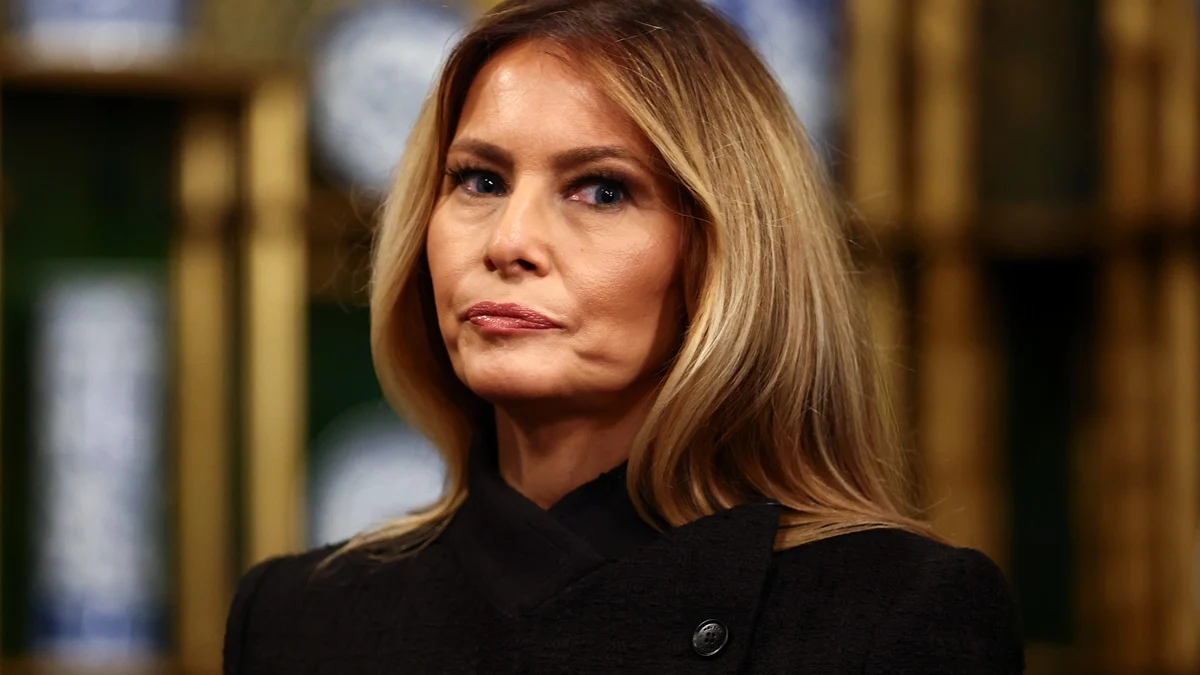
The public image of a presidential candidate is often as much a product of carefully curated narratives as it is a reflection of documented reality. Recently, a sharp divergence in perspective has emerged regarding the daily work habits of former President Donald Trump. During a high-profile appearance on Fox & Friends on September 23, former First Lady Melania Trump offered a staunch defense of her husband’s professional vigor, characterizing him as a man driven by relentless duty. However, this portrayal was quickly met with skepticism from political commentator and media personality David Pakman, whose critique has reignited a broader conversation about the transparency of the Trump campaign’s narrative and the nature of the candidate’s public stamina.
The First Lady’s Account: A Portrait of Presidential Dedication
During her sit-down interview with the Fox & Friends hosts, Melania Trump sought to humanize her husband and emphasize his commitment to the office he once held and seeks to occupy again. Speaking to a core base of MAGA supporters, the former First Lady provided a rare, intimate look at the Trump household’s dynamics.
"He has a lot on his plate," Melania stated, referencing the complex geopolitical landscape and domestic challenges currently facing the United States. "It’s very different, what’s going on around the world now. But I think he’s doing the best that he can. He’s, from morning until evening, nonstop working."
Mrs. Trump went on to laud the 80-year-old’s vitality, asserting that he possesses more "energy" than any of his predecessors. Her testimony was clearly designed to counter concerns regarding the candidate’s age—a central pillar of the current electoral discourse—and to reinforce the narrative of a man who remains laser-focused on the burdens of governance. By framing his schedule as a "nonstop" endeavor, she sought to project an image of a leader who is physically and mentally prepared for the rigors of the presidency.
David Pakman’s Rebuttal: Dissecting the Credibility of the Narrative
The narrative provided by Melania Trump did not remain unchallenged for long. David Pakman, a prominent political commentator, utilized his platform to systematically dismantle the First Lady’s assertions. In a video analysis that has garnered significant attention, Pakman questioned the proximity and depth of knowledge the First Lady possesses regarding her husband’s daily schedule.
Pakman’s primary contention rests on the reported physical distance between the couple. Citing various media reports suggesting that Melania Trump spends the majority of her time in New York, removed from the day-to-day operations of the Trump campaign or the former President’s primary residences in Florida, Pakman posited a fundamental question: "How would Melania know that Trump is working from morning until evening?"
The commentator went further, characterizing the relationship as "completely estranged." He pointed to persistent, albeit largely anecdotal, reports suggesting that the couple often maintains separate sleeping quarters even when residing in the same location. For Pakman, these alleged domestic arrangements serve as a basis for doubt regarding the First Lady’s authority to speak on the President’s daily routines.
Chronology of a Public Disagreement
To understand the weight of this exchange, one must look at the timeline of events:
- September 23: Melania Trump appears on Fox & Friends, offering a glowing testimonial of Donald Trump’s work ethic and high energy levels.
- Late September: Following the broadcast, political pundits begin to analyze the interview’s impact on the campaign’s "age narrative."
- Post-Interview Period: David Pakman releases his video rebuttal, challenging the validity of the First Lady’s claims and citing visual evidence of the former President appearing tired or asleep at public functions.
- Ongoing Discourse: The debate continues to circulate on social media, with supporters of the former President highlighting his rally schedule as evidence of his vigor, while critics continue to highlight moments of apparent lethargy as evidence of his declining stamina.
Supporting Data: The "Sleepy" Narrative and Campaign Logistics
Pakman’s critique is not merely based on domestic speculation; it draws upon a body of visual evidence that has become a staple of anti-Trump political commentary. Throughout the current election cycle, several instances of the former President appearing to doze off or lose focus during high-stakes events—such as court appearances, town halls, and major speeches—have been captured on camera.
Pakman juxtaposed these images with Melania’s claims of "nonstop" work. "We’ve also covered the increased frequency with which Donald Trump is falling asleep," Pakman noted in his critique. "So Melania Trump’s description is incredible: that Trump is so relentlessly working that, I guess, he has to catch up on sleep during work."
This line of argument is strategically significant. By connecting the First Lady’s praise to the visual evidence of the candidate’s "sleepy moments," critics like Pakman are attempting to create a cognitive dissonance for voters. They argue that the campaign’s internal narrative—that Trump is a powerhouse of activity—is fundamentally incompatible with the reality presented by his own public appearances.
Official Responses and Campaign Strategy
To date, the Trump campaign has not issued a formal statement in response to David Pakman’s specific criticisms. This is a common strategic choice for the campaign, which often ignores individual commentators to avoid providing them with a larger platform.
However, the campaign’s broader strategy remains clear: they continue to promote the image of a "high-energy" candidate through frequent rallies, long-form podcast interviews, and social media posts that highlight the sheer volume of his public appearances. By maintaining a heavy travel schedule, the campaign hopes to physically demonstrate the stamina that the First Lady describes, effectively countering the "age" and "energy" concerns through the sheer optics of presence.
Implications for the 2024 Election Cycle
The clash between Melania Trump’s account and David Pakman’s critique underscores a larger, more systemic issue in modern American politics: the battle for the "truth" of a candidate’s physical and mental fitness.
The Role of Spousal Testimony
Historically, the spouse of a candidate is a crucial asset in humanizing them. When Melania Trump speaks, she is intended to act as a witness to the candidate’s character. However, when the public perceives a disconnect between the spouse’s narrative and the candidate’s documented behavior, it can become a liability, allowing critics to paint the campaign as being in a state of denial.
The Power of Visual Evidence
In the digital age, visual evidence—often in the form of short, edited clips—carries immense weight. The images of Donald Trump appearing to sleep are powerful political tools. They serve as a shorthand for critics to argue that the candidate is no longer suited for the demands of the office. Conversely, the campaign’s reliance on rally footage aims to provide a counter-visual argument.
The Impact on the Electorate
For the undecided voter, this debate often serves as a proxy for broader concerns about age and longevity in government. While supporters of Donald Trump are likely to view Melania’s comments as an accurate reflection of his dedication and dismiss Pakman’s critique as politically motivated "hit-pieces," skeptics and undecided voters may find the questions raised about his daily routine and public stamina to be more compelling.
Conclusion
The discourse surrounding Donald Trump’s work ethic is emblematic of the polarized nature of modern political communication. Whether the former President is a tireless worker fueled by a sense of national urgency, or a man whose stamina is failing under the weight of his age and legal burdens, is a question that voters will ultimately decide at the ballot box.
Melania Trump’s interview provided the narrative the campaign needed to humanize its candidate, but David Pakman’s intervention serves as a reminder that in an era of constant surveillance, political narratives are under more scrutiny than ever before. As the campaign progresses, the struggle to define the "true" version of the candidate will undoubtedly continue, with both sides utilizing every tool—from personal testimony to viral video clips—to shape the public’s perception of a leader’s capacity to serve.
 Dwi Wanna
 Iffa Jayyana
