The contemporary art world stands at a vital crossroads of historical retrospection and political urgency. Recent developments highlighted by cultural institutions and advocacy networks reveal how visual culture continues to shape socio-political discourse. Central to this current cultural moment is the resurgence of "Fall of Freedom," a nationwide pro-democracy art and activism coalition mobilizing ahead of the midterm elections with an array of anti-administration and anti-fascist creative actions.
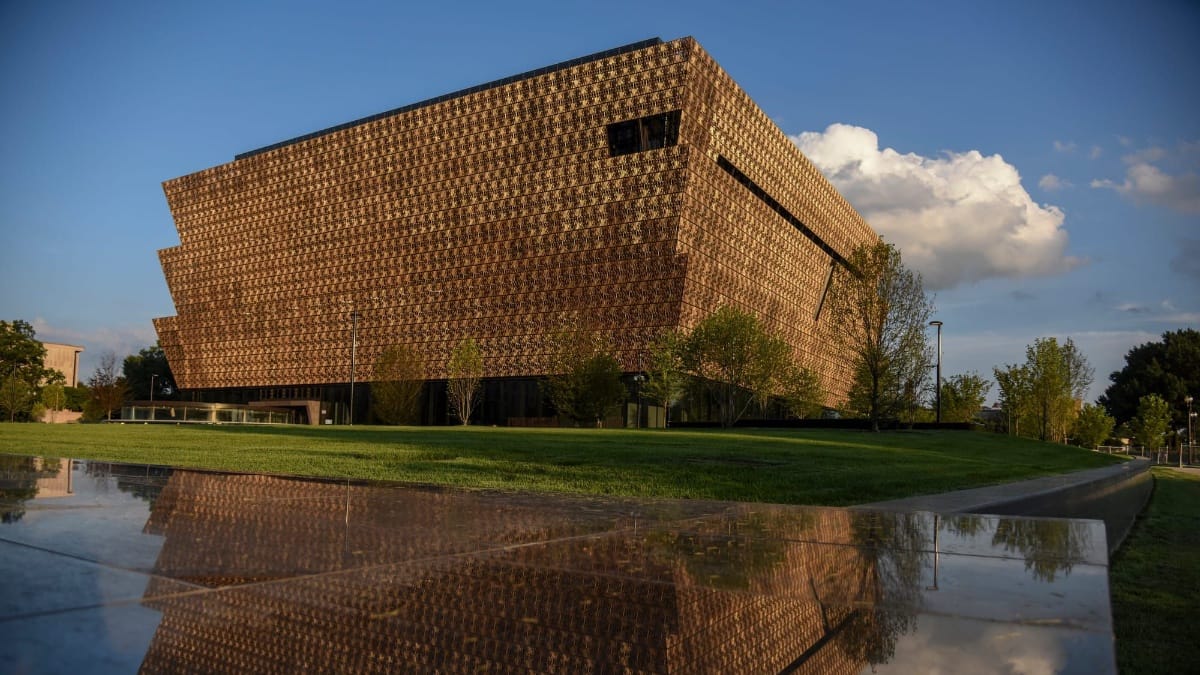
Simultaneously, historical preservation and the art market are converging in notable ways. A rare collection of drawings by renowned artist Alice Neel, capturing the politically charged atmosphere of the McCarthy-era Foley Square trials, is heading to auction, bringing renewed attention to mid-20th-century state overreach. In architectural critique, recent scholarship by Brian Goldstein has brought long-overdue focus to J. Max Bond Jr., the Black architect whose foundational contributions to the Smithsonian’s National Museum of African American History and Culture (NMAAHC) on the National Mall have often been overshadowed by high-profile co-designers like David Adjaye.
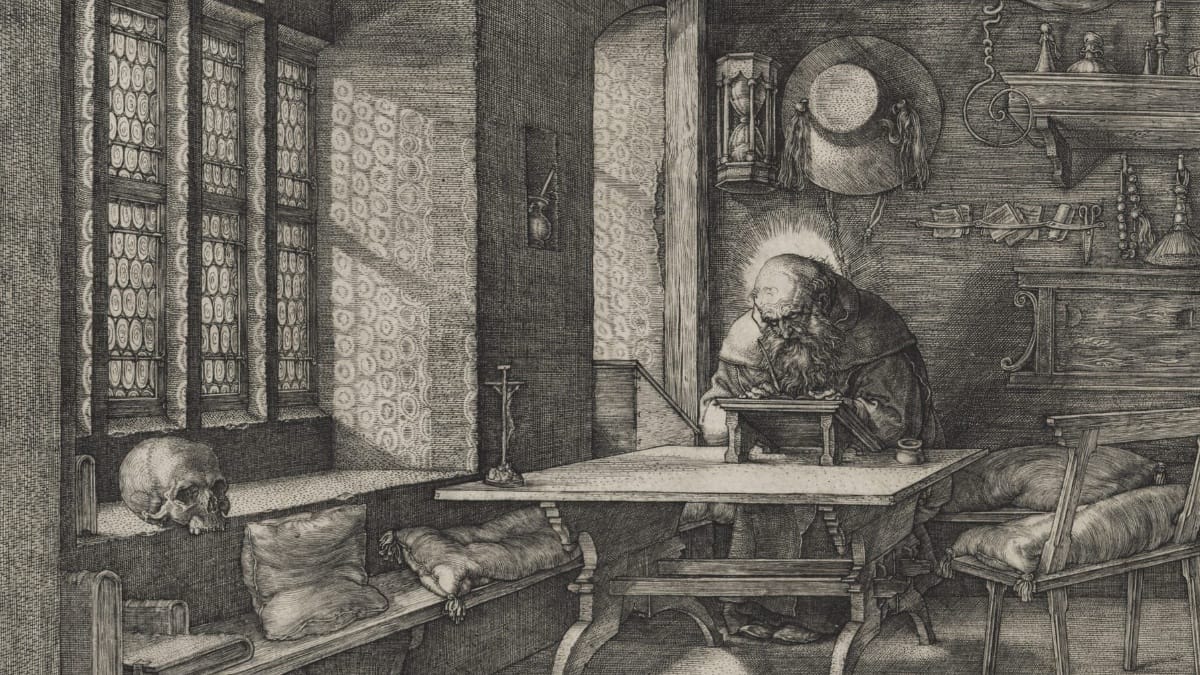
These stories form the backbone of a dynamic cultural ecosystem where museums are rethinking the physical placement of works on paper—exemplified by the International Fine Print Dealers Association’s (IFPDA) Prints & Drawings Month—and contemporary creators are challenging historical narratives through powerful exhibitions, such as Cosmo Whyte’s installation at the University of Michigan’s Stamps Gallery.
Chronology of Recent Cultural and Political Intersections
The trajectory leading to this moment spans decades of political struggle, artistic documentation, and institutional evolution:
1950s (The McCarthy Era): Alice Neel attends and visually chronicles the Foley Square trials in New York City, producing a searing body of work documenting the persecution of Communist Party members under the Smith Act. These drawings remain poignant testaments to civil liberties under siege.
Late 20th to Early 21st Century: Architect J. Max Bond Jr. builds an extraordinary legacy championing civic spaces and culturally significant institutions, eventually playing a pivotal role alongside Philip Freelon and David Adjaye in designing the Smithsonian’s National Museum of African American History and Culture.
Recent Years: Grassroots arts organizations mobilize against authoritarian political trends. The pro-democracy art and activism group "Fall of Freedom" establishes a nationwide network of creative resistance.
October 2026:
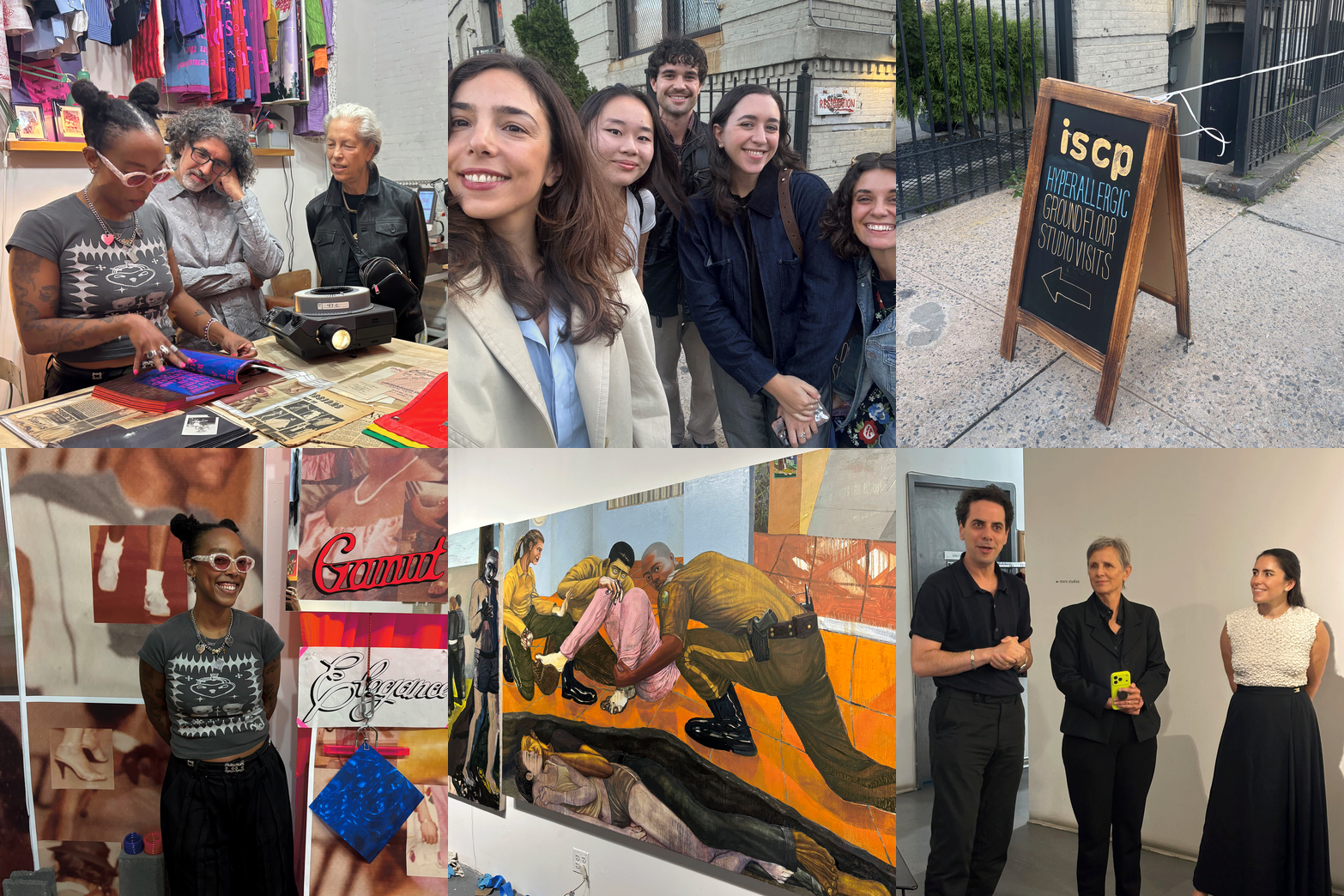
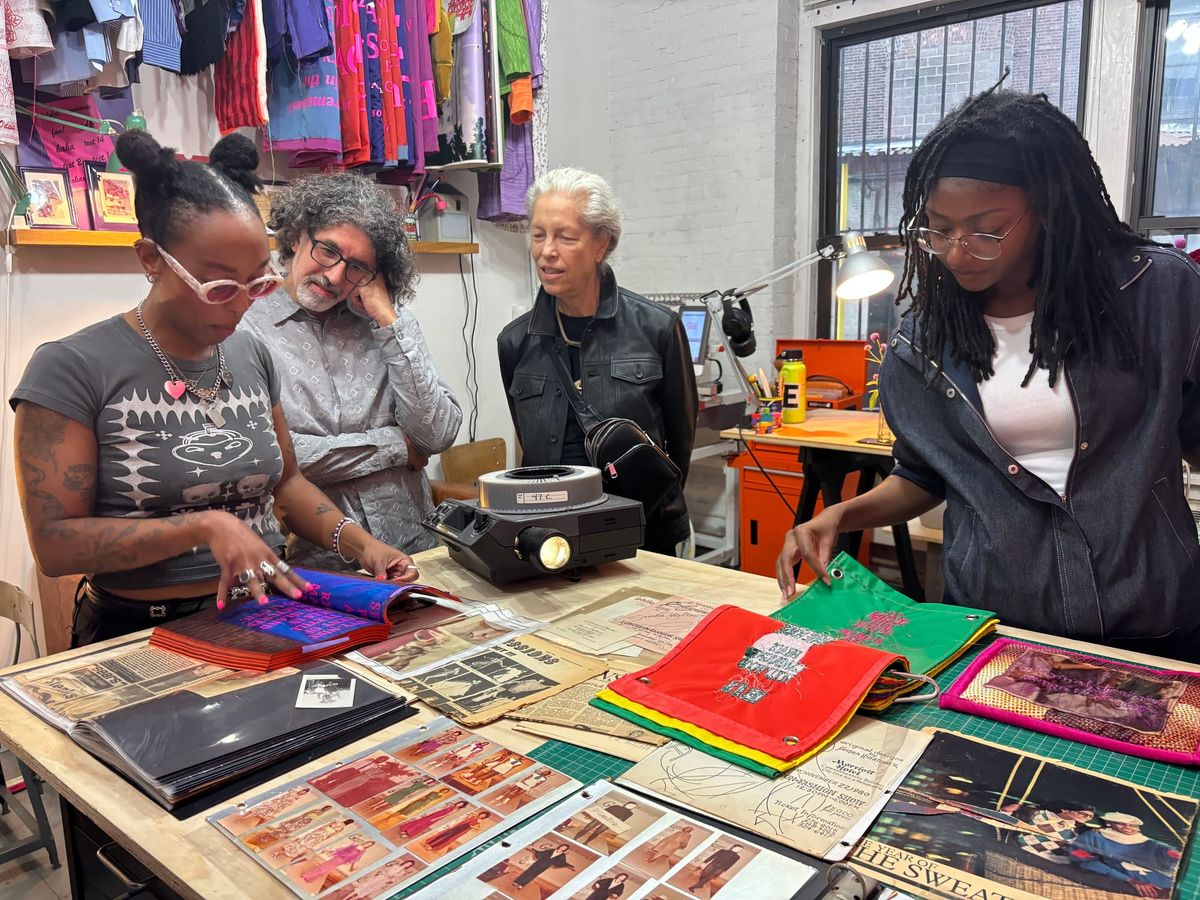
Mid-Month: Hyperallergic hosts a member gathering at the International Studio & Curatorial Program (ISCP) in Brooklyn, fostering dialogue between resident artists and arts patrons.
Current Period: The IFPDA launches its October Prints & Drawings Month, prompting major institutions like LACMA and The Met to reevaluate how works on paper are exhibited and valued. Concurrently, Alice Neel’s Foley Square trial drawings are announced for auction, and critical essays regarding Max Bond Jr.’s architectural legacy capture widespread attention.
Supporting Data and Institutional Context
The intersection of art, politics, and historical architecture is grounded in tangible institutional shifts and market evaluations:
Architectural Recognition: As detailed in the Smithsonian’s concourse exhibition A Century in the Making, the NMAAHC required decades of political, financial, and architectural negotiation. While starchitect David Adjaye often receives the lion’s share of public and media acclaim, records emphasize that the winning architectural collaborative—Freelon Adjaye Bond / SmithGroup—relied fundamentally on J. Max Bond Jr.’s deep expertise in urban sociology, civic architecture, and equity-driven design.
Market Valuation of Political Art: Alice Neel’s market standing has surged over the past decade, shifting from a revered painter of human psychology to a chronicler of American political and social history. The upcoming auction of her Foley Square trial drawings bridges a crucial gap between her portraiture and her direct engagement with historical watersheds like McCarthyism.
Institutional Engagement: Major institutions participating in the IFPDA’s October initiative, including the Los Angeles County Museum of Art (LACMA) and the Metropolitan Museum of Art, report a growing public appetite for intimate works on paper. This shift challenges the dominance of large-scale sculpture and painting by inviting viewers into more tactile, narrative-driven engagements with art history.
Activist Mobilization: "Fall of Freedom" has scaled its operations across multiple states, utilizing decentralized art installations, street theater, and digital interventions to register voters and counter anti-democratic rhetoric leading up to the midterms.
Official Responses and Critical Perspectives
The blending of art with direct political and historical commentary has sparked robust dialogue among critics, architects, and arts administrators:
Cultural critics have increasingly scrutinized the phenomenon of "starchitecture" and the erasure of collaborative labor in major public projects. Writing on the legacy of J. Max Bond Jr., architectural historian Brian Goldstein noted:
"On the concourse level of the Smithsonian Institution’s National Museum of African American History and Culture is a small exhibition… detailing the long development of a building that at last made a permanent home for Black history on the National Mall… One panel describes the competition that culminated in this bronze-colored icon, picturing the winning team of Philip Freelon, J. Max Bond Jr., and David Adjaye, whose contributions must be viewed with equitable historical lenses."
In the realm of contemporary criticism, discussions surrounding difficult or intellectually demanding art continue to challenge audiences. Responding to artist Arthur Jafa’s complex visual lexicons, critic Tracey Riese posed a central question regarding artistic obligation:
"’It’s a charming, playful, and rich homage, but does anyone get it?’ Is an artist obliged to make work that people ‘get’ without effort? Perhaps it’s a tribute to Jafa’s stature that critics want so badly for him to make the art they want him to make."
Meanwhile, organizers behind the "Fall of Freedom" initiative emphasize that creative resistance is not a passive aesthetic exercise but an active civic duty. In statements released ahead of their midterm mobilization efforts, collective organizers underscored that artists possess unique tools to visualize alternative democratic futures and push back against political intimidation.
Implications for the Future of Art and Activism
The convergence of historical reassessments, market events, and political organizing carries profound implications for the arts sector:
Redefining Authorship and Collaboration: The re-centering of figures like J. Max Bond Jr. signals a broader industry-wide reckoning with how architectural and artistic credit is distributed. As institutions face mounting pressure to decolonize their narratives, collaborative and marginalized voices are increasingly demanded in historical accounts of landmark structures.
The Politicization of Historical Archives: The market appearance of politically charged historical art—such as Neel’s McCarthy-era drawings—demonstrates a strong collector and institutional interest in art that directly engages with civil liberties crises. This trend encourages museums to acquire and exhibit works that mirror contemporary anxieties regarding democratic erosion.
The Vitality of Grassroots Art Coalitions: Initiatives like "Fall of Freedom" prove that artists are refusing to remain siloed within traditional gallery spaces. By taking their work directly to the public sphere, these coalitions validate the role of culture as a primary frontline in defending democratic norms.
Shifting Institutional Priorities: Programs like the IFPDA’s Prints & Drawings Month and low-residency pedagogical models (such as those at IDSVA) reflect an evolving educational and curatorial landscape. Institutions are actively dismantling barriers between high theory and accessible community engagement, ensuring that the next generation of cultural producers is equipped to address both aesthetic innovation and societal change.



 Muslim
 Laily UPN
 Nana Muazin
