

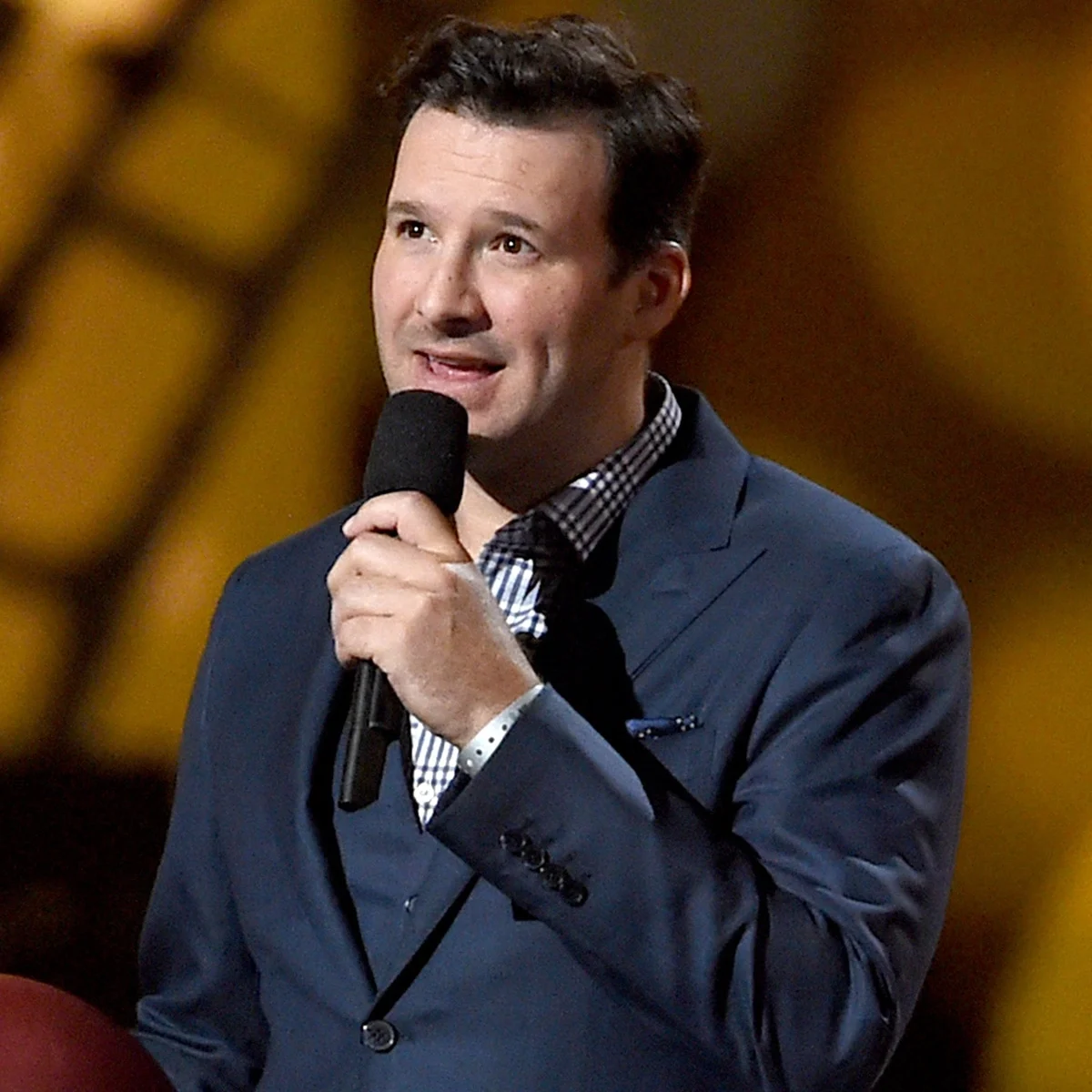
The landscape of professional sports often demands a level of physical and mental resilience that can push athletes to their absolute limits. For many, the cost of that endurance is a battle fought long after the final whistle. Recently, the sports world witnessed a somber milestone in this ongoing narrative as former Dallas Cowboys quarterback and prominent NFL analyst Tony Romo announced his departure from CBS Sports. This professional transition follows his arrest in Wisconsin for operating a vehicle while impaired (OWI)—a moment that has prompted a candid, public reckoning with the dangers of pain medication dependency and the subsequent, often hidden, struggle with alcohol.
The Sequence of Events: From Field to Fallout
The events leading to this career pivot were set in motion in July, when Romo was arrested in Wisconsin for operating a vehicle while impaired. The incident, which occurred during the NFL offseason, resulted in immediate professional consequences. CBS Sports placed the veteran analyst on an indefinite leave of absence shortly after the report surfaced.
According to official arrest records obtained by the media, Romo performed poorly during a standard field sobriety test at the time of his detainment. In the months that followed, the former Pro Bowler took full ownership of the situation, pleading no contest to the civil offense. On October 2, CBS Sports officially confirmed that the two parties had mutually agreed to part ways. J.J. Watt, who had stepped in during Romo’s leave, will continue to serve as the lead analyst alongside Jim Nantz and Tracy Wolfson for the remainder of the season.
Anatomy of an Addiction: The Path to "Over-Reliance"
In a vulnerable and detailed statement shared via Instagram in September, Romo pulled back the curtain on the factors that led to his arrest. He spoke openly about the physical toll of his legendary NFL career, specifically citing multiple back surgeries that ended his playing days prematurely.
"Those surgeries left me with constant, debilitating pain," Romo explained. "That pain led to a dependence on pain medication, and my efforts to get off those medications led to an over-reliance on alcohol."
Romo’s admission highlights a common, yet frequently stigmatized, pathway to addiction among professional athletes. The transition from the high-octane environment of the NFL to the relative stillness of a broadcast booth does not necessarily turn off the chronic pain signals born from years of high-impact trauma. When traditional pain management becomes unsustainable, the resulting void is often filled by substances that promise relief, inadvertently creating a secondary, more complex cycle of dependency.
Professional Implications and the "New Chapter"
The termination of his contract with CBS marks the end of a nine-year tenure for Romo. Since his retirement from the Dallas Cowboys in 2017, he had been widely regarded as one of the most insightful voices in NFL broadcasting. His departure leaves a significant vacancy in the network’s top-tier commentary team.
Romo’s response to the separation was one of professional grace and personal focus. "I approached my role as a game analyst the way I’ve approached everything in my life—with a desire to win and be the best that I can be," he stated. "I’m going to use this time to take a break, something I’ve never done before, and focus on my health and my family before moving on to my next opportunity."
The Culture of Silence: Broader Contexts of Athlete Sobriety
Tony Romo’s story is not an outlier in the world of professional athletics. As he navigates his path toward recovery, he joins a growing cohort of public figures who have begun to dismantle the stigma surrounding substance abuse, addiction, and mental health.
The history of professional sports is replete with cautionary tales of athletes struggling with the physical and psychological pressures of their careers. From NBA stars like Lamar Odom, who survived a near-fatal overdose, to iconic actors like Anthony Hopkins, who has celebrated 50 years of sobriety, the narrative of the "rock bottom" is increasingly being replaced by a narrative of "active recovery."
The "Functional" Addiction Myth
One of the most persistent themes among those who have successfully navigated sobriety is the myth of the "functional" addict. Many athletes and celebrities report that they were able to maintain high performance levels—or "crush it" in their respective fields—while harboring deep, secret dependencies.
Brantley Gilbert, the country music star, recounted that he kept bottles of liquor within arm’s reach at all times during the height of his career. "I was fully functioning," he admitted. "I wrote more songs then than I do now. That was the scary part." This ability to perform under the influence often delays the realization that a problem exists, as the individual equates their professional success with a lack of personal dysfunction.
The Role of External Intervention
Often, it takes an outside force—a spouse, a child, or a colleague—to break the cycle of denial.
- Bradley Cooper and Brad Pitt: In a notable example of peer support, actor Will Arnett confronted Bradley Cooper about his substance use, a move Cooper credits as the catalyst for his sobriety. Cooper later paid that forward, helping Brad Pitt embark on his own journey toward sobriety.
- Offset: The Migos rapper, who struggled with codeine addiction, found his "wake-up call" in his young son. After his son mimicked his behavior regarding soda consumption, the rapper realized the gravity of the influence he held, leading him to choose sobriety for the sake of his family.
- Jamie Lee Curtis: In a harrowing account of addiction, Curtis revealed that her ten-year struggle with opiates ended only after she stole her sister’s prescribed medication, a moment of profound shame that forced her to admit her reality to her husband and seek professional help.
The Science and Philosophy of Recovery
Modern recovery is increasingly viewed not just as a behavioral adjustment, but as an educational and medical imperative. Lamar Odom, speaking on the nature of his own addiction, emphasized the importance of treating substance use disorder as a "brain disease."
"If you do your education, you realize addiction is a brain disease, just like cancer or any other disease," Odom remarked. This perspective shifts the focus from moral failing to medical necessity. It allows individuals like Romo and Odom to move away from self-flagellation and toward a structured, clinical approach to health.
For others, the path is defined by a search for "clarity." Tom Holland, the Spider-Man star, noted that stopping his daily consumption of alcohol provided him with better sleep and improved mental clarity, allowing him to "handle problems better" on set. Similarly, Ryan Phillippe and Jax Taylor have spoken about the spiritual and mental freedom that accompanies the breaking of chemical dependencies, describing sobriety as a way to reconnect with their authentic selves.
Conclusion: The Harder Step
Tony Romo’s final words on the matter resonate with the universal struggle of any person attempting to rebuild their life after a public failure: "The harder and more important step is examining the path that brought you here and making the changes necessary to move forward. That path requires honesty."
As the sports world watches, Romo is now working with a team of medical professionals to address his health. His story serves as a reminder that even those who have reached the pinnacle of their professions are not immune to the pressures of chronic pain and the subsequent risks of dependency. By prioritizing his health over his career, Romo is participating in a necessary, if difficult, dialogue—one that emphasizes that the most significant "win" in any athlete’s life is not on the scoreboard, but in the ongoing, daily commitment to personal integrity and well-being.
For the millions of fans who have followed his career, his legacy may ultimately be redefined not by his touchdown passes or his broadcast insights, but by his willingness to stand up, take responsibility, and begin the arduous, honest work of getting better.
 Sagoh
Sagoh
 Siti Muinah
 Nana
Nana
