

In the landscape of modern cinema, few collaborations have generated as much pre-release intrigue as the union of visionary director Tony Gilroy and global icon Pedro Pascal. Their latest project, Behemoth!—which served as the centerpiece selection at this year’s New York Film Festival—is more than a standard character study. It is a dense, rhythmic, and emotionally harrowing exploration of a world-renowned cellist grappling with the dissonance of his own personal life.

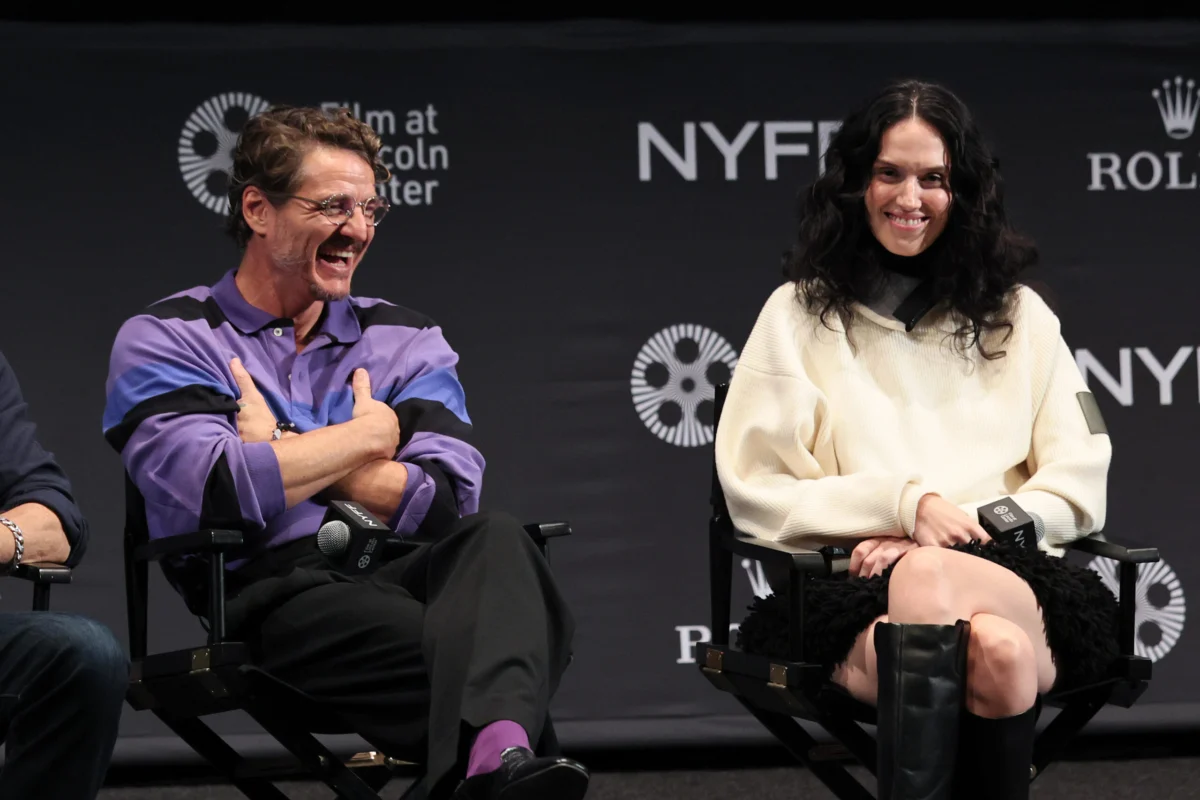
As the film makes its way to wider audiences, the discourse has shifted from the director’s pedigree to the extraordinary commitment of its lead. At a press conference held Friday morning in New York, both Gilroy and Pascal offered a rare, candid look behind the curtain of a production that demanded total artistic immersion.

The Physicality of the Performance: A Seven-Week Metamorphosis
The most striking aspect of the Behemoth! production is not the elaborate set design or the sprawling narrative, but the literal music emanating from the screen. Both director and actor were emphatic: when you see fingers dancing across the strings of a cello in the film, those are Pedro Pascal’s fingers.

"The cello was the main character of my life for the seven weeks leading up to shooting," Pascal remarked to the press. "It overlapped with learning my lines for the movie. I took it with me everywhere; that was Tony’s advice. You’re supposed to spend a year really learning how to hold the bow correctly, and I had a week. It was the hardest thing that I’ve ever done creatively."

Pascal described the preparation as a dichotomy of suffering and enlightenment. "It was hell and heaven," he joked, noting the sight of himself navigating Los Angeles with a bulky cello case strapped to his back. For an actor known for his work in high-stakes genre pieces like The Mandalorian and The Last of Us, this role represented a departure into a quiet, technical, and deeply introspective space.

The "Three-Hour Prenup": A Genesis Story
The partnership between Gilroy and Pascal was forged in a setting that felt more like a boardroom negotiation than a traditional creative meeting. Before Pascal was formally offered the role of Alex Serian—a child prodigy whose musical genius is inversely proportional to his ability to maintain adult relationships—Gilroy insisted on a stark, no-nonsense conversation.

"It was a come-to-Jesus meeting," Gilroy recalled. "It was like a three-hour prenup in a bar where I told him, ‘We don’t have a lot of time to make this movie. This is what we need you to do, and this is what you need to do. The only wrong answer is yes if you don’t really mean it.’"

The intensity of the director’s demand was not lost on Pascal, who admitted that his initial response was one of profound honesty. "That’s why my answer was, ‘I really don’t know,’" Pascal laughed. "I understood the assignment, but I couldn’t tell him I was going to get an A."

Ultimately, Pascal’s dedication paid off. Gilroy, a filmmaker known for his perfectionism and his work on projects like Michael Clayton and Duplicity, was effusive in his praise. "His playing was super-clean," the director stated. "Alex was sort of sitting there waiting in my mind, but he wasn’t really there until Pedro came onboard."

Chronology of a Passion Project: From Rogue One to the Concert Hall
The story of Behemoth! is rooted in Tony Gilroy’s own history. In the 1970s, a young Gilroy pursued a career as a musician, trekking from New York to Boston and eventually Los Angeles in hopes of finding a place as a studio session player.

"I realized, ‘I am not a studio musician,’" Gilroy admitted, a realization that spurred him to pivot toward screenwriting—a career that would eventually make him one of Hollywood’s most respected architects of narrative. Yet, the specific, high-pressure world of the studio musician never left him.

The kernel of the film began to germinate during the tumultuous production of 2016’s Rogue One: A Star Wars Story. Amidst the intensity of recording sessions with a 100-piece orchestra and choir, Gilroy found himself captivated by the atmosphere. "I thought, ‘Man, why is there not a movie here?’" he said. "So I researched the hell out of it. I have been so happy making this movie for the last two years; it’s not fair."

The Structural Puzzle: An Emotional Journey
Pascal described reading the script for Behemoth! as an act of discovery. "It felt like a puzzle that I was asked to put together," he explained. The film utilizes a non-linear, time-skipping narrative that mirrors the protagonist’s fractured psyche. Alex moves through relationships with a rotating cast of partners—ranging from a passionate violinist (Eva Victor) to the intense wife of a wealthy orchestra donor (Olivia Wilde)—without ever fully settling into himself.

"It was unusual to read something that was so intentional in the way it jumped around in time," Pascal added. "The emotional condition or relationship he’s in is a puzzle that the character is putting together as you are, while reading it or watching it. He seems like a person who is as much a passenger to his life as you are a passenger to his experience as a viewer."

The "Behemoth Collective": An Unprecedented Musical Strategy
Perhaps the most ambitious aspect of the production is the score. Rather than hiring a single composer, Gilroy assembled what he calls the "Behemoth Collective"—a supergroup of nine elite film composers, including Oscar titans James Newton Howard, Alan Silvestri, and Michael Giacchino.

"James was my ambassador," Gilroy explained. "My goal was to get two composers before the agents figured out what I was doing. So I tried to create FOMO, and make people go, ‘Oh, that sounds cool, I want to be part of that.’"

This collaborative experiment raises fascinating questions for the upcoming 2027 awards season. Can a score composed by nine individuals be considered as a singular entity by the Academy? It remains a point of intense speculation among industry experts.

Oscar Implications: Where Does Behemoth! Land?
With the film’s premiere, the speculation regarding its performance at the 2027 Oscars has intensified. While the score is a lock for attention, the acting categories remain more complex.

Best Actor: The Competitive Field
Pedro Pascal currently sits at No. 7 on the Gold Derby leaderboard. The consensus is that his performance is internal and subtle—a stark contrast to the louder, more "transformative" roles often favored by the Academy. He is currently trailing heavyweights like John Malkovich (Wild Horse Nine) and Andrew Scott (Elsinore). Whether his performance in Behemoth! has the "campaign volume" to break into the top five remains to be seen.

Best Original Screenplay: A Difficult Climb
Gilroy, a veteran of the awards circuit, faces a steep hill in the screenplay category. The current landscape is dominated by the dark, biting humor of Martin McDonagh’s Wild Horse Nine and the cultural relevance of Jesse Eisenberg’s The Debut. While Gilroy’s script is structurally brilliant, our experts currently rank it at No. 8, suggesting that Searchlight will need a aggressive marketing push to propel the film into the top tier.

Conclusion: A Testament to Intentionality
Behemoth! is, above all, a film about the cost of genius. By forcing his lead actor to undergo the same rigorous, transformative process as the character he portrays, Tony Gilroy has created a film that vibrates with authenticity.

Whether it sweeps the awards or remains a critical darling, the film stands as a bold, intentional piece of storytelling. For Pedro Pascal, it is a career-defining turn—a reminder that sometimes, the most profound music is the kind played in the silence of one’s own, messy, and beautifully complicated life. As the industry watches, one thing is certain: the collaboration between the director of Andor and the star of The Last of Us has produced a film that demands to be heard.
 Ammar Sabilarrohman
 Sagoh
Sagoh
 Nila Kartika Wati
