

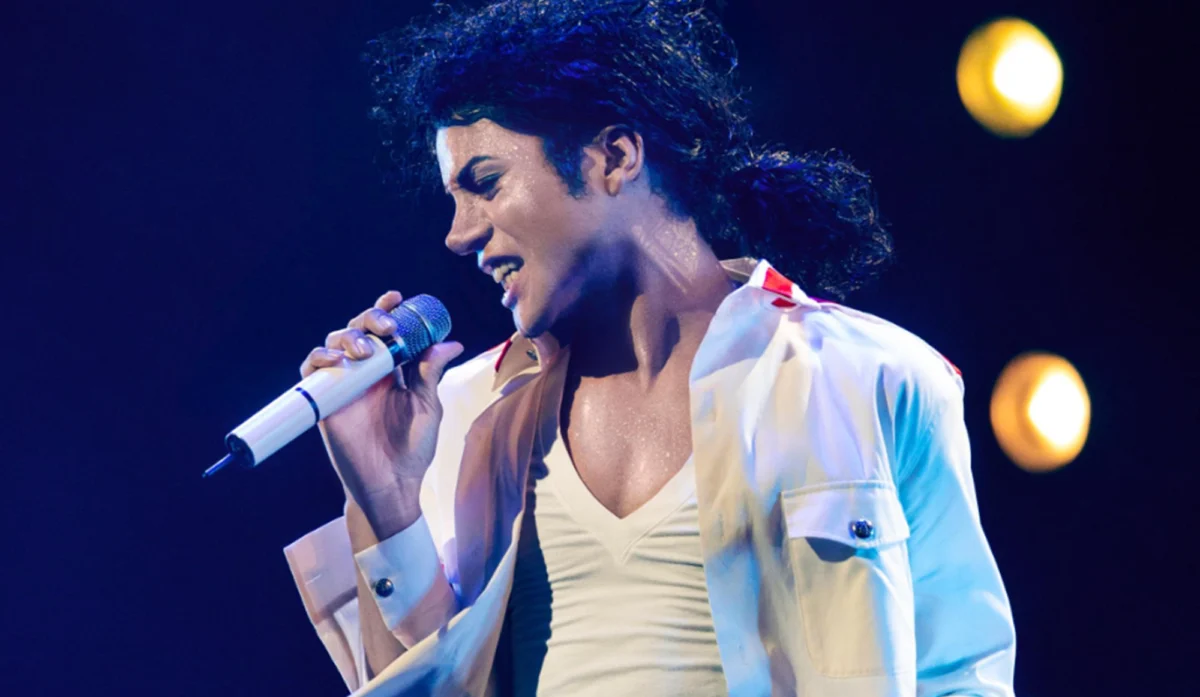
In the high-stakes world of Hollywood prognostications, the gap between a pre-release assumption and a box-office reality can be as vast as it is unforgiving. When the musical biopic Michael first arrived in theaters this past April, the consensus among industry insiders and awards pundits was, at best, tepid. Early analysis suggested that while the film might offer spectacle, it lacked the narrative weight required for serious Academy Award consideration. At Gold Derby, our initial assessment reflected this skepticism: we praised the charisma and technical proficiency of the lead performers—Jaafar Jackson, who masterfully captures the King of Pop in his prime, and Juliano Valdi, the young talent portraying the Jackson 5-era spark plug—but ultimately concluded that neither would be a major player in the Oscar mix.

We stand corrected. As the dust settles on an extraordinary box-office run, it has become clear that Michael is not merely a commercial juggernaut—having smashed records to become a billion-dollar global phenomenon—but a legitimate, "above-the-line" contender for the upcoming awards season.

A Chronology of Success: From Underdog to Frontrunner
The trajectory of Michael since its April debut serves as a masterclass in defying critical expectations. Following its release, the film faced a barrage of mixed reviews, with many critics questioning the narrative approach taken by director Antoine Fuqua. However, the disconnect between the critical establishment and the general public proved to be profound.

By mid-summer, the film’s momentum was undeniable. Audiences were not just watching Michael; they were championing it. The film’s ability to bridge generations, combined with the uncanny, transformative performance of Jaafar Jackson, turned the biopic into a cultural event. By August, it was evident that the film had bucked the negative critical trends, securing its place as a massive commercial success.

This momentum has now translated into the awards conversation. As of our latest tracking, Michael currently sits at No. 16 in our overall Best Picture odds. More impressively, the lead performance has gained significant traction, with Jaafar Jackson firmly entrenched in the Top 10 for Best Actor. Our initial assessment was not entirely off-base, however; we correctly identified Colman Domingo as a force to be reckoned with in the supporting race, and he currently ranks at No. 8, further validating the film’s strength across multiple categories.

Dissecting the Data: Why ‘Michael’ Is Moving Up
The shift in the award-season landscape is best understood through a granular look at the current projections. In the race for Best Film Comedy/Musical Actor, Jaafar Jackson has demonstrated remarkable staying power. Since we began tracking the Golden Globes and the Screen Actors Guild (SAG) awards, the film’s breakout star has cemented himself as a serious contender.

Currently, he is trending toward a nomination for Best Musical/Comedy Actor at the Golden Globes, where he holds the fourth spot in what is shaping up to be a competitive six-person showdown. While Lionsgate has yet to officially declare its strategy for the film—specifically whether it will push for placement in the Drama or Musical/Comedy categories—the strategic advantage of the latter is clear.

Recent musical biopics, such as A Complete Unknown, Elvis, and the Academy Award-winning Bohemian Rhapsody (which shares producer Graham King with Michael), have historically gravitated toward the Drama category. However, a pivot to Musical/Comedy could provide a clearer path to victory for Jaafar Jackson. The decision remains a delicate balancing act for the studio, which must weigh the historical prestige of the Drama category against the tactical benefits of a less crowded field in the Musical/Comedy race.

The International Factor: Navigating a Complex Legacy
Any discussion of Michael must contend with the polarized legacy of its subject. While the film has achieved immense commercial success, it has also been the subject of intense debate regarding how it handles the controversies that defined the later years of Michael Jackson’s life.

It is here that the composition of the voting bodies becomes crucial. International voters, who now make up a significant portion of the Golden Globes’ voting body, have historically shown a different sensibility toward global icons than their U.S.-based counterparts. There is a growing sentiment among industry observers that international voters are more likely to prioritize the cultural impact and artistic legacy of the King of Pop, potentially looking more favorably upon the film than domestic voters, who may be more preoccupied with the unresolved abuse allegations that are notably absent from the film’s narrative.

This cultural divide could prove to be the deciding factor in whether Michael secures a Best Picture nomination or finds itself relegated to technical and acting categories.

Implications for the Studios and the Academy
The success of Michael presents a fascinating dilemma for the Academy of Motion Picture Arts and Sciences. Historically, the Academy has been hesitant to fully embrace films that lack critical consensus, even when those films dominate the box office. Yet, the sheer scale of Michael’s success cannot be ignored.

For Lionsgate, the next few months will be defined by the "For Your Consideration" (FYC) campaign. The studio has a golden opportunity to frame the film not just as a musical, but as a cultural phenomenon that demands recognition. If the studio manages to steer the narrative effectively, they could see nominations not only for Jaafar Jackson but in technical categories like Sound, Cinematography, and perhaps even Best Picture.

However, the "giant asterisk" remains. These are still early days in the race, and the landscape is volatile. We have yet to see how the industry will react when the major guild awards—the bellwethers of Oscar success—begin to roll out. The path forward for Michael is fraught with complexity, but for the first time in the 2026 cycle, it is clear that the film is not just participating in the conversation; it is leading it.

A Final Assessment: The Road to the Dolby Theatre
As we look toward the final stretch of the year, the performance of Jaafar Jackson remains the most compelling element of this narrative. It is rare for a newcomer to step into such an iconic role and survive, let alone thrive, under the scrutiny of the public eye. His ability to channel the late icon’s signature moves, charisma, and vulnerability has silenced many of his earliest critics.

Whether or not this translates into an Academy Award nomination will depend on the strength of the competition—a field that includes seasoned veterans and other high-profile contenders like Tom Cruise, whose recent film Digger has seen its own, far less favorable, trajectory. While Cruise has long been a darling of the industry, his current struggles with critical reception create a vacuum that Michael is perfectly positioned to fill.

In the final analysis, Michael represents the quintessential Hollywood awards story: a film that was dismissed as a potential misfire, only to prove its worth through the sheer weight of its cultural resonance. The Academy is often accused of being out of touch with the public, but should they choose to acknowledge Michael this year, it would be an admission that they are listening to the audience just as much as they are listening to the critics. As we continue to track the odds, one thing is certain: the King of Pop is back in the spotlight, and this time, he is not going anywhere.
 rifanmuazin
 Raul Delapena Setiawan
 Siti Muinah
