

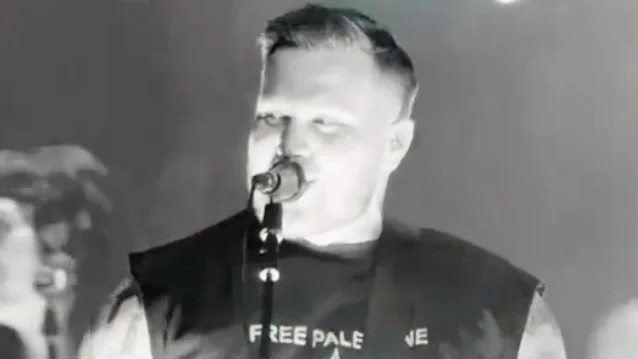
FOXBOROUGH, Mass. — Alternative country superstar Zach Bryan delivered a high-stakes political statement during his sold-out concert at Gillette Stadium on Friday night, stepping onto the stage wearing a t-shirt emblazoned with the words "Free Palestine." The sartorial choice instantly reverberated far beyond the stadium floor, serving not only as a global human rights declaration but also as a direct and provocative message directed at the venue’s billionaire owner, Robert Kraft.
The high-profile demonstration immediately drew parallels to a similar controversy involving rapper Macklemore just weeks prior, transforming a routine weekend tour stop into the epicenter of a fierce debate regarding artistic expression, political speech, and the boundaries of corporate control over performance spaces. As social media footage flooded platforms like TikTok and X, the music industry found itself once again grappling with the intersection of popular culture and geopolitical activism.
Main Facts
The core of the unfolding controversy centers on Zach Bryan’s wardrobe choice during the opening night of his two-night stint at Gillette Stadium in Foxborough, Massachusetts.
- The Statement: Bryan performed wearing a plain t-shirt explicitly displaying the phrase "Free Palestine," a message calling for Palestinian self-determination and an end to the ongoing humanitarian crisis in Gaza.
- The Location Context: The choice of venue added profound context to the gesture. Gillette Stadium is owned by New England Patriots and New England Revolution owner Robert Kraft, a prominent philanthropist and businessman who has maintained vocal, high-profile stances regarding Middle Eastern politics and Jewish advocacy.
- The Precedent: Bryan’s shirt directly mirrors the sentiment expressed by rapper Macklemore last month while the latter was performing as an opening act for Ed Sheeran. Macklemore’s vocal support for Palestine ultimately triggered a reported pressure campaign led by Kraft, which resulted in the rapper being dropped from subsequent tour lineups.
- Current Status: Bryan is slated to perform the second night of his Gillette Stadium residency on Saturday. Representatives for Robert Kraft and the Patriots organization have been approached for comment, though no official statements have been released as of publication time.
Chronology of Events
To fully understand the weight of Zach Bryan’s demonstration, it is necessary to trace the sequence of events connecting the Foxborough stage back through recent controversies in the live music touring circuit.
September 2026: The Macklemore Precedent
The friction between major venue stakeholders and artists expressing pro-Palestinian sentiments came to a head last month during Ed Sheeran’s stadium tour. Rapper Macklemore, serving as a supporting act, used his stage time to voice solidarity with Palestine.
Reports quickly emerged that Robert Kraft—known for his extensive philanthropic investments in combating antisemitism and supporting Israeli causes through the Foundation to Combat Antisemitism—took swift exception to the display. Behind-the-scenes pressure mounted, resulting in Macklemore’s removal from the remaining dates of the tour. The incident established a hardline precedent regarding what certain stadium executives would tolerate within their privately owned, publicly operated mega-venues.
Friday Night: Bryan Takes the Stage
Stepping into the lions’ den of Gillette Stadium on Friday, October —, Zach Bryan subverted expectations of corporate compliance. Rather than offering a standard, apolitical performance, the "Something in the Orange" singer-songwriter walked out for his headline set wearing the unmistakable "Free Palestine" shirt.
Concertgoers immediately recognized the significance of the apparel. Fan-shot videos capturing Bryan performing tracks like Warren Zevon’s "Lawyers, Guns and Money" quickly circulated online. The visual juxtaposition of a massive mainstream country-folk star making a progressive political statement inside a venue owned by a staunch political conservative sent shockwaves through the stadium and online fan communities.
Saturday: The Residency Continues
As of Saturday morning, anticipation surrounds Bryan’s second consecutive sold-out show at Gillette Stadium. Security and venue logistics remain standard, but industry insiders are watching closely to see whether Bryan will double down on his statement, alter his wardrobe, or if venue management will attempt to implement reactive measures.
Supporting Data and Cultural Context
The intersection of country music, Americana, and progressive political speech has historically been volatile, though the genre has experienced a significant demographic shift in recent years.
The Evolution of the Country Outlaw Tradition
Zach Bryan has built his immense multi-platinum career largely outside traditional Nashville machinery, cultivating an image as an independent-minded working-class troubadour in the vein of classic outlaw country artists. While traditional country music audiences have frequently skewed conservative, artists like Bryan, Tyler Childers, and Sturgill Simpson have increasingly attracted a diverse, politically heterogeneous fanbase that embraces anti-establishment themes.
By wearing a "Free Palestine" shirt in a venue controlled by a member of the corporate and sports elite, Bryan tapped directly into the anti-authoritarian roots of the genre. The move challenges the notion that massive stadium headliners must remain politically sanitized to protect their commercial viability.
Digital Amplification
Within hours of Friday’s concert, the demonstration became a trending topic globally. TikTok videos shared by users such as @robotcommander and @martinahhv garnered hundreds of thousands of views, with comments sections sharply divided between praise for Bryan’s courage and criticism of mixing politics with entertainment.
This digital footprint ensures that regardless of how venue executives choose to handle the physical premises, the message has already achieved viral saturation, outstripping the localized impact of a single stadium performance.
Official Responses and Industry Reactions
As a developing story, official statements from key stakeholders remain sparse, but the ripple effects across the music and sports industries are palpable.
Robert Kraft and Gillette Stadium Management
Robert Kraft, head of the Kraft Group, has not yet issued a personal statement regarding Bryan’s demonstration. However, given his swift and decisive actions in the Macklemore incident weeks prior, industry analysts are speculating whether similar punitive measures or contractual fallout will occur.
Gillette Stadium operates under strict private management guidelines. While artists rent the facility for performances, venue owners retain broad operational rights regarding future bookings, merchandising approvals, and backstage access. Observers are questioning whether Gillette Stadium will bar Bryan from future bookings—a heavy financial and cultural penalty for any touring act.
Zach Bryan’s Camp
True to his idiosyncratic public relations style—often characterized by direct communication with fans via social media rather than traditional press releases—Bryan has not issued a formal manifesto explaining his wardrobe choice. The shirt, much like his raw, unpolished lyricism, was left to speak for itself.
Implications for Live Music and Free Expression
The confrontation between Zach Bryan and the implicit rules of corporate-owned performance spaces highlights a growing crisis within the live entertainment industry.
The Corporate Sanitization of Concerts
Mega-venues like Gillette Stadium, MetLife Stadium, and SoFi Stadium are multi-billion-dollar corporate ecosystems. They rely heavily on corporate sponsorships, family-friendly branding, and risk-averse management. When artists utilize these stages to make polarizing geopolitical statements, venue owners find themselves caught between protecting their personal convictions, appeasing corporate partners, and respecting the First Amendment rights of performers.
However, legal experts point out that the First Amendment protects citizens from government censorship, not from private property owners imposing rules of conduct. Consequently, venue owners like Kraft hold immense leverage over performers who rely on major stadiums to accommodate their massive fanbases.
A New Standard for Artist Activism?
Bryan’s decision to follow Macklemore’s footprints—albeit in a vastly different genre and under the direct nose of the executive who penalized Macklemore—suggests that a subset of contemporary artists are increasingly unwilling to self-censor. For an artist of Bryan’s magnitude, whose commercial power gives him rare leverage within the industry, the risk of blacklisting is balanced by the fierce loyalty of a fanbase that values authenticity above corporate polish.
As the second night at Gillette Stadium approaches, the music world watches to see whether this moment will be treated as an isolated act of defiance or the catalyst for a broader reckoning regarding who controls the narrative inside America’s largest concert halls.
This is a developing story. Updates will be provided as official statements and industry reactions become available.
 Ali Ikhwan
 Nana
Nana
 Nila Kartika Wati
