

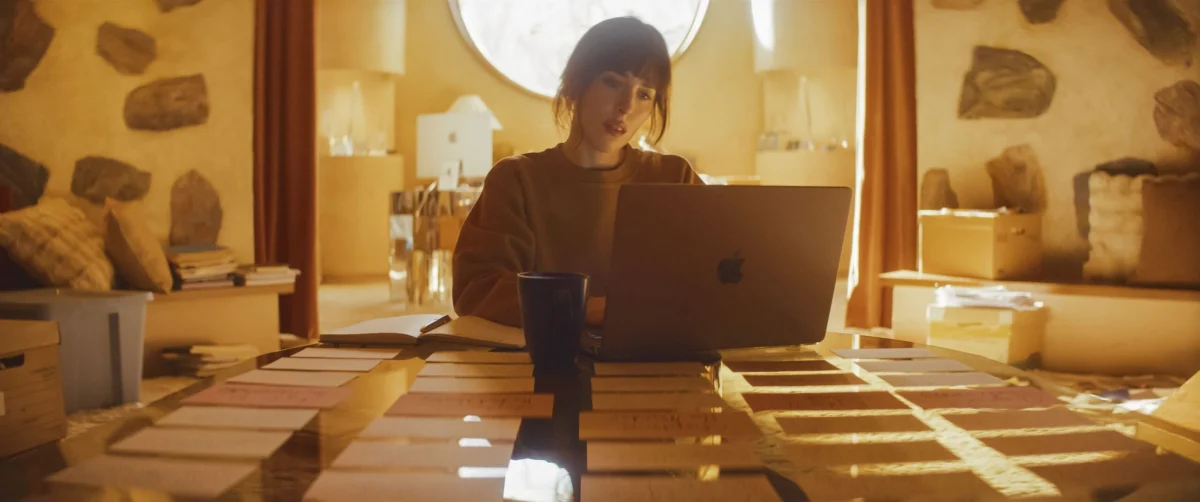
In the pantheon of contemporary psychological thrillers, few adaptations have generated as much fevered anticipation as the screen version of Colleen Hoover’s Verity. Directed with a sharp, voyeuristic lens, the film brings to life the claustrophobic tension of a ghostwriter tasked with finishing the masterpiece of a critically injured, iconic author. Starring Anne Hathaway as the enigmatic Verity Crawford and Dakota Johnson as the struggling writer Lowen Ashleigh, the film is more than just a battle of wits—it is a study in atmospheric dread, anchored by a setting that functions as a silent, malevolent protagonist.
For fans of the New York Times bestseller, the transition from page to screen is defined by a masterclass in location scouting. While the narrative is firmly rooted in the isolated, frost-bitten woods of Vermont, the reality of the production reveals a sophisticated architectural sleight-of-hand. By blending the frantic, concrete energy of New York City with the deceptive, modern elegance of Westchester County, the production team has crafted a visual language that mirrors the duplicitous nature of its lead characters.
The Architectural Villain: Finding the Crawford Estate
The cornerstone of the film’s visual identity is the Crawford home. In the novel, the house is a bastion of solitude, a place where secrets are buried beneath floorboards and trapped behind the eyes of its inhabitants. For production designer Amy Williams and location manager Elizabeth Krekel, the mandate was clear: the house needed to be modern, ominous, and imposing.
"We were looking for something that felt like a trap," notes Krekel. The search led the team away from the literal woods of New England and into the affluent enclaves of Westchester, New York. There, they discovered Beckoning Path, a sprawling property designed by the renowned Danish sculptor and designer Jens Quinsgaard.

The estate is a marvel of angular geometry, characterized by striking V-shaped windows—a subtle, perhaps intentional, nod to the name "Verity." However, the home was not simply chosen for its aesthetic; it was chosen for its capacity to unsettle. "The house is like a shipwreck at sea," says Williams. "It’s beautiful, yet it’s inherently broken."
To maintain the narrative continuity, the crew had to perform extensive modifications. Because the book offers few concrete descriptors of the home’s interior, the design team took "big swings," adding custom walls, towering bookshelves, and a color palette of deep, unsettling pinks to complement Hathaway’s presence. The office, in particular, was designed with input from both director Michael Showalter and Anne Hathaway, who serves as a producer. The result is a space that feels simultaneously like a "Hollywood dream" and a "villain’s lair," where mirrors serve as both vanity pieces and portals into the dark history of the Crawford family.
A Chronology of Deception: From Manhattan to the Mountains
The film’s structure follows a deliberate descent from the familiar into the nightmarish. The geography of the film serves as a map of Lowen’s psychological unraveling.
1. The Literary Origins (Books Are Magic)
The story opens in the vibrant, indie-bookstore culture of Brooklyn. To capture the essence of Lowen’s world—an intellectual, somewhat isolated life—the crew filmed at Books Are Magic in Carroll Gardens. For viewers, this setting establishes Lowen as a "writer’s writer," grounded in a community that feels miles away from the high-stakes, cutthroat world of the Crawfords.

2. The Midtown Collision
The inciting incident occurs at the intersection of Park Avenue and East 41st Street, a stone’s throw from Grand Central Station. This location was chosen for its chaotic, high-energy texture. "It was the perfect location for that Midtown hustle," Williams notes. It is here that the paths of Lowen and Jeremy Crawford (Josh Hartnett) cross in the shadow of a fatal accident—a grim omen for the tragedy that permeates the rest of the narrative.
3. The Publisher’s Sanctum
In a rare move, the production team was granted access to the actual offices of Hachette Book Group, Colleen Hoover’s publisher. This sequence is a treasure trove for fans, filled with fictional book jackets of Verity’s bibliography and a hidden cameo by the author herself as a receptionist. The authenticity of the space lends a weight to the professional stakes of the film; it is not just a story about a house, but a story about the industry of lies.
4. The Financial District Flashbacks
As Lowen delves into Verity’s manuscript, the film frequently transports the audience into the past. These sequences, filmed at the Laissez Faire cocktail lounge in the historic Beekman Hotel, represent the "glamorous" side of the Crawford mystery. Drenched in red, the aesthetic here is sharp, high-end, and dangerous, providing a stark visual contrast to the muted, cold tones of the Vermont mountain home.
Supporting Data: The Logistics of "Disturbing" Cinema
The production of Verity was a seasonal undertaking, requiring the crew to navigate the mercurial weather of the Northeast. Filming across Manhattan, Brooklyn, Queens, and Upstate New York allowed the team to capture the atmospheric shifts that define the characters’ internal states.

The decision to film the lake scenes during the summer, while the rest of the film leans into the harsh, skeletal beauty of winter, was a calculated choice to emphasize the duality of the characters. The lake, existing naturally on the Westchester property, became a pivotal set piece—a place of serene beauty that, in the context of the plot, carries the weight of a crime scene.
Furthermore, the integration of local businesses, such as the Bavarian-style pub Zum Stammtisch in Glendale, Queens, provided a grounded, "real-world" anchor to the story. By moving the birthday dinner scene from an Italian restaurant (as described in the book) to a German tavern, the filmmakers embraced the "happy accident" of proximity to their sound stages, proving that location management is as much about logistics as it is about artistic intent.
Official Responses and Creative Direction
Director Michael Showalter and his team were acutely aware of the pressure inherent in adapting a fan-favorite novel. "There was a lot of conversation about what the house looks like," Williams admits. The team feared that fans might have imagined a "traditional" Vermont farmhouse—perhaps a quaint, cozy structure. By choosing a modern, brutalist-inspired property, the team risked alienating purists but ultimately aimed to elevate the source material.
"The book is even more disturbing," Williams remarked during a press briefing. The team’s goal was to translate that specific, visceral discomfort into a visual medium. This involved a heavy reliance on lighting and architectural framing. In the office scenes, for instance, the lack of visible books at first—followed by the reveal that mirrors conceal entire libraries—was a deliberate metaphor for the way Verity herself operates: she is a person who hides her true self behind layers of reflection and artifice.

Implications: The Legacy of the Setting
The cinematic geography of Verity suggests a new trend in psychological thriller production: the "location as character" philosophy. By refusing to rely on sound stages for the core of the film, the production team has created a tangible, immersive environment that forces the audience to experience the same sense of claustrophobia as Lowen.
The implications for the film’s success are significant. When a setting is so well-curated, it becomes a point of pilgrimage for fans. Books Are Magic and Zum Stammtisch are no longer just businesses; they are now part of the Verity lore. This synthesis of real-world geography and fictional tension creates a "verity"—a truth—that resonates far beyond the screen.
As audiences file into theaters to witness the "honest and bloody" prose of Verity Crawford come to life, they will be stepping into a world that feels both hauntingly familiar and deeply, unnervingly new. The house at Beckoning Path may not be in Vermont, but in the world of the film, it is the only place that could ever hold the secrets of the Crawford family. Through careful planning, expert design, and a willingness to embrace the unconventional, the production team has ensured that the "villain’s lair" will linger in the audience’s memory long after the credits roll.
 Iffa Jayyana
 Suro Senen
 Lina Hope
