

NEW YORK — Following months of arduous collective bargaining, escalating rhetoric, and the looming threat of picket lines, unionized workers at three of New York City’s most prominent cultural institutions have successfully ratified new labor agreements. The milestone affects staff at the Brooklyn Museum, the Solomon R. Guggenheim Museum, and the American Folk Art Museum (AFAM), marking a significant chapter in the ongoing wave of labor organizing sweeping the nation’s cultural sector.
While these three institutions narrowly averted crippling work stoppages through last-minute compromises, the broader museum labor landscape in New York remains intensely volatile. As cultural institutions grapple with post-pandemic economic realities, soaring operational costs, and declining philanthropic revenues, the friction between front-line museum workers and executive leadership has reached an all-time high.
Main Facts: A Landmark Moment for NYC Museum Labor
The recent flurry of contract ratifications represents a major consolidation of power for cultural workers across New York City. The agreements—achieved after months of sitting across the bargaining table—address core grievances that have fueled museum labor activism over the last half-decade: fair compensation, job security, transparent promotion pathways, and protection against sudden layoffs.
The scope of the recent agreements includes:
- The American Folk Art Museum (AFAM): Staff members overwhelmingly voted to ratify their very first collective bargaining agreement, a historic step for the institution that solidifies worker protections and establishes baseline pay scales.
- The Brooklyn Museum: Unionized workers successfully negotiated their second collective bargaining agreement, securing crucial updates to their prior contract amidst a turbulent year marked by financial restructuring and job cuts.
- The Solomon R. Guggenheim Museum: Staff similarly finalized their second contract, concluding a protracted negotiation period that had previously seen workers authorize a strike to protest stagnant wages and diminishing benefits.
Despite these breakthroughs, the victory for museum labor is far from universal across the city. The labor landscape remains deeply fractured. Even as Brooklyn, the Guggenheim, and AFAM celebrate finalized pacts, unionized workers at the Whitney Museum of American Art have taken a militant stance, setting a firm strike deadline for Monday, October 5. This showdown coincides directly with the VIP previews and high-profile opening of the museum’s blockbuster Roy Lichtenstein retrospective—a high-stakes timing strategy designed to maximize leverage against museum leadership.
Chronology of a Crisis: From Organizing Waves to Strike Authorizations
The road to these contract ratifications was paved with rising tensions, public rallies, and escalating labor actions that spanned the better part of two years.
Late 2024 to Early 2025: The Budgetary Storm
The seeds of the current labor crisis were sown amid severe financial pressures facing New York’s cultural institutions. Early in 2025, both the Brooklyn Museum and the Guggenheim came under intense public scrutiny after announcing sweeping, abrupt layoffs.
The Brooklyn Museum pointed to a staggering $10 million budget deficit as the justification for cutting dozens of positions. Simultaneously, the Guggenheim announced plans to lay off 20 workers, citing mounting financial constraints. These unexpected cuts shocked the museum community, sparking immediate protests from staff and intensifying union demands for strict employment safeguards, severance guarantees, and mandatory union notification regarding financial restructuring.
Spring 2026: Rallies and Joint Pressure
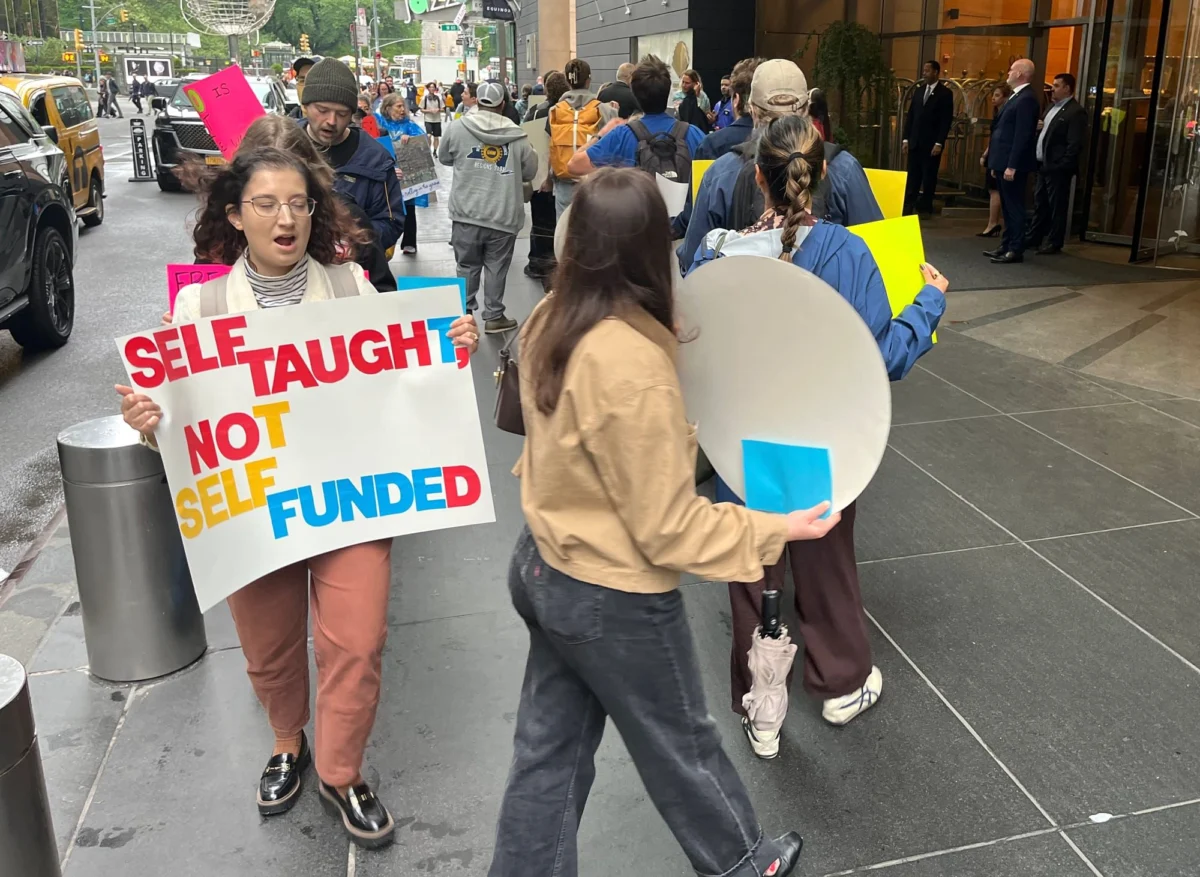
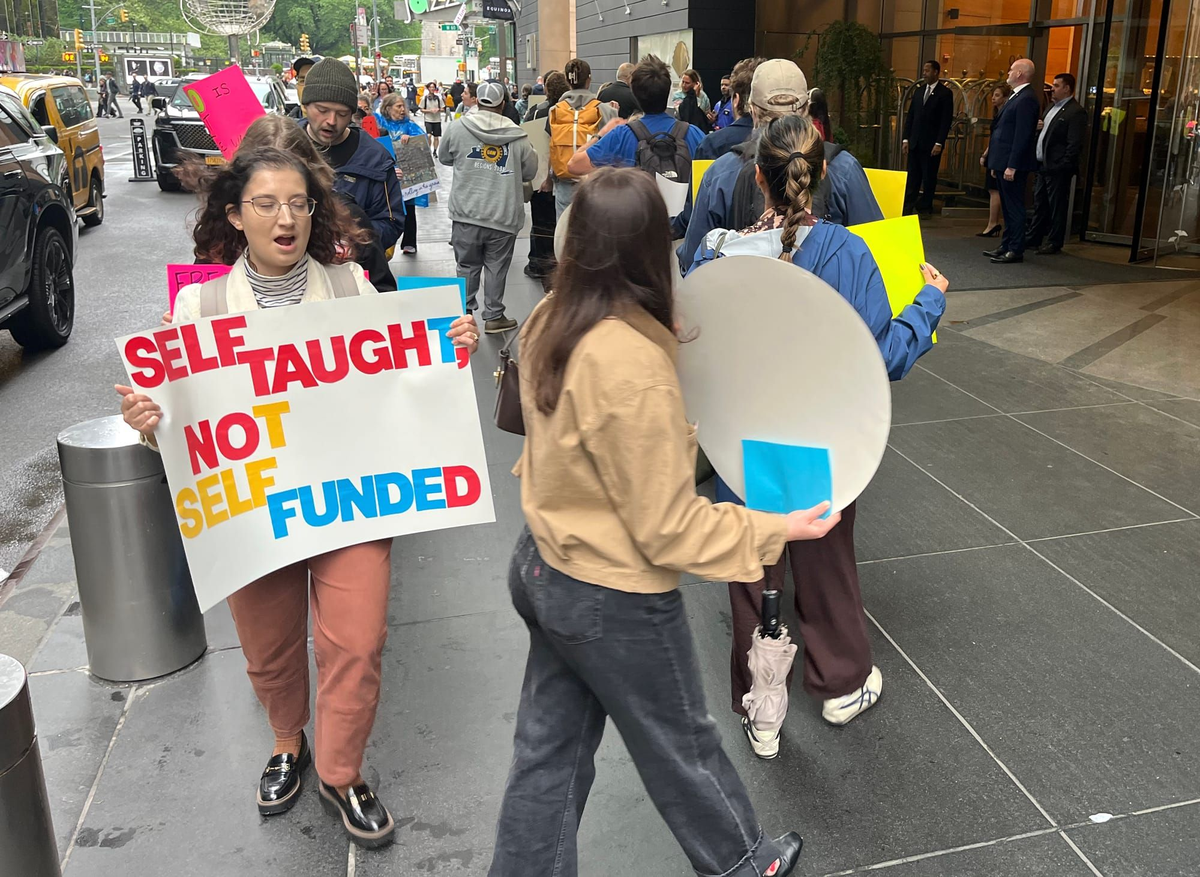
As negotiations dragged on through the spring of 2026, pressure mounted on museum boards. On May 6, 2026, workers at the American Folk Art Museum escalated their campaign by staging a noisy, highly visible rally outside the institution’s annual high-society gala held at the Mandarin Oriental in Manhattan. Clad in union gear and chanting slogans, workers brought their fight directly to the doorstep of the museum’s wealthiest donors and trustees.
June to September 2026: The Strike Authorization Wave
By mid-year, negotiations had hit major stumbling blocks across multiple institutions. Demonstrating unprecedented solidarity across the city’s cultural sector, unions representing staff at the Whitney Museum, the Brooklyn Museum, and AFAM jointly voted to authorize strike action in late summer, warning that walkouts would commence if management failed to deliver acceptable tentative agreements. They were quickly joined by the Guggenheim union, which had independently voted in favor of authorizing a strike at the end of June.
This coordinated pressure proved decisive for Brooklyn, the Guggenheim, and AFAM, forcing executive leadership back to the bargaining table to hammer out the compromises that ultimately led to the recent contract ratifications.
However, the Whitney Museum union—refusing to accept what it deemed insufficient concessions—chose a different path, pushing past the tentative agreement phase and setting its sights on a crippling autumn strike deadline.
Supporting Data: The Economic Realities of Museum Labor
To understand the tenacity of the museum union movement, one must examine the socioeconomic pressures facing cultural workers in New York City. For decades, the museum sector relied heavily on the prestige of employment to justify compensation packages that lagged far behind the cost of living in Manhattan and Brooklyn.
The Cost-of-Living Squeeze
With inflation surging through the post-pandemic years and rental prices in New York City hitting historic highs, entry- and mid-level museum workers—including educators, archivists, visitor service representatives, curators, and administrative staff—found themselves struggling to make ends meet. Many positions, despite requiring advanced degrees in art history, museum studies, or fine arts, offered starting salaries hovering near or below living wage thresholds for the metropolitan area.
Revenue Deficits vs. Executive Compensation
Museum directors and boards frequently cited post-pandemic attendance shortfalls, endowment pressures, and declining government grants to justify austerity measures. However, union researchers and labor advocates pointed to multimillion-dollar capital campaigns, lavish fundraising galas, and robust executive compensation packages as evidence of mismanaged priorities.
The layoffs at the Brooklyn Museum ($10 million deficit) and the Guggenheim were viewed by union organizers not as unavoidable tragedies, but as management choices that disproportionately targeted low- and mid-tier workers while shielding upper management from fiscal accountability. The newly ratified contracts represent an attempt to correct this power imbalance, introducing clauses that limit arbitrary terminations and establish transparent salary bands based on tenure and role.
Official Responses: Perspectives from Management and Labor
The wave of unionization and contract ratifications has forced cultural institutions to publicly reckon with a fundamental shift in their internal culture. The responses from museum leadership and union representatives highlight a widening philosophical gap regarding the operational identity of modern museums.
The Union Perspective: A Shift Toward Dignity
Representatives for the union coalitions have consistently framed these negotiations not merely as disputes over dollars and cents, but as moral imperatives regarding equity, respect, and professional dignity.
"Cultural workers love the art, the institutions, and the communities they serve, but passion cannot pay rent," said a spokesperson for the local museum workers union coalition. "For too long, the museum sector has exploited the dedication of its workforce, treating entry-level staff as disposable. These contract ratifications prove that when workers stand together, we can force institutions to live up to their progressive public facades by treating their own employees equitably."
Union leaders emphasized that the successful ratification at AFAM—their very first contract—serves as a beacon of hope for smaller and mid-sized cultural organizations that have historically resisted unionization efforts.
The Institutional Perspective: Balancing Financial Sustainability
Conversely, museum administrators and board members have expressed a more cautious, ledger-focused view of the proceedings, emphasizing the fragile economic ecosystem in which cultural centers operate.
In statements following the resolution of the contracts, representatives for the Brooklyn Museum and the Guggenheim acknowledged the hard work of the bargaining committees while subtly underscoring the financial acrobatics required to meet union demands.
"Our institution is deeply committed to supporting our dedicated staff, who are the lifeblood of our museum," an institutional spokesperson noted following the ratification of the Brooklyn Museum’s second contract. "Navigating these agreements required compromise from all parties during a time of significant economic transition. We look forward to moving forward together to fulfill our cultural mission for the public."
Management teams have privately and publicly worried that rigid contractual salary increases and strict staffing minimums could constrain their ability to respond to future economic downturns, potentially forcing cuts to public programming, exhibition scales, or operating hours.
Wider Implications: The Future of the Cultural Sector
The events unfolding across New York City’s museum landscape are far from localized anomalies; they form the leading edge of a national labor movement that is permanently reshaping the American non-profit and cultural sectors.
The Domino Effect on Other Institutions
The successful unionization drives and subsequent contract wins at major institutions like the Guggenheim, Brooklyn Museum, and AFAM have shattered the myth that cultural workers cannot successfully organize or sustain high-stakes labor actions. Smaller museums, historical societies, galleries, and botanical gardens across the United States are watching New York closely. The victories achieved in these negotiations provide a tested playbook for workers seeking to unionize institutions in Boston, Chicago, Los Angeles, and beyond.
The Shadow of the Whitney Strike
As the ink dries on the Brooklyn, Guggenheim, and AFAM contracts, all eyes in the art world are fixed on the impending October 5 strike deadline at the Whitney Museum. The decision to strike during the opening week of a major Roy Lichtenstein retrospective demonstrates a tactical evolution in museum labor strategy. Workers are no longer willing to strike quietly in the background or during slow seasons; they are leveraging the high-visibility, revenue-generating crown jewels of institutional programming to demand attention from trustees, donors, and the international press.
The outcome of the Whitney showdown will likely set a powerful precedent for how cultural institutions handle labor disputes moving forward. If the strike proceeds, it could cost the museum significant ticket revenue, disrupt high-society fundraising events, and generate negative publicity that prompts swift executive capitulation. Conversely, a failure of the strike could temper the current momentum of the cultural labor movement.
Redefining the Modern Museum
Ultimately, these labor struggles point to an existential identity crisis within the modern museum. For generations, cultural institutions operated under a paternalistic, corporate-charity model where executive boards held absolute, unquestioned authority over workplace conditions and artistic direction.
The rise of robust, militant museum unions signals the death of that era. Workers are demanding a seat at the table, insisting that social justice, equity, and fair labor practices must begin within the administrative offices and galleries of the museums themselves—not just on the canvas or in the exhibition catalog. As these three contracts demonstrate, the museum of the 21st century can no longer treat labor as an afterthought; it must negotiate as an equal partner with the people who keep its doors open to the world.
 Laily UPN
 Basiran
 Pevita Pearce
