

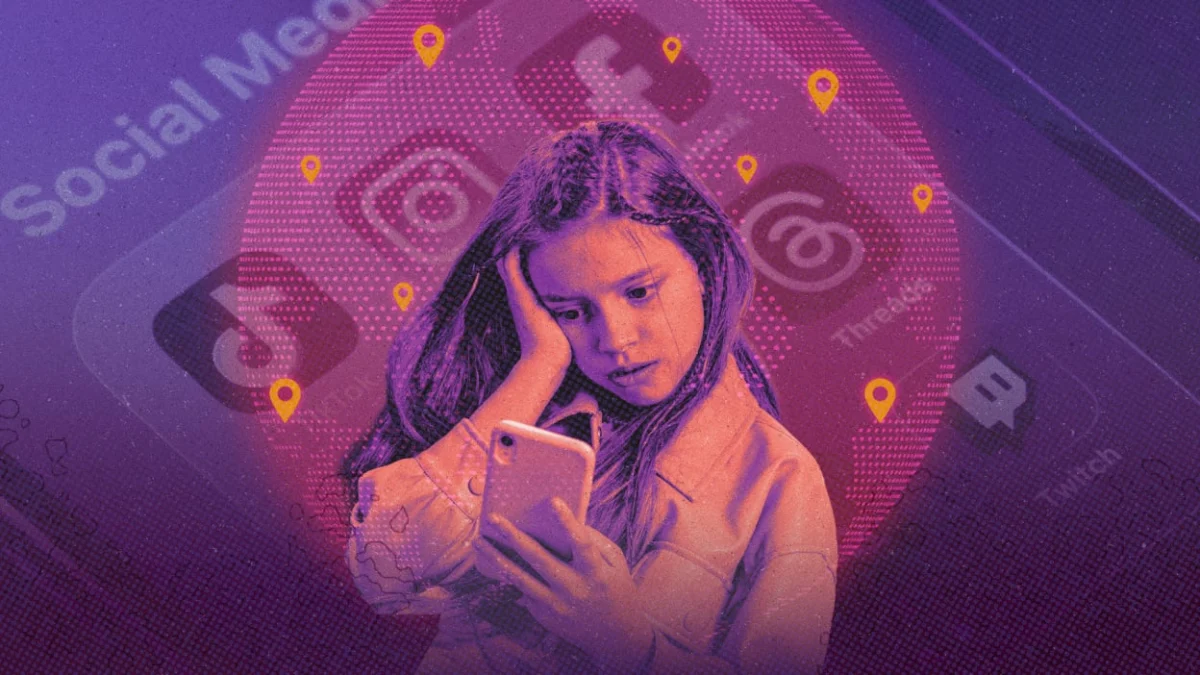
What began as a pioneering, albeit controversial, legislative experiment in the Southern Hemisphere has swiftly escalated into a global policy movement. Governments across the globe are increasingly treating Big Tech’s hold on young minds not as a parental challenge, but as a public health crisis requiring strict legislative intervention.
From comprehensive bans on account creation to mandatory age verification systems and the criminalization of addictive algorithmic loops, the landscape of the internet is undergoing a seismic shift. Lawmakers are citing alarming statistics regarding youth mental health, cyberbullying, exposure to violent and sexually explicit content, and addictive platform designs. Yet, these measures have simultaneously triggered fierce debates over digital privacy, free expression, and the practical effectiveness of technological workarounds.
Here is a comprehensive, global inventory of where nations stand on restricting social media access for minors, tracing the movement from its Australian catalyst to an emerging worldwide standard.
The Main Facts: A Paradigm Shift in Internet Regulation
The contemporary legislative wave is defined by a move away from voluntary digital literacy toward hard regulatory mandates. Rather than asking technology companies to self-police or encouraging parents to monitor screen time, sovereign nations are altering their legal frameworks to hold platforms directly liable.
At the core of these laws are several recurring mechanisms:
- Account Restrictions: Prohibiting minors (typically aged 14 to 16) from opening or maintaining profiles on major social networks, video-sharing platforms, and occasionally AI companions.
- Mandatory Age Verification: Requiring platforms to implement robust identity-checking technologies—such as biometric estimation, document checks, or centralized government apps—to screen out underage users.
- Algorithmic and Feature Prohibitions: Banning design features scientifically proven to prolong engagement, such as infinite scrolling, autoplay mechanisms, and algorithmic amplification of harmful or violent content.
- Corporate Liability: Imposing massive financial penalties—and in some jurisdictions, criminal liability for executives—when platforms fail to comply or allow systemic harm.
Despite the unified front presented by global lawmakers, implementation has proven complex. Critics argue that age verification mandates infringe upon the fundamental right to digital privacy for all users, while early studies from pioneering regions suggest tech-savvy youth are already utilizing virtual private networks (VPNs) and alternative methods to bypass restrictions.
Chronology of a Global Movement: How the Ban Wave Unfolded
The rapid spread of youth social media restrictions represents one of the fastest-moving legislative trends in modern technology history.
-
Late 2025 – The Catalyst:
- December 2025: Australia alters the global digital landscape by officially passing the Online Safety Amendment (Social Media Minimum Age) Act, creating the world’s first blanket ban for children under 16.
- October 2025: Denmark’s Prime Minister, Mette Frederiksen, announces plans for a proposed under-15 social media ban, setting the stage for European momentum.
- November 2025: Malaysia officially codifies the Online Safety Act 2025 (ONSA), laying the groundwork for its subsequent enforcement phases.
-
Early 2026 – The Domino Effect:
- February 2026: Spain’s Prime Minister Pedro Sánchez pledges to protect children from the "digital Wild West" by proposing an under-16 ban. Poland and Slovenia follow suit with draft legislation targeting users under 15.
- March 2026: Indonesia acts decisively, ordering high-risk platforms to deactivate accounts belonging to users under 16. Austria introduces a sweeping bill targeting children under 14 alongside mandatory school curriculums on media literacy. Brazil’s Digital Statute of Children and Adolescents enters into force.
- April 2026: Greece announces an impending under-15 ban slated for 2027. Turkey successfully passes a strict bill barring children under 15 from accessing social platforms.
-
Mid-to-Late 2026 – Institutional Consolidation:
- June 2026: Canada introduces the Safe Social Media Act, extending restrictions not just to traditional social networks, but also to AI chatbot providers. The United Kingdom officially confirms its impending under-16 ban, adopting the Australian model. France reaches a legislative compromise to approve Europe’s first national under-15 ban, scheduled to take effect in stages.
- July 2026: An official Australian government advisory study suggests the initial rollout of their ban faces hurdles regarding real-world effectiveness. Meanwhile, the European Commission unveils plans for a unified regional framework.
- August 2026: New Zealand introduces the Online Safety (Minimum Age and Child Safety Risk Assessment) Bill to parliament.
- September 2026: The European Commission formally proposes the EU KIDS Act, seeking to harmonize protections across all 27 member states for children under 13 and 15.
Country-by-Country Breakdown
Australia
As the nation that started the global trend, Australia’s Online Safety Amendment (Social Media Minimum Age) Act (passed in December 2025) requires platforms like TikTok, Instagram, Facebook, YouTube, X, and Snapchat to implement strict age verification. However, the path has been rocky: a July 2026 government advisory study revealed the ban has struggled with initial effectiveness due to workarounds, and tech giant Reddit has launched legal challenges against the state.

Austria
In March 2026, Austria proposed legislation to restrict social media access for children under 14. Uniquely, the Austrian framework integrates education, introducing a compulsory school subject titled "Media and Democracy" designed to teach students how to identify disinformation and radicalization.
Brazil
Brazil’s Digital Statute of Children and Adolescents went into effect in March 2026. The legislation mandates that children under 16 link their social accounts to a legal guardian. It also forces platforms to disable features engineered to artificially sustain screen time, such as autoplay videos, and requires robust age verification for adult content.
Canada
Introduced on June 11, 2026, Canada’s Safe Social Media Act targets users under 16. Going further than standard social networks, the Canadian bill explicitly sweeps generative artificial intelligence platforms—including ChatGPT, Gemini, and Claude—into its regulatory scope, requiring strict safety measures and age verification.
Denmark
Prime Minister Mette Frederiksen announced plans in October 2025 to ban social media for children under 15. While details continue to evolve, discussions indicate parental exemptions might be permitted for children starting at age 13.
European Union
Marking the largest potential shift in the digital ecosystem, the European Commission proposed the EU KIDS Act on September 17, 2026. If passed, the regulation will establish a uniform ban for children under 13 and restricted usage for those under 15 across all 27 EU member states. The law targets not only social media, but also video-sharing apps, online gaming environments, app stores, and AI companions, utilizing a centralized EU age-verification framework.
France
France is poised to become the first European nation to formally enact a national social media ban for children under 15, following a legislative compromise in July 2026. Under the timeline outlined by Le Monde, the creation of new accounts for under-15s is blocked starting September 1, with existing accounts falling under the legislative restriction by January 2027.
Germany
While Germany has not yet passed a formal ban, high-level expert panels and government ministries are actively reviewing proposals to restrict social media access for children under 13.
Greece
Prime Minister Kyriakos Mitsotakis announced an under-15 social media ban in April 2026, citing acute sleep disturbances, anxiety, and the psychological pressure of constant connectivity. The law is targeted to take effect on January 1, 2027, backed by mandatory age-verification protocols.
Indonesia
Indonesia moved swiftly in March 2026, with the Ministry of Communication and Digital Affairs ordering the deactivation of accounts belonging to users under 16 on high-risk platforms, explicitly naming YouTube, TikTok, Facebook, Instagram, Threads, X, Bigo Live, and Roblox.
Malaysia
Malaysia’s Online Safety Act 2025 (ONSA) came into force at the start of 2026, with enforcement ramping up heavily by mid-year. The law prohibits children under 16 from registering on platforms with user bases exceeding 8 million, while forcing companies to dismantle engagement-maximizing algorithms.
New Zealand
Prime Minister Christopher Luxon introduced the Online Safety (Minimum Age and Child Safety Risk Assessment) Bill to parliament in August 2026. The legislation aims to block under-16s from social platforms and AI companions, giving tech firms a six-month compliance window once formally enacted.

Poland
Poland’s Ministry of Education announced proactive plans in February 2026 to introduce an under-15 social media ban, featuring mandatory age verification protocols and substantial financial penalties for non-compliant corporations.
Slovenia
Deputy Prime Minister Matej Arčon unveiled draft legislation in February 2026 aimed at completely cutting off social media access for minors under 15.
Spain
Prime Minister Pedro Sánchez announced Spain’s alignment with the anti-tech-addiction movement in February 2026. The proposed legislation seeks to hold corporate executives legally liable for harmful content and introduces criminal offenses for algorithmic manipulation and the amplification of illegal material.
Thailand
While formal legislation has not yet been introduced, high-profile public debates are actively underway regarding the necessity of statutory child protection measures online.
Turkey
Turkey enacted a robust legislative package in April 2026 barring children under 15 from accessing social networks. The law mandates rapid response times for the removal of harmful material and expands statutory requirements for parental control systems.
United Kingdom
Following the introduction of broader age-verification standards, the UK government confirmed an impending social media ban for under-16s in June 2026, modeling its strategy closely on Australia’s framework. Furthermore, Westminster is actively evaluating additional measures, including overnight digital curfews for 16- and 17-year-olds and bans on infinite-scroll interfaces.
Official Responses and Stakeholder Positions
The legislative blitz has sparked intense ideological battles between governments, child advocacy groups, and technology conglomerates.
- Governments and Public Health Advocates: Proponents argue that state intervention is non-negotiable. Lawmakers point to mounting clinical data linking excessive screen time to depression, anxiety, body dysmorphia, and disrupted sleep architectures. From this perspective, leaving child safety to voluntary corporate guidelines has failed, making legislative intervention equivalent to regulating tobacco or alcohol.
- Big Tech and Industry Pushback: Technology companies have largely resisted the mandates, arguing that heavy-handed bans do more harm than good. Critics within the tech sector and civil liberties groups highlight that verifying ages across the entire internet requires intrusive collection of biometric data or government-issued identification, thereby destroying user anonymity and threatening digital privacy for adults and children alike. Furthermore, industry representatives argue that restricting access drives youth underground into unregulated, darker corners of the web where safety protocols are entirely absent.
- Legal Challenges: The friction between state power and corporate interests has already manifested in the courts. For instance, Reddit’s ongoing lawsuit against the Australian government underscores the legal battles anticipated as platforms challenge the constitutional and jurisdictional validity of these sweeping mandates.
Implications: The Future of the Global Internet
As these diverse national frameworks transition from proposal to active enforcement, several critical questions remain unanswered:
- The Fragmentation of the World Wide Web: The rapid proliferation of disparate national age limits—ranging from under-13 in potential EU frameworks to under-16 in Australia, Canada, and the UK—threatens to fracture the global internet into regional compliance zones. Platforms may be forced to deploy cumbersome, localized gateway checks that alter the user experience universally.
- The Effectiveness of Technological Workarounds: Early indicators from Australia suggest that determined minors quickly pivot to VPNs, spoofed credentials, or alternative peer-to-peer messaging apps to bypass account bans. Lawmakers will soon face the reality that technical blocks alone cannot substitute for media literacy and cultural shifts.
- The Expansion into AI and Immersive Tech: What began strictly as a "social media" restriction is rapidly expanding. Newer legislative packages, such as those in Canada and the European Union, explicitly target AI chatbots, virtual companions, and online gaming environments. As synthetic relationships become more common among youth, regulatory bodies are signaling that any interactive digital medium capable of shaping a child’s psychological development will soon fall under the legislative microscope.
The global social media ban wave is no longer a localized policy experiment; it is reshaping the fundamental contract between the digital economy, sovereign states, and the next generation of citizens.
 Muslim
 Layla Zulfa
