

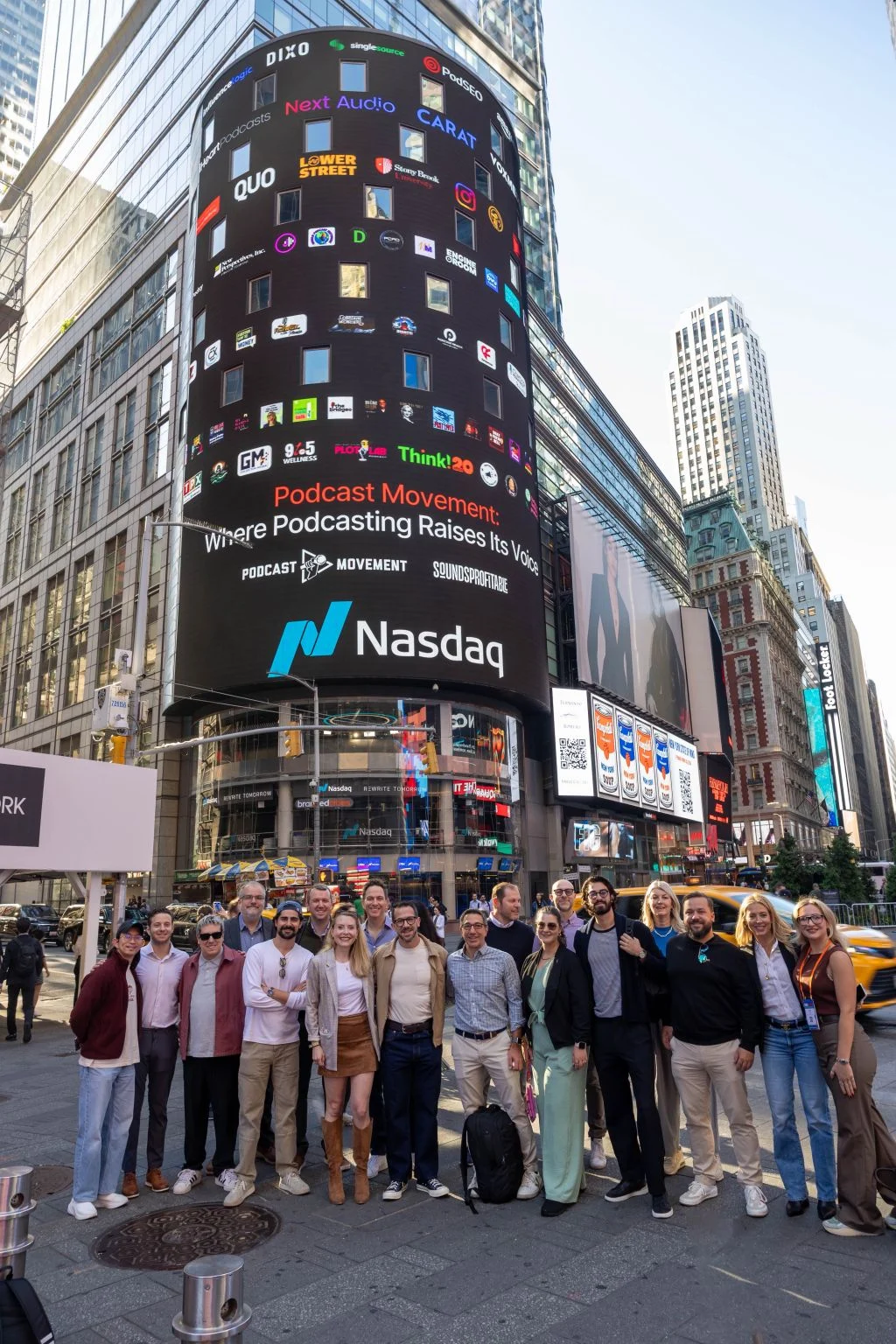
NEW YORK — As the podcasting industry gathers in the heart of Manhattan for the 2026 Podcast Movement, the atmosphere is electric. From the towering digital billboards of Times Square—where industry partners are currently commanding the NASDAQ Big Screen—to the quiet, intensive workshops focused on the future of narrative storytelling, the medium is proving that it is not merely surviving in a post-algorithmic landscape; it is evolving.
This week’s industry pulse highlights a diverse array of content, ranging from high-stakes investigative journalism to the nuanced, binaural exploration of Victorian horror. As we digest the data and the trends, it is clear that the "Golden Age" of audio has transitioned into an "Age of Precision," where audience engagement is measured not just in sheer downloads, but in depth of connection.

The Main Facts: A Diverse Landscape
The current audio landscape is defined by a shift toward specialized, high-production value content. Our latest tracking of the industry reveals a mix of legacy titans and disruptive new entries.
On the charts, The Daily continues to command the top position on Apple Podcasts in the United States, cementing its role as a cornerstone of daily news consumption. Simultaneously, The Joe Rogan Experience maintains its iron grip on the #1 spot on Spotify, illustrating the enduring power of long-form, personality-driven conversation.

However, the most compelling stories are coming from the periphery. The SuperHumanizer Podcast has seen a meteoric rise in the social sciences category in Ireland, while the spiritual and philosophical inquiry of Be There Now, hosted by Anasuya Weil and Hanuman Goleman, has debuted as the #2 podcast in the Hinduism category in the U.S. These data points suggest that listeners are increasingly seeking niche, identity-affirming, and intellectually rigorous content.
Chronology: The Evolution of Recent Releases
The past week has seen a wave of high-profile launches that demonstrate the technical and creative breadth of modern podcasting.

- September 10-12: The industry began its pre-conference buzz, with independent creators and network giants alike signaling a move toward immersive soundscapes.
- September 14: Reaching Out, a six-part audio memoir by documentary artist Sayre Quevedo, launched with significant acclaim. The series, which tracks the journey of twin brothers searching for their biological father, has been heralded for its raw, vulnerable storytelling.
- September 15: Victorian Gothic: The Hauntings hit major platforms, utilizing advanced spatial and binaural audio design to place listeners directly into the environment of the narrative. This represents a significant technical leap for fiction podcasts.
- September 16: The industry convenes in New York for the Podcast Movement conference, with special attention paid to the intersection of AI-assisted production and human-centric storytelling.
Supporting Data: Understanding Audience Behavior
Data remains the primary language of the industry. While the top-tier podcasts continue to dominate the charts, the underlying metrics reveal a fragmented but highly engaged audience.
Market Leaders (US Market)
- News: The Daily (Apple Podcasts #1)
- Personality/Long-form: The Joe Rogan Experience (Spotify #1)
- Documentary: I’m Not a Monster: Where is Austin Tice? (Apple Podcasts #1 in Ireland)
- Leisure: C.R.E.A.M. (The TDC Podcast) (Spotify #1 in UK)
The success of I’m Not a Monster underscores a continued listener appetite for high-stakes investigative journalism. These projects require months, sometimes years, of field reporting, and their chart success validates the economic model of long-term investigative audio.

Official Perspectives and Industry Commentary
As we look at the state of the medium, several key voices are shaping the narrative.
On Communication and Leadership
Margaret Watts Romney, creator of the podcast Speakership in the Time of Change, emphasizes that the medium is a tool for leaders to navigate the "unexpected." Her work, built on 10,000+ hours of coaching high-knowledge professionals, is a direct response to the modern demand for better communication frameworks. "We are moving away from the ‘broadcast’ model of leadership and into a ‘relational’ model," says Romney. "Podcasting allows for that intimacy that traditional media simply cannot replicate."

On the Progressive Voice
The ongoing success of The Young Turks (TYT) highlights the necessity of the "Home of the Progressives" in the current political climate. With Cenk Uygur and Ana Kasparian leading the charge, the show proves that there is a massive, consistent audience for provocative, daily commentary. Their ability to bridge the gap between hard news and entertainment is a benchmark for many independent networks.
On Memoir and Human Connection
Sayre Quevedo’s Reaching Out is arguably the most discussed piece of audio storytelling this week. By focusing on a deeply personal, six-part quest, Quevedo and his partners at Futuro and KCRW have proven that the "personal is political" still holds immense weight in the audio space. The show’s recognition at the 2026 Tribeca Film Festival serves as a reminder that the industry is increasingly blurring the lines between journalism and art.
Implications: The Road Ahead
The developments of this week suggest three major implications for the industry through the end of 2026 and into 2027.
1. The Technical Renaissance
The success of Victorian Gothic: The Hauntings signals a move toward "audio-first" production techniques. Creators are no longer just recording conversations; they are designing environments. We expect to see a surge in the use of spatial audio, binaural recording, and immersive sound design in fiction and narrative non-fiction. This will likely necessitate new partnerships between traditional production houses and tech-forward sound engineering firms.

2. The Rise of the "Niche Titan"
While The Joe Rogan Experience remains an outlier in terms of scale, the success of genre-specific hits like Be There Now shows that there is a viable, sustainable path for "niche" creators. Networks are beginning to move away from the "one-size-fits-all" model of growth and are instead investing in "community-first" programming. By targeting specific demographics, interests, and philosophies, creators are building more loyal, and therefore more valuable, listener bases.
3. The New Visibility
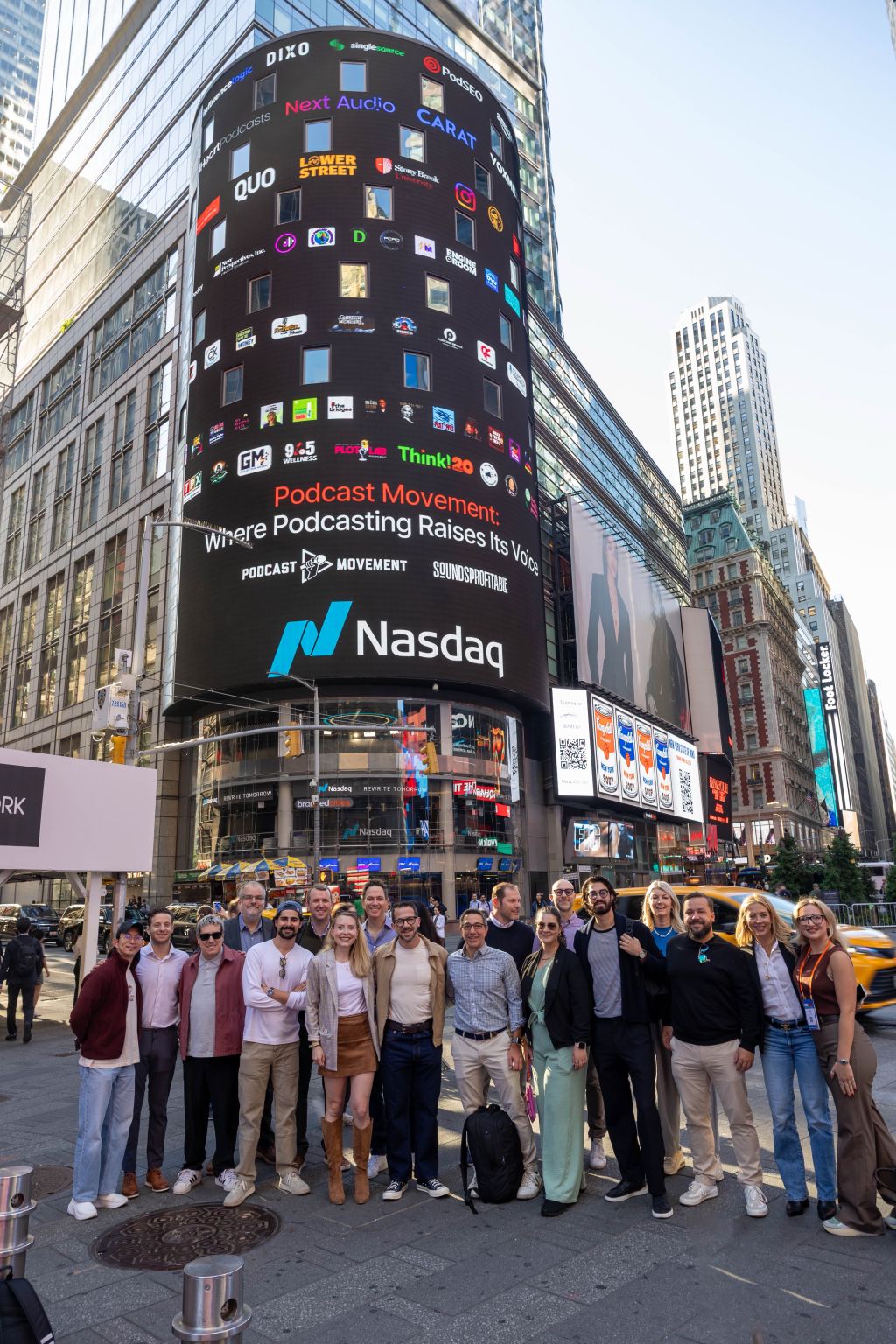
The sight of podcasters taking over the NASDAQ screens in Times Square is more than just a marketing stunt; it is a declaration of maturity. Podcasting has moved from a "fringe" medium to a primary pillar of the media economy. The challenge for the next twelve months will be to maintain this visibility while ensuring that the quality of content keeps pace with the growing commercial interest.

4. Leadership and Education
As evidenced by Speakership in the Time of Change, the podcast format is increasingly being utilized as a platform for education and professional development. We are seeing a shift where audio is not just for leisure, but for "high-knowledge" acquisition. This opens up new revenue streams in corporate training, executive coaching, and B2B media, moving beyond the traditional advertising model.
Conclusion
As the sun sets on Times Square and the lights of the NASDAQ screen reflect the faces of the creators who are defining the next era of audio, the message is clear: the industry is robust, inventive, and deeply human.

From the investigative grit of documentaries tracking missing persons to the ethereal, spatial soundscapes of historical fiction, podcasters are finding new ways to reach listeners where they are—in their cars, on their commutes, and in their quietest moments. The industry of 2026 is one that rewards technical excellence, authentic storytelling, and the courage to be niche. As we move through the remainder of the year, all eyes will be on the creators who continue to push the boundaries of what a microphone, a story, and an audience can achieve together.
For those attending Podcast Movement, the message is simple: keep listening, keep creating, and keep pushing the medium forward. The future of audio is not just being recorded—it is being written in real-time.
 Nana
Nana
 Siti Muinah
 Muslim
