Main Facts: A Nationwide Mobilization for Cultural Survival
As the United States navigates an increasingly tense political climate marked by escalating federal crackdowns on free expression, artists, cultural organizations, and community workers are pushing back. The second annual Fall of Freedom initiative launched its multi-day weekend of action today, running from October 2 through October 4, 2026.
Spanning coast-to-coast, the festival features hundreds of independent and coordinated public artworks, theatrical performances, concerts, zine-making workshops, and historical walking tours. The overarching mission is singular and urgent: to unite creative communities in direct opposition to the authoritarian overreaches of the Trump administration.
The nationwide movement is spearheaded by a coalition of prominent cultural figures, including conceptual artist Dread Scott, artist Jenny Polak, Pulitzer Prize-winning playwright Lynn Nottage, and curator Laura Raicovich. Following a high-impact inaugural run last November and a subsequent nationwide series of events around May Day, this fall’s programming represents a significant scaling-up of artistic dissent.
Organizers report that events are taking place in major metropolitan hubs and smaller towns alike, transforming public libraries, museums, alternative art spaces, and outdoor plazas into forums for free expression, political education, and solidarity.
Chronology: From First-Year Outcry to a Scaled-Up National Movement
The trajectory of Fall of Freedom highlights the rapid escalation of tensions between the American creative sector and the federal government:
Late 2024–Early 2025: Following the return of Donald Trump to the White House, early warning signs of cultural censorship began to materialize, ranging from threats to public arts funding to politically motivated administrative changes at premier cultural institutions.
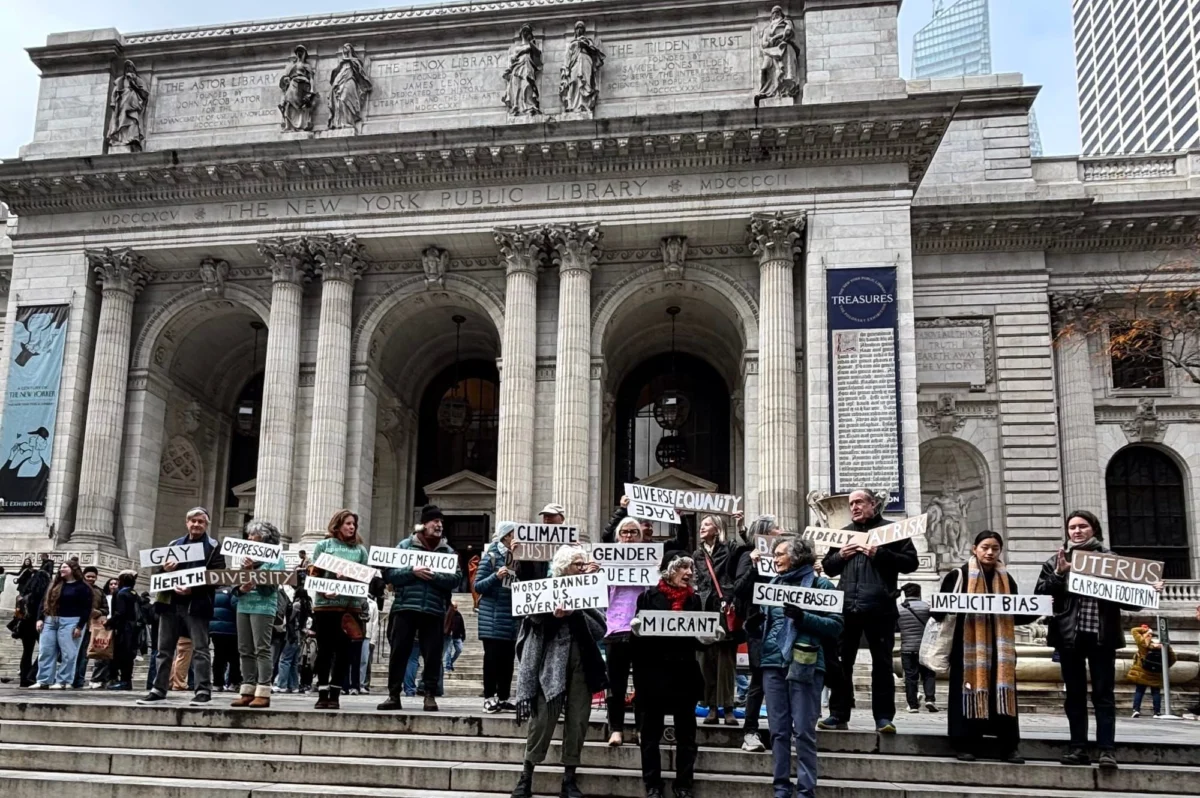
November 2025: The inaugural Fall of Freedom weekend galvanized artists nationwide. Highlights included high-profile demonstrations, such as a protest dance outside the John F. Kennedy Center for the Performing Arts, and localized actions highlighting the erosion of democratic norms.
May 2026: Recognizing the compounding pressures of the political climate, organizers expanded the initiative’s scope, hosting a synchronized wave of art-and-activism events across the country to coincide with May Day labor and civil rights actions.
October 2–4, 2026: The current weekend marks the second annual anchor event. Featuring expansive multidisciplinary programming—from grassroots zine workshops in Arkansas to large-scale theatrical productions in Harlem—the initiative cements its status as a permanent fixture in the modern American resistance.
Supporting Data and Key Programming
The scope of Fall of Freedom is reflected in its diverse, decentralized schedule, which leverages both micro-level community engagement and major institutional platforms:
Undersiege: Conceived by playwrights Lynn Nottage and MacArthur "Genius" fellow Dominique Morisseau, this anchor production features powerful monologues delivered by over 40 Black women and femmes. It is set to premiere on Friday, October 2, through a joint presentation by the National Black Theatre and the Studio Museum in Harlem.
Theatrical Tributes and Literary Critiques: The New York Theatre Workshop is hosting a powerful one-man show by Roger Guenver Smith honoring the life and enduring legacy of visionary painter Jean-Michel Basquiat. Meanwhile, in Chapel Hill, North Carolina, community spaces are hosting youth-led political literary readings, such as "GenZ Reads Animal Farm" at Epilogue Books.
Grassroots Archives and Radical Print: In Little Rock, Arkansas, organizers are conducting public zine-making workshops. This tactile, independent medium has increasingly become a target of systemic administrative scrutiny and censorship initiatives, particularly in conservative states and institutional libraries.
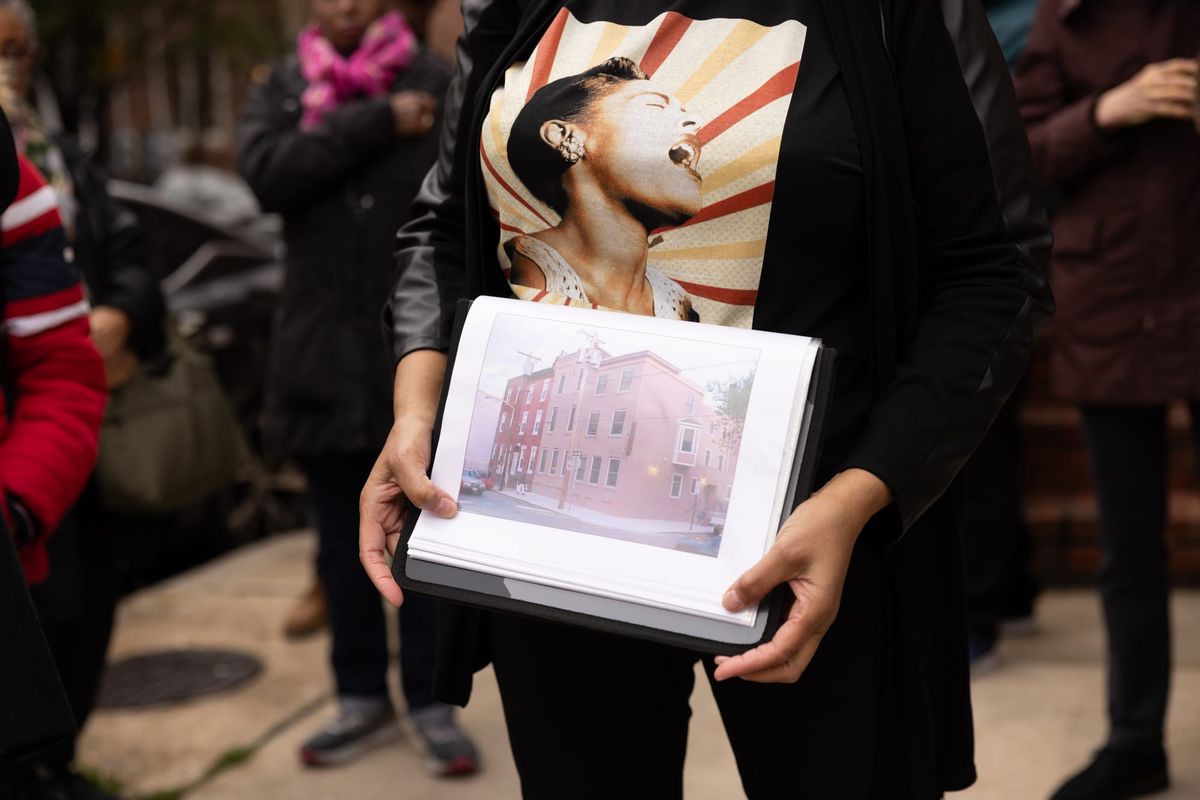
Reclaiming Public Spaces: In Washington, DC, a special convening at the Kennedy Center invites citizens to share oral histories and personal narratives regarding the institution, directly challenging attempts by the administration to alter its cultural footprint. In Philadelphia, educational walking tours—such as Billie Holiday’s Philadelphia Walking Tour, led by Faye Anderson and presented by All That Philly Jazz and the Scribe Video Center—reconnect contemporary audiences with histories of Black resilience and artistic triumph.
Official Responses and Perspectives from the Frontlines
The urgency behind Fall of Freedom stems from tangible, systematic pressure points directed at the arts and education sectors. Over the past year, the Trump administration has repeatedly targeted cultural touchstones. These include efforts to stamp the president’s name onto the Kennedy Center, attempts to slash the Smithsonian Institution’s federal budget while exerting ideological influence over its historical programming, and the sudden removal or political targeting of abstract and modernist public artworks, such as Joel Shapiro’s Blue (2019) and José de Rivera’s Infinity (1967).
Speaking to Hyperallergic, co-organizer Dread Scott did not mince words regarding the current political landscape:
"Fascism in the United States is advancing and metastasizing," Scott said. "Migrants are being deported in record numbers. The rule of law is in tatters. And the arts are assaulted. They want to silence us. But artists and musicians are unruly and we refuse to be quiet."
Lynn Nottage echoed this sentiment, emphasizing the collective resilience vibrating through the cultural sector:
"Artists are collectively using this moment to say our voices won’t and can’t be silenced. It is beautiful to witness how many people across the country have responded to this call to action by organizing concerts, readings, workshops, exhibits, and salons centering art as a form of resistance, celebration, and liberation."
The festival’s evocative title—Fall of Freedom—serves deliberate linguistic double-duty. It acknowledges both the precarious decline of democratic liberties and the active, forceful descent or dismantling of oppressive systems. Reflecting on this dual ethos in a previous essay for Hyperallergic, transgender and nonbinary artist Kris Grey noted:
"A core ethos of the project is the belief that creativity, in and of itself, is a practice of resistance. Art is not a luxury in moments like this; it is a survival strategy."
Implications: The Future of Cultural Autonomy in America
The implications of the Fall of Freedom movement extend far beyond a single weekend of performances and exhibitions. As federal authorities increasingly view independent cultural production, historical interpretation, and avant-garde expression as ideological threats, artists are establishing permanent, cross-country solidarity networks.
By decentralizing resistance—taking it out of elite institutional gatekeeping spaces and embedding it directly into neighborhood libraries, sidewalks, community centers, and grassroots theatres—Fall of Freedom demonstrates that the defense of democracy is inextricably linked to the defense of imagination.
As the political battles over public monuments, museum funding, and freedom of speech intensify through the remainder of 2026, the coalition behind Fall of Freedom has made one reality abundantly clear: when institutional safety nets are pulled away, artists will weave their own.



 Nila Kartika Wati
 rifanmuazin
