

By Anna Lee
Published in News
Main Facts
Francis Lee Rogers, a 63-year-old unhoused artist whose vibrant, observant canvases captured the soul of New York City’s most famous green space, died on Sunday, September 27. According to law enforcement sources who spoke with the New York Post, Rogers was found beaten to death beneath the park gazebo that served as her shelter. While the New York Police Department (NYPD) has withheld official confirmation of her identity pending notification of next of kin and ongoing forensic evaluations, the artistic community and her peers in the park have positively identified her.
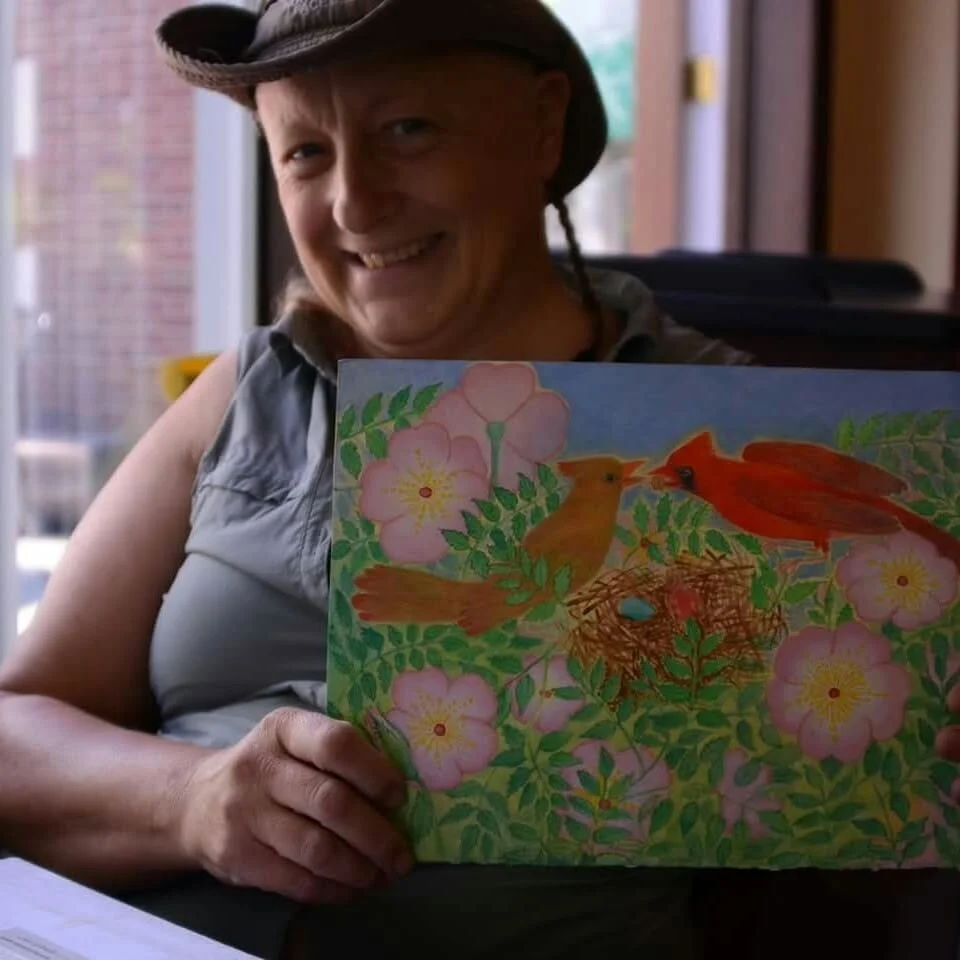
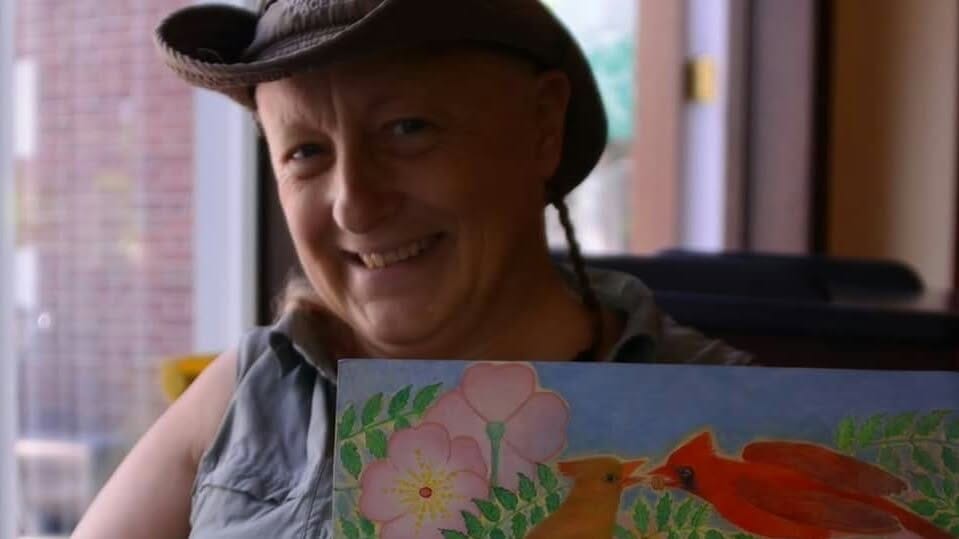
For years, Rogers was a quiet yet indelible fixture of Central Park. Armed with brushes, paints, and a profound empathy for the natural world, she chronicled the park’s flora and fauna—most notably its rich avian life. Her preferred studio was the Ramble, a 38-acre labyrinth of dense woods, winding paths, and rocky outcrops that serves as a sanctuary for migratory birds and local wildlife alike.
Affectionately dubbed the “Grandma Moses of Central Park” by those who knew her—a nod to the celebrated American folk artist who similarly began her career late in life and captured rural simplicity—Rogers lived a life defined by stark contrasts. She was simultaneously invisible to the millions of tourists who rushed past her makeshift home and deeply visible to the naturalists, birdwatchers, and regular parkgoers who came to know her gentle demeanor, fierce independence, and remarkable creative output.
Her tragic death has sent shockwaves through New York City’s cultural and activist communities, drawing renewed attention to the perilous realities faced by unhoused individuals, the profound vulnerabilities of street artists, and the complex safety dynamics within public urban parks after dark.
Chronology: A Life of Survival, Art, and Sanctuary
The trajectory that led Francis Lee Rogers to a gazebo in Central Park was neither linear nor easy. Over the course of her 63 years, she navigated profound personal trauma, economic instability, and addiction, reinventing herself multiple times while steadfastly holding onto her creative identity.
Early Struggles and the Road to New York
Born with a sharp eye for detail and an innate creative spark, Rogers experienced a tumultuous youth. Operating under different names throughout various chapters of her life—most notably Elise Bainbridge Hill—she made the fateful decision to run away from home as a teenager. Thrust abruptly into an unforgiving world with few resources, she endured severe hardships, supporting herself through sex work and later battling a devastating heroin addiction.
Despite the chaotic and often dangerous circumstances of her early adulthood, Rogers managed to carve out pockets of time and mental space for her true calling: making art. Painting and drawing served not merely as a hobby, but as an essential psychological anchor, a method of processing trauma and asserting her humanity in environments that frequently sought to strip it away.
The 2007 Documentary Begging Naked
A crucial window into Rogers’s early life and resilience is provided by filmmaker Karen Gehres’s 2007 documentary, Begging Naked. In the film, Rogers—then known as Elise Bainbridge Hill—spoke candidly about her past, detailing the harrowing realities of adolescent flight, the survival mechanisms she developed on the streets, and her arduous journey through substance dependency.
Rather than painting a portrait of pure victimhood, Begging Naked highlighted Rogers’s fierce autonomy and unwavering artistic spirit. The documentary captured a woman in transition, striving to reconcile her past traumas with her ongoing creative aspirations. It established her capacity for profound self-reflection and laid bare the systemic failures that often force vulnerable individuals to the margins of society.
Finding Home in the Ramble
In the years following the documentary’s release, Rogers gravitated toward Central Park, ultimately making it her permanent home. To many outsiders, living unhoused in a public park signifies destitution; to Rogers, the park offered a unique ecosystem of sanctuary, community, and endless inspiration.
She frequented the Ramble, a landscape designed by Frederick Law Olmsted and Calvert Vaux to evoke a wild, untamed wilderness in the heart of Manhattan. Here, Rogers blended into the background, observing the seasonal shifts in foliage and the arrival of hundreds of bird species. She did not hawk her art aggressively or seek commercial fame. Instead, she painted quietly, trading or gifting her works to those who took the time to converse with her, cementing her status as a beloved, if enigmatic, local icon.
Supporting Data and Perspectives
To understand the impact of Francis Lee Rogers’s life and death is to examine the dual realities of Central Park: a pristine cultural playground for the affluent and a precarious refuge for the city’s most vulnerable populations.
The "Grandma Moses of Central Park"
Among the naturalists and birders who crisscrossed the Ramble daily, Rogers was a respected peer. Robert "Birding Bob" DeCandido, a prominent New York City naturalist and ornithologist, recalled her unique presence in a phone interview with Hyperallergic.
"We used to call her the Grandma Moses of Central Park," DeCandido said, drawing a parallel between Rogers and the legendary self-taught folk painter Anna Mary Robertson Moses. "But she probably wouldn’t want all this sympathy. She didn’t call attention to herself."
DeCandido’s observation underscores Rogers’s humility. While contemporary artists often chase social media visibility, gallery representation, and financial backing, Rogers painted for the sheer act of creation and connection with her surroundings. Her subjects—cardinals, warblers, herons, and the soaring canopy of the park—were rendered with an intimate, unpretentious touch that reflected her deep immersion in the natural world.
The Unhoused Population in New York City Parks
Rogers’s death highlights the stark vulnerabilities faced by unhoused individuals in New York City, particularly women living on the streets. According to data from the Coalition for the Homeless and the NYC Department of Homeless Services (DHS), thousands of individuals sleep rough across the city on any given night, frequently avoiding congregate shelter systems due to safety concerns, restrictive rules, or mental health challenges.
While Central Park is heavily patrolled by the NYPD and Central Park Conservancy staff during daylight hours, its vast acreage—spanning 843 acres—becomes deeply isolated after dark. The gazebo where Rogers sought shelter offered temporary protection from the elements, but it also left her exposed to the unpredictable dangers of nocturnal urban spaces. Advocacy groups have long argued that encampment sweeps and a lack of permanent, low-threshold housing options actively endanger unhoused populations, pushing them into increasingly precarious and hidden locations where they are vulnerable to violence.
Official Responses and Investigation
As of press time, the circumstances surrounding Francis Lee Rogers’s death remain under active investigation by the New York Police Department.
NYPD and Medical Examiner Inquiries
Law enforcement sources confirmed to the New York Post that emergency responders discovered Rogers beneath a park gazebo, bearing severe signs of physical trauma consistent with a violent assault. The medical examiner’s office is conducting an autopsy to determine the official cause and manner of death.

Because the investigation is in its preliminary stages, the NYPD has exercised caution regarding public disclosures. A spokesperson for the department noted that formal identification procedures, including confirmation via DNA or dental records and the official notification of distant family members, must be completed before her name can be formally released to the broader public. Consequently, the NYPD declined to officially confirm her identity to Hyperallergic at the time of initial reporting, though community networks and local journalists have widely verified her identity through acquaintances and documentary records.
Calls for Accountability and Justice
The news of the brutal attack has triggered an outpouring of grief and anger among local advocates, artists, and park regulars. Social media platforms have been flooded with tributes sharing photographs of Rogers, her paintings, and memories of her quiet presence in the Ramble.
Community leaders and homeless advocacy organizations are calling for a transparent and thorough investigation into her homicide, emphasizing that the lives of unhoused New Yorkers must be treated with the same urgency, gravity, and demand for justice as those of any other resident.
"Francis Lee Rogers was an artist, a chronicler of our city’s natural beauty, and a member of our community," said a representative from a local advocacy coalition. "Her life mattered. Her art mattered. Her brutal end is a tragedy that demands accountability from our justice system and a profound moral reckoning from our city leaders regarding how we treat our most vulnerable neighbors."
Implications: Art, Urban Space, and the Marginalized
The life and death of Francis Lee Rogers force a difficult reckoning with several intersecting issues in contemporary American life: the commodification of art versus artistic purity, the safety and accessibility of public urban spaces, and society’s collective failure to protect unhoused individuals.
The Value of Outsider Art
Rogers’s legacy sits firmly within the tradition of outsider art—works created by self-taught individuals operating outside the traditional institutional structures of the art world. Figures like Rogers remind us that artistic expression is a fundamental human drive, independent of commercial validation, museum curation, or elite patronage. Her paintings of Central Park’s flora and fauna are not just charming local artifacts; they are visual testaments to endurance, observation, and grace found in the most unlikely circumstances.
Safety in Public Commons
Central Park is frequently heralded as a triumph of landscape architecture—a democratic green space designed to offer respite to all New Yorkers, regardless of socioeconomic status. However, Rogers’s death exposes the tension inherent in public commons. How can cities maintain open, welcoming parks while ensuring the safety of those who rely on them for shelter?
The tragedy challenges municipal authorities to move beyond punitive measures, such as sweeps and displacement, and toward compassionate, housing-first solutions that address the root causes of homelessness. When unhoused individuals are forced to sleep in remote park structures because they lack safe indoor alternatives, public spaces fail in their fundamental promise of sanctuary.
Honoring Her Legacy
As the investigation into her death proceeds, friends, naturalists, and admirers are planning informal memorials in Central Park—specifically within her beloved Ramble. There are discussions among local artists and birders about organizing a retrospective exhibition of her surviving works, ensuring that her distinct vision of the park’s natural splendor is not lost to time.
Francis Lee Rogers survived the streets, addiction, and personal trauma through the sheer force of her creativity. While her life was cut short in a senseless act of violence, her vibrant depictions of Central Park’s birds and trees remain as a lasting testament to a woman who looked at the wild heart of Manhattan and found beauty, dignity, and a place to call home.
 Sagoh
Sagoh
 Muslim
 Dwi Wanna
