

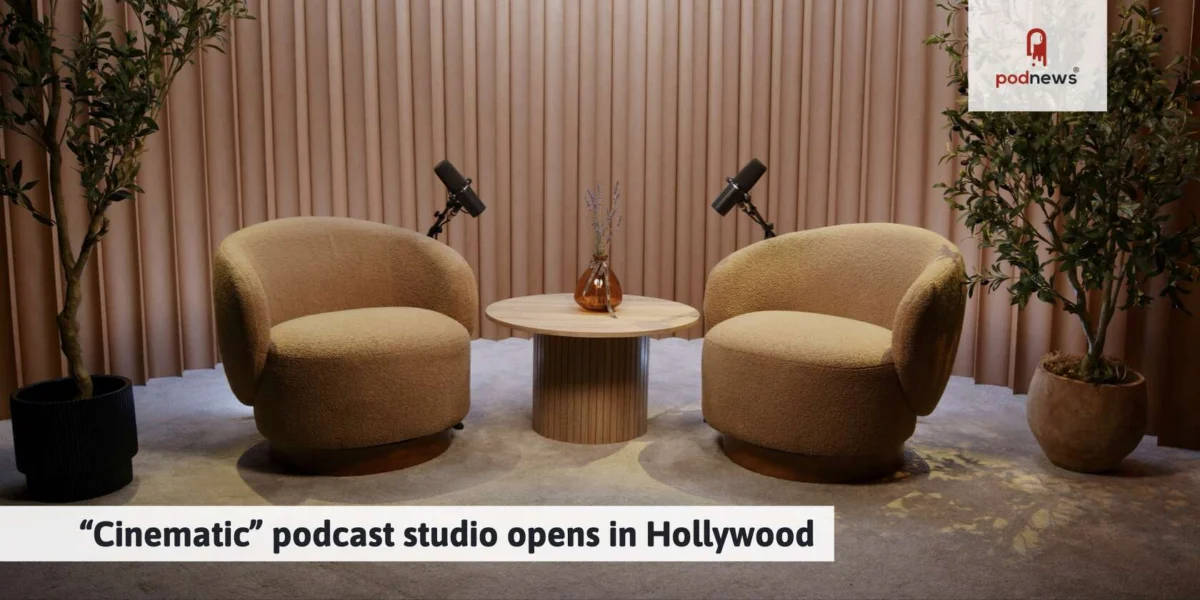
The landscape of professional audio production shifted in a dramatic direction this September 2026, as a state-of-the-art "cinematic" podcast studio opened its doors in the heart of Hollywood. This development marks more than just a real estate transaction; it signifies the maturation of the medium, as creators increasingly look to bridge the gap between traditional broadcast audio and high-end visual storytelling. As the industry gathers for the much-anticipated Podcast Movement in New York City, the convergence of technology, community-driven content, and high-fidelity production has never been more apparent.
The Dawn of Cinematic Podcasting in Hollywood
Hollywood has long been the epicenter of visual media, but the recent unveiling of a premier "cinematic" studio facility signals a pivotal moment for audio-first storytellers. This facility is designed not merely for recording voices, but for capturing the nuances of presence and atmosphere that define modern video-podcasting.

Equipped with cutting-edge acoustics, dynamic lighting rigs designed for multi-camera setups, and an aesthetic that mirrors high-budget film sets, the studio aims to serve the growing legion of creators who recognize that, in 2026, a podcast is often viewed as much as it is heard. This transition toward a "cinematic" standard reflects a broader trend: the audience expectation for high-production value that competes directly with streaming television and film.
Chronology of the Industry Shift
The rise of the cinematic studio is not an isolated event but the result of a multi-year trajectory in audio evolution:

- 2023–2024: The industry saw the "Video-First" movement take root. Platforms like YouTube and Spotify began prioritizing video integration, forcing creators to upgrade their home setups to avoid looking "low-budget."
- Early 2025: Demand for professional, bookable studio space skyrocketed. Independent creators found that while they could record audio at home, achieving a professional visual "look" required expertise in lighting and interior design.
- Mid-2025: Investment firms began pouring capital into physical media infrastructure in major hubs like Los Angeles, London, and New York, identifying "podcast studios as a service" as a viable business model.
- September 2026: The opening of the Hollywood facility marks the culmination of this trend, moving away from "closet-style" recording toward studio environments that act as legitimate production houses.
The Pulse of the Industry: New Content and Strategic Moves
As the physical infrastructure evolves, the content ecosystem continues to diversify. Recent weeks have been marked by significant strategic moves from networks and creators alike.
Strategic Signings and Network Expansion
NOVA Podcasts has made a bold move by signing the award-winning parenting show, We Don’t Have Time For This. The show, which has seen massive success through sold-out live tours across Australia, represents the "community-first" model. Rachel Corbett, Network Director of NOVA Podcasts, noted that the show’s success is rooted in its ability to build an "incredibly loyal community who don’t just listen to the show, they feel part of it." This highlights a core truth of the 2026 market: longevity in podcasting is no longer just about download numbers, but about the depth of the parasocial bond between creator and listener.

Journalism and Media Analysis
The debut of Media Bubble arrives at a critical time for the Australian media landscape. Hosted by industry veterans Irene Hulme, Ben Willee, and Peter Whitehead, the show offers a candid look at the industry from the inside out. By bringing together operators who have historically viewed the media from different sides of the desk, Media Bubble provides a necessary, critical perspective on the forces shaping modern news and entertainment.
Intellectual Growth and Niche Storytelling
Philosophy is experiencing a renaissance in the audio format, exemplified by Philosophize This!. The podcast continues to prove that complex academic subjects can find massive, mainstream audiences when distilled through accessible, chronological storytelling. By stripping away the requirement for graduate-level prerequisites, the show has become a cornerstone of educational podcasting.

Similarly, Edible Empire has reached its conclusion, offering a comprehensive deep dive into the hidden costs of food production. By drawing on 18 world-renowned experts, the series illustrates the power of the medium to tackle long-form investigative journalism—exploring labor, migration, and power dynamics in a way that typical 20-minute news segments cannot.
Political Discourse and Social Commentary
As the 2026 midterms approach, the political podcast sphere is intensifying. Surviving Trump has launched its third season, focusing specifically on the weeks leading up to the election. By mapping out sixteen distinct threats to the electoral process alongside a granular analysis of competitive House and Senate races, the show serves as a high-stakes guide for an electorate that is increasingly turning to audio for real-time political analysis.

Supporting Data: Market Dominance and Listener Trends
Podcast consumption data for early September 2026 reveals a clear preference for established powerhouses while highlighting the growth of niche interest areas.
- The Powerhouses: The Daily continues its reign as the #1 show in the United States on Apple Podcasts, proving that high-quality, daily news remains the bedrock of listener routines. Simultaneously, The Joe Rogan Experience maintains the top spot on Spotify (US), showcasing the enduring influence of long-form, conversation-based content.
- International Trends: In the United Kingdom, the Society & Culture category is led by We Need To Talk with Paul C. Brunson, reflecting a global appetite for relationship-based and self-improvement content.
- Emerging Niches: Off Leash with Dr. Pete is seeing the largest growth in the Pets & Animals category in Canada, while The Baseball History Timeline has seen a breakout entry in Ireland. These data points confirm that regardless of geography, listeners are seeking highly specific, expert-led content that caters to personal passions.
Official Responses and Industry Sentiment
The general sentiment among industry leaders heading into the NYC Podcast Movement is one of cautious optimism and intense focus on quality. Producers and studio owners interviewed regarding the new Hollywood facility emphasize that the "golden age of quantity" is being replaced by the "era of intentional production."

"We aren’t just recording audio anymore," says one studio executive. "We are creating visual assets that have to survive on platforms where attention spans are measured in seconds. The cinematic approach is our response to the competitive pressure of TikTok, Instagram Reels, and YouTube Shorts."
Furthermore, the emphasis on community—as seen with the Sara & Cariad’s Weirdos Book Club and its star-studded guest lineups—suggests that creators are focusing on "super-serving" existing fanbases rather than casting the widest net possible. The industry is moving away from the "discovery at all costs" model toward one of "retention through community."

Implications for the Future of Audio
The implications of these developments are twofold. First, the barrier to entry for "premium" content is rising. As cinematic studios become the benchmark, independent creators without access to high-end facilities will need to get creative with lighting and set design to remain competitive.
Second, the line between "podcaster" and "content creator" is effectively dissolving. The successful show of 2026 is one that understands the multi-modal nature of modern media—where audio is the primary engine, but the visual brand is the fuel.

As we look toward the remainder of 2026, the focus will undoubtedly shift toward:
- Monetization of Community: Moving beyond simple ad-reads toward live events, memberships, and integrated brand partnerships that feel native to the show.
- Technological Integration: Utilizing AI for post-production, translation, and discoverability, while maintaining the "human" touch that keeps listeners coming back.
- Visual Storytelling: Investing in production design that distinguishes one podcast from the thousands of others vying for attention.
The opening of the Hollywood studio is a symbolic milestone. It marks the point where the podcast industry stopped looking over its shoulder at radio and started looking forward to the future of digital entertainment. For creators, producers, and advertisers alike, the message is clear: the standards have been set, the audience is waiting, and the medium has finally found its visual identity. As the industry convenes in New York, the conversation will not just be about "how to podcast," but "how to build a lasting, cinematic legacy."
 Laily UPN
 Reynand Wu
 Lina Hope
