

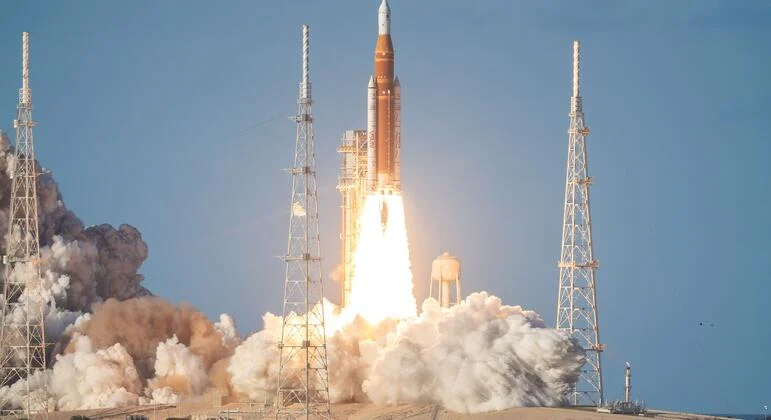
4 October 2026 — As the calendar turns to October, the global community looks toward the stars. From 4 to 10 October, the United Nations observes World Space Week, an annual celebration that serves as both a commemoration of human ingenuity and a vital forum for international cooperation. In 2026, the occasion carries unprecedented weight, coming just months after a historic human mission successfully ventured beyond the far side of the Moon, pushing the boundaries of exploration further than ever before.
The Foundations of a New Frontier: Main Facts
The inception of World Space Week is inextricably linked to the dawn of the Space Age. On 4 October 1957, the Soviet Union launched Sputnik 1, the world’s first artificial satellite. This singular event fundamentally altered the course of human history, sparking a race for the heavens that eventually necessitated a framework for international order.
In response to the rapid escalation of space activities, the United Nations Office for Outer Space Affairs (UNOOSA) was established. Since its inception, UNOOSA has served as the primary custodian of international space law, overseeing more than 77 successful lunar missions and facilitating the complex diplomatic negotiations required to keep space a domain for peace.
World Space Week, which spans from 4 to 10 October, is a global educational event designed to inspire the next generation of scientists, engineers, and dreamers. It is not merely a celebration of past achievements; it is a platform for discussing the governance, ethics, and sustainability of a domain that now plays a critical role in the socio-economic development of every nation on Earth.
A Chronology of Cooperation: From 1957 to the Present
The journey of international space governance is marked by several pivotal milestones that have defined how humanity interacts with the cosmos:
- 1957: The launch of Sputnik 1 ignites the Space Age.
- 1959: Recognizing the need for global oversight, the UN General Assembly establishes the Committee on the Peaceful Uses of Outer Space (COPUOS). Its mandate is clear: ensure the exploration and use of space remain exclusively for the benefit of all humanity, focusing on peace, security, and sustainable development.
- 1967–1979: COPUOS leads the drafting of the "Five Treaties and Principles of Outer Space," the bedrock of international space law. These documents prohibit the placement of weapons of mass destruction in orbit and establish that no nation can claim sovereignty over celestial bodies.
- 1990: The UN partners with Lemle Pictures and the Association for Space Explorers to produce Our Planet Earth, a documentary capturing the profound psychological shift experienced by astronauts viewing the Earth from orbit.
- 2022: The IAEA and FAO initiate the "Cosmic Crops" project, sending seeds to the International Space Station to study genetic resilience under extreme radiation, aiming to secure food supplies for a warming planet.
- 2026: The UN hosts the crew of the most recent historic lunar mission, which completed the farthest human spaceflight in history, successfully venturing beyond the far side of the Moon.
The Multi-Disciplinary Reach of Space Technology
While the public often associates space with rockets and astronauts, the reality is that space technology is now woven into the fabric of daily life on Earth. At least 25 different UN entities rely on space-based data to execute their mandates. This integration is vital for achieving the Sustainable Development Goals (SDGs).
1. Cosmic Crops and Food Security
In an era of accelerating climate change, the International Atomic Energy Agency (IAEA) and the Food and Agriculture Organization (FAO) are looking to the stars to solve hunger on Earth. By exposing seeds to the harsh environment of the International Space Station, researchers are studying how space-induced mutations can create hardier, more climate-resilient crops. These "cosmic crops" could prove essential for sustaining populations in regions plagued by drought, salinity, and extreme temperatures.
2. Satellite Tele-medicine
The World Health Organization (WHO) has recognized that geography should not be a barrier to quality healthcare. In collaboration with UNOOSA, the WHO is deploying satellite tele-medicine platforms. These systems allow doctors in remote, underserved areas to consult with global specialists in real-time, utilizing high-speed satellite links to transmit diagnostic data, images, and life-saving instructions to corners of the world that lack traditional medical infrastructure.
3. Environmental Stewardship and Orbital Sustainability
The UN Environment Programme (UNEP) faces a unique challenge: the "space junk" crisis. With over 130 million pieces of debris currently orbiting Earth—ranging from microscopic paint flecks to abandoned, multi-ton rocket stages—the risk of "Kessler Syndrome," a catastrophic chain reaction of collisions, is a growing concern. UNEP is leading efforts to establish international guidelines for "space traffic management" and long-term orbital sustainability, ensuring that Earth’s orbit remains a usable resource for future generations.
The Human Dimension: Astronauts’ Reflections
Perhaps the most enduring legacy of space exploration is the "Overview Effect"—a cognitive shift reported by astronauts who experience the profound perspective of seeing Earth as a fragile, borderless sphere suspended in the vastness of space.
In the documentary Our Planet Earth, seventeen astronauts shared these transformative experiences. "It was the greatest feeling I ever had in my entire life," one astronaut recalled. "Seeing the black sky and the bright sun. This is really impossible, but I saw it."
For many, the physical experience of weightlessness, often described as "entering a dream state," is secondary to the emotional impact of the view. One astronaut recounted the feeling of observing the Earth while struggling to maneuver in zero gravity, only to be struck by the sheer beauty of the planet. "I felt a love for all the inhabitants of the Earth," he said. "I just wanted to love them all." This sentiment remains the core philosophy behind the UN’s involvement in space: to treat the cosmos as a common heritage that reminds us of our shared humanity.
Implications for the Future: A Domain for Peace
As we look toward the late 2020s and beyond, the implications of space exploration are shifting from competitive exploration to collaborative management. The mandate of COPUOS is more critical than ever as private corporations enter the space sector at an unprecedented rate.
The future of space involves balancing the commercial ambitions of space-faring nations and private entities with the collective security of the global community. The rapid pace of technological advancement means that international law must remain agile. Issues such as space mining, planetary protection, and the militarization of space are no longer hypothetical; they are current, pressing topics on the UN agenda.
World Space Week serves as the necessary reminder that space is not just a scientific playground; it is a complex, fragile environment that requires global stewardship. Whether it is protecting the Earth from asteroid threats, monitoring climate change via satellite imagery, or simply ensuring that space remains free from conflict, the UN’s role is to act as the moderator of human ambition.
As the crew members of the recent lunar mission noted upon their return to the United Nations, the technology to reach the Moon is impressive, but the wisdom to live peacefully on Earth—informed by the perspective of space—is the true goal of our journey into the unknown.
For those interested in participating in the ongoing discourse or finding local events, the United Nations encourages citizens worldwide to engage with the official World Space Week website. The future of our planet may very well be written in the stars, but it is being decided right here, on the ground, through the strength of our international commitments.
 Lina Irawan
 Suro Senen
 Nana Muazin
