

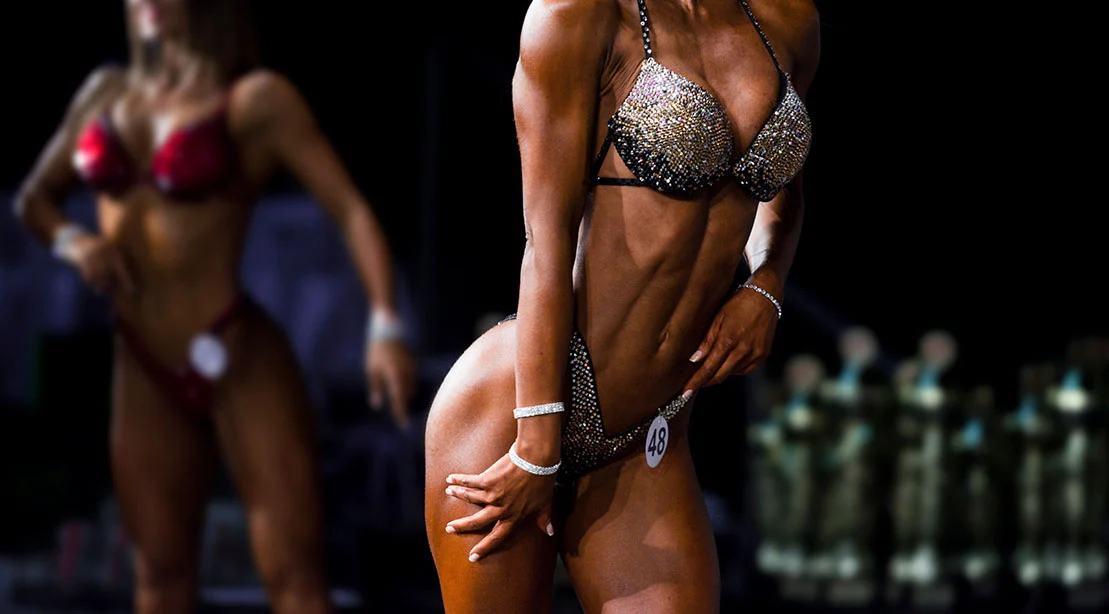
This week in Las Vegas, the Olympia Fitness & Performance Weekend is undertaking a structural shift that may fundamentally alter the trajectory of the IFBB Pro League. As the stage lights hit the Convention Center floor, the federation will crown the inaugural Fit Model Olympia champion. For the purists of the old-school bodybuilding era, this latest addition might feel like yet another dilution of the sport’s iron-clad roots. However, to dismiss the Fit Model division as "just another category" is to ignore the complex, cyclical nature of physique competition itself.
Since Larry Scott hoisted the first Sandow trophy in 1965, the Olympia has been in a constant state of metamorphosis. Today, the lineup includes 12 distinct divisions: Open, 212, Classic, Men’s Physique, Bikini, Figure, Wellness, Fitness, Women’s Physique, Women’s Bodybuilding, Wheelchair, and now, Fit Model. While critics may argue that the industry has finally exhausted every possible way to stand onstage, the introduction of Fit Model represents something far more calculated: a strategic attempt to reset the aesthetic clock.
A Chronology of Categorization
The evolution of the Olympia has always been a response to the "bigger is better" mandate. Throughout the 1980s and 90s, the sport pushed the boundaries of human muscularity. As the Open division evolved into a showcase of mass monsters, the federation sought to broaden its appeal and accessibility by creating niche categories.
The timeline of this expansion reflects a recurring pattern:
- 1965–1990s: The era of pure bodybuilding, defined by mass and conditioning.
- 1995: The introduction of Fitness, blending athleticism with physique.
- 2003: Figure is introduced, targeting a more "athletic" yet feminine look.
- 2011: Bikini is born, prioritizing a softer, "mainstream" aesthetic.
- 2016: Classic Physique arrives as a nostalgia-fueled correction to the sheer size of the Open division.
- 2025–2026: The amateur-to-pro pipeline for Fit Model is established, culminating in its 2026 Olympia debut.
The NPC pioneered the division at the amateur level in 2025, with the IFBB Pro League following suit in 2026. This year’s Olympia, scheduled for September 24–27 in Las Vegas, marks the first time this category has been integrated into the official qualification system, signaling that the league is fully committed to this new, leaner aesthetic.
Decoding the Criteria: The Art of "Less"
What makes Fit Model distinct—and perhaps controversial—is its explicit rejection of the "more is better" philosophy that has defined bodybuilding for six decades. The judging criteria are unusually surgical, providing a blueprint that aims to keep the division from suffering the same "muscle creep" that has historically transformed every other category.
The rules are stringent:
- Muscle Volume: Competitors must possess enough muscle to shape the frame, but explicitly less than Bikini competitors.
- Targeted Reduction: The guidelines mandate less development in the legs, glutes, arms, and delts.
- Deltoid Constraints: While some roundness is permitted, "capped" shoulders are penalized.
- Conditioning: The midsection should be fit but lack the extreme, high-definition vascularity often rewarded in Figure or Women’s Physique.
- Anatomy Restrictions: Crucially, there should be no visible glute-ham tie-in and no hamstring separation.
To put this into a visual context, the IFBB has pointed to the 2015 physique of three-time Bikini Olympia champion Ashley Kaltwasser as the standard-bearer for the division. By using a past iteration of an established star, the judges are attempting to "anchor" the division to a specific look before it begins its inevitable evolution.
The Inevitable Tide of "Physique Creep"
The history of the Olympia is a history of inflation. When Bikini was first introduced, it was intended to showcase a "beach-ready," accessible physique. Over the last decade, however, the "Bikini look" has become significantly more muscular, conditioned, and competitive.
This phenomenon is not unique to women’s divisions. Even the Classic Physique category, which was explicitly created to provide an alternative to the enormous Open bodybuilders, has seen its top competitors grow to sizes that would have dominated the Open stage in the 1970s. Competitive evolution has a clear, one-way vector: more muscle, harder conditioning, and more prominent muscle bellies.
Fit Model is the federation’s attempt to reverse-engineer this process. By placing strict, lower-bound limits on muscle growth, they are trying to create a "permanent entry-level" division. But as any seasoned judge will tell you, the athletes—driven by a desire to win—will always push the boundaries of the rules. If the inaugural winner is slightly too lean or too muscular, the rest of the field will emulate that, creating a new, unintentional baseline.
Implications: A New Demographic for the Stage
The most vital question regarding Fit Model is not whether it is "real" bodybuilding, but whether it succeeds in expanding the tent.
The industry has reached a point where the training requirements for Bikini, Figure, and Women’s Physique are so rigorous that they effectively alienate a massive population of women who train hard and value fitness but have no desire to undergo the grueling, months-long dieting processes required to achieve visible glute-ham tie-ins or extreme leanness.
Fit Model offers a "not-quite-bodybuilding" stage show that prioritizes presentation, symmetry, and balance over pure hypertrophy. Without the mandatory bodybuilding poses, the focus shifts toward a runway-style presentation. With simpler, plain-colored suits and a focus on elegance, the division is clearly positioning itself as a hybrid between fitness competition and fashion modeling.
The Judgment of the Future
As the stage lights dim on the 2026 Olympia, the implications of the Fit Model division will become clear. The judges carry a heavy burden: they are not just selecting a winner; they are defining the division’s identity.
If the judges reward a competitor who pushes the boundaries of the criteria—perhaps someone slightly harder or more muscular than the rules intend—the "Fit Model" standard will begin to drift. We have seen this cycle repeat for sixty years. If the division loses its "less is more" ethos, we will likely see a push for yet another category—perhaps a "Fit Model Classic" to reclaim the original vision.
I will be watching the inaugural champion closely. I’m not just interested in the individual who takes home the trophy, but in the exact physical profile that the judges deem "correct." Every competitor who enters this division in 2027 and beyond will be chasing that ghost. If the IFBB can maintain these strict, lower-end standards, they may succeed in creating a sustainable, long-term division for a new generation of competitors. If they fail to hold the line, the Fit Model division will simply be another chapter in the endless, ever-growing history of the Olympia.
The stage is set, the criteria are written, and the industry is watching. The question remains: can the Olympia keep the "model" in "Fit Model," or will the gravity of the sport pull it toward the same massive, highly-conditioned destiny as its predecessors?
 Raul Delapena Setiawan
 Azzam Bilal Chamdy
 Asro
Asro
