

On the concourse level of the Smithsonian Institution’s National Museum of African American History and Culture (NMAAHC) in Washington, DC, a quiet exhibition occupies a space that many visitors rush past. Titled A Century in the Making, the display chronicles the generational struggle to establish a permanent national home for Black history on the National Mall. One particular panel, headlined "An Architectural Marvel," details the high-stakes design competition that birthed the building’s now-iconic bronze corona. A photograph on the wall displays the winning collaborative team: architects Philip Freelon, J. Max Bond Jr., and David Adjaye.
Operating under the consortium name Freelon Adjaye Bond/SmithGroup, these three visionary designers shaped the landmark together. Yet, in the decade since the museum’s triumphant opening in September 2016, public discourse and architectural criticism have disproportionately centered on one man: David Adjaye.
As a globetrotting "starchitect" with a soaring reputation, the Ghanaian-British designer’s fame quickly overshadowed his co-creators. Mainstream publications readily crowned the achievement as "Adjaye’s stunning building" (The Guardian), boasting a "radically inventive design" (Vogue) and an "Adjaye structure" (The New Yorker). When the full consortium was acknowledged at all, it was typically reduced to a fleeting footnote.
This narrow focus on a singular, heroic auteur reflects a chronic ailment within architectural history. But the shifting landscape of the profession—accelerated by serious professional reckonings and the passage of time—demands a recalibration. As the NMAAHC marks its milestone 10th anniversary amid intensifying political battles over how American history is taught and preserved, it is long past time to restore J. Max Bond Jr. to his rightful place in the historical canon. Bond was not merely a co-designer of the building; he was the intellectual godfather who lobbied for its very existence.
The Main Facts: Collective Vision Versus Architectural Stardom
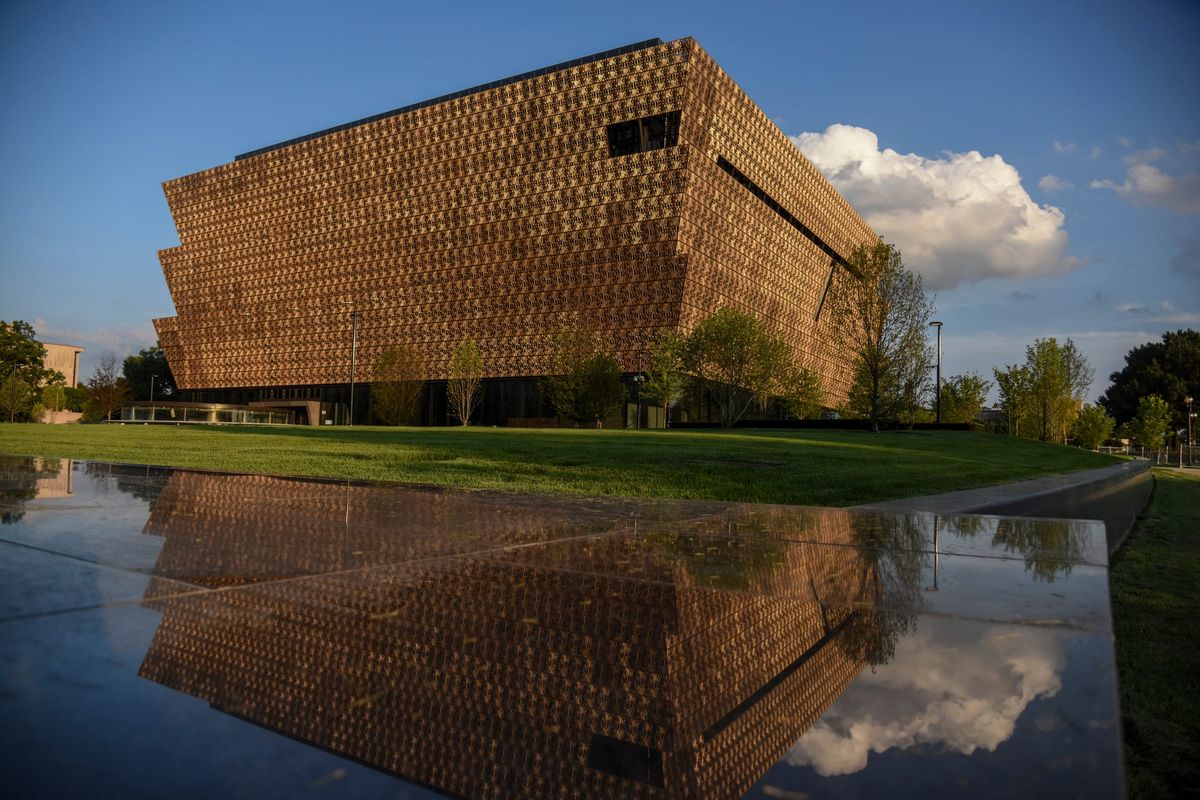
The NMAAHC is frequently celebrated as a triumph of modern engineering and symbolic expression. Its distinct, three-tiered corona, wrapped in an intricate bronze-mesh lattice, draws inspiration from West African art and the ornate ironwork crafted by enslaved artisans in the American South. However, viewing this masterpiece through the singular lens of starchitecture distorts the reality of how major civic institutions are brought to life.
For decades, the architectural establishment has clung to the myth of the lone genius—an auteur whose solitary brilliance yields monumental spaces. This romanticized trope not only misrepresents the collaborative nature of large-scale urban design, but it also carries distinct institutional risks.
In July 2023, the Financial Times published investigative reports detailing serious allegations of sexual misconduct against David Adjaye by multiple former employees. As Adjaye subsequently stepped back from the public eye, the architectural world was forced to confront the systemic dangers of hitching the identity of a major civic institution to the pedestal of a single "genius."
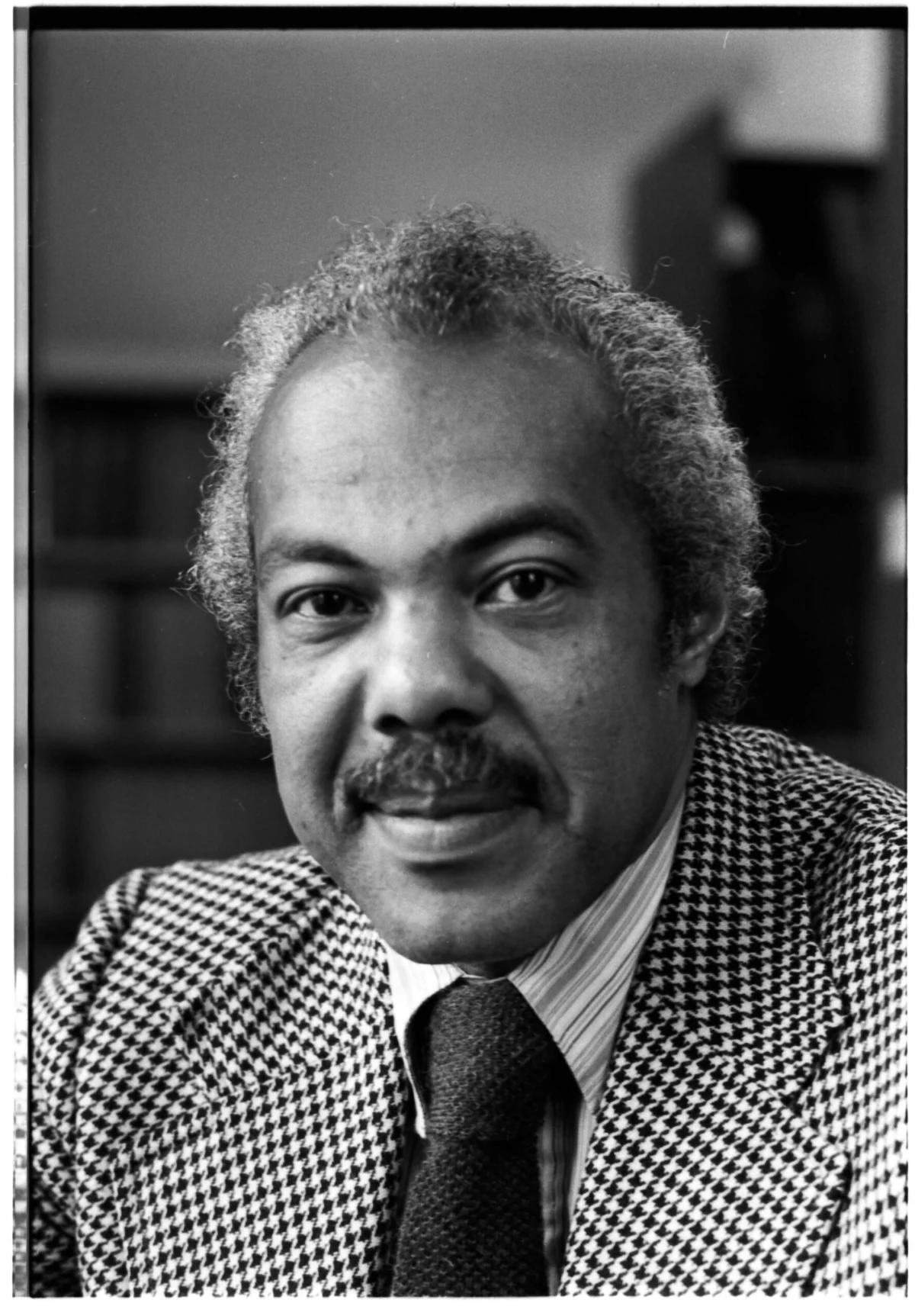
By contrast, J. Max Bond Jr. spent his entire career actively dismantling the architecture "star system." Bond passed away from cancer in February 2009—tragically, just months before his team won the commission for the Smithsonian museum. Throughout his decades-long career, he maintained a profound skepticism toward architectural self-aggrandizement.
"We as architects should question whether or not the ‘Star System’ serves our interests as a group," Bond wrote in an unpublished 1993 essay. For Bond, architecture was never about a flash-of-brilliance sketch on a cocktail napkin; it was an exercise in slow, deliberate collaboration, social responsibility, and political awakening.
Chronology of a Landmark: The Long Road to the National Mall
To fully understand the monumental nature of the NMAAHC—often affectionately dubbed the "Blacksonian"—one must trace the trajectory of Black representation in American architecture, a narrative in which Max Bond’s life and career serve as a vital backbone.
Early Foundations and Global Perspectives (1935–1960s)
Born in 1935, J. Max Bond Jr. came of age during an era of profound racial segregation and systemic exclusion. He pursued his education at Harvard University, earning both his undergraduate degree and his Master of Architecture by 1958. Despite his credentials, the American architectural landscape offered limited opportunities for Black practitioners.
Seeking an environment free from the immediate constraints of Jim Crow America, Bond relocated to Paris and later to Ghana in the early 1960s. Working in West Africa during its post-independence boom, Bond contributed to nation-building efforts, designing the Africa House at the University of Ghana and experiencing firsthand an architecture directly tied to democratic self-determination. This formative period cemented his belief that buildings should actively serve and elevate marginalized communities.
Returning to the States and Institutional Leadership (1970s–1990s)
Upon returning to the United States, Bond established a prominent practice in New York City, taking on critical civic and cultural commissions. He served as the executive director of the Harlem Urban Development Corporation in the 1970s, applying his design philosophy to urban renewal that prioritized community preservation over displacement.
His influence extended deep into academia. In 1980, Bond was appointed chair of the Division of Architecture at the Columbia University Graduate School of Architecture and Planning, becoming a mentor to generations of younger architects. He later joined the renowned firm Davis Brody Bond, where he led major public projects, including the Martin Luther King Jr. Center for Nonviolent Social Change in Atlanta and the Schomburg Center for Research in Black Culture in Harlem.
The Push for the Smithsonian Museum (Late 1990s–2009)
Long before Congress authorized the creation of the NMAAHC in 2003, Bond was among the small, dedicated vanguard of historians, activists, and cultural leaders lobbying Washington to establish a national museum dedicated to African American history on the National Mall. He understood that physical space on the Mall conferred national legitimacy.
When the Smithsonian finally launched the architectural design competition for the museum in the late 2000s, Bond—collaborating with Philip Freelon and David Adjaye—poured his lifetime of experience into the proposal. The team’s winning design was announced shortly after Bond’s death in 2009. Though he did not live to see the building rise from the earth, the intellectual framework, political tenacity, and cultural sensitivity that made the design possible were unmistakably his.
Supporting Data and Professional Insights
Architectural historians and critics are increasingly re-evaluating the systemic erasure of Black architects from major national monuments. Data compiled by organizations like the National Organization of Minority Architects (NOMA) highlights a persistent lack of diversity within the field: Black architects make up roughly 2% of all licensed architects in the United States today.
During Bond’s active decades, that percentage was even lower, rendering his achievements as a Black practitioner navigating major institutional commissions all the more extraordinary. Yet, mainstream architectural media historically marginalized these barriers, framing success through an individualistic, eurocentric lens.

In his recently published biography, Max Bond: The Life and Work of the People’s Architect (Princeton University Press), architectural historian Brian Goldstein argues that Bond’s legacy offers a crucial corrective to contemporary practices. Goldstein writes:
"To understand the long-germinating ideas that made this museum a profound interruption of the monumental status quo, we must look to Bond… For him, architecture required not simply virtuosic form but virtuosic function, especially for the benefit of its inhabitants."
Bond’s philosophy was rooted in the idea that buildings must respond to their social context. While starchitects often dropped sculptural objects into urban environments with little regard for surrounding communities, Bond designed with communities. His buildings were democratic, socially engaged, and unapologetically reflective of the populations they served.
Official Responses and Cultural Implications
As the NMAAHC marks its 10th anniversary, the museum finds itself at a profound crossroads. The milestone arrives not only amid celebration of its cultural impact—having welcomed tens of millions of visitors and transformed the national dialogue on race and history—but also during a period of intense political vulnerability.
In recent years, federal political figures, including members of the incoming Trump administration, have leveled sharp criticisms against the Smithsonian Institution, accusing its museums of promoting "anti-white activism" and advancing a partisan historical narrative. Calls from political quarters to constrain, rewrite, or defund exhibitions dealing with the realities of slavery, segregation, and civil rights represent an existential threat to the institution’s mission.
In this climate, remembering J. Max Bond Jr. takes on renewed urgency. The museum is more than a striking bronze structure; it is a physical manifestation of decades of resistance against historical erasure.
Cultural critics note that whitewashing the architectural pedigree of the NMAAHC by reducing it to a single star’s vision mirrors the broader societal impulse to sanitize history by stripping away collective struggle and institutional resistance. Reclaiming Bond’s role reminds the public that the museum was willed into existence through collective perseverance, political organizing, and a shared Black intellectual tradition.
Conclusion: Reclaiming the People’s Architect
The legacy of J. Max Bond Jr. challenges the architectural profession to abandon its obsession with the isolated genius and embrace a more collaborative, socially conscious model of practice.
As the National Museum of African American History and Culture enters its second decade, honoring its physical home requires looking past the glossy magazine covers and acknowledging the foundational contributions of the team that built it. By recognizing Bond as the intellectual pioneer who first pushed for a permanent home for Black history on the National Mall, we restore integrity not only to the history of a building, but to the broader American landscape it proudly transformed.
 Muslim
 Sagoh
Sagoh
 Dwi Wanna
