

By Brian VanHooker
Published October 5, 2026
Main Facts: The Enduring Power of a Cold War Masterpiece
More than six decades after its initial broadcast, Rod Serling’s legendary anthology series The Twilight Zone continues to cast a long, influential shadow over modern science fiction and horror. While contemporary audiences are accustomed to hyper-realistic computer-generated effects, intricate creature designs, and sprawling cinematic universes, the foundational classics of television history achieved their terrifying impact through a very different lens.
Aliens, time travelers, and malevolent dolls have long populated the genre, yet none of these supernatural entities measure up to the quiet, psychological dread of Season 3’s "The Shelter." Originally aired in the fall of 1961—65 years ago—this specific episode stands as a masterclass in tension because it relies entirely on a monster that requires no special effects: human nature.
Written by series creator and host Rod Serling, "The Shelter" strips away all sci-fi window dressing. There are no visitors from another planet, no futuristic technology, and no magical anomalies. Instead, the episode presents a chillingly grounded scenario: a suburban neighborhood pushed to the brink of utter barbarism by the mere threat of a nuclear attack. In examining how quickly civility dissolves into primal tribalism, the episode offers a timeless critique of prejudice, fear, and societal collapse that remains profoundly relevant today.
Chronology: A Birthday Party Interrupted by Armageddon
The narrative structure of "The Shelter" unfolds with a masterclass in escalating dread, moving seamlessly from warm suburban camaraderie to absolute societal disintegration within the span of a single evening.
1. The Celebration (Dinner Among Friends)
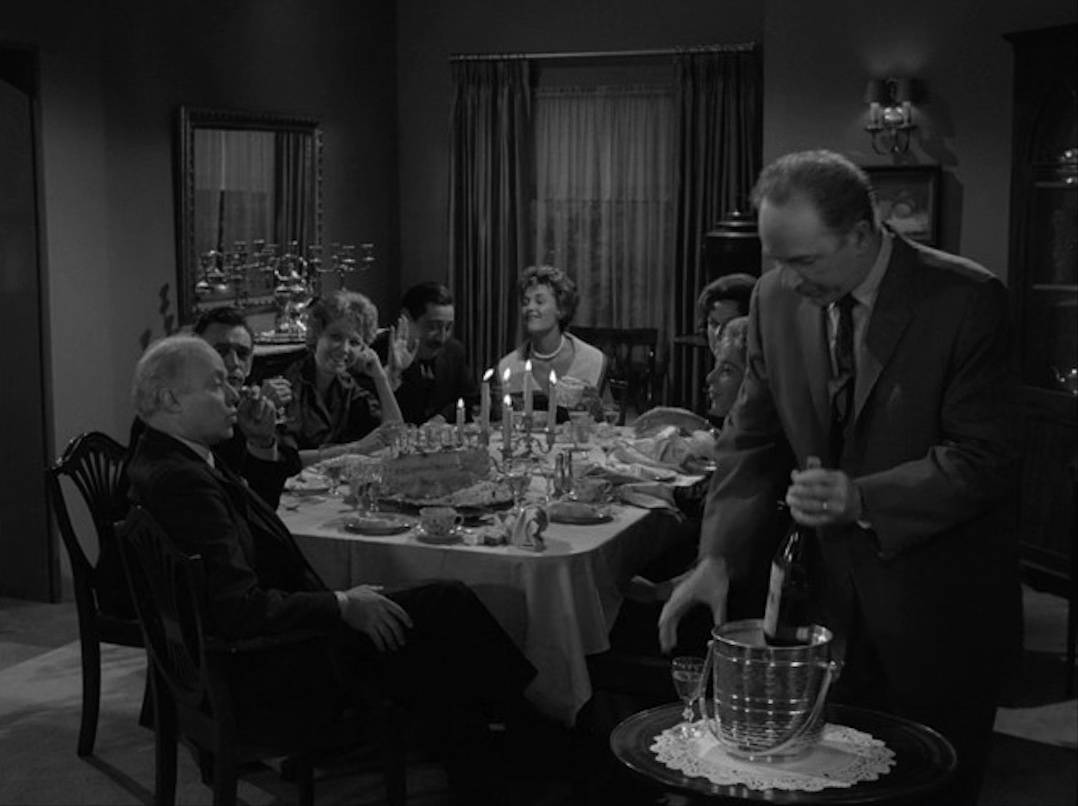
The episode opens in a comfortably lit suburban home where a group of neighborly families has gathered to celebrate a birthday. The guest of honor is Dr. Bill Stockton, brilliantly portrayed by Larry Gates. Dr. Stockton is the beloved local physician who has tended to these families for years. The atmosphere is jovial, filled with wine, laughter, and polite banter.
However, beneath the surface pleasantries, minor tensions bubble. The neighbors are aware that Dr. Stockton has spent considerable time, money, and effort constructing a private fallout shelter in his basement. Earlier in the evening, they tease him about his paranoia, mocking his investment in a concrete bunker while the world outside sits in a fragile peace. Stockton takes the ribbing in stride, quietly holding firm to his belief that preparation is a pragmatic necessity.
2. The Broadcast (The Announcement of Doom)
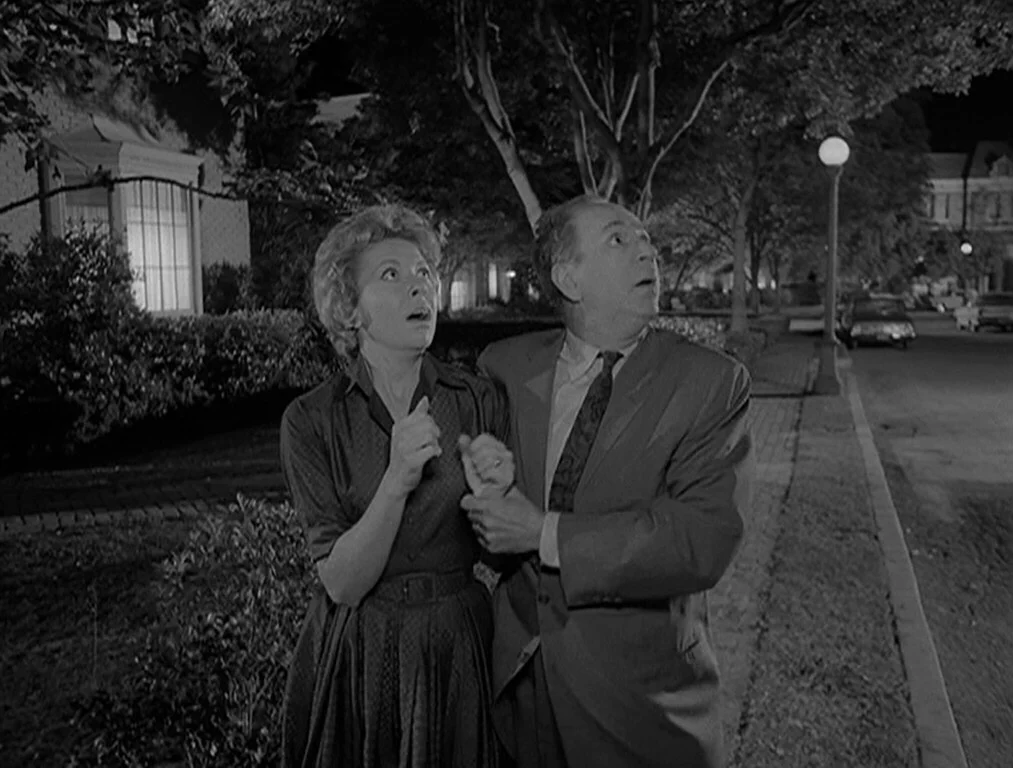
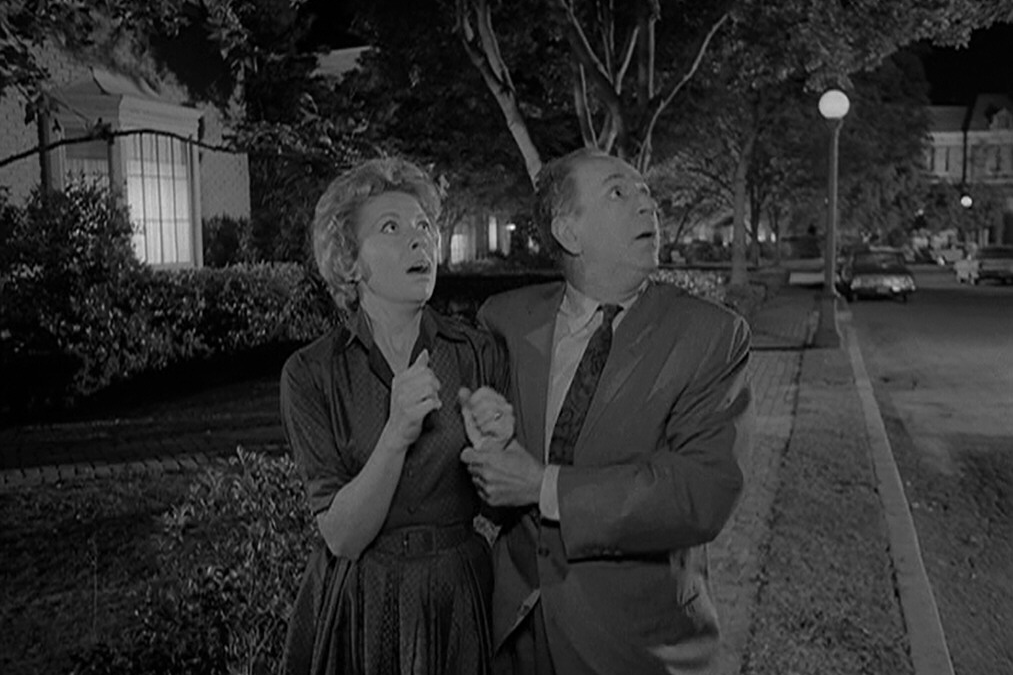
The festive mood shatters instantly when an emergency alert interrupts the radio. A calm, chilling voice announces that unidentified objects have been detected in the airspace nearby. A nuclear attack may be imminent. The broadcast issues a directive that every citizen must immediately seek shelter in a basement or, ideally, a reinforced fallout shelter.
Panic sets in immediately. The neighborhood’s veneer of civilized neighborliness evaporates. As the reality of the situation sinks in, a terrifying truth emerges: Dr. Stockton is the only person on the block who built a shelter.
3. The Rejection and the Siege
Stockton rushes his wife and child into the basement, preparing to seal the heavy steel door. As he does, his panicked neighbors converge on his home, begging, pleading, and eventually demanding to be let inside.
Stockton meets them with profound sorrow, gently explaining the mathematical and physical reality of the situation: his shelter was engineered precisely and exclusively for his immediate family. There is simply no physical space, oxygen, or water to sustain additional bodies. When Stockton apologetically locks the door, the transition from friends to enemies is instantaneous.
Outside the subterranean refuge, a chaotic debate over who "deserves" survival erupts. Hysteria gives way to xenophobia and bigotry, culminating in the neighbors sourcing a heavy metal flagpole to use as a makeshift battering ram to breach the door and kill or displace the doctor’s family to save themselves.
Supporting Data: The Historical Context of 1961
To fully appreciate the cultural resonance of "The Shelter," one must examine the socio-political climate of the United States in 1961. This was the height of the Cold War, an era defined by an atmosphere of acute paranoia and existential dread.
- Nuclear Preparedness Drills: During this period, civil defense was a daily reality for American citizens. Schoolchildren routinely practiced "duck and cover" drills under their desks, while municipal governments designated public buildings as fallout shelters, marked by distinct yellow-and-black triangular signs.
- The Backyard Bunker Boom: Driven by government pamphlets and escalating tensions between the U.S. and the Soviet Union, an increasing number of suburban families began constructing private fallout shelters in their backyards. This commercialization of survivalism frequently sparked ethical debates within communities: If a neighbor builds a shelter, do they have a moral obligation to share it with the community?
- The Red Scare Legacy: The early 1960s were heavily influenced by McCarthyism and a pervasive fear of communist infiltration. Trust in one’s neighbors was compromised by ideological suspicions, making the quick slide into suspicion and finger-pointing depicted in Serling’s script a mirror of contemporary anxieties.
While history proved that the catastrophic nuclear exchange feared during the Cold War did not materialize, the psychological weight of living under a constant, invisible threat of annihilation made "The Shelter" a visceral, terrifying viewing experience for families tuning in from their living rooms in 1961.

Official Responses and Critical Legacy
Over the past six decades, television critics, historians, and cultural analysts have consistently ranked "The Shelter" among the finest achievements of The Twilight Zone’s five-season run.
Unlike many episodes that leaned heavily into the surreal, Rod Serling deliberately anchored "The Shelter" in stark realism to provoke introspection among his viewers. Network executives and censors offered little pushback regarding the episode’s dark thematic turn, recognizing that Serling was addressing a national conversation already happening in newspapers and town hall meetings across America.
Retrospective reviews frequently highlight the performance of Larry Gates as Dr. Stockton, whose calm, resolute demeanor provides a stark foil to the shrieking hysteria of the mob. Critics have noted that Stockton is not presented as a villain for protecting his family, nor are the neighbors portrayed as mustache-twirling evil men; rather, they are ordinary people exposed as fragile, fearful animals when stripped of the comfort of polite society.
Film and television scholars frequently cite the episode as a pioneer of the "bottle episode" and home-invasion/bunker-survival subgenres that would later dominate modern thrillers and horror cinema.
Implications: Why "The Shelter" Resonates in the 21st Century
More than sixty years after its premiere—and decades past landmark historical shifts such as the fall of the Berlin Wall and the post-9/11 security era—the literal threat of 1960s-style nuclear annihilation feels distant to many modern viewers. Yet, "The Shelter" refuses to age out of relevance.
The true genius of Rod Serling’s writing lies in the fundamental truth that The Twilight Zone was never really about science fiction; it was always about sociology and human psychology.
1. The Mask of Civility
At the start of the episode, the neighbors view Dr. Stockton as an indispensable pillar of the community—a friend, a healer, and a welcome guest at their table. By the final act, those same individuals are screaming curses at his door, ready to murder him and his family for a chance at survival. The implication is chilling: civilization is merely a thin varnish. Underneath our polite manners, professional titles, and community barbecues lies a volatile cocktail of panic and entitlement.
2. Tribalism and Scapegoating
When faced with a crisis they cannot control, the trapped neighbors immediately turn inward against one another. Ethnic prejudices and deep-seated xenophobia bubble to the surface, with one neighbor arguing that a foreign-born resident is somehow less deserving of protection than native-born Americans. This sociological phenomenon remains entirely timeless. Whenever modern societies face severe stress—whether through economic downturns, public health crises, or systemic resource scarcity—the immediate human impulse is often to fracture along tribal, racial, and national lines.
3. The Timelessness of Human Nature
Aliens, killer dolls, and mystical slot machines provide fantastic entertainment, but they ultimately rely on novelty. Human fear, greed, bigotry, and mob mentality are eternal. We may no longer worry about backyard bomb shelters in the exact same manner as 1961, but we witness identical patterns of mass hysteria, selfishness, and targeted scapegoating on our news feeds every single day.
That is why The Twilight Zone continues to endure across generations. The monsters in Serling’s universe were never lurking in the dark skies or hiding under the bed; they were always standing right next to us, wearing our clothes, smiling at our birthday parties, and waiting for the sirens to sound.
For those looking to experience or revisit this masterclass in television history, "The Shelter"—alongside the rest of the classic series—is currently available to stream for free on Pluto TV.
 Asep Darmawan
 rifanmuazin
 Raul Delapena Setiawan
