

By Hakim Bishara
Special to Hyperallergic
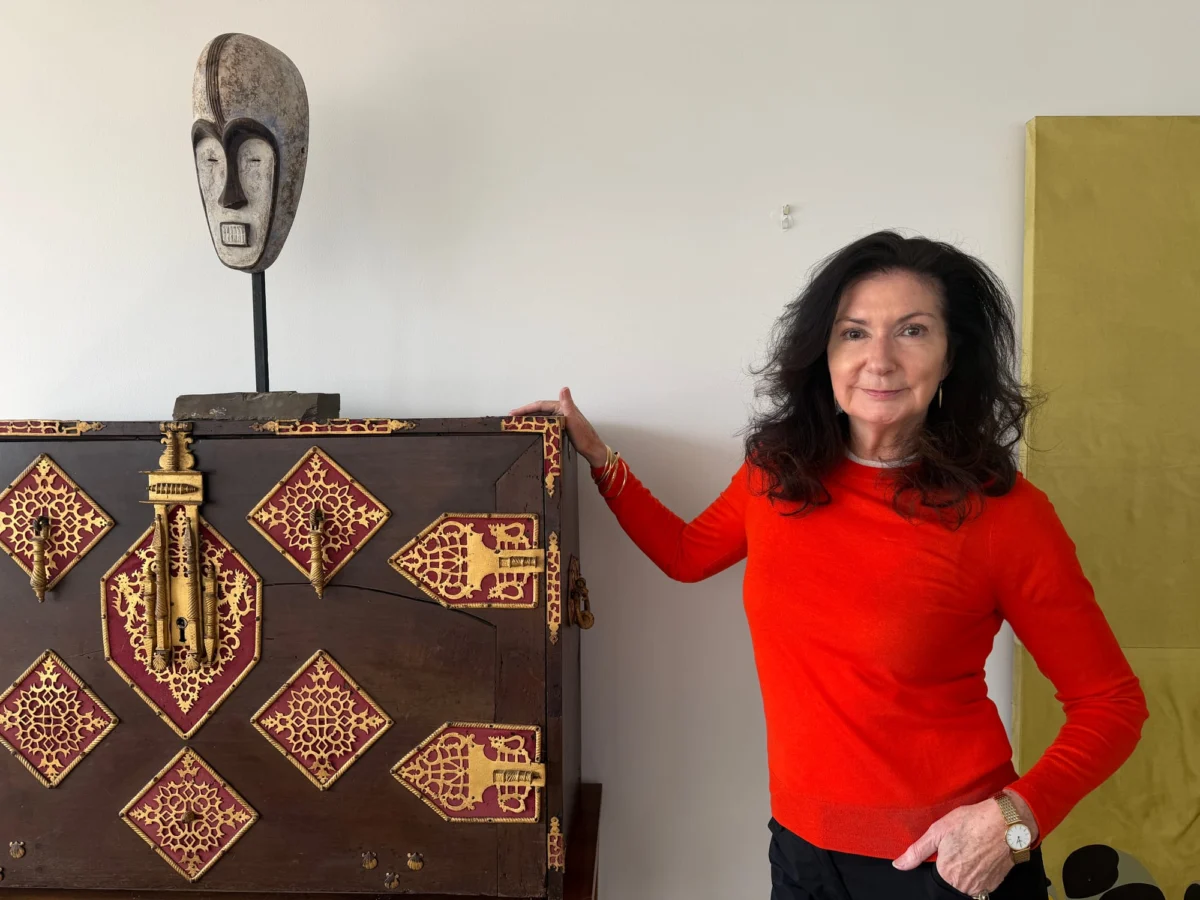
After guiding the historic 400-acre artist sanctuary through financial ruin, modernization, a global pandemic, and a century of cultural shifts, Elaina Richardson is stepping down as president of Yaddo. Her departure marks the end of a transformative 26-year tenure at the helm of the legendary Saratoga Springs, New York, residency.
Richardson will be officially succeeded by Cyra Levenson, currently the deputy director of Learning and Engagement at the Solomon R. Guggenheim Museum, in a transition announced last week.
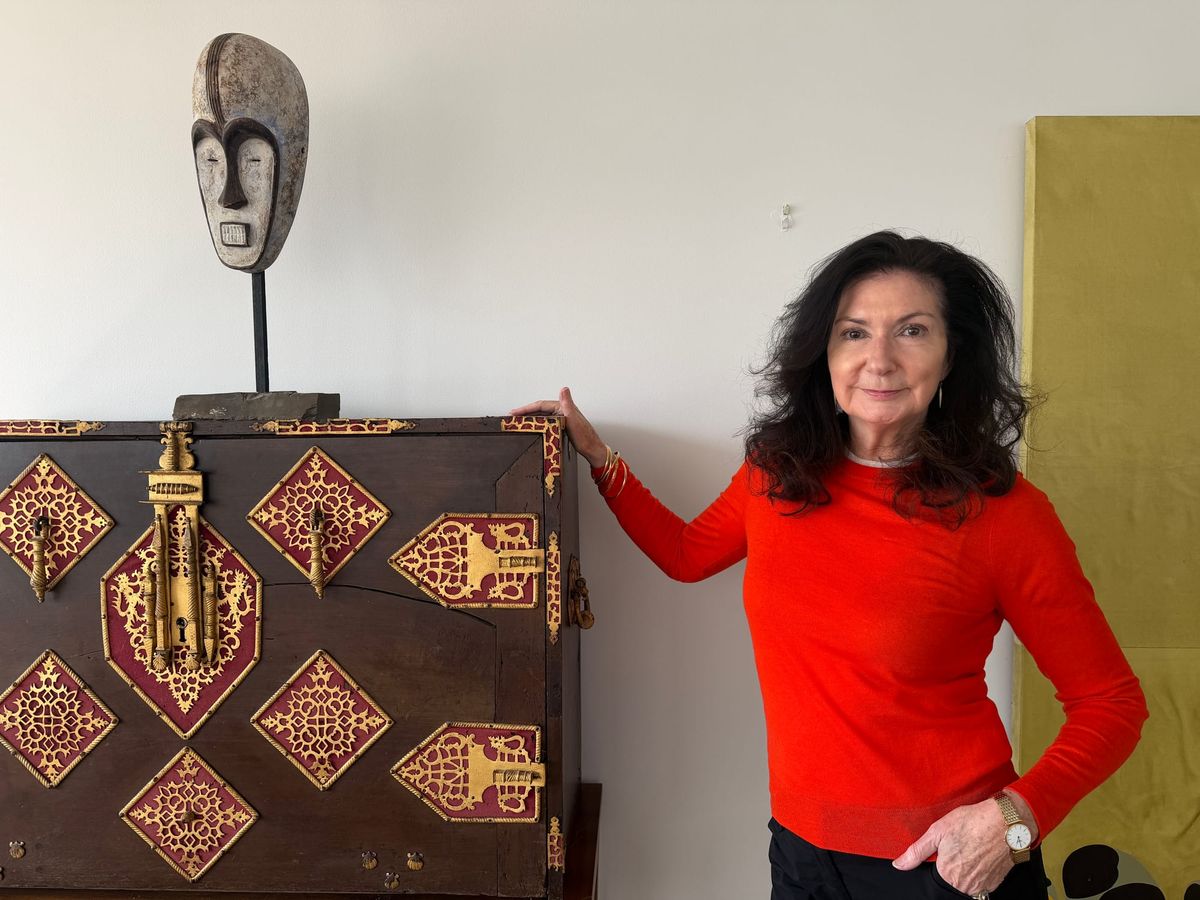
As Yaddo celebrates its milestone centennial anniversary, Richardson leaves behind an institution radically different from the one she inherited in the late 1990s. Once struggling with a meager endowment and insular operations, the retreat is now a financially stabilized, globally diverse haven for contemporary creators. In an exclusive interview at her Manhattan apartment, Richardson sat down to discuss her quarter-century journey, the shifting landscape of arts philanthropy, and what it truly takes to nurture creative minds in the 21st century.
Main Facts: The End of an Exemplary Leadership
Elaina Richardson’s tenure as president of Yaddo represents one of the longest and most impactful leadership runs in the history of American cultural institutions. Under her watch, the prestigious retreat—whose alumni rolls read like a pantheon of 20th- and 21st-century cultural giants, including James Baldwin, Truman Capote, Sylvia Plath, Leonard Bernstein, Jacob Lawrence, and Philip Guston—underwent a quiet yet radical revolution.
When Richardson took over the position in the late 1990s, Yaddo was a fragile ecosystem. Despite its unmatched legacy—its former residents have collectively amassed 90 Pulitzer Prizes, 36 MacArthur Fellowships, 73 National Book Awards, and a Nobel Prize in Literature—the institution was tethered to archaic administrative models and precarious financial structures.
Richardson’s successor, Cyra Levenson, steps into a very different reality. With a robust background in museum education and public engagement at institutions like the Guggenheim, Levenson is poised to lead Yaddo into its next century. Yet, the blueprint she inherits—one balancing institutional prestige with progressive financial and social structures—is almost entirely the handiwork of Richardson.
Chronology: From Glasgow Roots to the Heart of the American Art World
To understand Richardson’s pragmatic, no-nonsense approach to leadership, one must look at her unlikely trajectory. Born to a working-class family in Glasgow, Scotland, Richardson was an outlier in the hyper-exclusive worlds of elite glossy magazines and high-end philanthropic institutions.
Before taking the reins at Yaddo, Richardson built a formidable career in journalism. She spent seven years at the fashion and culture magazine Elle, culminating in her appointment as editor-in-chief. That rigorous, deadline-driven media background instilled in her a straightforward, bullshit-free communication style that quickly set her apart in the often-pretentious realm of arts administration.
- The Late 1990s: Richardson assumes the presidency of Yaddo, inheriting an institution with an endowment of just $8 million and significant operational vulnerabilities.
- The 2000s: Navigating economic turbulence—including the 2008 financial crash, which briefly delayed her initial thoughts of stepping down—Richardson focuses on aggressive fundraising, structural repairs to the historic Saratoga Springs mansion, and expanding the institution’s donor base.
- The 2010s: Yaddo broadens its application pipelines, significantly increasing the racial, cultural, and geographic diversity of its artist cohorts. The residency sheds its historical reputation as an exclusive club for coastal elites.
- 2020–2022: Richardson steers the century-old retreat through the unprecedented operational and financial threats of the COVID-19 pandemic, implementing rigorous safety protocols while keeping the residency afloat.
- Late 2026: Celebrating Yaddo’s centennial year, Richardson announces her departure. Cyra Levenson is named as her successor, setting the stage for a seamless handover.
Supporting Data: Transforming Yaddo’s Financial and Cultural Footprint
The numbers defining Richardson’s legacy at Yaddo speak volumes about her fiscal acumen and commitment to institutional longevity:
- Endowment Growth: When Richardson arrived, Yaddo’s endowment stood at a precarious $8 million. Through strategic capital campaigns and targeted donor cultivation, she expanded the endowment to approximately $40 million.
- The Estate: Spanning 400 acres in Saratoga Springs, New York, the estate—originally purchased in 1881 by financier Spencer Trask and writer Katrina Trask—underwent essential facility upgrades and modernizations under Richardson’s watch, ensuring that historic structures could comfortably house modern multi-disciplinary creators.
- The Legacy of Alumni: Yaddo’s prestige rests heavily on the output of its fellows. Alumni achievements accumulated over the decades include:
- 90 Pulitzer Prizes
- 36 MacArthur Fellowships ("Genius Grants")
- 73 National Book Awards
- 1 Nobel Prize in Literature (along with countless other international accolades).
Official Responses and Reflections
In her interview with Hyperallergic, Richardson revealed that the decision to step down was rooted in personal timing and institutional health.
"Let’s start at the end. Why are you leaving?" she was asked.
"Mainly because it feels healthy to do it," Richardson explained. "And it feels safe to do it, or at least felt so when I announced the decision. ‘Safe’ meaning for Yaddo as a place."
Richardson recalled earlier moments in her tenure when transition felt natural—such as when her daughter was leaving for college—only for macroeconomic shocks, like the 2008 stock market crash, to intervene. By building a $40 million safety net, she ensured that her eventual departure would not leave the institution vulnerable to market volatility.
Board members and cultural peers have widely lauded her stewardship, noting that her working-class Scottish upbringing gave her a rare combination of empathy for struggling artists and corporate tenacity. Devoid of "artspeak," condescension, or empty flattery, Richardson earned the deep trust of generations of residents who found in her a fierce protector of creative space.
Implications: What Richardson’s Departure Means for the Future of Artist Residencies
Richardson’s exit arrives at a pivotal juncture for artist residencies across the globe. As economic inequality deepens, housing costs soar, and traditional funding models for the arts face constant scrutiny, the role of institutions like Yaddo has never been more vital—or more challenging.
Under Richardson, Yaddo proved that a century-old institution could successfully pivot toward inclusivity without sacrificing its rigorous standards of artistic excellence. By diversifying the pool of residents and opening the historic gates to a broader spectrum of voices, she modernised the very definition of who an American artist is.
When Cyra Levenson takes over, she will inherit a residency that is fiscally secure and culturally relevant, but she will also face the modern pressures of digital-age burnout, changing artist expectations, and the ongoing struggle to secure long-term philanthropic support in a turbulent economy.
As Elaina Richardson closes her chapter on Yaddo, she leaves behind a masterclass in cultural leadership—proving that visionary stewardship requires not just a passion for art, but resilience, strategic clarity, and an unwavering commitment to the people who create it.
 Muslim
 Sagoh
Sagoh
 Asro
Asro
