

By Automotive Desk
Published: October 2026
Main Facts: The Great American Muscle Divide
The verdict from America’s muscle-car loyalists is officially in, and it leaves virtually no room for ambiguity. When given a direct, showroom-floor choice between the roar of internal combustion and the silent, torque-heavy future of battery-electric vehicles, Dodge enthusiasts have voted overwhelmingly with their wallets.
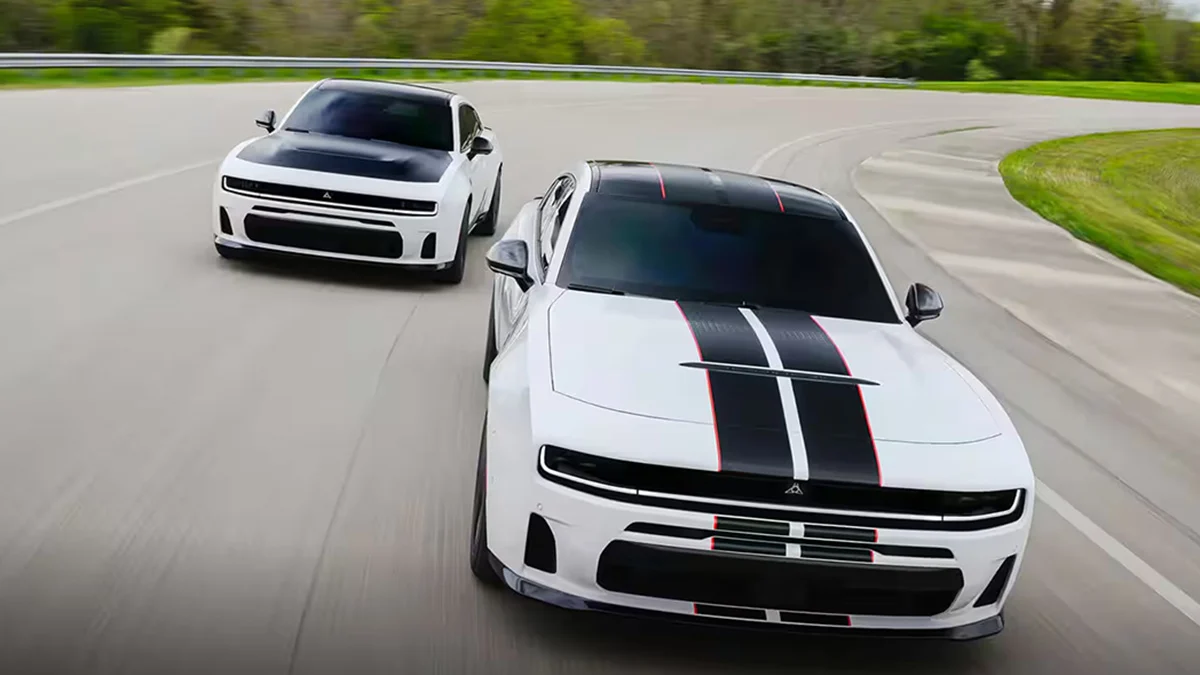
According to third-quarter sales data released by parent company Stellantis, the gas-powered iterations of the eighth-generation Dodge Charger are obliterating their all-electric sibling, the Charger Daytona EV. The numbers present a stark reality for automotive planners: gas-powered Chargers are currently outselling the battery-powered version by a staggering 15 to 1.
This massive disparity underscores a turbulent transition period for heritage performance brands. Stellantis poured immense capital, engineering prowess, and marketing muscle into introducing the world’s first electric muscle car, positioning the Charger Daytona as the vanguard of a new era. Yet, the traditional internal combustion engine (ICE) models—powered by Stellantis’s robust 3.0-liter twin-turbocharged Hurricane inline-six engine—are dominating showroom floors to a degree that has caught the attention of industry analysts worldwide.
While the gas-powered variants are experiencing an unprecedented surge in demand, the electric Daytona is suffering from a severe slump. The data paints a picture of a traditional consumer base that is fiercely resistant to forced electrification, even as legacy automakers grapple with shifting regulatory landscapes and evolving corporate strategies.
Chronology: How the Battle Lines Were Drawn
To understand the current state of the Dodge Charger lineup, one must examine the timeline of its dramatic reinvention and the production realities that shaped the marketplace.
The Seventh-Gen Sendoff and the EV Prelude
For years, the automotive world watched as Dodge’s LX-platform Charger and Challenger—beloved icons of the modern muscle renaissance—nearing the end of their lifecycle. When Dodge finally announced the retirement of the aging Hemi V-8 engines, it sent shockwaves through the enthusiast community. In their place, Dodge promised a revolutionary future, previewed by the Charger Daytona SRT Concept, which featured the controversial "Fratzonic Chambered Exhaust" designed to mimic the decibel levels of a traditional gas-powered V-8.
The Launch of the Eighth Generation
The rollout of the eighth-generation Charger family was staged as a two-pronged attack: lead with the headline-grabbing, all-electric Daytona variants, followed later by the internal combustion engine versions. During the initial launch phases through late 2024 and 2025, the electric Daytona models enjoyed early adopter attention, though production scaling was gradual.
However, a crucial manufacturing nuance explains part of the early statistical volatility: the gas-powered versions of the eighth-generation Charger did not officially enter full-scale production until the final quarter of last year. Consequently, low gas-powered sales figures reported prior to late 2025 largely consisted of remaining seventh-generation dealer inventory.

The 2026 Showdown: First Full Year of Choice
By 2026, the marketplace achieved its first full calendar year where buyers had simultaneous, unfettered access to both eighth-generation configurations: the twin-turbo Hurricane inline-six ICE models (encompassing the R/T, Scat Pack, and Sixpack trims) and the all-electric Daytona models.
The resulting third-quarter data for 2026 marks a watershed moment. It highlights a dramatic divergence in consumer demand that has accelerated faster than most industry watchers anticipated, laying bare the uphill battle facing performance EVs in traditional segments.
Supporting Data: Breaking Down the Numbers
The third-quarter sales report issued by Stellantis provides a fascinating, granular look at the shifting dynamics within American performance car sales. The statistics, covering the period from July through September, reveal a tale of two distinct powertrains.
The Internal Combustion Surge
For the third quarter of 2026, Stellantis reported a massive surge in gas-powered Charger sales:
- Q3 2026 Sales: 3,446 units of the gas-powered Charger.
- Q3 2025 Sales: 238 units (primarily comprising runout seventh-generation stock and very early eighth-gen deliveries).
- Year-Over-Year Growth: An astonishing 1,348 percent increase (representing an addition of 3,208 units).
- Year-to-Date Performance: Total gas-powered Charger sales through the first nine months of 2026 reached 8,029 units.
The variants driving this volume are equipped exclusively with the 3.0-liter twin-turbocharged Hurricane inline-six engine. Available in trims such as the R/T, Scat Pack, and Sixpack, these models have successfully captured the imagination—and capital—of drivers who prioritize traditional exhaust notes, tactile mechanical feedback, and familiar refueling habits.
The Electric Slump
Conversely, the all-electric Charger Daytona has encountered significant headwinds. The data reveals a sharp contraction in demand for the battery-powered variant:
- Total Q3 2026 Charger Sales: 3,679 units (combining both ICE and EV).
- Q3 2026 EV Sales: Just 233 examples of the all-electric Daytona.
- Q3 2025 EV Sales: 2,776 Daytona examples (during its initial introductory window).
- Year-Over-Year Decline: A steep 92 percent drop in quarterly sales.
- Year-to-Date Performance: Through September 2026, only 767 units of the EV have been sold, reflecting an 89 percent year-over-year decline.
When these figures are synthesized, the headline metric becomes impossible to ignore: the gas-powered Charger is outselling its electric counterpart by a 15-to-1 margin.
Official Responses and Market Context
Stellantis executives have maintained a measured public posture regarding the polarized sales data, though behind-the-scenes strategy sessions are undoubtedly taking place.
Industry experts note that the dramatic downturn in EV sales cannot be viewed in a vacuum. A primary catalyst for the steep decline in Charger Daytona purchases is the recent expiration and structural overhaul of government incentives, notably the loss of the federal $7,500 EV tax credit. For performance enthusiasts—a demographic often sensitive to pricing, value, and upfront capital outlay—the sudden removal of financial incentives altered the economic calculus of adopting an electric muscle car.

Furthermore, automotive economists point out that the early adopter wave for high-end electric vehicles has largely crested across multiple segments, leaving automakers to contend with the more conservative, pragmatic mainstream performance buyer.
Dodge leadership has historically positioned itself as a brand that listens closely to its customer base. The rapid scaling of the Hurricane inline-six engine production was designed to ensure that loyalists unwilling to make the leap to electrification would still find a home in a Dodge showroom. However, the sheer magnitude of the 15-to-1 ratio suggests that the brand’s core audience is not merely hesitant about EVs—they are outright rejecting the electric Daytona format at current price points and specifications.
Implications: What This Means for the Future of Muscle Cars
The widening chasm between ICE and EV sales within the Dodge lineup carries profound implications for Stellantis, its dealer network, and the broader automotive industry as it navigates the murky waters of the transition to zero-emission mobility.
1. Product Strategy and Powertrain Flexibility
Dodge’s underlying platform architecture for the eighth-generation Charger was engineered from the ground up to accommodate both internal combustion and battery-electric powertrains. This multi-energy strategy, once viewed by critics as a compromise, is now proving to be an essential corporate lifeline. Without the Hurricane-powered models carrying the sales volume, the Charger nameplate would be facing a catastrophic commercial downturn. The data proves that multi-powertrain flexibility is not just a nice-to-have feature, but a mandatory survival mechanism in a politically and culturally divided automotive market.
2. The Pressure on the Daytona
While the poor 2026 sales performance of the Charger Daytona is unlikely to trigger an immediate cancellation—Stellantis knew the transition would be fraught with friction—patience in corporate boardrooms is rarely infinite. For the electric muscle car to survive long-term, it must begin closing the performance and value gap with its sibling. Whether that requires aggressive lease incentives, software updates, structural price adjustments, or enhanced marketing campaigns remains to be seen. If the 15-to-1 ratio persists over the next several quarters, Stellantis will face difficult questions regarding factory allocation and long-term EV investment.
3. A Broader Warning for Legacy Automakers
Beyond Dodge, the 2026 Charger sales report serves as a cautionary tale for any heritage brand attempting to pivot historic nameplates into the electric age. Performance vehicle buyers are uniquely passionate about emotional connection, sound, mechanical engagement, and ritual. Forcing an ideological shift without replicating those intangible emotional pillars risks alienating the very community that built the brand’s equity.
Conclusion
As the automotive industry looks toward the horizon, the Dodge Charger stands as a fascinating case study in consumer behavior. Stellantis gave muscle car buyers a choice between the spark and the piston. For now, the verdict is definitive: America’s heart still beats to the rhythm of internal combustion, leaving the electric dream fighting an uphill battle on the showroom floor.
 Sagoh
Sagoh
 Asro
Asro
 Lina Irawan
