

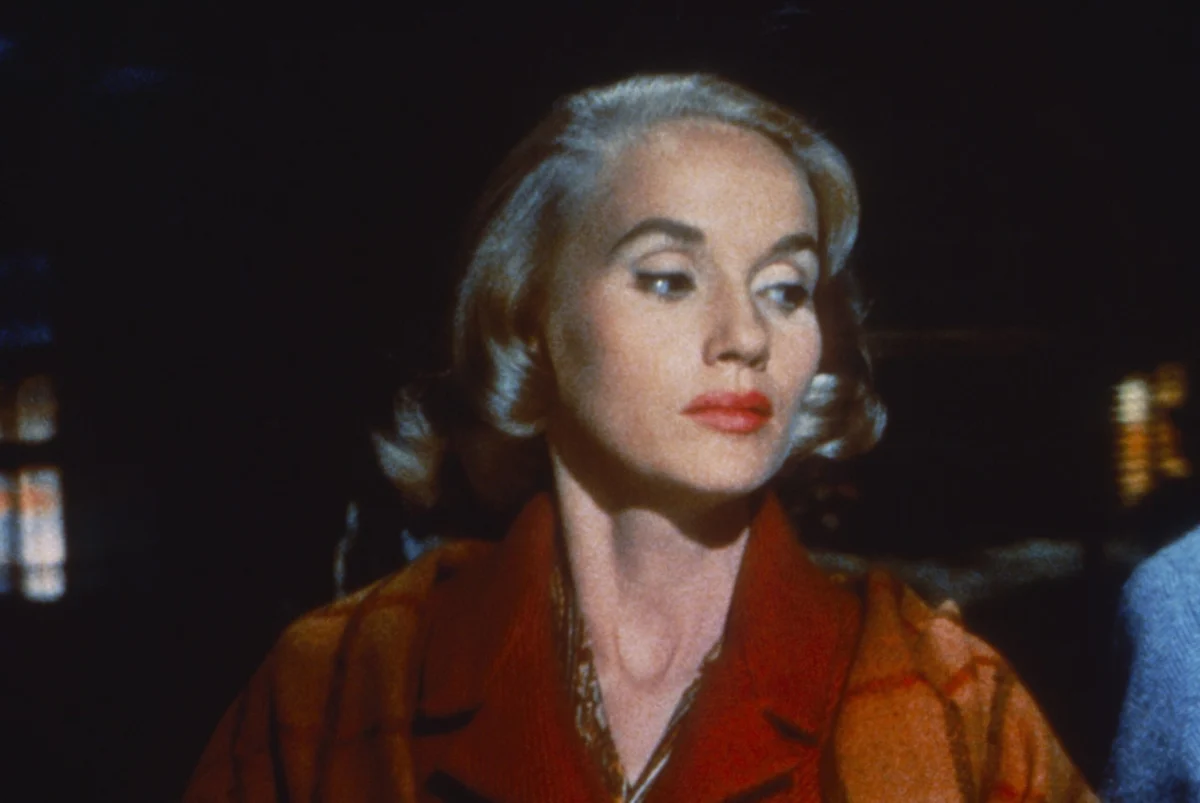
Eva Marie Saint, a luminous presence who bridged the gap between the gritty realism of 1950s Method acting and the polished, suspense-laden brilliance of Alfred Hitchcock’s thrillers, has died at the age of 102. Her passing marks the definitive end of an era, as she was one of the last surviving titans of Hollywood’s Golden Age—a performer who commanded the screen alongside the greatest legends of the 20th century. Her representatives confirmed the news, prompting an outpouring of grief and tributes from across the cinematic world.
A Legacy of Unrivaled Brilliance
Saint was more than a movie star; she was a masterclass in subtlety. Throughout a career spanning seven decades, she displayed an uncanny ability to hold her own against the most formidable leading men of her time. From the raw, improvisational intensity of Marlon Brando to the cool, sophisticated charisma of Cary Grant, Saint possessed a chameleon-like quality that allowed her to define the "everywoman" with a depth that felt both modern and timeless.
Whether she was playing the vulnerable Edie Doyle in Elia Kazan’s On the Waterfront or the duplicitous, sophisticated Eve Kendall in North by Northwest, Saint brought a sharp intelligence to her roles. Her eyes, often described as expressive windows into her characters’ souls, frequently betrayed deeper strategic calculations, hinting at a woman who was always three steps ahead of her male counterparts.
The Chronology of a Storied Life
Early Foundations (1924–1950)
Born in 1924 in Newark, New Jersey, Saint was raised in upstate New York. While her early aspirations leaned toward the noble profession of school teaching, her trajectory shifted during her years at Bowling Green State University in Ohio. It was there that the "acting bug" took hold, a passion so potent that it diverted her from the classroom to the stage. She moved to New York City, the epicenter of American theater, where she honed her craft in the grueling, competitive world of live television and Broadway, building the stamina and discipline that would later make her a formidable film presence.
The Breakthrough (1954)
In 1954, Saint landed what would become one of the most significant debuts in cinematic history. Cast as Edie Doyle in On the Waterfront, she was thrust into the spotlight opposite Marlon Brando. In a film dominated by the volcanic, revolutionary acting style of the "Method," Saint provided a grounding, poignant counterpoint. Her performance was not just a successful debut; it was a revelation. She was honored with the Academy Award for Best Supporting Actress, cementing her status as a force to be reckoned with.
The Hitchcock Era and Beyond (1955–1969)
Five years after her Oscar win, Saint reached the pinnacle of glamour and suspense in Alfred Hitchcock’s North by Northwest (1959). As Eve Kendall, she navigated a world of international espionage with an effortless, dry wit that perfectly complemented Cary Grant. The film’s climax—with Saint dangling off the face of Mount Rushmore—became one of the most enduring images in the history of the medium.

During this period, she worked with a "who’s who" of Hollywood icons, including Henry Fonda, Paul Newman, Gregory Peck, Richard Burton, and Warren Beatty. Her filmography in the 1960s continued to reflect her range, with standout performances in John Frankenheimer’s Grand Prix (1966), Otto Preminger’s Exodus (1960), and Vincente Minnelli’s The Sandpiper (1965).
Resilience and Re-invention (1970–2026)
As the industry shifted toward the New Hollywood era and beyond, Saint transitioned seamlessly into television and character-driven roles. She appeared in acclaimed shows such as Moonlighting and Frasier, proving her relevance to a new generation of viewers. In the 21st century, she didn’t slow down, taking roles in high-profile films like Bryan Singer’s Superman Returns (2006) and Akiva Goldsman’s Winter’s Tale (2014). Her commitment to her craft remained intact well into her 90s, culminating in audio drama performances as recently as 2022.
Supporting Data: A Career in Numbers
Eva Marie Saint’s career is a testament to longevity. Over a 70-year span, she accumulated:
- 1 Academy Award Win: Best Supporting Actress for On the Waterfront (1954).
- Multiple Nominations: Including Golden Globe and BAFTA recognitions.
- Television Mastery: Appearances in over 50 television projects, including Emmy-nominated work for People Like Us (1990).
- Enduring Collaborations: A professional life that spanned the transition from black-and-white studio epics to the modern digital age of filmmaking.
Official Responses and Industry Tributes
The loss of Saint has been felt deeply by film historians and industry peers alike. The Academy of Motion Picture Arts and Sciences issued a statement calling her "an emblem of grace and an artist of unparalleled sensitivity."
"Eva Marie Saint was the bridge between the old guard of Hollywood and the modern era of acting," said film critic Marcus Thorne. "She didn’t just act; she navigated the screen with a psychological complexity that most of her peers couldn’t touch. To watch her is to watch a master at work."
Colleagues who worked with her during her later years described a woman of "infinite curiosity" and "sharp humor." Her family, in a statement provided to the press, noted, "She was a giant on the screen, but at home, she was simply Mom, Grandma, and Great-Grandma. Her life was defined by the same integrity she brought to every character she portrayed."

The Implications of Her Passing
The death of Eva Marie Saint serves as a sobering reminder of the thinning ranks of the generation that defined the American cinematic language. As we lose these titans, the industry loses direct links to the studio system, the birth of Method acting, and the foundational aesthetic of the noir and suspense genres.
However, the implication of her legacy is not merely one of loss, but of preservation. Saint’s body of work remains a primary text for students of acting. Her ability to balance the technical demands of a Hitchcock set with the emotional spontaneity required by Kazan is a skill set that continues to influence modern performers.
Furthermore, her career trajectory offers a blueprint for longevity in a notoriously ageist industry. By moving between film, theater, and television, and by remaining open to new mediums—like her late-career work in audio drama—Saint avoided the pitfalls of "typecasting" that claimed many of her contemporaries. She remained an artist until the very end, viewing her work not as a static historical achievement, but as an ongoing dialogue with the audience.
Final Reflections
As we look back on the century-long life of Eva Marie Saint, we see a woman who was never defined by a single decade or a single role. She was a witness to the evolution of cinema, and more importantly, a primary architect of its greatness. From the docks of Hoboken in On the Waterfront to the heights of Mount Rushmore in North by Northwest, she traversed the emotional landscape of human experience with a quiet, steely determination.
She is survived by her two children, four grandchildren, and two great-grandchildren, all of whom carry the legacy of a woman who proved that one could be both a monumental star and a deeply grounded human being. While the screen may be quieter today, the echoes of her performances remain, ensuring that as long as film exists, Eva Marie Saint will never truly be out of sight.
 Ali Ikhwan
 Nana
Nana
