

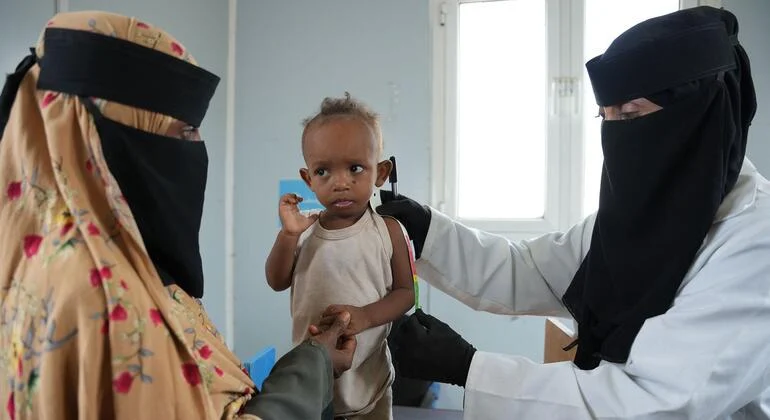
The humanitarian landscape in Yemen has deteriorated sharply in recent weeks as a surge in fighting between Saudi-backed Yemeni Government forces and Iranian-supported Houthi rebels threatens to push an already fragile nation into a total health collapse. With the front lines shifting across key governorates, the international community is facing a "critical funding gap" that is paralyzing the ability of aid agencies to provide life-saving care to hundreds of thousands of civilians caught in the crossfire.
The Current Crisis: A Statistical Overview
The latest data from the International Organization for Migration (IOM) paints a grim picture of mass displacement and instability. As of the most recent reporting period, more than 200,000 individuals have been forced to flee their homes, abandoning livelihoods and possessions in search of safety. The instability has also triggered a spillover effect, with approximately 3,800 refugees braving the treacherous waters of the Red Sea to seek asylum in neighboring Djibouti.
The human cost of this renewed military escalation is mounting daily. Yemeni health authorities report that as of October 2, the conflict has resulted in 959 confirmed deaths and 4,207 injuries across 10 governorates. However, humanitarian observers warn that these figures are likely conservative estimates, as many areas remain inaccessible to aid workers and data collection is severely hampered by the ongoing violence.
Chronology of Escalation: The Shift Toward Total Crisis
The recent spike in violence is not an isolated event but a continuation of a multi-year conflict that has hollowed out the nation’s infrastructure.
- Early September: Tensions spiked in the Lahj governorate, particularly along the coast near the strategic Bab al-Mandeb Strait—a vital maritime chokepoint. The tactical importance of this region has drawn heavy military assets from both sides, leading to sustained shelling and ground skirmishes.
- Mid-September: The conflict widened into the neighboring Taiz governorate and the northern hub of Marib. These areas, which were already struggling to provide basic public services, saw an influx of internally displaced persons (IDPs) fleeing the coastal violence.
- Late September: The health system, already operating under extreme duress, reached a tipping point. Surgical supplies, anesthetics, and fuel began to run dry. Emergency maternity services in Marib and Ras Al-Arah were suspended, leaving pregnant women without any viable options for obstetric care.
- October 2: Health authorities issued an official statement confirming nearly 1,000 deaths. Simultaneously, the World Health Organization (WHO) signaled an urgent alarm, noting that their funding requirements for the country had ballooned from $9 million to $31 million in a matter of weeks.
The "Golden Hour" of Trauma Care: A Systemic Failure
One of the most harrowing aspects of the current crisis is the lack of trauma stabilization. Dr. Syed Jaffar Hussain, the WHO Representative in Yemen, has been vocal about the medical realities of the front lines.
"For people with severe injuries, access to trauma care within the first hour can determine whether they survive," Dr. Hussain noted. "Yet trauma stabilization points on the Lahj coast and in Al-Dhale have no partners to operate them. Few agencies are able to provide trauma care, leaving critical gaps along the front lines."
This void in trauma services is not merely a logistical failure; it is a death sentence for those injured by landmines, shelling, or small-arms fire. When the "golden hour" passes without medical intervention, treatable wounds become fatal, placing an even greater burden on the few hospitals that remain operational. Currently, nearly 50% of health facilities in conflict-affected areas lack external partner support, meaning they are operating with exhausted staff and dwindling supplies.
The Multi-Front War: Disease and Malnutrition
While the immediate violence grabs headlines, a silent epidemic is unfolding within the displacement camps. The breakdown of sanitation and clean water infrastructure, combined with overcrowding, has created the perfect environment for infectious diseases to thrive.
Cholera, Dengue, and Malaria
Cholera cases have tripled in just three weeks. The infection is no longer confined to urban centers; it has now been detected in displacement camps where hygiene conditions are dire. Simultaneously, cases of dengue fever and malaria are on an upward trajectory, fueled by the rainy season and the lack of basic vector-control measures.
The Measles Crisis
Perhaps most alarming is the resurgence of vaccine-preventable diseases. This year alone, over 22,000 suspected cases of measles have been recorded, resulting in 128 deaths. The vast majority of these victims are unvaccinated children residing in displacement camps. Because immunization programs have been disrupted by the conflict, a generation of children is becoming increasingly vulnerable to preventable illnesses.
The Looming El Niño Threat
Climate analysts and aid agencies have warned that the approaching El Niño phenomenon will likely exacerbate these outbreaks. Increased rainfall, while potentially alleviating some water shortages, will lead to flooding that destroys remaining shelter and facilitates the spread of waterborne diseases. Furthermore, the conflict has decimated local food production, meaning that malnutrition is no longer a localized issue but a systemic threat.
Official Responses and the Financing Deficit
The international response to the Yemen crisis is currently operating on a shoe-string budget. The WHO, acting as the primary health coordinator for the country, has been forced into the role of "provider of last resort." This means that when no other NGO or governmental body is able to deliver services, the burden falls on the WHO.
However, the organization has made it clear that their current financial reserves are insufficient to meet the escalating needs. The $31 million required for the health response is not a luxury; it is the minimum threshold for maintaining core trauma services, providing maternal care, and managing disease outbreaks.
An additional $700,000 is required specifically to support the influx of refugees in Djibouti, who are arriving with little more than the clothes on their backs.
"The situation is evolving into a complex emergency, with health needs rising as resources are already severely stretched," Dr. Hussain stated. "Without urgent additional financing, the gaps between available services and needs will continue to widen."
The Human Implication: A Generation Left Behind
The implications of this funding gap extend far beyond the immediate statistics. Of the nearly 198,000 people displaced, less than one percent had received any form of professional health service as of early October. This means that tens of thousands of families are navigating the trauma of war while dealing with untreated infections, chronic conditions, and the lingering psychological impact of displacement.
When maternity wards close, infant mortality rises. When blood banks run out of supplies, the victims of shelling have no chance of survival. When fuel for ambulances and hospital generators disappears, the health system effectively ceases to exist.
Conclusion: The Path Forward
The situation in Yemen is a stark reminder of the limitations of the current global humanitarian architecture. While the political and military actors involved in the conflict continue their maneuvers, the civilian population is left to contend with the consequences of a system that is failing them.
The immediate priority for the international community must be twofold: first, a robust injection of emergency funding to bridge the $31 million gap identified by the WHO; and second, a renewed diplomatic effort to secure humanitarian corridors. Without the ability to transport surgical kits, blood-bank materials, and vaccines safely to the front lines, even the most generous donations will struggle to reach those who need them most.
As the conflict shows no signs of abating, the window to prevent a total health collapse is closing. The world is watching a tragedy unfold, and for the people of Yemen, the difference between life and death is increasingly measured in the dollars and resources that have yet to arrive.
 Nana Muazin
 Basiran
 Nana Wu
