

Published on October 8, 2026
By Automotive Editorial Desk
Porsche is officially ready to redefine the upper echelon of the automotive world. Following weeks of fervent industry speculation, anonymous insider whispers, and spy shots circulating across enthusiast forums, the legendary German sports car manufacturer has confirmed what enthusiasts have been praying for: a brand-new, ultra-exclusive halo supercar is officially in development.
Set to sit comfortably—and fiercely—above the iconic, long-running 911 model line, the upcoming concept has been christened the Mission S. The official confirmation was delivered to the public during Porsche’s high-profile Capital Markets Day event, immediately sending shockwaves through the global automotive community.
Main Facts: What We Know About the Mission S
The announcement of the Mission S marks a monumental chapter for Porsche. For years, purists and collectors have wondered if the brand would ever return to the hyper-exclusive territory last occupied by the hybrid-powered 918 Spyder. The answer is a resounding yes.
- The Designation: The vehicle—or at least its introductory concept—will be officially known as the Mission S.
- The Positioning: It will sit entirely above the 911 model range, serving as the ultimate flagship vehicle for the brand.
- The Architecture: Newly appointed CEO Mark Leiters confirmed during the Capital Markets Day presentation that the vehicle will utilize a traditional mid-engine layout, prioritizing race-bred dynamics and optimal weight distribution.
- The Teaser: Shortly after the corporate presentation, Porsche dropped a tantalizing teaser across its official social media channels. The brief video flashed glimpses of a sleek, aerodynamic silhouette adorned with the iconic Stuttgart crest, accompanied by a poetic and aggressive caption: “Welcome Mission S. Our love letter to the sports car.”
- The Reveal Date: Automotive enthusiasts will not have to wait long to see the full scope of this project; the Mission S concept is scheduled for its official global debut next week on October 15, 2026.
Chronology of a Legend: Porsche’s Ultimate Halo Cars
To truly understand the weight of the Mission S announcement, one must look back at Porsche’s historical approach to its absolute flagship models. While the rear-engined 911 remains the beating heart of the brand and one of the most celebrated sports cars in automotive history, Porsche has periodically stepped outside its comfort zone to build generation-defining hyper-performers that sit above the 911 in the hierarchy.
1. The 1980s: The Technological Marvel of the Porsche 959
Born out of the ashes of the wild Group B rally era, the Porsche 959 arrived in the mid-1980s as a technical tour de force. Featuring an advanced all-wheel-drive system, sequential twin-turbos, and lightweight composite body panels, the 959 was far ahead of its time. It proved that high performance could be harnessed safely and effectively in all weather conditions, cementing its status as a technological masterpiece.
2. The 2000s: The V10 Symphony of the Carrera GT
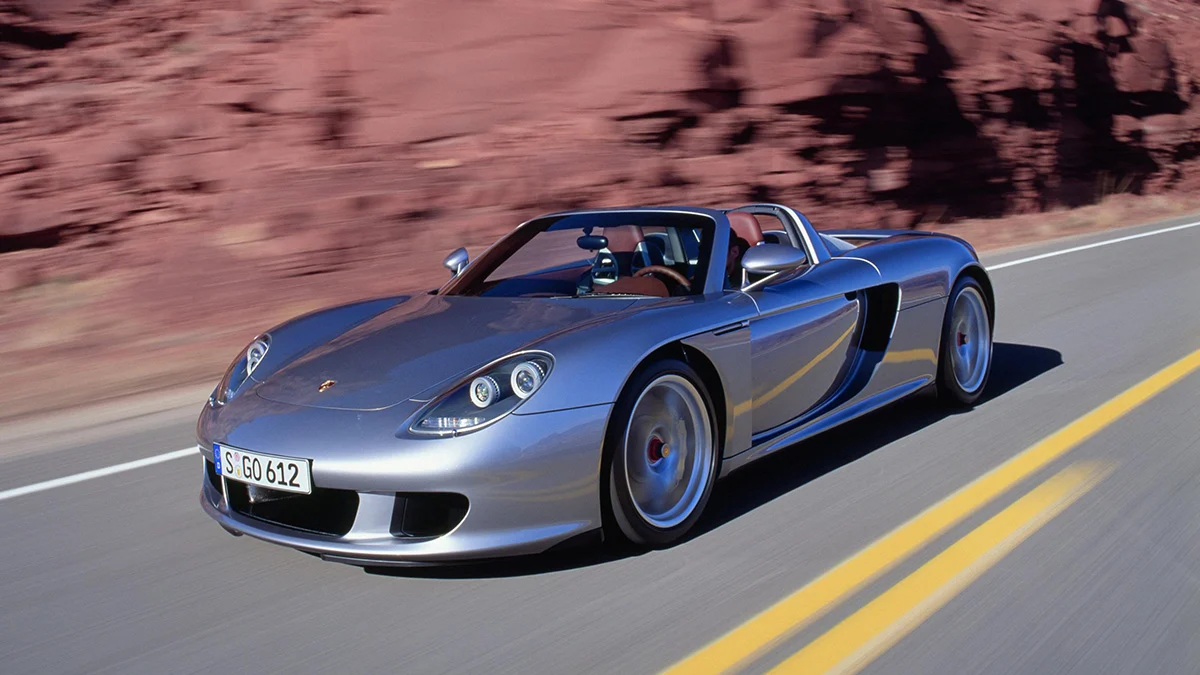
As the automotive industry turned the page into the new millennium, Porsche delivered an entirely different kind of beast. Powered by a screaming, race-derived 5.7-liter naturally aspirated V10 engine—initially developed for Formula 1 before being repurposed—the Carrera GT offered an analog, unfiltered driving experience. Paired with a traditional manual transmission and a carbon-fiber monocoque, it remains one of the most visceral and sought-after analog supercars ever produced.
3. The 2010s: The Hybrid Trinity and the 918 Spyder
In the early 2010s, Porsche joined forces with Ferrari and McLaren to push the boundaries of electrification. The result was the 918 Spyder, a plug-in hybrid hypercar that utilized a high-revving V8 paired with dual electric motors. Producing a combined 887 horsepower, the 918 shattered Nürburgring lap records and demonstrated that electrification could enhance, rather than hinder, the soul of a high-performance vehicle.
4. The 2020s and Beyond: The Rise of the Mission S
Now, as the automotive landscape navigates shifting regulatory environments and powertrain technologies, Porsche is stepping up to the plate once again. The Mission S is poised to write the next chapter in this illustrious bloodline.
Supporting Data: Rumors of a Revolutionary Flat-Eight Engine
While the confirmation of the Mission S is exciting enough on its own, rumors that surfaced in September 2026 suggest that Porsche is cooking up something radically innovative beneath the skin.
According to insiders close to the development team, the Mission S may serve as the debut vehicle for an entirely new engine architecture: a flat-eight (boxer-8) layout. If these reports hold true, it would represent a historic mechanical departure for a brand that has famously relied on flat-six and flat-four configurations for its rear- and mid-engined sports cars for decades.

The Numbers Game
Earlier this year, hints of this powertrain emerged when Porsche’s eFuel project manager publicly discussed ongoing testing with a revolutionary prototype engine. The specifications discussed during those technical briefings paint a portrait of an absolute engineering masterpiece:
- Displacement: 5.0 liters
- Induction: Twin-turbocharged
- Power Output: Approximately 750 horsepower
- Torque: 728 lb-ft of torque
- Redline: A thrilling 9,000 RPM
If the production version of the Mission S—or its immediate evolutionary roadmap—incorporates a high-revving, turbocharged flat-eight running on advanced synthetic eFuels, Porsche will achieve a double victory: delivering unmatched internal combustion performance while simultaneously carving out a sustainable, carbon-neutral future for enthusiast cars.
Official Responses and Strategic Shifts
The confirmation of the Mission S was delivered by Mark Leiters, who recently stepped into the role of CEO at Porsche. Leiters’ presentation during the Capital Markets Day event was designed to reassure investors, stakeholders, and passionate petrolheads alike: Porsche remains fully committed to building uncompromising drivers’ cars, even as the broader industry aggressively pivots toward electrification.
"Porsche’s DNA is forged on the race track and expressed through our halo products," Leiters indicated during his address. By shifting focus toward more exclusive, low-volume, high-margin halo projects, Porsche is signaling a strategic pivot. Rather than diluting its lineup, the brand is doubling down on emotional appeal.
The social media campaign that followed—highlighted by the deliberate and evocative phrasing of “Our love letter to the sports car”—was clearly calculated to soothe anxieties among purists who feared the brand might abandon its mechanical roots. By framing the Mission S as a "love letter," Porsche’s marketing and executive teams are positioning the car not merely as a machine, but as an emotional artifact celebrating the pure joy of driving.
Implications for the Supercar Market and the Future of Porsche
The unveiling of the Mission S on October 15 carries profound implications for both Porsche as a corporate entity and the broader luxury automotive landscape.
1. Raising the Stakes in the Hypercar Wars
With brands like Ferrari, Lamborghini, McLaren, and Koenigsegg constantly pushing the boundaries of output and aerodynamics, Porsche needed a definitive answer to maintain its prestige at the very top of the food chain. The Mission S gives Porsche a dedicated weapon to rival the next generation of hybrid and combustion hypercars, ensuring Stuttgart remains a dominant force in elite performance metrics.
2. The Preservation of the Internal Combustion Engine via eFuels
Porsche has been one of the most vocal and proactive advocates for synthetic eFuels, investing heavily in production facilities to keep internal combustion engines alive in a post-fossil-fuel world. If the Mission S utilizes the rumored flat-eight eFuel setup, it will serve as a rolling laboratory and a proof-of-concept. It will demonstrate to the world that high-performance ICE vehicles do not need to die out; they simply need cleaner, sustainable fuel sources.
3. Strengthening Brand Equity and Collector Value
Ultra-exclusive halo cars traditionally act as a rising tide that lifts all boats. By introducing a car that sits above the 911, Porsche creates a halo effect that ripples down through the entire lineup—from the 718 and 911 to the Macan and Cayenne. Furthermore, with limited production numbers all but guaranteed, the Mission S is poised to become an immediate collector’s item, commanding massive premiums on the secondary market much like its spiritual predecessors, the 959, Carrera GT, and 918 Spyder.
Conclusion: The Countdown Has Begun
The automotive world is currently holding its collective breath. For months, automotive journalists have parsed through whispers, trademark filings, and fuzzy spy photos. Now, with official confirmation from CEO Mark Leiters and a tantalizing social media teaser in hand, the reality of the Mission S is sinking in.
Porsche is ready to write the next great chapter in supercar history. As we count down the days to the official global reveal on October 15, 2026, one thing is abundantly clear: Porsche’s dedication to the art of the sports car remains as fierce, uncompromising, and brilliant as ever.
 Suro Senen
 Lina Irawan
 Ali Ikhwan
