

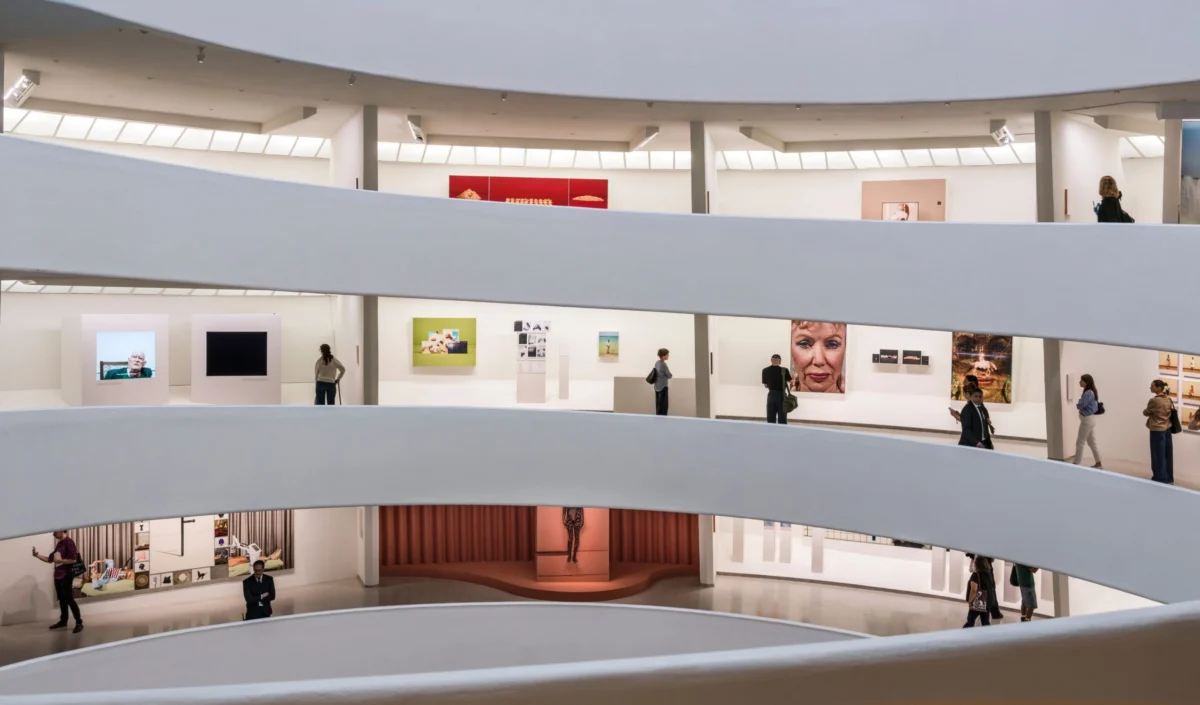
As the days shorten and the chill of winter settles over the concrete canyons of New York City, the local art scene offers a necessary warmth. From the hallowed, spiraling halls of the Upper East Side’s Museum Mile to the converted industrial warehouses of Brooklyn, the city’s cultural institutions are currently hosting a diverse array of exhibitions that challenge our perceptions of history, identity, and the environment. Whether you are seeking a deep dive into the evolution of urban identity or a whimsical exploration of the cultural power of dolls, New York’s current programming proves that the city remains the global epicenter of artistic discourse.
The State of the Arts: A Seasonal Overview
The current slate of exhibitions in New York is characterized by a "widening lens." Museums are moving beyond traditional white-cube displays to embrace multimedia storytelling, forensic investigations into social justice, and deep archival dives into the city’s own storied past. This season is marked by an emphasis on the intersection of the personal and the political, with curators focusing heavily on how individual narratives—whether from a filmmaker, a forensic pathologist, or a graphic novelist—can articulate broader systemic truths.
For the intrepid cultural traveler, this winter offers a unique opportunity to engage with art that is not merely decorative but deeply reflective. The following guide provides a comprehensive look at the must-see exhibitions currently defining the city’s aesthetic landscape.

New Museum: Chronicles of the Bowery and the Black Experience
Located in the heart of the Lower East Side, the New Museum continues to push the boundaries of contemporary art. Its current programming is a masterclass in contextualizing space and identity.
Arthur Jafa: I Am Tony
Spanning two full floors, Arthur Jafa: I Am Tony serves as the first comprehensive retrospective of the American artist and cinematographer’s four-decade career. The exhibition is anchored by his seminal eight-minute video montage, Love is the Message, the Message is Death. This powerful work weaves a complex tapestry of the 20th-century Black experience, utilizing sampled clips from news footage, sporting events, and music videos. It is an unflinching look at the grief, joy, and profound resilience embedded in Black history.
- Run dates: Through January 3, 2027.
Bowery: Devil’s Mile
Moving to the second floor, visitors are invited to walk through four centuries of history in the exhibition Bowery: Devil’s Mile. This exhibit tracks the evolution of one of Manhattan’s most mythic streets—from its origins as a pre-colonial Lenape footpath to its reputation as a turn-of-the-century strip of saloons and dance halls, and later, its role as a sanctuary for the Beatniks, punk rockers, and post-rockers who defined New York’s counterculture. Through a collection of 19th-century sideshow flyers and Jacob Riis’s haunting photographs of the working class, the exhibition serves as a poignant reminder of the street’s many lives before its modern-day gentrification.

- Run dates: Through January 31, 2027.
Solomon R. Guggenheim Museum: The Architecture of Memory
Frank Lloyd Wright’s architectural masterpiece, the Guggenheim, is currently housing its most expansive exhibition to date.
Taryn Simon: Father Country I Do Love You
Taryn Simon’s latest work is a sprawling, immersive experience that begins with a personal anecdote about her father and an intelligence officer. What follows is a labyrinthine investigation into the life of an anonymous ex-FBI agent. Utilizing over a thousand images, sculptures, videos, and texts, Simon maps the interconnectedness of historical events and obscure characters. Set within the museum’s iconic rotunda, the exhibition reflects the absurdity of "real life" and the complex nature of truth.
- Run dates: Through March 14, 2027.
Amant: A Dialogue with the Earth
In East Williamsburg, the arts campus Amant offers a more contemplative, decentralized experience. Far from the bustling foot traffic of Manhattan, Amant provides a sanctuary for artists to experiment with scale and environmental messaging.

Sentient Earth
The campus-wide installation Sentient Earth invites 28 artists to imagine a world where the planet possesses consciousness and a voice. The exhibit confronts the viewer with the sobering reality of human impact on the environment. Notable pieces include enlarged blister pill packs presented as archaeological artifacts and sculptures resembling industrial mining tools. It is an urgent, occasionally humorous, and deeply necessary reflection on the climate crisis.
- Run dates: Through February 14, 2027.
The Museum of Modern Art (MoMA): The Surreal and the Forensic
MoMA continues its tradition of intellectual rigor, balancing the avant-garde history of Surrealism with the pressing realities of modern systemic violence.
The Surrealist Book: Tomorrow Lives in Mirrors
This exhibition shifts the focus from Surrealist canvases to the "book as art." It explores how figures like André Breton and Max Ernst used the medium of the book to experiment with form and ideology. A particular highlight is the inclusion of photomontages by queer artist Claude Cahun, whose work on gender and identity in the 20th century is finally receiving the recognition it deserves.

Teresa Margolles: The Forensic Trace
On the second floor, Aproximación al lugar de los hechos (Approaching the Scene) utilizes the artist’s background as a forensic pathologist to trace femicide and systemic violence in the United States. Through the use of fragments like shattered glass and soil from crime scenes, Margolles creates a visceral, overwhelming experience of loss. The exhibition continues at MoMA PS1 in Long Island City, where En el lugar de los hechos (At the Scene) expands upon this narrative.
- Run dates: Through Summer 2027.
Museum at FIT and Brooklyn Museum: From Dolls to Manga
Cultural history is rarely as straightforward as it seems, as evidenced by these two institutions.
Doll Dressing (Museum at FIT)
Dolls have long functioned as both toys and symbols of cultural aspiration. The Museum at FIT’s Doll Dressing explores the miniature fashion world, showcasing how designers like Marc Jacobs and Loewe play with scale. The exhibition includes everything from 1960s "Twiggy" icons to modern Bratz dolls, examining the influence of these figures on human style.

- Run dates: Through January 3, 2027.
Art of Manga (Brooklyn Museum)
As the first major exhibition in the Americas to treat Manga as a fine art form, the Brooklyn Museum presents over 600 drawings. Featuring original works from the creators of One Piece and JoJo’s Bizarre Adventure, the exhibit highlights the global influence of Japanese graphic storytelling. Furthermore, the fourth floor hosts Hopi Kachina Dolls, a beautiful collection of 53 wooden figures that provide a deep dive into the coming-of-age traditions of Hopi culture.
- Run dates: Through January 31, 2027.
New York Historical Society: The Disco Era
You Should Be Dancing: New York, 1976 and Beyond
The final installment of the society’s "America at 250" series, this exhibit captures the energy of a bankrupt, creative, and volatile New York. With artifacts ranging from a CBGB awning to original Studio 54 invitations and hand-written Patti Smith lyrics, the exhibit serves as a vibrant time capsule of the city’s punk, hip-hop, and disco explosion.
- Run dates: Through April 2, 2027.
Implications for the Future of Art
The diversity of these exhibitions suggests a shift in the role of the museum in the 21st century. No longer content to simply act as a repository for static objects, institutions are increasingly positioning themselves as sites of active community engagement and historical reckoning. By centering voices that were historically marginalized—whether queer artists, forensic witnesses, or non-Western graphic novelists—these museums are ensuring that the "art of the city" remains as complex, challenging, and vibrant as the city itself. As we move through the winter months, these spaces offer more than just shelter from the cold; they offer a mirror to our own collective identity.
 Muslim
 Asep Darmawan
 Evan Lee Salim
