By Rhea Nayyar Published in collaboration with cultural and arts desks
Introduction: Embodying Survivance Across Turtle Island
To commemorate Indigenous Peoples’ Day, cultural institutions across New York are hosting powerful exhibitions that spotlight the depth, resilience, and evolution of Native art and history. Spanning Manhattan, the Hessel Museum of Art at Bard College, and the Long Island Museum in Stony Brook, these seven ongoing showcases bring together a diverse tapestry of Indigenous populations from across Turtle Island.
Rather than viewing Native history strictly through a lens of historical trauma, these solo and group presentations embody what scholar Gerald Vizenor terms “survivance”—an active sense of presence over historical absence, forced assimilation, and cultural marginalization. Through their work, featured artists reject romanticized or flattened narratives of dispossession, actively upend and satirize colonial stereotypes, preserve and radically reinvent traditional art forms, and bring vital, underrepresented histories out from the margins into the contemporary cultural discourse.
While Indigenous Peoples’ Day serves as a focal point for reflection, many working professionals and community members are not afforded a standard three-day weekend. Fortunately, these exhibitions are designed for extended engagement, remaining open to the public from late autumn through the spring of next year.
Main Facts: A Statewide Cultural Snapshot
The current New York gallery and museum season features a rare concentration of major Indigenous exhibitions that bridge historical critique with contemporary artistic vision. Key highlights include:
Geographic Reach: Exhibitions are distributed across key cultural hubs, including SoHo and Chelsea in Manhattan, upstate New York at Bard College, and Long Island.
Diverse Mediums: The works on display range from industrial ironstone ceramics and reclaimed colonial furniture to mixed-media photography, textile arts, and site-specific installations.
Renowned Artists: The lineup features celebrated and visionary Native artists, including Cannupa Hanska Luger, Shelley Niro, Jeremy Dennis, and Sarah Sense, among others.
Core Themes: The art collectively addresses westward expansion, environmental stewardship, the distortion of collective memory, Indigenous matriarchy, and the assertion of Native futurity.
Chronology and Exhibition Guide
To help visitors navigate this expansive seasonal programming, the featured exhibitions are detailed below, complete with their thematic focuses and venue information.
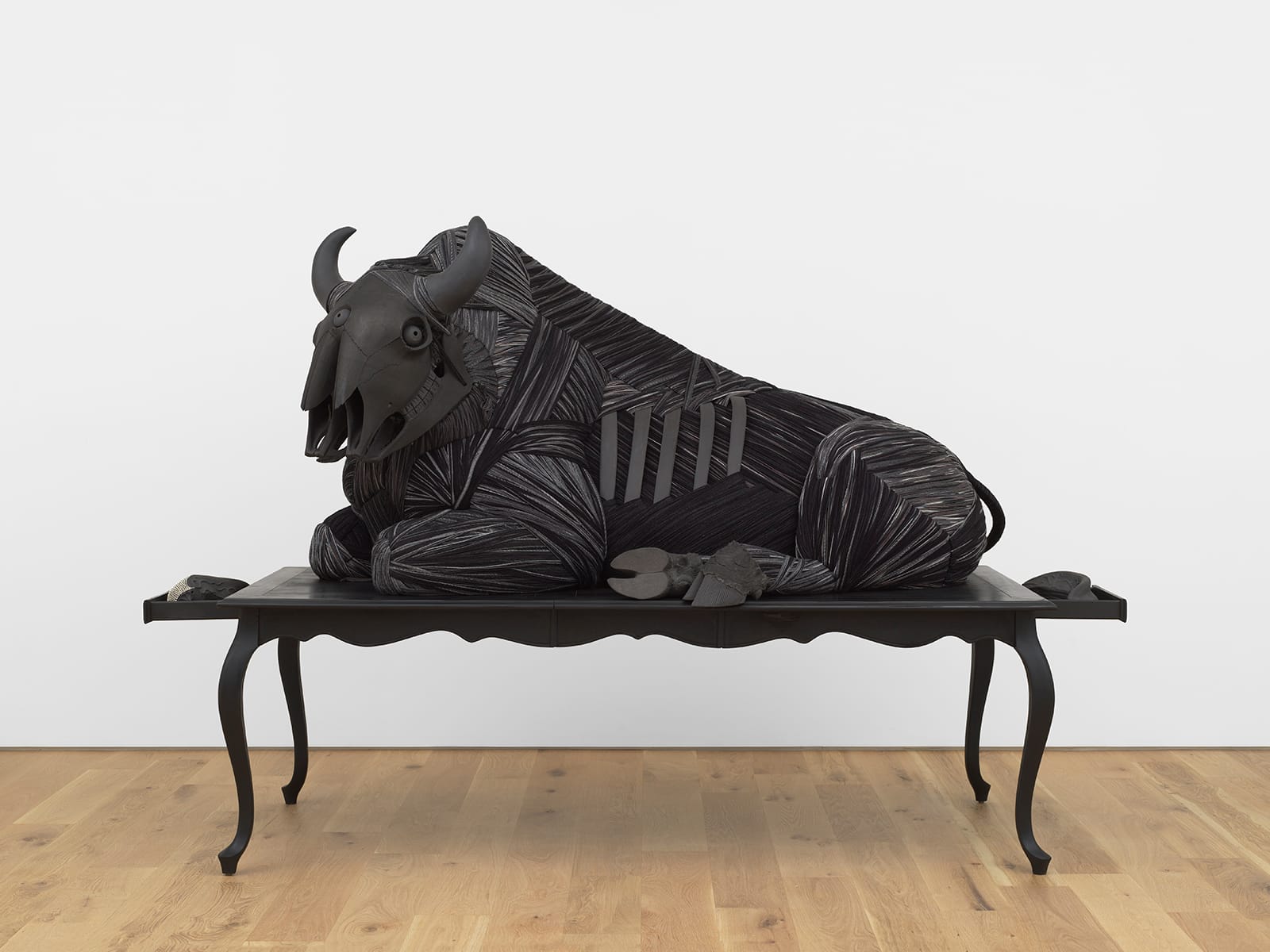
Inaugurating the gallery’s brand-new SoHo space, interdisciplinary artist Cannupa Hanska Luger (Mandan, Hidatsa, Arikara, and Lakota) departs from his typically vibrant color palettes to present American Traditional. This stark, sobering body of work is forged from uniform matte-black ironstone clay, sumi ink, and direct flame.
The titular piece features a striated sculpture of a skinned bison, complete with a bifurcated skull, resting upon a standard colonial-fashion dining table. This visual distortion echoes across Luger’s wall hangings and sculptural pedestals, which display animal skulls and carcasses embellished with railroad spikes, Pulaski axes, and vintage Americana furniture tied to nineteenth-century westward expansion. According to the artist, the installation exposes the "bizarre and horrific history of colonialism," utilizing motifs of mutilation and mutation to critique how collective memory has been manipulated to sanitize or erase Indigenous perspectives.
Shelley Niro: In Her Lifetime
Venue: Hales Gallery, 547 West 20th Street, Chelsea, Manhattan
Dates: Through October 31
A celebrated member of the Turtle Clan of the Kanyen’kehà:ka (Mohawk) Nation, artist and filmmaker Shelley Niro anchors her second solo exhibition with Hales New York around a tight, decades-spanning selection of mixed-media photographic works.
In Her Lifetime—named after Niro’s poignant 1992 black-and-white photo sequence of her sister paired with overlaid text—highlights the artist’s signature wit and accessible cultural references. Niro explores identity, nationhood, and collective memory through an unapologetically Indigenous lens. For this presentation, she breathes new life into several iconic photographs from the early 1990s, enhancing them with hand-painted elements and decorative patterns. These additions lend a cheeky, assertive energy to her portrayals of family, community, and Indigenous womanhood.
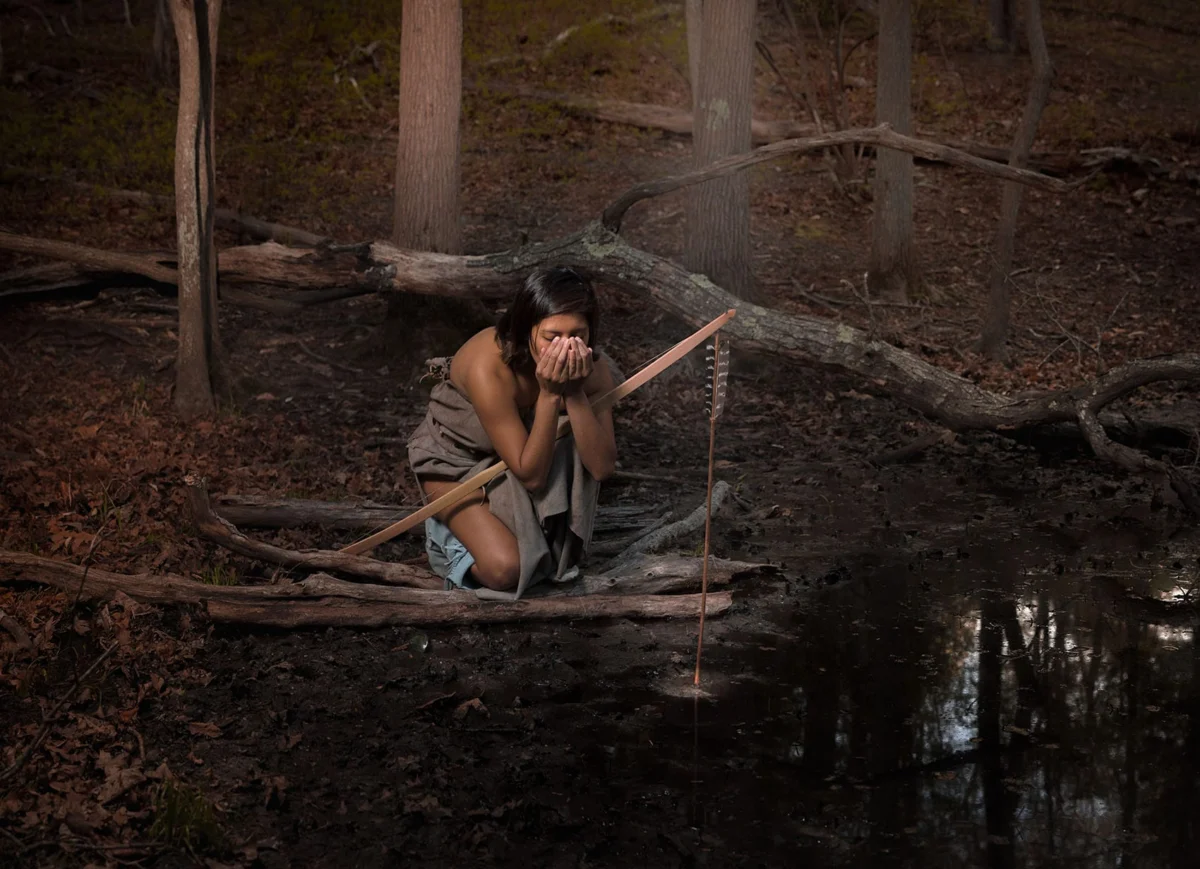
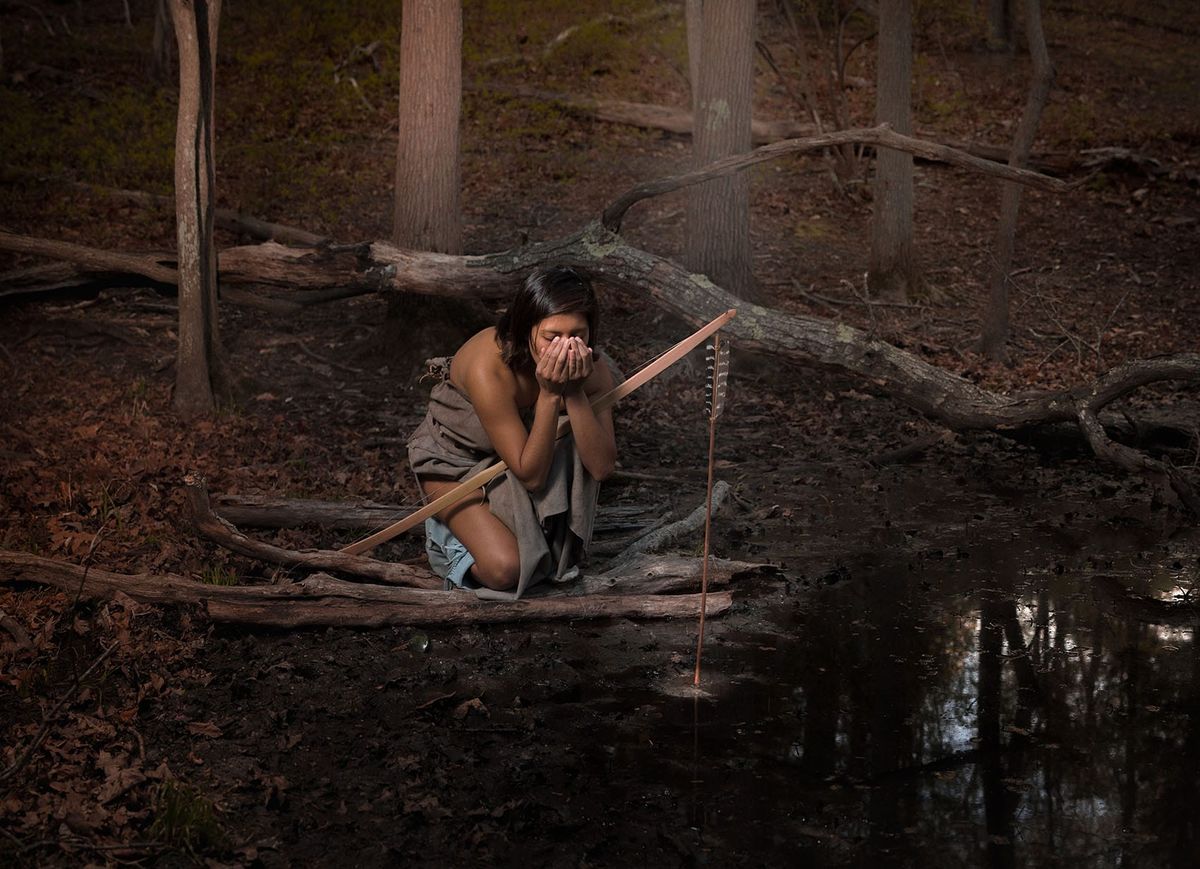
Jeremy Dennis: Directing the Native Landscape
Venue: Long Island Museum, Stony Brook, New York
Dates: Extended seasonal run
Photographer and tribal member of the Shinnecock Indian Nation Jeremy Dennis uses his lens to reclaim ancestral spaces. Known for cinematic, hyper-narrative photography that stages mythological and historical scenes on Long Island’s historic lands, Dennis confronts the erasure of Indigenous presence from suburban landscapes. Works like Manitou Hill (2017) serve as visual testaments to sacred geographies, forcing viewers to reckon with the invisible layers of Native history embedded beneath contemporary development.
Sarah Sense: Weaving Transnational Narratives
Venue: Hessel Museum of Art, Bard College, Annandale-on-Hudson, New York
Dates: Extended seasonal run
Chitimacha and Atakapa-Ishak artist Sarah Sense merges traditional basketry techniques with contemporary digital photography. By physically weaving together photographic prints from her travels across Indigenous territories in North and South America, Sense creates intricate geometric patterns that dissolve borders. Her work emphasizes a Pan-American Indigenous solidarity, proving that traditional craft can evolve into a sophisticated, modern medium for political and cultural reclamation.
Supporting Data: The Rising Prominence of Native Art in Mainstream Institutions
The current concentration of Indigenous art exhibitions in New York reflects a broader, long-overdue shift within the global art market and museum sector. Historically sidelined as "ethnographic artifacts" rather than "fine art," Native contemporary art has experienced a vital resurgence over the last decade.
Institutional Representation: According to recent cultural sector metrics, major metropolitan museums and commercial galleries have increased their solo exhibitions featuring Indigenous artists by over 40% since 2020.
Market Valuation: Auction houses and high-end galleries have reported a steady upward trajectory in the acquisition of works by artists such as Cannupa Hanska Luger, Jaune Quick-to-See Smith, and Kent Monkman, signaling strong institutional and collector demand.
Educational Impact: Programs accompanying these exhibitions—such as artist talks, curatorial walkthroughs, and academic panels—have seen record attendance, indicating a growing public appetite for honest historical reckonings and authentic Indigenous narratives.
Official Responses and Curatorial Perspectives
Curators and gallery directors organizing these exhibitions emphasize that programming around Indigenous Peoples’ Day must transcend mere tokenism. It requires a permanent commitment to shifting the center of gravity in art history.
"When we look at works like Cannupa Hanska Luger’s American Traditional or Shelley Niro’s photographic revisions, we are not just looking at art that critiques the past," shared one participating New York curator. "We are looking at blueprints for the future. These artists are dismantling the visual machinery of colonialism and building sovereign visual languages in its place."
Galleries hosting these shows have also implemented community-access initiatives, offering free admission, educational toolkits for schools, and dedicated programming designed to center Native voices, historians, and youth groups.
Implications: Charting Native Futurity
The significance of these seven exhibitions extends far beyond the gallery walls of Manhattan, Bard College, and Long Island. By confronting the dark chapters of westward expansion, dismantling monolithic stereotypes, and celebrating the complexities of modern Native life, these artists are actively reshaping the cultural identity of New York State and the nation at large.
Ultimately, these exhibitions challenge audiences to move past passive acknowledgment. They demand an active engagement with Native futurity—a vision of tomorrow where Indigenous histories are fully recognized, traditional knowledge systems are honored as cutting-edge innovations, and Native artists hold their rightful, uncompromised place at the vanguard of contemporary art.



 Sagoh
Sagoh
 Evan Lee Salim
 Nana
Nana
