

By Armando Pulido
Published in partnership with the Getty Research Institute
Main Facts
In the sweeping narrative of West Coast cultural development, Los Angeles has long positioned itself as a vibrant, forward-thinking metropolis. Yet, behind the pristine glass cases of its most celebrated cultural institutions lies a darker, more complicated provenance. A groundbreaking new publication, Artifacts to Art: Collecting Ancient America in Midcentury L.A. (2026), authored by researchers Andrew D. Turner, Mary E. Miller, and Khristaan D. Villela, exposes the mechanics of this hidden history.
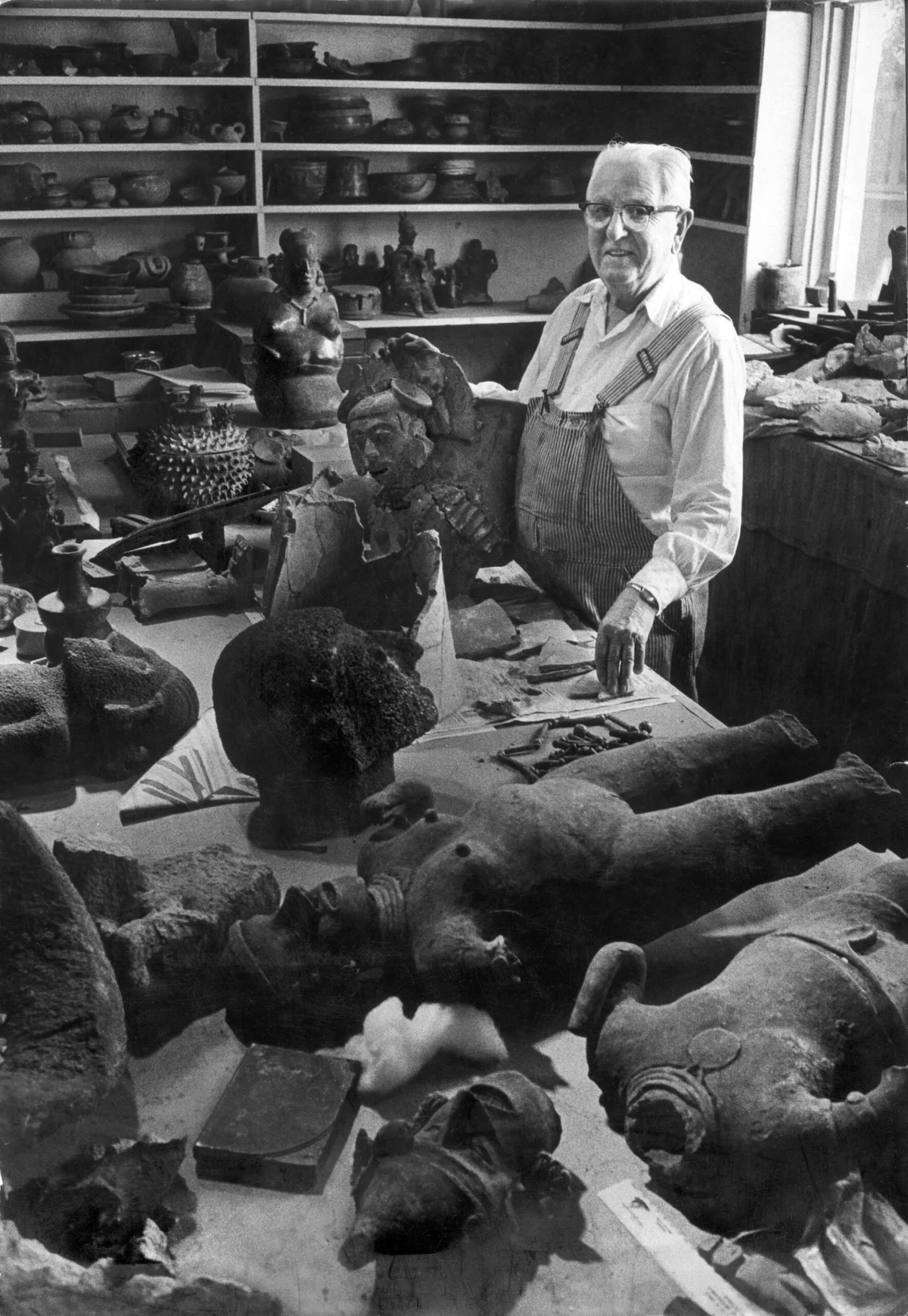
At the center of this expose is Earl Stendahl, a mid-century Los Angeles gallerist who operated with virtual impunity. Stendahl capitalized on a booming post-war appetite for the exotic and the ancient, shamelessly handling stolen, looted, and occasionally forged Mesoamerican artifacts. He successfully marketed these items to Hollywood elites, wealthy private collectors, and prestigious institutions across the United States.
The book, drawing upon five years of exhaustive research into the Stendahl Art Galleries archive—now preserved at the Getty Research Institute—dismantles the romanticized myth of the mid-century art dealer as an adventurous connoisseur. Instead, it paints a damning portrait of a trafficker who commodified cultural heritage, stripping sacred objects of their historical context and transforming them into luxury decor and high-status museum centerpieces.
The repercussions of Stendahl’s enterprise continue to haunt the museum world today, raising profound ethical questions about provenance, repatriation, and the foundational collections of Southern California’s premier cultural institutions.
Chronology: From Sacred Heritage to Salable Commodity
To understand how ancient Central and South American artifacts transitioned from protected cultural heritage to coveted commodities, one must trace a timeline of shifting definitions, illicit excavations, and high-profile institutional acquisitions.
The 1940s: Hollywood Glamour Meets Ancient Stone
The mid-century rebranding of pre-Columbian items as high art was accelerated by clever marketing and celebrity endorsement. A striking 1940 photograph by Man Ray captures Academy Award-winning actor Teresa Wright posing misty-eyed next to an ancient Chacmool sculpture—a reclining Mesoamerican figure with its head contorted toward the viewer.
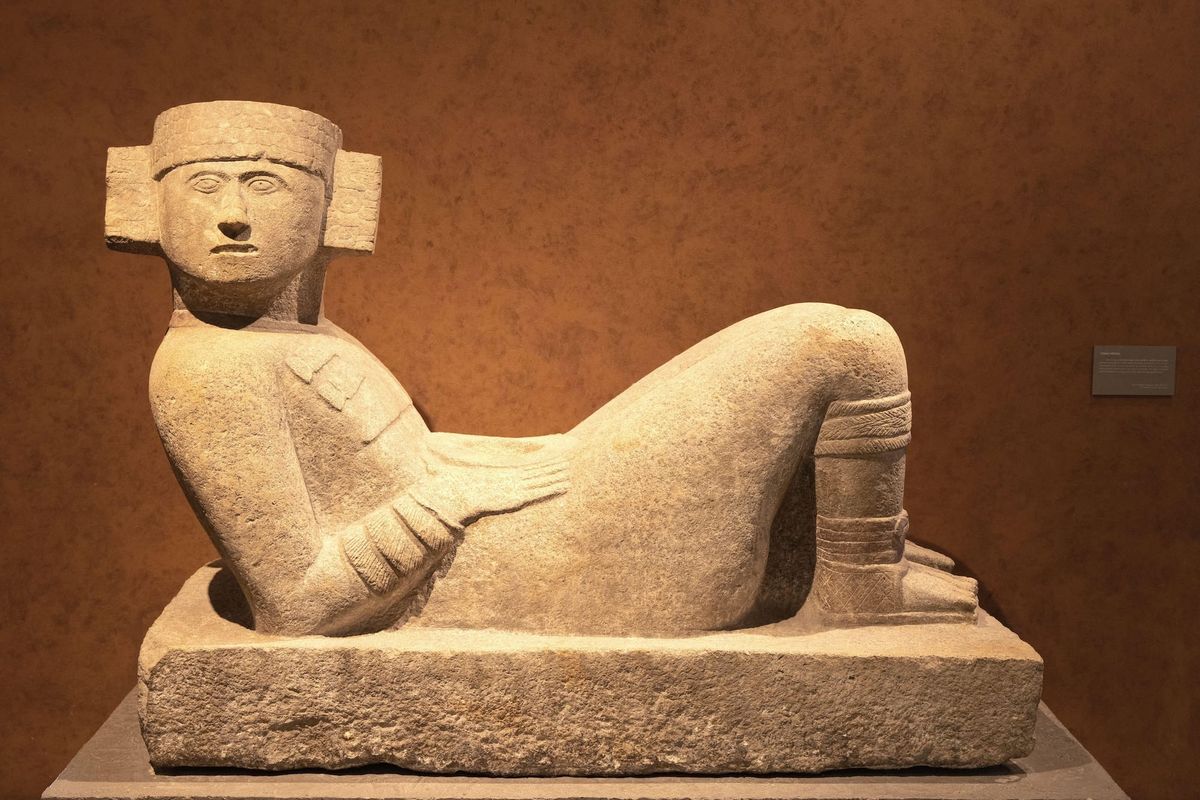
This juxtaposition of classical Hollywood glamour and ancient indigenous art served a dual purpose. It offered a refreshed, avant-garde vision of modernity to collectors while obscuring the violent, unauthorized extraction methods required to bring these objects north of the border.
1947: The Minneapolis Institute of Art Acquisition
The institutional appetite for such pieces reached a milestone in 1947 when the Minneapolis Institute of Art purchased a "King Chak Mool" for $10,000—a staggering sum at the time. The sculpture was subsequently sent on a high-profile European tour from 1958 to 1960, quickly becoming a foundational cornerstone of the museum’s collection.
However, the narrative of absolute authenticity crumbled a decade later when a specialist made a devastating discovery: the celebrated "King Chak Mool" was, in fact, an intricate forgery. This revelation exposed the deep vulnerabilities of mid-century museum curators, who were often so eager to acquire pre-Columbian masterpieces that they bypassed rigorous scientific verification.
The 1950s–1960s: The Stendahl Syndicate at Scale
Throughout the post-war decades, the Stendahl Art Galleries on Hillside Avenue in Los Angeles operated as a primary nexus for the influx of looted goods. Utilizing a network of clandestine looters across Mexico and Central America, Stendahl bypassed international antiquities laws. He established a seamless pipeline that moved sacred funerary objects, terra cotta figurines, and monumental stone carvings out of their native soil and directly into the hands of American buyers.
Supporting Data: Inside the Stendahl Archives
The revelations in Artifacts to Art are not based on speculative journalism; they are anchored by unprecedented access to primary source material. Following decades of private holding, the complete archive of the Stendahl Art Galleries was acquired by the Getty Research Institute, transforming an opaque chapter of art history into an open book for rigorous academic investigation.
- Five Years of Research: Authors Turner, Miller, and Villela spent half a decade combing through correspondence, shipping manifests, financial ledgers, and photographic records contained within the archive.
- The Non-Chronological Framework: Rather than relying on a linear timeline, the book’s structure mimics the decentralized, opportunistic nature of the antiquities trade, analyzing the convergence of Mexican looters, Hollywood actors, and international museum directors.
- Economic Valuation: As demonstrated by the $10,000 acquisition of the Minneapolis Chacmool in 1947 (equivalent to over $130,000 today), the mid-century pre-Columbian market was wildly lucrative, incentivizing a steady stream of illegal excavation across Mesoamerican archaeological sites.
- The Forgery Factor: Archival documents reveal that the demand for ancient American art outpaced the supply of genuine artifacts, inadvertently fueling a shadow economy of skilled forgers who capitalized on the aesthetic preferences of American buyers.
Official Responses and Institutional Reckoning
The publication of Artifacts to Art by the Getty Research Institute represents a significant institutional shift toward self-reflection and transparency. For decades, major museums in Los Angeles and across the globe avoided probing too deeply into the murky provenance of their founding collections. Today, however, the cultural landscape demands accountability.
Major institutions holding pieces associated with the mid-century Stendahl network face mounting pressure from international heritage advocates, foreign governments, and modern museum-goers. While the Getty Research Institute has chosen to shine a scholarly light on these illicit practices by publishing the very archive that exposes them, other museums housing these contested objects are being forced to re-evaluate their acquisition policies.

In recent years, domestic and international cultural ministries have stepped up demands for provenance transparency. Museums that once displayed looted artifacts with pride are now establishing dedicated provenance research teams to trace the lineage of unexcavated items. The goal is twofold: to identify objects acquired via illicit channels and to open formal dialogues regarding ethical stewardship and potential repatriation.
Implications: Re-writing the Provenance of Los Angeles Museums
As a museum curator, one question has consistently lingered: Why is so much cultural heritage of ancient Central and South America preserved in our city’s collections?
Artifacts to Art provides the definitive, albeit uncomfortable, answer. The heavy concentration of pre-Columbian art in Los Angeles is not the result of benign cultural exchange or visionary foresight; it is the direct legacy of systemic looting, smuggling, and a permissive domestic art market that prioritized aesthetics over ethics.
The Ethical Dilemma of Display
The revelations brought to light by Turner, Miller, and Villela force modern curators to confront the ethical dilemmas of displaying objects born of structural violence and theft. When a museum exhibits a piece smuggled out of Mexico by mid-century dealers like Earl Stendahl, it implicitly validates an illegal enterprise. Moving forward, institutions must weigh the educational value of displaying these artifacts against the ethical imperative of acknowledging—and attempting to rectify—the circumstances of their removal.
A Blueprint for Future Research
Beyond its specific focus on Los Angeles, the book serves as a methodological blueprint for how institutions should handle their own archives. By courageously opening up the Stendahl papers for critical analysis, the Getty Research Institute has demonstrated that museums can and should play an active role in exposing historical malpractice, even when it implicates the foundational networks of their own cities.
Ultimately, Artifacts to Art marks a turning point in how we study the history of collecting. It reminds us that every ancient object resting in a modern gallery carries a dual story: the sophisticated culture that originally crafted it, and the modern hands that tore it from its homeland for profit. Recognizing both stories is essential if the art world is to build an ethical and transparent future.
 Evan Lee Salim
 Nana
Nana
 Reynand Wu
