

Published: October 11, 2026
Author: Entertainment Desk
Main Facts
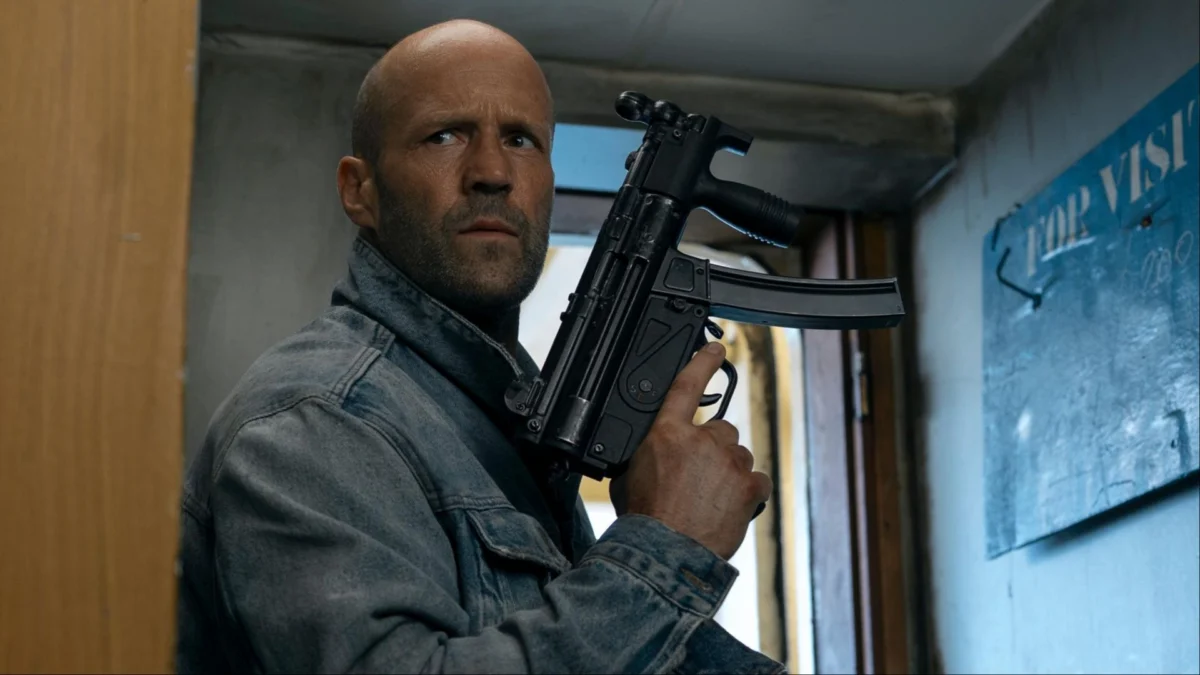
Jason Statham is one of the most recognizable and bankable action stars of the 21st century. Boasting a prolific career spanning nearly 60 feature films, the British actor has carved out a distinct niche for himself as Hollywood’s go-to guy for high-octane thrillers, bone-crunching fight choreography, and taciturn, lethal protagonists. Yet, despite his massive box-office success—anchored by hits like The Beekeeper, The Meg, the Fast & Furious franchise, and recent titles such as Mutiny—Statham remains remarkably grounded about his identity as a performer.
Rather than chasing prestige dramas or attempting complex, transformative character studies, Statham has openly and consistently embraced his limitations. He does not view himself as a classically trained "thespian" or chameleon, but rather as an athlete and former street vendor who happened to stumble into the film industry through a fortunate collision of physical attributes and timing. By recognizing his strengths—namely, authentic physical prowess, martial arts capability, and an undeniable onscreen gravity—Statham has built an enduring career by leaning entirely into what he does best, rather than straining to be something he is not.
Chronology: From Street Vendor and Diver to Global Action Star
To understand Jason Statham’s unique approach to Hollywood, one must examine his unconventional trajectory into the entertainment industry. Unlike many of his peers who matriculated through prestigious drama schools and regional theater circuits, Statham’s formative years were defined by sweat, competition, and hustle.
The Athletic and Entrepreneurial Early Years
Growing up in Shirebrook, Derbyshire, Statham developed a deep passion for sports. He excelled notably in diving, spending 12 years as a member of Britain’s National Diving Squad and competing globally, including representing his country at the 1990 Commonwealth Games. Alongside his athletic pursuits, Statham learned the realities of working-class survival. Following in his father’s footsteps, he spent his youth selling knock-off perfume and jewelry on street corners to make ends meet.
The Fateful Discovery by Guy Ritchie
Statham’s athletic physique eventually caught the attention of a sports-modeling agency, leading to campaign work for brands like French Connection. It was during one of these modeling gigs that he crossed paths with an up-and-coming commercial director named Guy Ritchie. Ritchie was casting for his gritty London crime comedy Lock, Stock, and Two Smoking Barrels (1998) and needed someone who could authentically pull off the persona of an unlicensed street hustler. Because Statham had actually lived that reality, he didn’t need to act; he simply had to show up.
The Birth of an Action Empire
Lock, Stock, and Two Smoking Barrels was a critical and commercial breakout, instantly launching Statham into the cinematic consciousness. He quickly reunited with Ritchie for 2000’s Snatch, solidifying his reputation for sharp, fast-talking, tough-guy roles. From there, Statham pivoted toward pure action cinema, headlining Luc Besson’s The Transporter (2002). The Transporter franchise cemented his status as a premier international action star, proving he could carry a multi-million-dollar franchise purely on the strength of his driving and combat skills.
Over the next two decades, Statham’s filmography expanded exponentially. He transitioned seamlessly from gritty crime thrillers (Layer Cake, The Bank Job) to blockbuster ensemble franchises (The Expendables, Fast & Furious) and solo action vehicles (Crank, The Mechanic, Wrath of Man). As of 2026, with upcoming projects like The Beekeeper 2, Fast Forever, and David Leitch’s meta-comedy Jason Statham Stole My Bike, his momentum shows zero signs of slowing down.
Supporting Data and Career Statistics
A closer look at Statham’s filmography reveals a meticulously sustained brand built on consistency rather than reinvention.
- Volume: Statham has appeared in nearly 60 feature films since his 1998 debut, maintaining an average of two to three releases per year during his peak working decades.
- Box Office Draw: Franchises featuring Statham have collectively grossed billions of dollars worldwide. His entry into the Fast & Furious universe with Fast & Furious 6 and subsequent spin-off Hobbs & Shaw helped elevate the series’ global box-office footprint to unprecedented heights.
- Niche Dominance: Statistical tracking of his roles shows that over 80% of his filmography casts him as an ex-military operative, underground fighter, elite driver, or security specialist seeking retribution or protecting the innocent.
- Rare Departures: While the vast majority of his filmography stays within the action-thriller parameters, rare departures like Paul Feig’s 2015 comedy Spy—where Statham played a spoof of his own hyper-serious action persona to critical acclaim—and the dramatic thriller Hummingbird (2013) prove he is capable of expanding his toolkit when the right material meets his baseline of physical authenticity.
Official Responses: In His Own Words
Statham’s refreshing lack of pretension has been documented in various interviews over the years, but perhaps his most definitive explanation of his career philosophy came during a 2017 appearance on the Jim and Sam Show, hosted by Jim Norton and Sam Roberts.
When asked by the hosts whether he ever gets offered roles that completely subvert expectations—such as a quiet, domestic drama about a mathematician undergoing a bitter divorce—Statham offered a characteristically candid and humorous response.
"A mathematician that’s going through a bitter divorce or something? No, I don’t get offered those!" Statham joked.
Expanding on why he intentionally avoids such parts, the actor made it clear that self-awareness is the cornerstone of his career longevity. He harbors no delusions of grandeur regarding his skill set, openly identifying as an athlete and former street merchant rather than a classically trained actor.
"I only want to do things that I think I could do a good job at, and I think I’d be no good at that," Statham explained. "You know, I’m not an actor really. I mean, I used to work jewelry and pinch jewelry on the street. I was a sportsman for years. I’m not really some thespian that can adopt and chameleon himself into different roles. I just got into this by being in the right place at the right time… I got plucked from obscurity into the movie industry."
Statham emphasized that he has never spent years mastering different accents or studying theatrical methodologies, nor does he feel any professional obligation to do so. Instead, he focuses entirely on what he can execute with absolute confidence.
"It’s not like I’ve spent years honing out the different accents or working on my craft. That doesn’t apply to me. I accept what I’m good at. I might not be good at any of it, but I accept what I feel that I’m confident at and just try and go with the flow in that direction."
Crucially, Statham noted that the primary driver behind the consistency of his roles is authenticity. Because he performs his own heavy stunts, engages in rigorous martial arts training, and possesses a genuinely imposing physical presence, audiences buy into his performances in a way they might not if he forced himself into ill-fitting dramatic molds.
"A lot of the characters I play are pretty similar in some ways. I get a lot of the physical roles because I can do all that. So there’s an authenticity with that, so I tend to stick with that."
Implications for Modern Action Cinema
Statham’s steadfast refusal to chase traditional Hollywood validation carries profound implications for the modern action genre. In an era where franchises frequently attempt to deconstruct their heroes, inject excessive CGI, or lean heavily into ironic self-parody, Jason Statham remains a rare anchor of old-school, kinetic authenticity.
The Death of the Traditional Movie Star
Film critics frequently lament the decline of the "movie star"—the rare breed of actor who can open a film on the strength of their personal persona alone, regardless of the intellectual property attached. While contemporary actors often feel interchangeable against green screens, Statham is an auteur of his own brand. When audiences buy a ticket to a Jason Statham movie, they are paying for a specific, reliable brand of kinetic escapism. He understands that spectators do not go to a Statham film to see Shakespearean emotional anguish; they go to watch a finely tuned physical specimen dispatch villains with maximum efficiency and minimal dialogue.
A Blueprint for Career Longevity
By refusing to stretch beyond his capabilities just to appease award season prognosticators, Statham has avoided the embarrassing missteps that often plague action stars attempting ill-advised dramatic turns. He has carved out a sustainable, long-term career trajectory that mirrors icons like Charles Bronson, Clint Eastwood, and Arnold Schwarzenegger.
Furthermore, Statham’s upcoming slate proves that playing to type does not preclude creative evolution. By jumping back into high-concept sequels like The Beekeeper 2 and Fast Forever, while simultaneously taking a meta-textual leap into David Leitch’s self-referential Jason Statham Stole My Bike, he demonstrates that an actor can be deeply self-aware of their cinematic persona while continuing to deliver exactly what the global audience craves.
Ultimately, Jason Statham proves that cinematic royalty does not require an Oscar on the mantelpiece. By mastering his lane, honoring his roots as an athlete and a hustler, and respecting the expectations of his fanbase, the king of action-thriller cinema has secured a legacy that will endure long after the final punch is thrown.
 Nila Kartika Wati
 Ammar Sabilarrohman
 Nana Wu
