

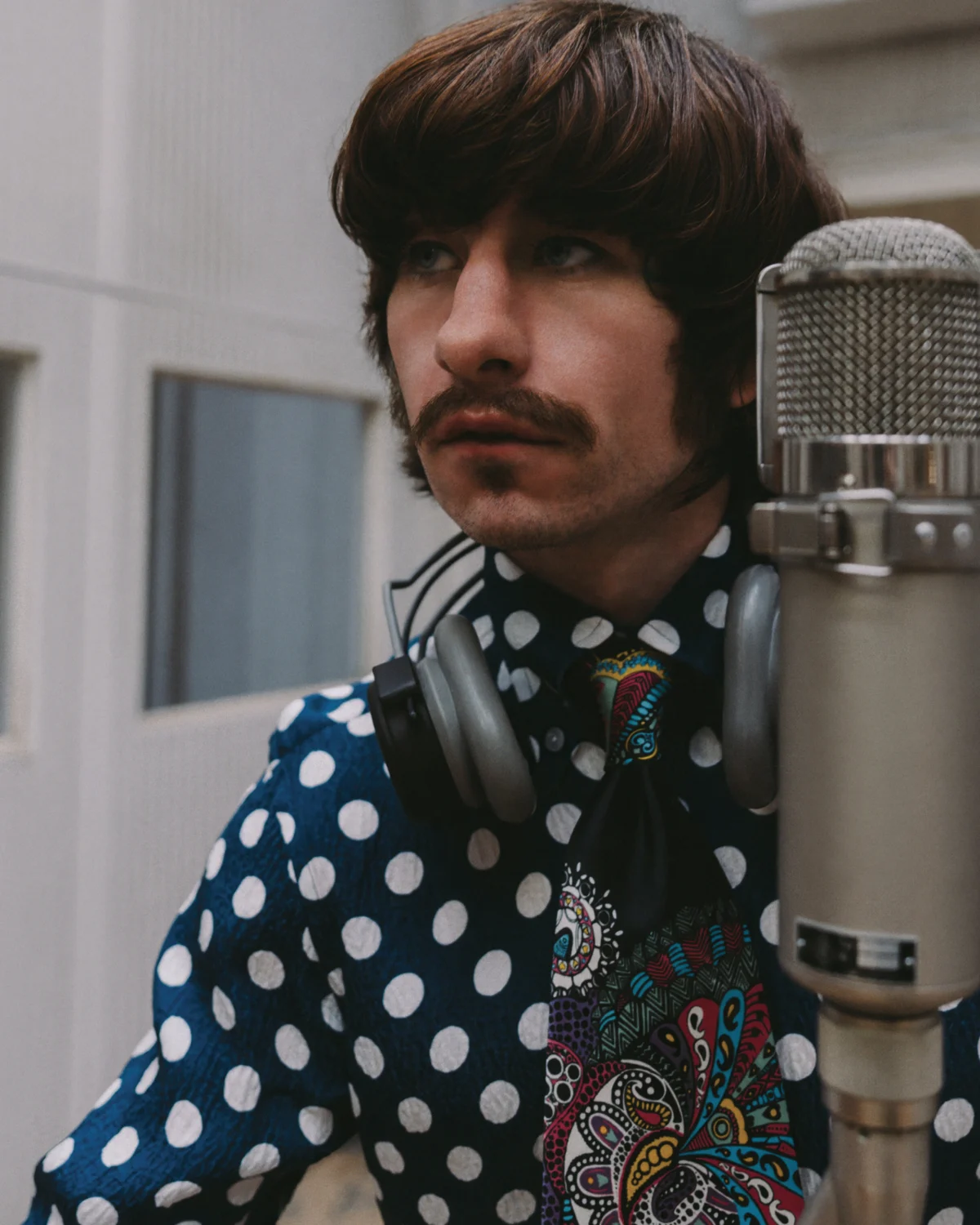
The Beatles are not merely a band; they are a cultural monolith. Their influence on music, fashion, and global consciousness is so vast that attempting to capture their journey in a traditional two-hour biopic has historically felt like trying to bottle a lightning storm. Recognizing this, Sony Pictures has embarked on a project of staggering ambition: The Beatles — A Four-Film Cinematic Event.
Officially unveiled at CinemaCon in 2025, this project represents the most daring approach to musical biography in modern Hollywood history. Rather than condensing the band’s decade-long evolution into a singular, frantic narrative, director Sam Mendes is helming four interconnected films—each told exclusively from the perspective of an individual band member. With production currently underway and a global release slated for April 2028, the industry is watching closely to see if this "cinematic event" can redefine how we tell the stories of our greatest icons.
The Genesis of an Ambitious Vision
The logic behind the project is rooted in the sheer magnitude of the band’s history. During his presentation at CinemaCon, Academy Award-winning director Sam Mendes revealed that he had spent years wrestling with the challenge of a Beatles film.

"I’ve been trying to make a film about the Beatles for years, but I had temporarily given up," Mendes admitted. "I just felt the story of the band was too huge to fit into a single movie, and a TV series just somehow didn’t feel right. I felt there simply had to be a way to tell a big story of those four extraordinary men for a new generation. I’m sure we all think we know a version of the Beatles’ story, but I can assure you, there is still plenty to tell."
By granting each film its own specific lens, Mendes aims to move away from the "greatest hits" compilation format that often plagues music biopics. Instead, audiences will be treated to four distinct emotional landscapes, unified by the shared history of the group, yet separated by the unique internal lives of John Lennon, Paul McCartney, George Harrison, and Ringo Starr.
A New Cinematic Chronology
The release strategy for the films is as unique as the content itself. Producer Pippa Harris, speaking at the BFI London Film Festival’s Industry Forum, clarified that the studio is not aiming for a "marathon" viewing experience, but rather a flexible, immersive rollout.

"The idea at the moment is the films will come out in 2028, and we want people to be able to experience them in the cinema during the same period," Harris explained. "That doesn’t necessarily mean we’re thinking that people will go and see all four films on the same day. But within the same month, you might see one a week, or you might see one on a weekend, two the next one. However you see it, I think our hope is that people will see all four films."
This strategy suggests a "Beatles Month" approach, where the cultural conversation is dominated by the release of each film. By releasing them within a tight window in April 2028, Sony hopes to maintain a constant drumbeat of publicity and public engagement, effectively turning the cinema into a space of collective discovery for the band’s history.
The Cast: A Roster of Rising British Stars
Sony’s casting announcement was a masterclass in building anticipation. Eschewing A-list Hollywood megastars in favor of highly acclaimed, rising actors from the British Isles, the studio has assembled a quartet that feels both authentic and artistically hungry.

- Paul Mescal (Gladiator II, Normal People): The Oscar nominee is set to portray the melodic architect of the band, Paul McCartney.
- Harris Dickinson (Babygirl, Triangle of Sadness): The breakout star will step into the shoes of the complex and razor-witted John Lennon.
- Barry Keoghan (The Banshees of Inisherin, Saltburn): Known for his intense character work, the Oscar-nominated Keoghan will bring depth to the often-understated Ringo Starr.
- Joseph Quinn (Stranger Things, The Fantastic Four: First Steps): The rising star will capture the spiritual and musical evolution of George Harrison.
The first official images of the cast, released in early 2026, sparked a frenzy online. Shared via a clever marketing campaign involving hidden postcards at the Liverpool Institute of Performing Arts (LIPA), these images confirmed that the production is prioritizing a grounded, period-accurate aesthetic that leans into the grit and glamour of 1960s Liverpool and London.
Expanding the World: The Supporting Ensemble
A band is only as good as the people who surround them, and Sam Mendes has assembled an incredible secondary cast to flesh out the lives of the Fab Four.
The romantic partners and inner circle are being played by some of the most sought-after talent in the industry:

- Saoirse Ronan (four-time Oscar nominee) as Linda McCartney.
- Anna Sawai (Shōgun) as Yoko Ono.
- Lucy Boynton as Jane Asher.
- Morfydd Clark (The Rings of Power) as Cynthia Lennon.
- Mia McKenna-Bruce as Maureen Starkey.
- Aimee Lou Wood (The White Lotus) as Pattie Boyd.
The professional orbit of the band is equally star-studded. James Norton takes on the pivotal role of manager Brian Epstein, the man who polished the band into a global powerhouse. Harry Lloyd will portray the legendary producer George Martin, the "fifth Beatle" whose sonic experimentation defined their later years.
Further rounding out the cast are Farhan Akhtar as Ravi Shankar, David Morrissey as Jim McCartney, Leanne Best as Aunt Mimi, and Adam Pally as the controversial manager Allen Klein. The sheer depth of this cast indicates that these films will not just be about the music; they will be about the high-stakes business and complicated personal relationships that fueled the band’s meteoric rise and inevitable fracture.
The Creative Engine: Writing and Directing
While Sam Mendes serves as the primary creative force directing all four films, the task of crafting the scripts has been delegated to a powerhouse trio:

- Jez Butterworth (Ford v Ferrari, Spectre): Known for his ability to write high-tension, character-driven scripts.
- Peter Straughan (Oscar-winning writer of Conclave): A master of intricate, intellectual storytelling.
- Jack Thorne (Emmy winner for Adolescence): A writer known for his profound emotional resonance.
How these three will divide the labor—whether they are co-writing each script or splitting the films individually—remains to be seen. However, their collective resume suggests a commitment to nuance that goes far beyond the average musical biopic.
Implications and Awards Prospects
The most fascinating aspect of this project is its potential impact on the film industry and the awards circuit. Traditional biopics often lean on "mimicry"—actors doing their best to imitate the mannerisms of a star. By focusing on four distinct perspectives, this project forces the audience to consider the subjectivity of memory.
The Awards Dilemma:
The "Four-Film" structure presents a unique problem for the Academy and other voting bodies. If each actor is a lead in their own film but a supporting player in the others, how will they be categorized? Furthermore, will the films cannibalize each other? If all four films are released simultaneously, they may split the voting block, or conversely, create a massive "Beatles Sweep" effect where the quartet is nominated across the board for acting and craft categories.

The Cultural Impact:
If successful, this format could change the way major studios approach historical epics. The era of the "three-hour slog" biopic might be coming to an end, replaced by these serialized, interconnected cinematic events that offer the depth of a limited series with the production value and scale of a blockbuster feature film.
Conclusion: A New Standard for Biopics
As we look toward April 2028, the expectations for The Beatles — A Four-Film Cinematic Event are as high as they possibly could be. By breaking the story into four distinct perspectives, Sam Mendes and his team have invited us to look at the Fab Four not as a single, static entity, but as four unique individuals whose paths converged to change the world.
Whether the project ultimately succeeds in capturing the "magic" of the Beatles will be for the critics and the fans to decide. But one thing is certain: the industry has never seen anything like this before. It is an audacious, risky, and potentially brilliant gamble that aims to turn the story of four boys from Liverpool into the definitive cinematic event of the decade.
 Reynand Wu
 Dwi Wanna
 Neng Nana
