

Main Facts
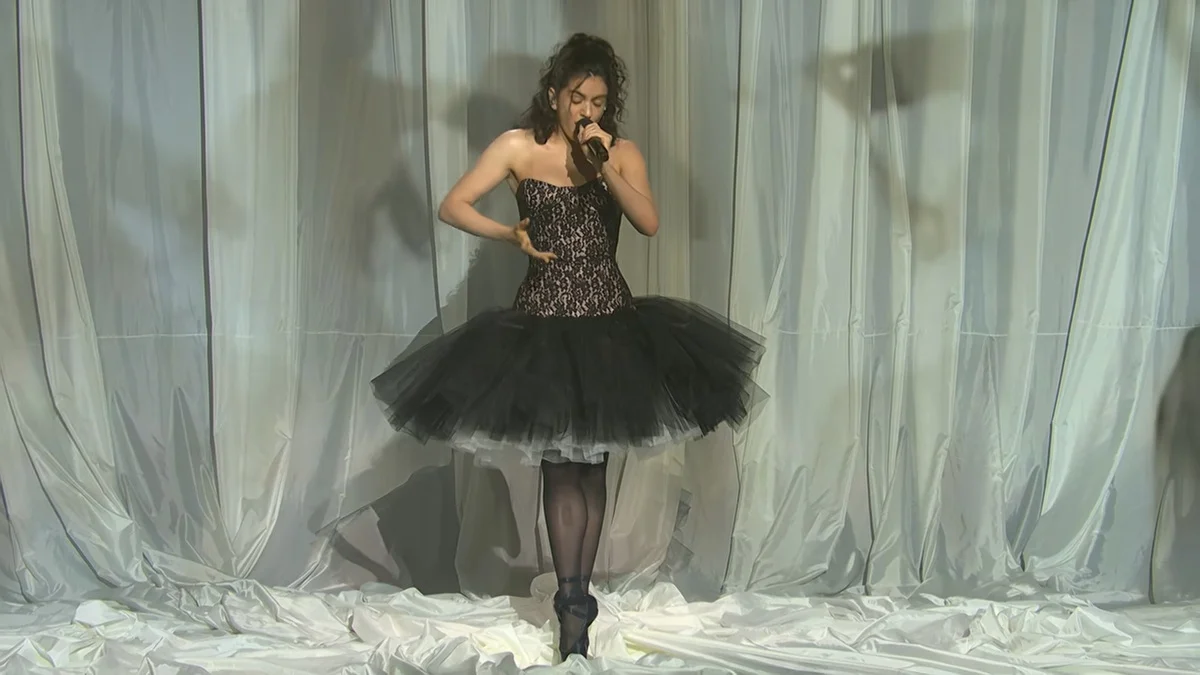
When Rosalía stepped onto the storied stage of Studio 8H for her recent appearance on Saturday Night Live, she did not merely deliver a musical performance—she manufactured a living optical illusion. Performing her haunting track “Reliquia,” the global pop visionary appeared to maintain a flawless, unyielding en pointe position for nearly four minutes while simultaneously holding a pristine vocal pitch. To the untrained eye, it was an astonishing display of classical ballet discipline grafted onto a contemporary musical presentation. To professionals who have spent decades destroying their joints and breaking their toes for the exact same mastery, however, it was physically impossible.
Almost immediately following the broadcast, ballet masters, choreographers, and dance directors across the globe began dissecting the broadcast frames. The consensus among elite dance professionals was swift and unanimous: Rosalía’s gravity-defying feat was aided by theatrical trickery. Yet, in a twist as fascinating as the performance itself, the dance community is entirely unbothered. Far from crying foul over stolen valor or the misrepresentation of classical technique, prominent figures in the ballet world have welcomed the spectacle, praising the Spanish superstar for driving unprecedented cultural visibility to a rigorous and often underappreciated art form.
Chronology
The unfolding of the SNL phenomenon can be traced from the live broadcast to the global digital investigation that followed:
- Late Saturday Night: Rosalía takes the Saturday Night Live stage to perform “Reliquia” and “Magnolias.” During “Reliquia,” she rises en pointe—balancing entirely on the tips of her toes inside reinforced pointe shoes—and remains locked in a rigid, statuesque posture for the duration of the song, astonishing late-night viewers.
- Sunday Morning: Social media platforms, particularly X (formerly Twitter) and Reddit’s dedicated
r/rosaliacommunity, erupt with speculation. Fans frantically upload clips, attempting to reverse-engineer how a human being could possibly sustain such extreme balance without shaking, swaying, or collapsing from muscle fatigue while singing live. - Sunday Afternoon: Cultural journalists and digital investigators reach out to classical dance institutions. Major Spanish publications, notably El Periódico, solicit professional commentary from the directors of Spain’s premier ballet companies.
- Early Week: Industry heavyweights—including directors from the Ballet de Catalunya and Ballet de Barcelona—weigh in via the press, confirming that while the setup was undoubtedly an illusion, the artistic merit and cultural windfall of the stunt far outweigh any technical sleight-of-hand.
Supporting Data and Technical Breakdown
To understand why professional dancers immediately spotted an anomaly, one must examine the grueling biomechanics of dancing en pointe. True en pointe work requires an immense amount of muscular engagement, core stability, and micro-adjustments. The human foot is not designed to support the entire body weight on the flattened platform (the box) of a pointe shoe. Even the most elite principal dancers in the world—individuals who train six to eight hours a day for decades—cannot stand completely motionless en pointe for four consecutive minutes.
Human physiology dictates that balance is an active, continuous process of tiny corrections. As Leo Sorribes, director of Ballet de Catalunya, pointed out in his interview with El Periódico, the laws of physics make total stillness impossible under natural circumstances. “It’s impossible not to sway,” Sorribes explained, noting that Rosalía’s lower limbs must have been physically fixed or anchored in place to achieve such unyielding verticality.
Chase Johnsey, artistic director and co-founder of Ballet de Barcelona, expanded on the technical mechanics, speculating that the singer was likely utilizing a specialized, hidden support structure—such as a rigid stool-like apparatus or a bolted brace concealed beneath her voluminous tutu or heavy costuming.
Further compounding the physical impossibility of the feat is the simultaneous requirement of live vocal performance. Singing requires breath support, diaphragm control, and core movement—all of which violently disrupt the hyper-focused abdominal and spinal tension required to hold a static balance on pointe.
On digital forums like Reddit, fans meticulously analyzed the footage frame-by-frame. One viral thread featured users admitting they came to the platform specifically to decode the mystery. Consensus among the digital sleuths leaned heavily toward a hybrid theory: while Rosalía’s actual feet and legs were likely inside the pointe shoes, her weight was entirely offloaded onto an industrial-grade hidden stage prop, allowing her to simulate the pain-staking posture without enduring the catastrophic physical toll it would normally exact.
Official Responses from the Ballet Community
While a purist community might typically react with indignation to the artificial simulation of a classical discipline, the reaction from the upper echelons of the ballet world has been remarkably gracious and pragmatic.
Leo Sorribes offered a nuanced defense of the pop star, emphasizing transparency of intent: “She has never pretended to be something she isn’t.” Rosalía is a boundary-pushing avant-garde pop artist, not a prima ballerina. Her use of ballet imagery was purely conceptual, meant to serve the moody, dramatic narrative of “Reliquia” rather than pass a Royal Academy of Dance examination.
Chase Johnsey echoed this sentiment, choosing to focus on the macro-level benefits to the struggling performing arts sector. Ballet companies globally constantly struggle with ticket sales, cultural relevance, and public funding. By placing ballet aesthetics at the center of one of American television’s most-watched platforms, Rosalía inadvertently handed the medium a multi-million-dollar marketing campaign. “It’s good for ballet to gain visibility through Rosalía,” Johnsey stated, characterizing the pop crossover as “magnificent” for drawing fresh eyes to a discipline that desperately needs modern audiences.
David Campos, a renowned Barcelona ballet instructor and former company director, offered the most colorful and emphatic confirmation of the trickery while simultaneously showering the singer with praise. When asked if there was a trick involved, Campos responded bluntly: “Is there a trick in the video? Obviously! Without a doubt.” Yet, he quickly pivoted to championing her creative vision, declaring, “She has technique, talent, and looks for new ideas.” For Campos, the innovation displayed by Rosalía in blending pop spectacle with classical iconography outweighed the literal impossibility of the physical execution.
Implications for Pop Culture and the Performing Arts
Rosalía’s SNL illusion touches upon a broader conversation regarding authenticity, theatricality, and cross-genre pollination in modern entertainment. Pop music has long borrowed from high art to elevate its visual and conceptual framing—from Madonna’s integration of vogueing and modern dance to Beyoncé’s incorporation of classical and marching band formations. However, Rosalía’s execution highlights a modern appetite for ambiguous spectacles that blur the line between real physical achievement and digital/practical illusion.
By sparking global discourse, the performance achieved something far more valuable than a technically flawless dance routine: it forced millions of pop music consumers to Google the term en pointe, research the mechanics of ballet shoes, and contemplate the grueling physical sacrifices real dancers make every day.
Ultimately, Rosalía didn’t need to stand on her own two toes for four minutes to make her point. By using the idea of ballet as a conceptual anchor, she manipulated expectations, triggered an international dialogue, and generated massive free publicity for a classical art form that rarely penetrates mainstream pop discourse. In the end, the ballet masters were right: it was a trick, but it was a magnificent one—and art, after all, has always been about the magic of illusion.
 Jia Lissa
 Neng Nana
 Evan Lee Salim
