

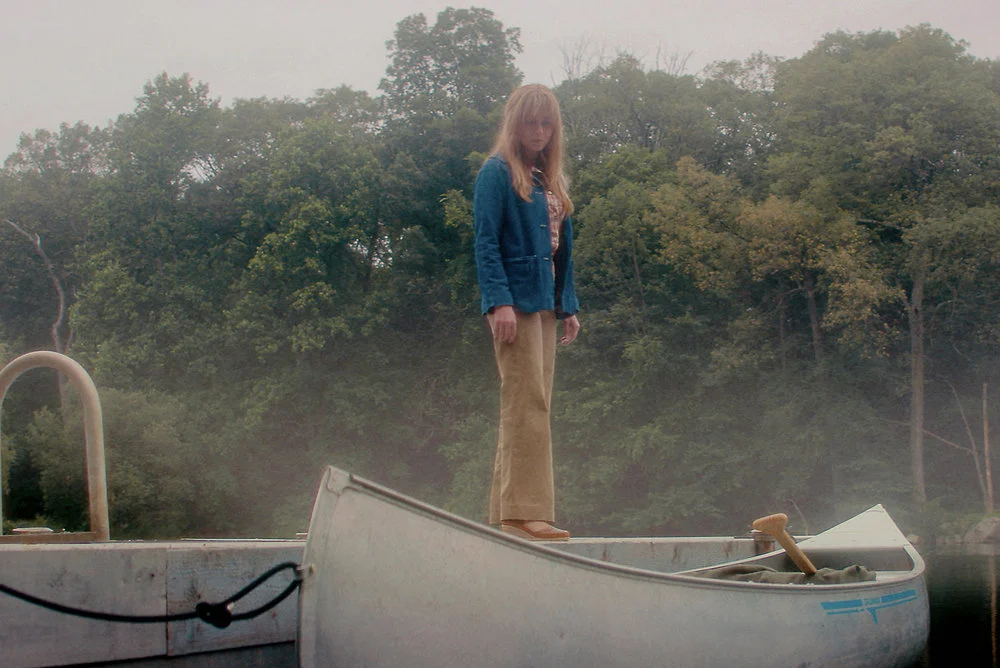
The horror genre is often defined by its cycles of reinvention, but few franchises possess the cultural gravity of Friday the 13th. For 46 years, the name Jason Voorhees has been synonymous with the relentless, unkillable slasher archetype. However, the latest expansion of the mythos, Peacock’s ambitious prequel series Crystal Lake, seeks to strip away the hockey mask and the machete to reveal the raw, human tragedy that preceded the carnage.
Dropping all eight episodes as a haunting pre-Halloween binge, Crystal Lake is not merely another chapter in a long-running saga; it is a profound exploration of maternal grief, societal cruelty, and the catastrophic failures of protection. By shifting the perspective from the faceless killer to the boy who was once at the heart of the storm, the series offers a harrowing look at the origins of one of cinema’s most enduring boogeymen.
The Genesis of a Nightmare: A Fresh Look at a Seminal Moment
The series premiere wastes no time in establishing its thematic stakes. Within the first six minutes, viewers are transported back to the familiar, murky waters of the titular camp. We see a young Jason Voorhees (Callum Vinson), portrayed not as a monster, but as a vulnerable, isolated 11-year-old boy. Watching from the shore is his mother, Pamela (played with haunting precision by Emmy winner Linda Cardellini).
In the original 1980 feature film, Jason’s death was a distant, secondary detail—a brief, grainy memory recounted by a frantic Pamela. Crystal Lake treats this moment with the gravitas it deserves, leveraging the expanded scope and heightened production values of the modern prestige television era. The sequence is a masterclass in tension, opting for long, sweeping shots that contrast the serenity of the camp with the looming, inevitable tragedy of a child drifting too far from the safety of the shore.
As the smiles on the beach curdle into the iconic, blood-curdling screams of a mother realizing her worst fear, the series avoids the temptation to show the drowning from beneath the surface. Instead, the camera stays with the witnesses, emphasizing the mystery, the panic, and the sudden, violent rupture of a life. It is an intentional creative choice by showrunner Brad Caleb Kane and director Michael Lennox, designed to keep the audience tethered to the emotional fallout rather than the mechanics of the death itself.

Chronology of a Tragedy: From Innocence to Infamy
To understand the monster, one must understand the environment that forged him. The narrative structure of Crystal Lake utilizes extensive, carefully placed flashbacks to map the trajectory of the Voorhees family. This is the most sustained screen time the franchise has ever dedicated to a pre-slasher Jason.
The series posits that the path to the massacre at Camp Crystal Lake was paved with small, agonizing moments of exclusion. Jason is depicted as a child struggling with hydrocephalus, a condition resulting in significant facial deformities that made him a lightning rod for the casual, pervasive cruelty of the 1970s.
"For me, Jason really had to be a normal 11-year-old boy, except for the physical challenges that he has," explains showrunner Brad Caleb Kane. "He just wants to fit in, but kids in the ’70s were cruel. It’s just inherent to that age group; anybody who is different gets pushed outside the group."
The series effectively captures the "cruelty culture" of the era, drawing parallels to classic psychological horror films like The Bad Seed or The Good Son. Kane notes that the lack of social mechanisms at the time meant that children were often left to their own devices, allowing their inherent exclusionary instincts to manifest in ways that were devastatingly harmful. This context is essential for the audience: it transforms Pamela Voorhees from a one-dimensional villain into a deeply relatable, albeit deeply unstable, figure driven by the crushing weight of her failure to protect her son from a world that viewed him as an outsider.
The Burden of Parenthood: Official Insights and Creative Intent
The collaboration between NBCUniversal and A24 has provided the creative team with the resources to elevate the Friday the 13th brand from simple slasher fodder to a character-driven psychological drama. According to Brad Caleb Kane, the core of the show lies in the unspoken questions of childhood and the limits of maternal love.

A pivotal scene in the premiere features young Jason asking his mother, "Mommy, why am I like this?" This question serves as the emotional anchor for the entire series. It is a moment of profound vulnerability that highlights the disconnect between a mother’s desire to shield her child and the harsh reality of the world.
"We, as parents, want to make everything OK for our kids," says Kane. "And the reality is that we can’t. Our kids go out into the world and have their own experiences where we can’t watch them all the time. I really wanted that line to hammer home the idea that Pam loves Jason unconditionally… but in the end, she can’t [stop the world from hurting him]."
This perspective reframes the entire franchise. When Pamela eventually descends into the murderous rage that defines the original film, it is no longer just "insanity"—it is the twisted, violent manifestation of a grief that has nowhere else to go. Her transformation into the franchise’s original killer is framed as the final, desperate act of a woman who has lost the only thing that gave her life purpose.
Implications for the Horror Genre
The success of Crystal Lake in humanizing Jason and Pamela Voorhees signals a shift in how legacy horror franchises are being handled in the streaming age. By focusing on the "why" rather than just the "how" of the kills, the series taps into a vein of psychological resonance that the franchise has previously only touched upon in passing.
Impact on Legacy Characters
By exploring Jason’s childhood, the show takes a significant risk: it risks demystifying a character whose power was once derived from his silence and lack of humanity. However, the critical response suggests that by providing Jason with a personality—a desire for friendship, a fear of rejection, and a physical struggle—the show actually makes the inevitable outcome feel more tragic.

The A24 Influence
The involvement of A24, known for its "elevated" approach to horror, is evident in the show’s pacing and focus. Crystal Lake eschews the jump-scare-a-minute rhythm of the 1980s slashers in favor of a slow-burn narrative that prioritizes character development and atmospheric dread. This reflects a broader trend in the industry: the desire to turn "intellectual property" into "prestige storytelling."
The Cultural Mirror
Finally, the series serves as a reflection of our changing social values. Kane’s commentary on the "kindness movement" and the historical lack of empathy for children with disabilities provides a lens through which modern audiences can critique the past. The show asks: if the kids at the camp had been kinder, would the events of 1980 have ever occurred? It is a hypothetical that underscores the central theme of the series: that monsters are often created by the very society that fears them.
Conclusion: The Vengeance to Come
As the episodes progress, the weight of the tragedy becomes increasingly suffocating. We know the outcome. We know the waters of Crystal Lake will eventually claim the boy, and we know that the mother will respond with an iron will and a sharp blade.
Yet, in the hands of the Crystal Lake creative team, the story feels new again. It is no longer just a slasher movie; it is a tragedy about the limits of human intervention and the terrifying consequences of unaddressed trauma. While Jason Voorhees may have been the one to sink beneath the surface, it is Pamela who remains the driving force of the show’s dark, beating heart. And as the premiere makes abundantly clear, when it comes to taking bloody vengeance for the loss of her son, Pamela Voorhees is not someone who will fail.
 Sagoh
Sagoh
 Evan Lee Salim
 Asep Darmawan
