

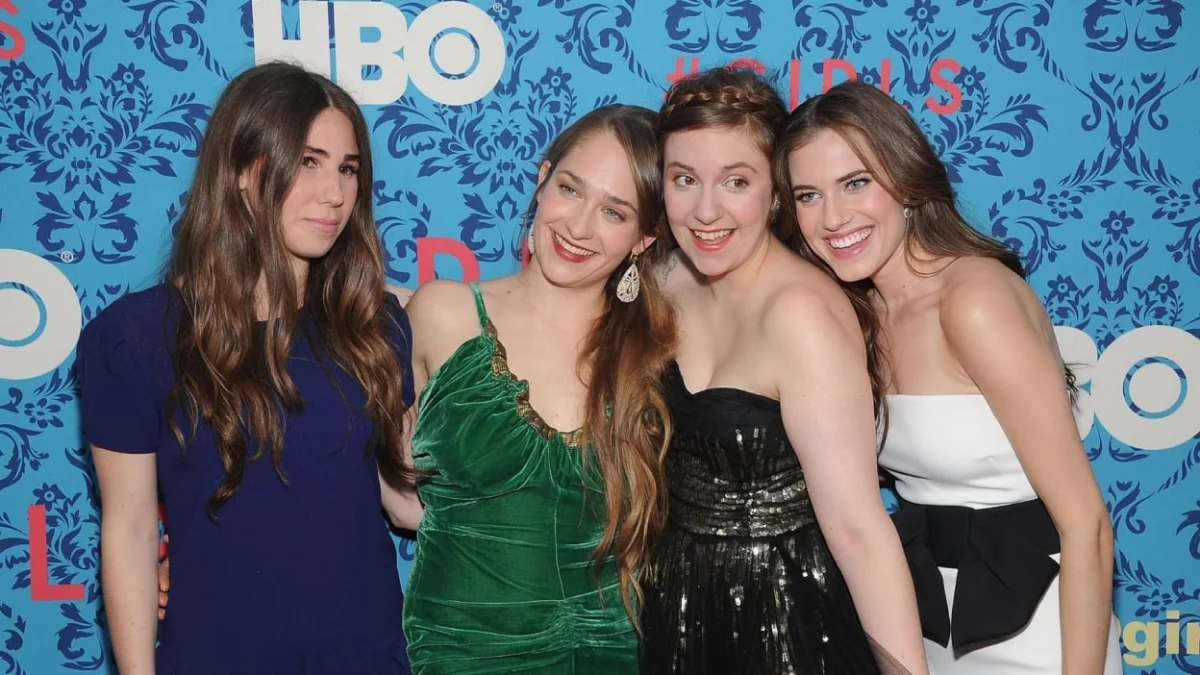
When Lena Dunham’s watershed HBO series Girls premiered in the spring of 2012, it arrived like a hand grenade tossed into the polite drawing room of prestige television. Chronicling the messy, often excruciatingly self-absorbed lives of four twenty-something women navigating the financial instability, romantic delusions, and professional limbo of post-recession New York City, the series polarized audiences and critics alike. It was hailed as a generational mirror by some, and panned as an insular, hyper-privileged vanity project by others.
Now, nearly a decade and a half after Hannah Horvath famously declared herself “the voice of a generation—or at least a voice of a generation,” HBO has officially greenlit a five-episode limited revival series. Dunham will return at the helm, alongside the original core quartet: Dunham as Hannah, Allison Williams as Marnie, Jemima Kirke as Jessa, and Zosia Mamet as Shoshanna.
As original viewers who spent their early twenties watching these characters crash and burn are now pushing past forty, the cultural landscape has shifted seismically. The millennial Brooklyn of artisan pickle shops and struggling indie magazines has given way to algorithmic gentrification, TikTok micro-trends, and a radically different economic reality.
To explore what a modern iteration of this chaotic universe might look like, here is an exhaustive, 18-point blueprint of what fans and cultural critics alike are demanding from the upcoming Girls revival.
The Main Facts: What We Know About the HBO Revival
The announcement of the Girls limited series has sent shockwaves through the television landscape. While plot details remain heavily guarded, HBO executives have confirmed the following core components of the project:
- The Format: A targeted, five-episode limited series event, designed to check in on the characters in real-time.
- The Creative Team: Series creator Lena Dunham is returning as writer and director, ensuring the distinct, biting tone of the original run remains intact.
- The Cast: All four primary leads—Dunham, Williams, Kirke, and Mamet—are officially returning, alongside anticipated appearances by key supporting fan favorites.
- The Timeline: Set in the present day, the revival bridges the gap between the 2017 series finale and the current socio-economic climate of New York City.
Chronology: From 2012 Infamy to 2026 Nostalgia
To understand the weight of this revival, it is crucial to trace the trajectory of the franchise over the past fourteen years:
- Spring 2012: Girls debuts on HBO, instantly sparking intense media debates about class, race, entitlement, and the definition of modern feminism.
- 2015–2016: The middle seasons solidify the show’s reputation as an unblinking, cince-worthy chronicle of toxic relationships, artistic failures, and fractured female friendships.
- Spring 2017: The sixth and final season airs. The series concludes with a psychologically complex finale (“Latching”), leaving Hannah raising her son, Sample, in a peaceful suburban setting, while her friends experience varying degrees of closure and divergence.
- October 2026: HBO announces the five-episode limited revival series, prompting widespread speculation, nostalgia, and a cultural re-evaluation of the show’s prescient exploration of early digital-age narcissism.
Supporting Data & Cultural Context: The Millennial Evolution
When Girls originally aired, social media was still in its adolescence. Instagram was primarily used for filtered photos of brunch, Twitter was a text-based sandbox for snark, and TikTok did not yet exist.
The revival arrives at a moment when the original audience—millennials who aged alongside Hannah, Marnie, Jessa, and Shoshanna—is grappling with middle age, suburban migration, rising interest rates, and the bizarre reality of raising children in an algorithmic age. According to recent entertainment analytics, legacy television revivals perform exceptionally well when they weaponize nostalgia while simultaneously subverting audience expectations. Girls is uniquely positioned for this, given that its characters were never meant to be role models; they were cautionary tales disguised as comedies.
Official Responses and Creative Intent
In early press statements following the greenlight, HBO executives emphasized that the revival is not an attempt to sanitize the original characters or grant them easy, redemptive character arcs.
"The goal was never to make these women palatable," said an internal production source close to the project. "If anything, aging them another decade makes their inherent flaws funnier, sharper, and far more desperate. New York City doesn’t coddle forty-year-olds who still haven’t figured it out, and neither will this season."
Lena Dunham has similarly hinted in social media posts that the new episodes will lean heavily into the absurdities of contemporary internet culture, middle-aged reinvention, and the stark contrast between 2010s bohemian idealism and 2020s burnout.

The Ultimate 18-Point Revival Wishlist
As anticipation builds, fans have taken to digital platforms to draft their dream scenarios for the upcoming five-episode run. Here are 18 extremely specific plotlines and character updates that the revival desperately needs to explore:
1. The Return of Joshua (Patrick Wilson)
Is the "hot doctor" still single? Does he still reside in that immaculate Brooklyn brownstone? Viewers who spent a decade wondering about his culinary kitchen demands an update.
2. Jessa as an Anti-Vaxxer Wellness Grifter
Jessa’s trajectory from bohemian drifter to unhinged wellness influencer feels mathematically guaranteed. Expect raw milk consumption, overpriced Hudson Valley trauma-healing retreats, and unverified certifications.
3. Marnie’s Beige Mommy Influencer Era
Marnie has undoubtedly pivoted to divorced mommy vlogging. Her Instagram features neutral linen aesthetics, sponsored gut-health powders, and a podcast titled Becoming Marnie.
4. Shoshanna the Startup Queen
True to form, Shoshanna is the only one who successfully weaponized the capitalist landscape. She runs a multimillion-dollar wellness empire, secures Forbes profiles, and weaponizes corporate jargon like "circle back" in daily life.
5. Hannah’s TikTok Villain Arc
Hannah publishes an intensely confessional essay about motherhood, only to be dragged across the internet as a cautionary parenting tale. Her subsequent Notes app apology only pours gasoline on the fire.
6. An Update on Caroline, Laird, and Sample
Is Sample being raised in an unstructured Brooklyn commune? Has Caroline transitioned into a radical homeschooling TikToker? And, most importantly, is Laird still wearing his signature beanie?
7. Elijah as a Fire Island Elder
Andrew Rannells returns as Elijah, now navigating his status as a gay elder on Fire Island, complaining that Gen Z doesn’t know queer history while maintaining an aggressively curated Close Friends story.
8. Ray’s Local Political Ambitions
Ray (Alex Karpovsky) is running for local office on an ultra-specific, cranky platform: protecting independent coffee shops, battling corporate landlords, and outlawing people from filming TikTok dances inside diners.
9. Evie’s Social Media Supremacy
Marnie discovers her mother, Evie (Rita Wilson), has eclipsed her own digital footprint with a booming TikTok account offering blunt dating advice to divorced women.
10. A Humiliating Gen Z Encounter
Hannah attempts to bridge the generational divide with twentysomethings at a Williamsburg bar, only to be informed that millennials are deeply "cringe." When one calls her "mother," Hannah takes it literally.

11. Desi’s "Divine Masculinity" Podcast
Ebon Moss-Bachrach’s Desi has reinvented himself as a men’s spirituality guru, hosting breathwork seminars, attending ayahuasca retreats, and dropping the word "consciousness" into every sentence.
12. The Gentrification Reckoning
The characters confront a New York City where their favorite dives are shuttered, rents are astronomical, and they are no longer the cultural vanguard of their own neighborhoods.
13. Mimi-Rose Howard’s AI Art Empire
Gillian Jacobs returns as Mimi-Rose, having fully embraced generative artificial intelligence as the pinnacle of conceptual art—to Hannah’s profound, moralistic fury.
14. Marnie’s Wedding Makeup Resurfaces
A fresh generation discovers Marnie’s infamous, disastrous DIY wedding makeup look on TikTok, turning it into a viral makeup challenge that she attempts to monetize.
15. Hannah Gets an Adult ADHD Diagnosis
Hannah seizes upon a late-in-life ADHD diagnosis to retroactively excuse every terrible decision she made in her twenties, launching a short-lived Substack about neurodivergence.
16. Booth Jonathan’s NFT Ruin
Jorma Taccone’s eccentric artist is now entirely bankrupt after sinking his life savings into a defunct, members-only blockchain art collective, yet he still insists he is a visionary.
17. Dan Levy as the Exasperated Literary Agent
Dan Levy joins the cast as Hannah’s beleaguered literary agent, desperately trying to get her to finish a manuscript she insists is three separate books while she suspects he favors a younger BookTok phenom.
18. Andrew Scott as the Literary Rival-Turned-Lover
Andrew Scott stars as an acclaimed Irish novelist teaching at Hannah’s university, whose universally praised books on emotional honesty drive Hannah insane because she believes she invented navel-gazing.
Implications: Why Girls Matters Now More Than Ever
The decision to revive Girls is more than a standard cash-grab nostalgia play; it is a cultural stress-test. In the decade since the show first aired, television has wrestled heavily with how to depict flawed women. Series like Fleabag, Insecure, and Hacks all owe a distinct debt to the trail blazed by Dunham’s creation.
By bringing these characters back into the fold at a time of profound cultural fatigue and economic uncertainty, HBO is offering a rare mirror to a generation that once thought it could conquer New York—and now just wants to figure out how to schedule a dentist appointment without having an existential crisis. Whether the revival succeeds or collapses under the weight of its own chaotic history, one thing is certain: nobody does messy quite like the girls of Brooklyn.
 Nana Wu
 Neng Nana
 Reynand Wu
