

For decades, the unwritten social contract of venture capital was clean, clear, and absolute: a reputable firm does not fund two companies that compete head-on. This cardinal rule was designed to protect trade secrets, prevent conflicts of interest at the board level, and assure founders that their financial backers were entirely in their corner.
Today, that foundational pillar of Silicon Valley culture is under unprecedented strain.
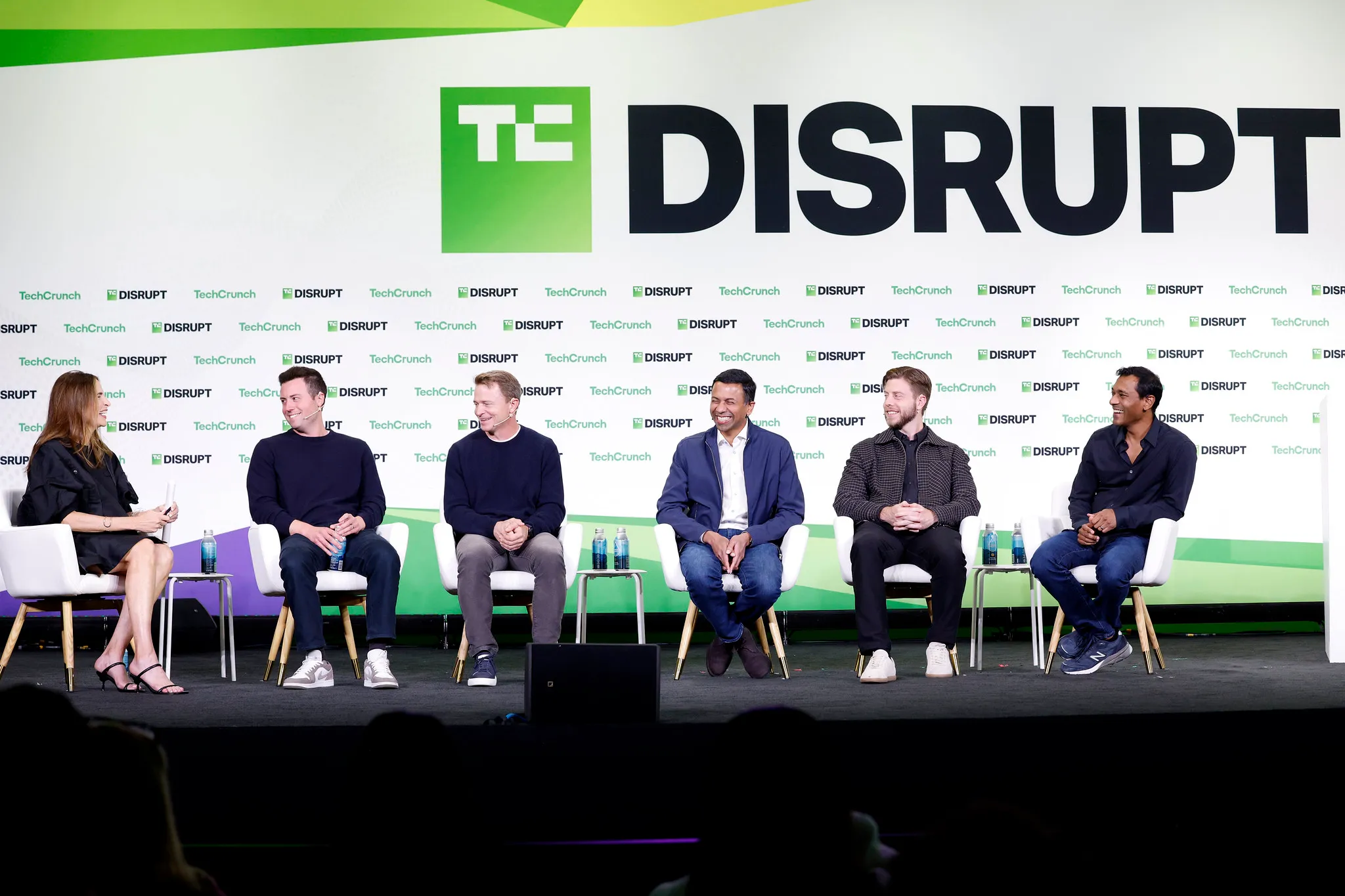
Speaking on stage at TechCrunch Disrupt, partners from Benchmark—one of the most prestigious and disciplined venture capital firms in tech history—frankly acknowledged that the explosive, fast-moving artificial intelligence boom is making traditional exclusivity nearly impossible to maintain. While the firm’s partners stopped short of declaring the pact dead, their admissions signal a seismic shift in how venture capitalists view market overlap, portfolio hygiene, and the ethical boundaries of early-stage investing.
Main Facts: The Anatomy of an Emerging Crisis
The tension between traditional VC ethics and modern market realities has been building for years, driven primarily by the astronomical rise of generative AI.
- The Portfolio Overlap: Major AI heavyweights like OpenAI and Anthropic already share a sprawling web of overlapping institutional investors. At the early stage, where venture capitalists pride themselves on hand-selected exclusivity, the lines are blurring at a dizzying pace.
- The Factory vs. Cognition Fallout: The boiling point of this structural tension spilled into public view in late September, when software-development AI agent startup Factory ousted board observer and adviser Chris Degnan. Factory accused Degnan of "unethical conduct involving Cognition," its direct rival and the creator of the Devin coding agent. Factory’s leadership alleged that Degnan discussed a potential job at Cognition while privy to confidential, board-level discussions at Factory.
- Public Fallout and Loyalties Tested: Degnan denied sharing proprietary information and countered that he had already resigned prior to the accusations. He quickly announced his move to Cognition as chief revenue officer. The dispute escalated when powerhouse investor Vinod Khosla publicly sided with Degnan on X (formerly Twitter), sharply criticizing Factory’s CEO and labeling the startup "a struggling second tier competitor." Notably, Khosla Ventures is an investor in both companies, illustrating how dual-backed portfolios can erupt into public warfare.
Chronology of a Fracturing Norm
To understand how venture capital arrived at this precipice, it is helpful to trace the evolution of the software industry alongside the changing profile of the modern venture firm.
The Golden Era of Exclusivity (1990s–2010s)
For generations, firms like Benchmark built their reputations on deep, long-term partnerships—often lasting 10 to 15 years—with founders at the seed and Series A stages. In this era, market spaces were relatively well-defined. If a VC backed an enterprise software company, they explicitly avoided funding a direct clone. Founders trusted that their board members were sanctuaries of confidentiality, free from competing interests.
The Rise of the Multi-Stage Super-Fund (2015–2022)
As venture funds swelled from tens of millions of dollars to multibillion-dollar mega-institutions, firms naturally expanded their mandates. To deploy capital at scale, they had to write checks across multiple stages, moving from seed rounds all the way to pre-IPO growth stages. This "multi-product" strategy meant firms inevitably collided with their own portfolio companies or found themselves backing adjacent players that gradually evolved into rivals.
The AI Gold Rush and the "Surface Area" Explosion (2023–Present)
The launch of advanced generative AI models compressed software development costs dramatically. Suddenly, building complex software became cheap, fast, and accessible. Ambitious founders began chasing vast, undefined market opportunities—what Benchmark partner Chetan Puttagunta describes as an expansive "surface area." Startups that begin in distinct niches rapidly pivot, acquire new capabilities, and bleed into each other’s territories, turning peaceful co-existence into direct warfare virtually overnight.
Supporting Data & Market Dynamics: Why AI Changes Everything
The structural breakdown of exclusivity is not merely a failure of individual ethics; it is an economic inevitability driven by the nature of the artificial intelligence market.
- The Cost of Software Development Approaches Zero: According to industry analysts, generative tooling has lowered the barrier to entry for software startups. Founders can prototype and scale products with a fraction of the engineering headcount required a decade ago. Consequently, thousands of companies are sprinting toward the same AI-driven use cases simultaneously.
- The "Pivot Velocity": In the SaaS era, a startup pivot took 12 to 18 months of deliberate planning, giving investors plenty of time to spot conflicts. In the generative AI era, startups routinely pivot their product roadmaps in weeks based on new foundation model releases (e.g., OpenAI, Anthropic, or open-source Llama drops). This hyper-velocity makes static portfolio mapping nearly impossible.
- The Capital Concentration Dilemma: A handful of elite venture firms and sovereign wealth funds control the vast majority of dry powder allocated to frontier AI. Because the addressable market for artificial intelligence is projected to reach trillions of dollars, investors face a Catch-22: sit out the most important technological revolution in history, or back multiple players in the same ecosystem and manage the inevitable friction.
Official Responses: How Benchmark Partners View the Shift
During their panel at TechCrunch Disrupt, Benchmark partners Eric Vishria, Chetan Puttagunta, and Peter Fenton offered contrasting yet revealing perspectives on how the firm navigates this volatile landscape.
Eric Vishria on Market Evolution and Reality
Vishria did not mince words about the friction facing modern venture capitalists, attributing the conflicts to natural market evolution rather than intentional double-dealing.
"The harsh reality of this world is every company is evolving very quickly. You are going to get conflicts, and that’s just the reality of the current dynamic."
While maintaining that Benchmark remains fiercely loyal to its founders and treats proprietary information with strict confidentiality, Vishria downplayed the risk of cross-contamination, noting drily, "We are not product or technology experts." He distinguished Benchmark’s approach by noting they have largely avoided the "insane direct conflict" seen elsewhere in the valley, reaffirming that exclusivity remains vital at the earliest seed stages. Even so, he conceded: "Things are evolving. There’s no doubt about that."
Chetan Puttagunta on the Expanding "Surface Area"
Puttagunta pointed directly to the hyper-ambition of AI founders as the primary accelerant of portfolio collisions. Because the cost of building software is plummeting, modern entrepreneurs view expansive market landscapes and want to claim all of it.
"It’s probably going to happen more, where you start to run into each other."
Puttagunta drew a sharp distinction between backing two direct competitors from day one—which he categorized as "an easy answer" (a firm "no")—versus a scenario where two non-competing portfolio companies organically expand over time until they collide. The latter, he noted, is an increasingly unavoidable byproduct of modern innovation.
Peter Fenton on "Kryptonite" and the Spectrum of Trust
Peter Fenton offered the most philosophical take, labeling portfolio conflicts as venture capital’s ultimate "kryptonite" and the single toughest problem facing the industry.
Fenton laid out a clear spectrum of investor behavior:
- The Co-Founder End: Characterized by early-stage venture firms (like Benchmark) that work hand-in-glove with management, shaping company culture, strategy, and hiring. These investors cannot ethically back rivals.
- The Public-Market Stock Picker End: Characterized by public equities managers who freely own competing stocks (e.g., holding both Coca-Cola and PepsiCo) because their role is purely financial allocation rather than operational guidance.
Placing Benchmark firmly on the co-founder end of the spectrum, Fenton emphasized that transparency is the ultimate safeguard. Founders must never be caught by surprise. "There shouldn’t be the surprise after the fact," Fenton insisted, adding that if a conflict eventually arises, the founder should never feel shortchanged or betrayed.
Implications: What the Death of Exclusivity Means for Founders
The erosion of the traditional VC pact carries profound implications for the startup ecosystem at large.
1. Increased Due Diligence for Founders
Founders can no longer assume that taking a term sheet from a prestigious multi-stage fund guarantees market exclusivity. During pitch meetings, entrepreneurs must explicitly ask venture capitalists about their existing portfolio companies, adjacent investments, and internal policies regarding strategic pivots.
2. The Rise of "Clean-Room" VCs and Boutique Firms
As mega-funds increasingly place bets across entire tech ecosystems, founders may increasingly seek out specialized, boutique, or micro-VC funds that maintain strict, single-track exclusivity. These smaller firms can use their lack of conflicting portfolio companies as a distinct competitive advantage to win top-tier deal flow.
3. Heightened Litigiousness and Governance Battles
The messy public brawl between Factory, Cognition, and Vinod Khosla Ventures serves as a warning shot. As overlapping portfolios become the norm, expect to see more board-level disputes, accusations of espionage, rapid ousters of observers, and public PR wars. When millions—or billions—are at stake, the unwritten gentlemen’s agreements of Silicon Valley are easily replaced by hardball legal maneuvering.
Conclusion
Benchmark has not officially thrown out its playbook, but the firm’s candid admissions at TechCrunch Disrupt mark the end of an era of romanticized venture exclusivity. In the high-stakes, fast-moving world of artificial intelligence, the old rules of engagement are buckling under the weight of market ambition. For founders navigating the modern funding landscape, buyer beware: the venture capitalist sitting across the table may already be funding your fiercest rival’s next big pivot.
 Asep Darmawan
 Ali Ikhwan
 Laily UPN
