The most polarizing experiment in the history of Magic: The Gathering is finally drawing to a close. When Wizards of the Coast launched the Alchemy format on MTG Arena in 2021, it arrived with a bold promise: to create a digital-native frontier where cards could be rebalanced overnight and mechanics like Conjure, Seek, and Perpetual could operate unburdened by the physical constraints of cardboard and table space.
Now, with Wizards officially scheduling the format’s retirement for early 2027, Arena’s most ambitious design sandbox is entering its final chapter.
Love it or hate it, Alchemy fundamentally expanded Magic’s mechanical lexicon. It proved that a digital platform could test design spaces physically impossible in tabletop play just as easily as it could simulate traditional matches. Drafting the Power Nine from thin air, altering card stats permanently across game zones, and directly patching the inherent win-rate disparities of the play/draw dynamic simultaneously horrified MTG purists and thrilled digital-first players. It gifted the community a hyper-evolving metagame that fully embraced software’s speed.
Although the dedicated Alchemy queue is sunsetting, the format’s digital footprint will endure across alternative formats like Historic, Timeless, and Brawl. To truly understand this chaotic, transformative era of digital card design, we must examine the 10 cards that best encapsulate Magic’s Alchemy experiment—from format-warping value engines to brilliant, paradigm-shifting structural fixes.
Main Facts: The Rise and Fall of MTG Arena’s Digital Frontier
The closure of Alchemy marks a major turning point for Wizards of the Coast’s digital strategy. Introduced to inject volatility and freshness into Arena between major Standard set releases, Alchemy was built on the premise that digital card games should leverage software capabilities rather than simply mimic physical paper.
However, the format faced severe backlash from players who invested wildcards into digital-only cards—or Standard-legal cards that were unexpectedly nerfed for Alchemy balance reasons, inadvertently impacting their playability elsewhere.
The Core Mechanics: Alchemy introduced unique concepts such as Conjuring (creating cards out of thin air), Seeking (searching a library for a card matching specific criteria without shuffling), and Perpetual (permanently modifying a card’s stats regardless of where it moves in the game).
The Legacy: While the dedicated queue is shutting down, digital cards will remain legal in legacy-style digital formats, ensuring that the chaos of Alchemy leaves a permanent mark on Arena’s deep-format ecosystems.
Chronology of an Experiment: A Timeline of Digital Evolution
December 2021: Wizards of the Coast launches Alchemy: Innistrad, introducing the digital-only format alongside sweeping pre-emptive nerfs to standard cards like Goldspan Dragon.
2022–2024: The format expands through dedicated mini-sets tied to major releases like Kamigawa: Neon Dynasty, Dominaria United, and The Brothers’ War, introducing iconic and controversial powerhouses like Oracle of the Alpha and Crucias, Titan of the Waves.
September 2025: Community sentiment reaches a boiling point regarding wildcard economy fatigue and format fragmentation, prompting developers to re-evaluate the frequency of digital-only expansions.
October 2026: Wizards of the Coast announces the official roadmap for MTG Arena, setting the formal retirement of the Alchemy format for early 2027.
Supporting Data: 10 Cards That Defined the Alchemy Era
To understand how Alchemy shaped digital play, one must look at the cards that pushed its boundaries.
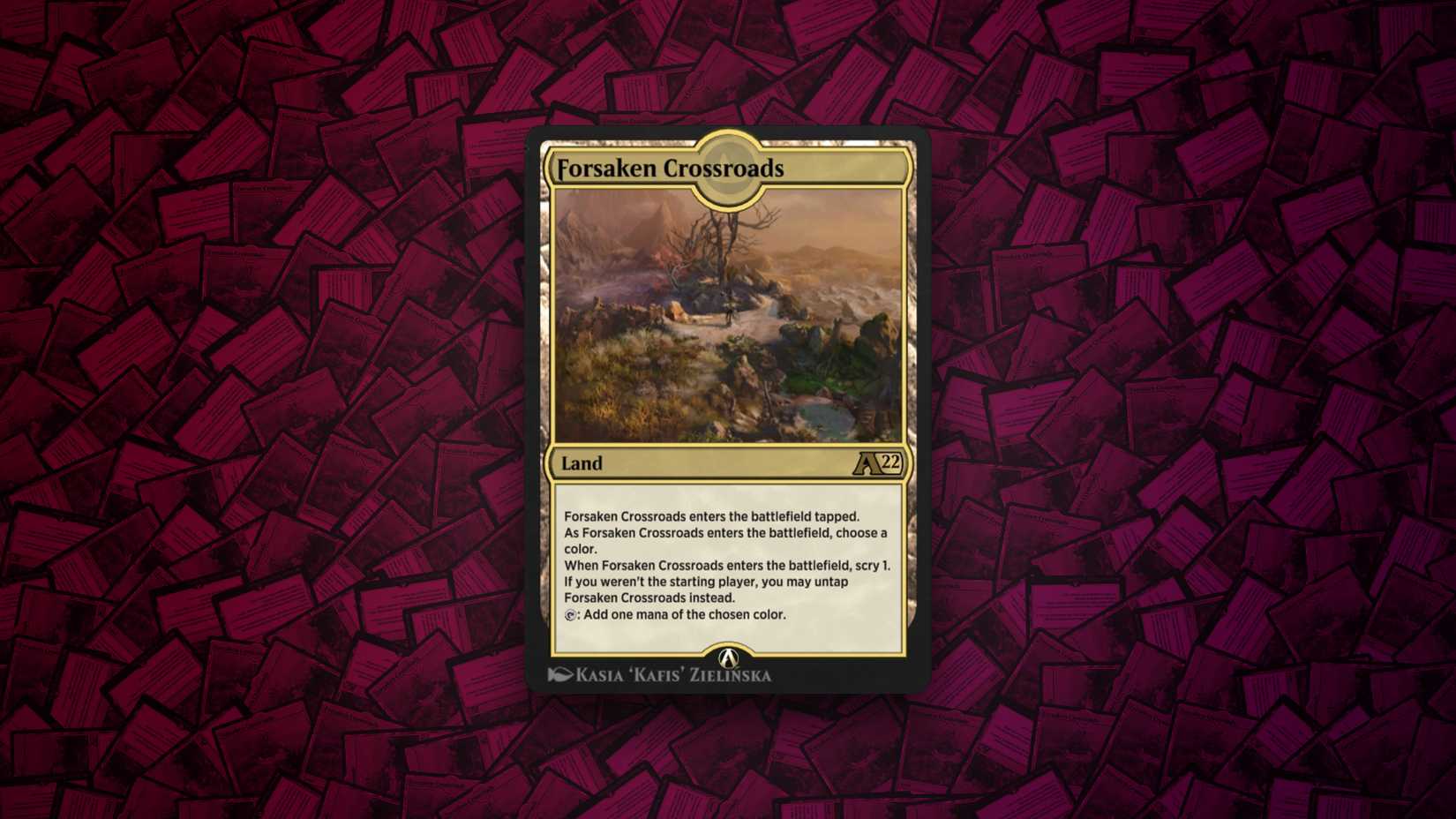
10. Forsaken Crossroads (Alchemy: Innistrad)
Forsaken Crossroads is perhaps the least visually flashy card on this list, but it explains why Alchemy was willing to question the fundamental rules of Magic. Entering tapped with a scry effect, it untaps immediately if you are not the starting player. By directly addressing the statistical disadvantage of going second, Alchemy bypassed decades of tabletop dogma, proving that digital design could tackle systemic balance issues head-on.
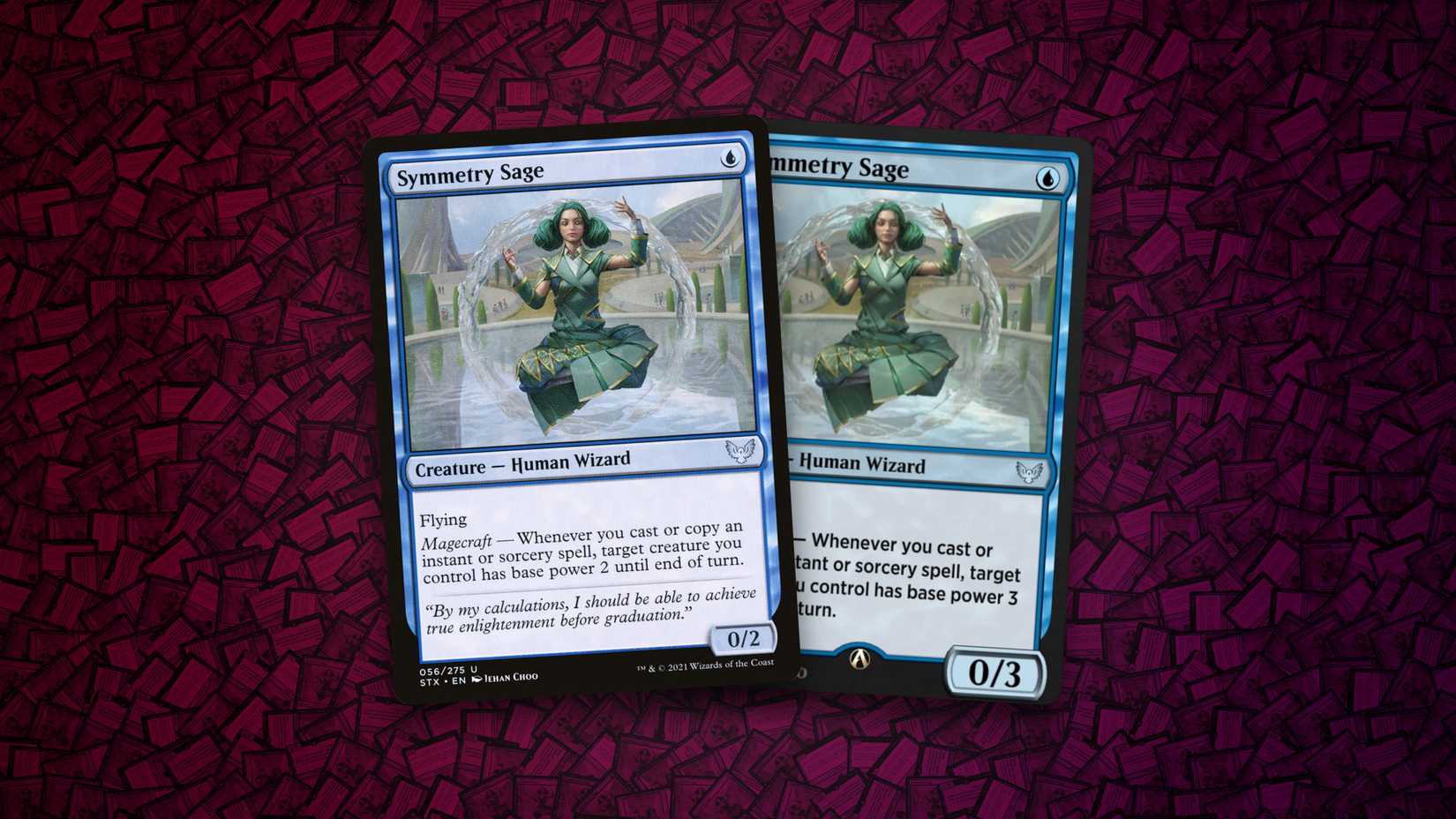
9. Symmetry Sage (Adventures in the Forgotten Realms)
As one of the earliest examples of digital rebalancing, Symmetry Sage was transformed from a physical 0/2 into a digital 0/3 with an amplified Magecraft buff. It demonstrated how Wizards could breathe new life into underutilized archetypes in formats like Historic without disrupting physical paper collections sitting on kitchen tables.
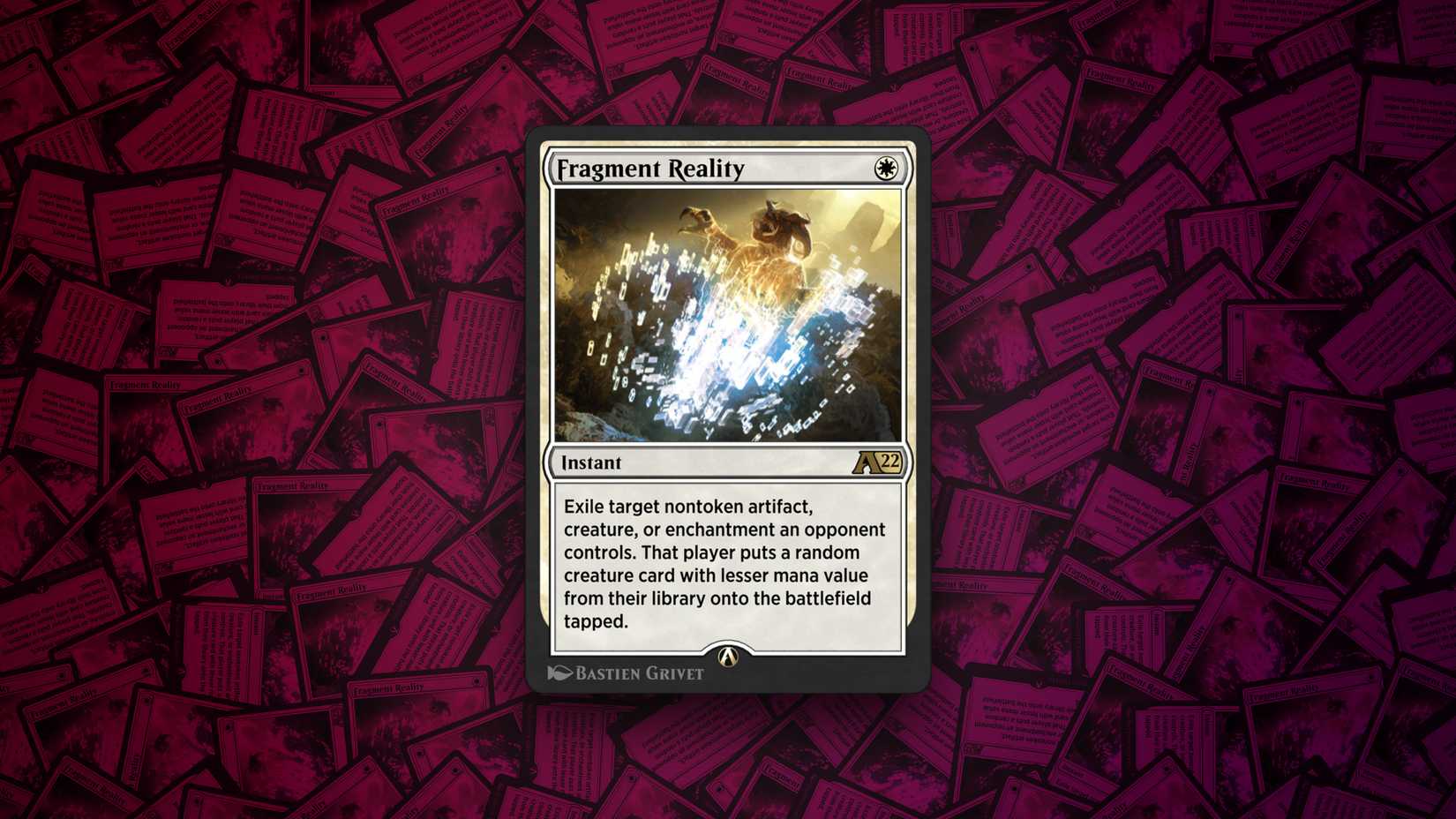
8. Fragment Reality (Alchemy: Kamigawa)
A one-mana white instant capable of exiling almost any permanent at the cost of giving the opponent a random cheaper creature, Fragment Reality was a masterclass in risk-reward design. Its efficiency forced multiple digital-era adjustments, showcasing how agile developers could tweak a card’s target restrictions after unexpected synergies broke out in Timeless.
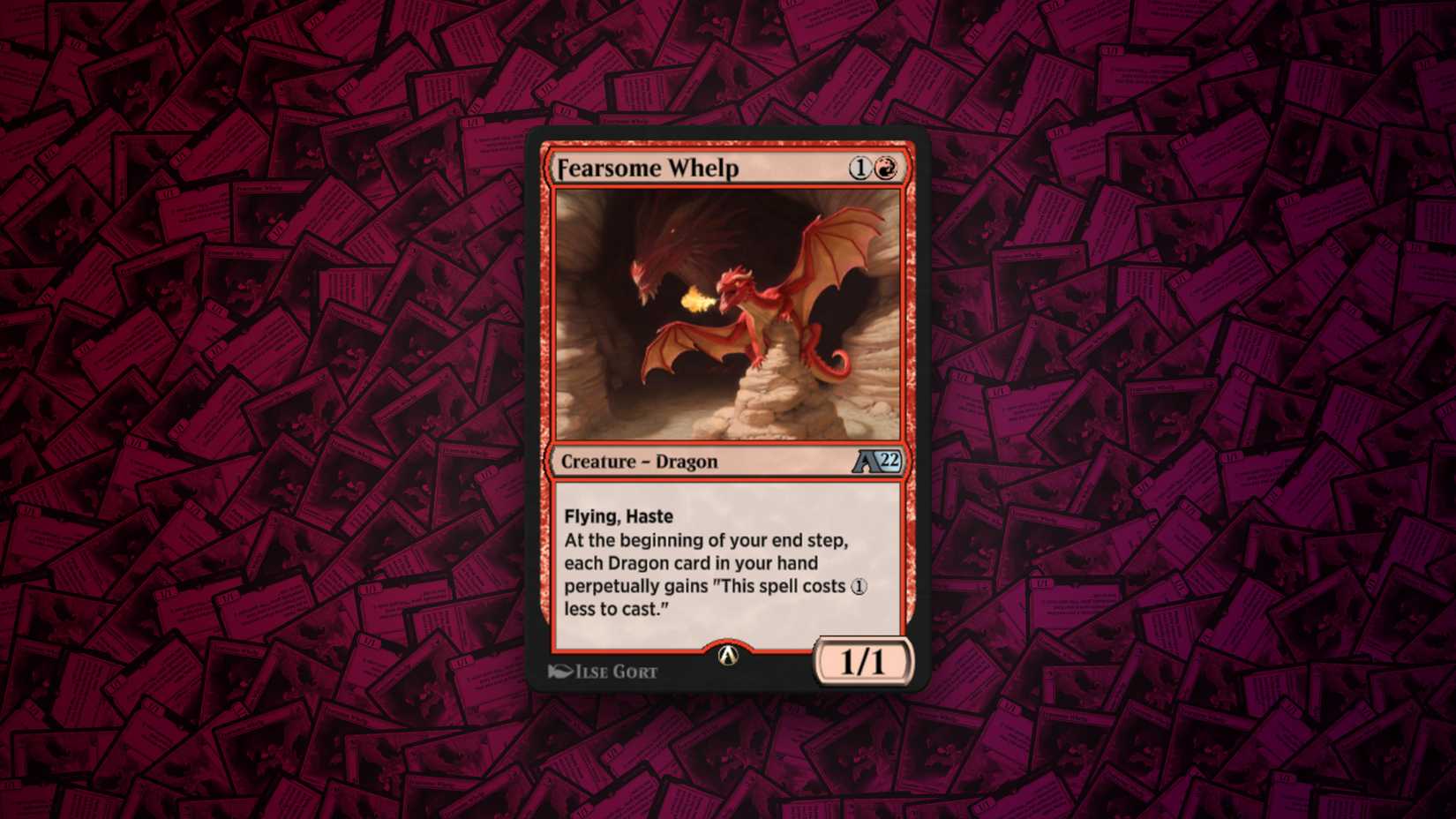
7. Fearsome Whelp (Alchemy: Innistrad)
Fearsome Whelp took the classic tribal cost-reduction effect and supercharged it. By making the mana-reduction permanent across turns, it rewarded players who could protect the creature over multiple cycles. It quickly became a focal point for dragon-heavy strategies before receiving digital balance tweaks.
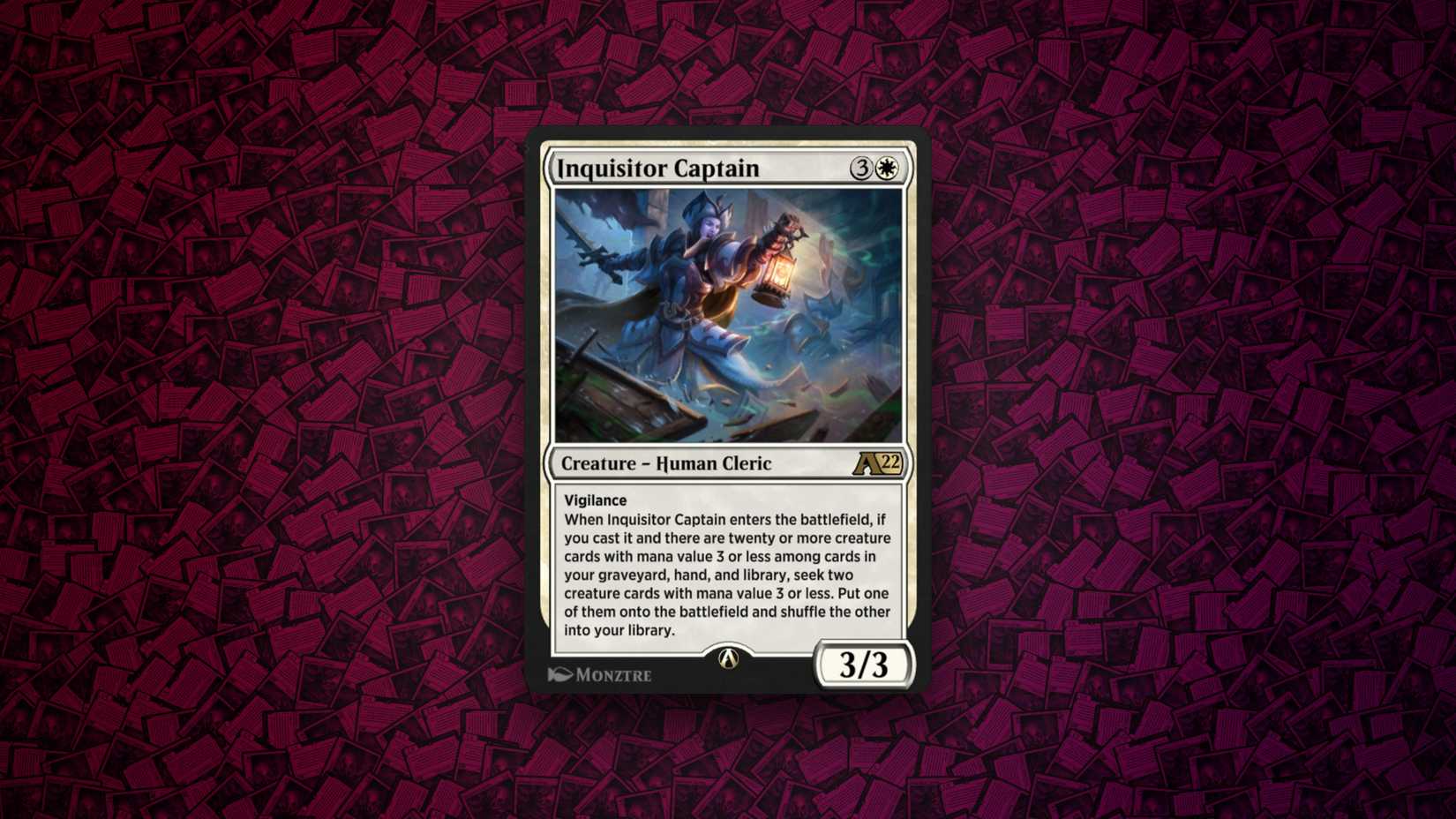
6. Inquisitor Captain (Alchemy: Innistrad)
A four-mana white creature that leveraged the Seek mechanic to flood the board with cheap threats, Inquisitor Captain turned hyper-aggression into an explosive science. It highlighted how difficult it was to predict digital-only card interactions compared to traditional print runs.
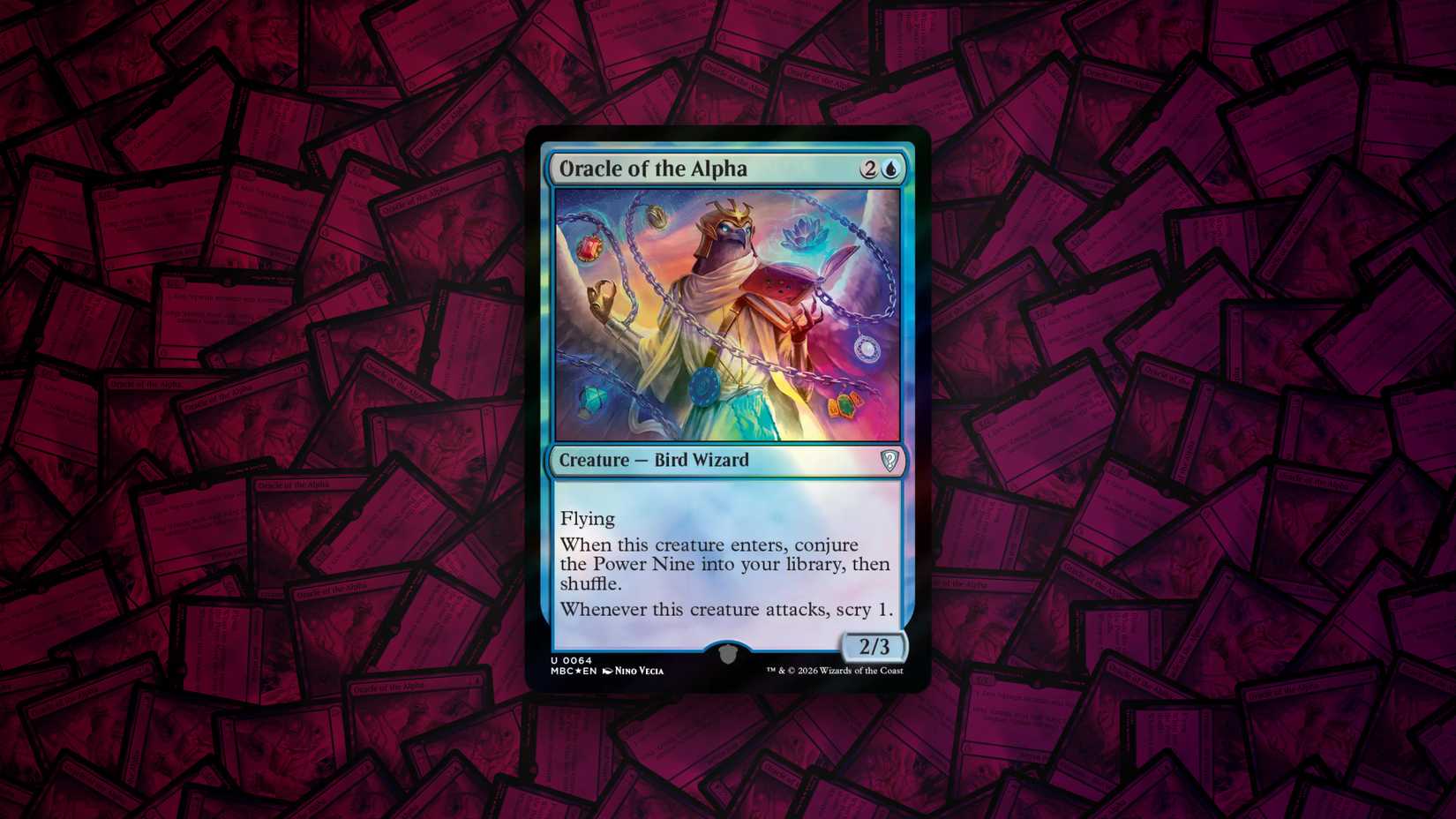
5. Oracle of the Alpha (Alchemy: Dominaria)
Oracle of the Alpha achieved the impossible in casual circles: it put the legendary Power Nine (Black Lotus, Ancestral Recall, the Moxen, etc.) directly into a modern-era deck. While competitively balanced by the randomness of shuffling them into a library, its existence celebrated the unbridled freedom of digital card pools.
4. Key to the Archive (Alchemy: Innistrad)
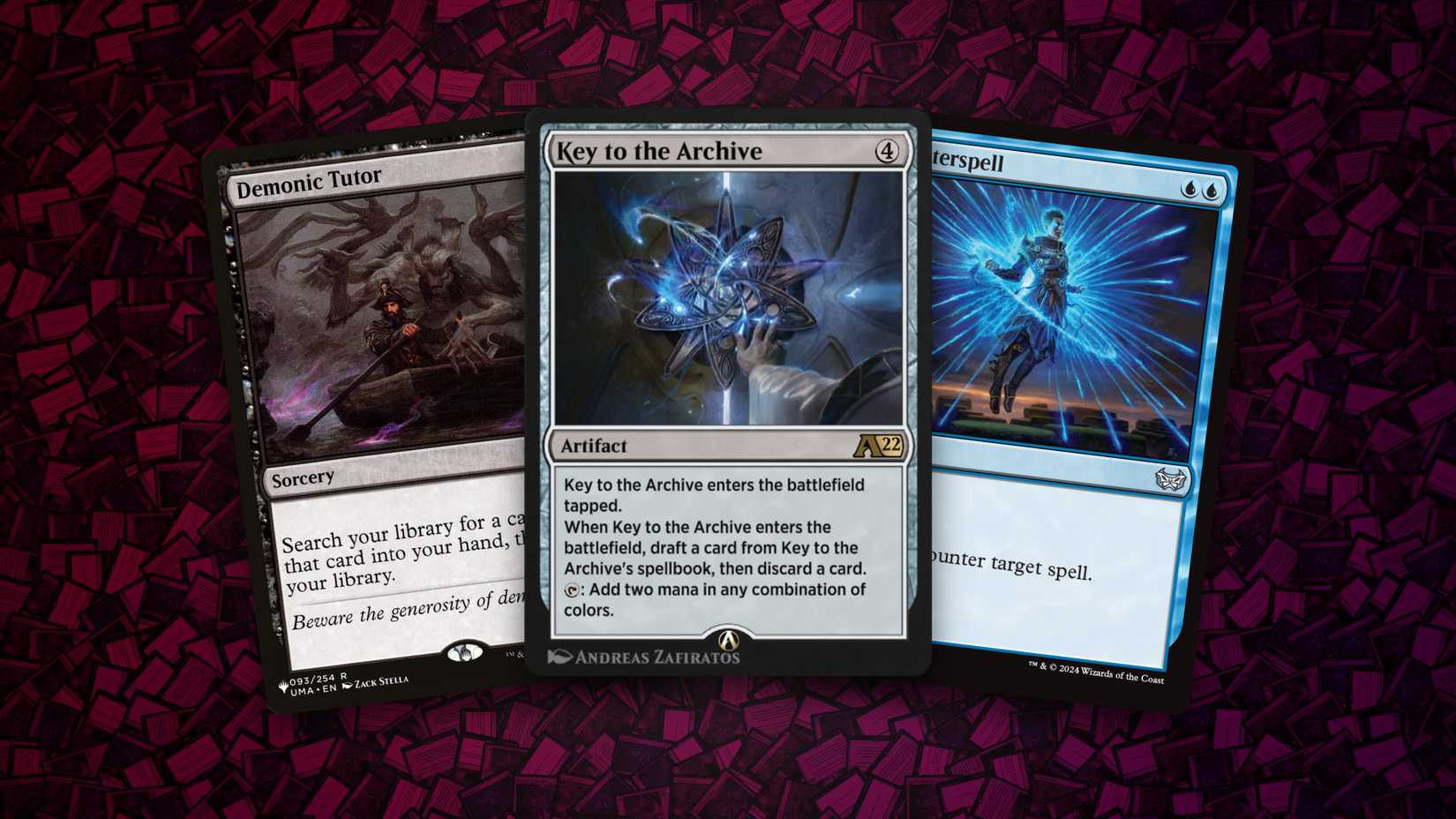
Serving as a masterclass in the Spellbook mechanic, Key to the Archive offered players a curated lottery of historic powerhouses like Demonic Tutor, Time Warp, and Lightning Bolt. It turned a simple mana artifact into an unpredictable portal spanning Magic’s entire history.
3. Town-Razer Tyrant (Alchemy: Innistrad)
Town-Razer Tyrant pushed land disruption into dangerous territory. By transforming nonbasic lands into ticking time bombs, it punished greedy multicolor mana bases. Multiple rebalance iterations—shifting damage triggers and targeting parameters—showcased the iterative agility that digital platforms allowed.
2. Rusko, Clockmaker (Alchemy: The Brothers’ War)
Rusko was Alchemy distilled into a single, highly efficient package. Generating a Midnight Clock upon entry while draining opponents and gaining life with every noncreature spell cast, Rusko proved why digital engines could achieve complexity and recursion levels that would be tracking nightmares on a physical tabletop.
1. Crucias, Titan of the Waves (Alchemy: The Brothers’ War)
Few cards polarize opinion quite like Crucias. Combining card filtering, treasure generation, and a resilient body, this Grixis powerhouse defined midrange dominance on Arena. Its eventual nerf from a 3/3 to a 3/1 stands as a monument to the relentless balancing cycle that defined high-level Alchemy play.
Official Responses: What Wizards Says About the Future
In the official State of the Formats briefing, Wizards of the Coast reflected on the five-year run of Alchemy, acknowledging both its successes and its community challenges.
"Alchemy was an invaluable sandbox for the MTG Arena team," lead designers noted in the transition logs. "It allowed us to explore design space at a velocity that paper magic simply cannot match. However, as the digital ecosystem matures, our focus moving forward is to consolidate our competitive queues and ensure player collections feel deeply valued across stable, long-term formats like Timeless, Historic, and Standard."
Developers emphasized that while the dedicated Alchemy ladder is being sunsetted, the underlying technological frameworks—such as digital tracking and dynamic patching tools—have permanently upgraded Wizards’ capabilities for future digital client developments.
Implications: The Legacy Left Behind
The closure of Alchemy leaves behind a complex legacy. For competitive purists, the format’s retirement is a welcome return to form—a sign that MTG Arena will no longer fracture its player base across digital-exclusive subsets. For creative deckbuilders and digital-first enthusiasts, however, the loss of Alchemy represents the end of an era where design rules were made to be broken.
Ultimately, Alchemy served as a high-speed R&D lab for Wizards of the Coast. Lessons learned from its mechanics—ranging from UI improvements for complex triggers to managing player sentiment regarding digital balance changes—will undoubtedly influence how Magic: The Gathering approaches digital platforms for years to come. As Arena prepares for 2027, the ghosts of Crucias and Oracle of the Alpha will live on, reminding players of a time when digital magic threw caution to the wind.





 Nana Muazin
 Basiran
 Dwi Wanna
