Few rivalries in the history of cinema and literature are as enduring, heavily documented, and culturally significant as the ideological chasm between horror icon Stephen King and master filmmaker Stanley Kubrick regarding the 1980 film adaptation of The Shining. Published in 1977, King’s novel stands as one of his most deeply personal works—a semi-autobiographical reckoning with his harrowing early struggles with alcoholism, domestic frustration, and the terrifying, volatile weight of fatherhood.
Three years later, Kubrick translated the text to the silver screen, delivering a chilly, nihilistic, and visually groundbreaking horror classic that permanently altered the cinematic landscape. Yet, despite its status as a critical and cultural milestone, King has spent decades publicly denouncing the film. Their conflict is not merely a matter of artistic preference; it represents a fundamental philosophical disagreement over narrative intent, character agency, empathy, and the nature of evil itself.
While King envisioned a tragic narrative about a fundamentally decent, loving man corrupted and destroyed by supernatural malevolence, Kubrick crafted a psychological thriller about a deeply flawed, bitter, and inherently violent man who enters the Overlook Hotel primed and ready to commit murder. This foundational divergence has fueled a legendary decades-long grudge that highlights the complex, often fraught relationship between source material and cinematic adaptation.
Chronology of a Creative Collision
1977–1980: From Page to Celluloid
The Novel’s Genesis (1977): Stephen King draws heavily from his own life while staying at the Stanley Hotel in Estes Park, Colorado. Struggling with addiction and the pressures of a growing family, he pours his anxieties into the character of Jack Torrance, creating a tragic protagonist battling inner demons alongside literal ghosts.
Kubrick Takes the Reins (1980): Warner Bros. releases Stanley Kubrick’s The Shining, starring Jack Nicholson as Jack Torrance and Shelley Duvall as Wendy. From its sweeping, helicopter-shot opening over the Colorado Rockies to its symmetrical, dread-inducing Steadicam tracking shots, the film immediately establishes a tone vastly different from traditional horror cinema.
The 1980s: The Initial Backlash
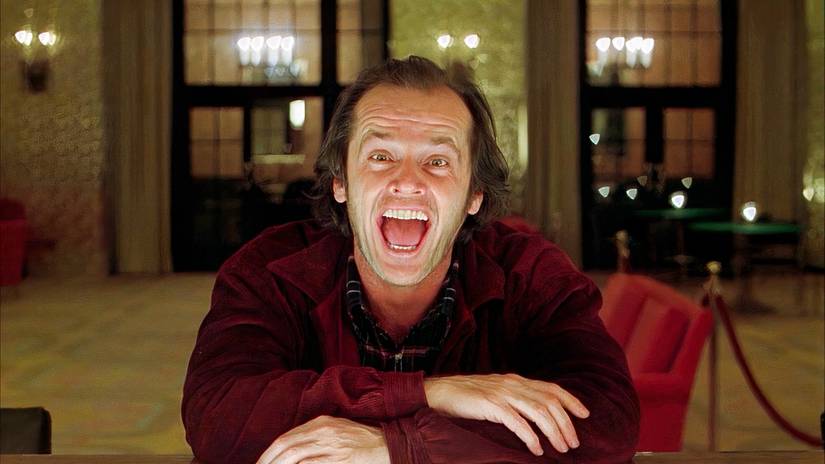
Playboy Interview (1983): Just three years after the film’s theatrical run, King vocalizes his profound disappointment in a landmark interview with Playboy. He takes direct aim at the casting of Jack Nicholson, arguing that Nicholson’s iconic manic grin and his recent role in One Flew Over the Cuckoo’s Nest signaled to audiences that the character was "loony from the first scene," entirely stripping the narrative of its tragic descent.
The 2010s–Present: Reevaluations and Retrenchments
The BBC Critique (2013): King doubles down on his critique of the film’s treatment of gender and character psychology, famously labeling Shelley Duvall’s portrayal of Wendy as "one of the most misogynistic characters ever put on film" and reducing her function to merely screaming and panicking.
The Legacy Persists: Although King eventually sanctioned a more faithful, television-miniseries adaptation of The Shining in 1997 (directed by Mick Garris), Kubrick’s 1980 film remains the undisputed cultural titan, continuing to spark academic analysis, documentaries (such as Room 237), and endless debate.
Supporting Data: Differing Visions of the Overlook Hotel
To understand why King’s grudge persists, one must examine how the two artists constructed the core characters of Jack and Wendy Torrance.
Element
Stephen King’s Vision (The Novel)
Stanley Kubrick’s Vision (The Film)
Jack Torrance
A good man, a loving father, and a struggling writer whose psyche is eroded from the outside in by a genuinely malignant, supernatural hotel.
A bitter, failed writer who arrives at the hotel psychologically predisposed to violence, contemptuous of his wife, and resentful of his son.
Wendy Torrance
A resilient, fiercely protective mother and partner who stands as an equal emotional anchor against the unfolding madness.
An eccentric, fragile figure interpreted by Kubrick to heighten the claustrophobic terror, but viewed by King as a reductive, hysterical stereotype.
The Supernatural
The Overlook Hotel acts as a sentient entity with an active agenda, corrupting an otherwise healthy human vessel.
The hotel functions largely as an amplifier and external mirror for the rot already festering inside Jack’s mind.
The Psychological Undercurrents
A prime illustration of this divide occurs early in Kubrick’s film, during a scene where Wendy chats casually with a pediatrician regarding Danny’s health. While smoking a cigarette, she laughs off a past incident where a drunken Jack accidentally dislocated young Danny’s shoulder while pulling him away from scattered writing notes, dismissing it as "purely an accident."
Kubrick uses this moment to establish that domestic violence and toxic undercurrents already existed in the Torrance household before they ever set foot in the Colorado mountains. King, conversely, argued that such characterizations completely rewrote the moral contract of the story, transforming a relatable tragedy of addiction into a bleak exercise in inevitability where the characters are doomed from frame one.
Official Responses and Creative Philosophies
Both creators have been remarkably transparent over the decades regarding their opposing philosophies on adaptation.
Stanley Kubrick, speaking in a rare and extensive interview with film critic Michel Ciment, made no secret of his intention to subvert and reshape King’s narrative framework to suit his own thematic goals. Kubrick noted:
"Jack comes to the hotel psychologically prepared to do its murderous bidding. He is bitter about his failure as a writer. He is married to a woman for whom he has only contempt. He hates his son."
Kubrick deliberately chose to lean into Shelley Duvall’s unique screen presence and vulnerability—a grueling process for the actress on set, who endured months of intense psychological direction. Kubrick defended this choice, viewing Duvall’s distinct emotional fragility as essential to capturing the overwhelming, inescapable terror of isolation.
Stephen King, on the other hand, has never hidden his aversion to the final product, famously comparing the film to a "big, beautiful Cadillac with no engine inside it." While King has occasionally conceded that the film features striking visual composition and unforgettable imagery, his core artistic grievance remains unchanged: Kubrick traded emotional truth and character integrity for cold, calculated cinematic formalism.
Implications: What the Feud Teaches Us About Adaptation
The enduring conflict between Stephen King and Stanley Kubrick over The Shining serves as a fascinating case study in the evolution of media adaptations. It raises a timeless, vital question for creators and audiences alike: Is a great adaptation faithful to the letter of the source text, or does it possess the artistic license to completely reinvent the material?
From a strict fidelity standpoint, King’s frustrations are entirely justified. Kubrick excised the emotional warmth, the redemptive character arcs, and the precise thematic mechanics of King’s battle against alcoholism.
Yet, from a cinematic standpoint, Kubrick achieved the ultimate holy grail of adaptation: he took existing raw material and forged an entirely new, autonomous work of art that stands shoulder-to-shoulder with (and arguably eclipses, in terms of pure pop-culture footprint) the original literature. Kubrick’s The Shining proved that cinema does not merely need to illustrate a book; it can interrogate, deconstruct, and mutate it into something entirely alien and terrifying.
Ultimately, both men were right in their own domains. Stephen King protected the emotional integrity of his personal demons on the printed page, while Stanley Kubrick unlocked a cold, Kubrickian nightmare on the silver screen. As The Shining continues to stream to new generations of horror enthusiasts on platforms like Max, this legendary creative clash reminds us that the best art often emerges not from agreement, but from fierce, unyielding collision.





 Layla Zulfa
 Basiran
