

By Automotive Editorial Desk
October 22, 2026
The transition from the roar of a naturally aspirated V-12 to the high-frequency hum of an electric motor is perhaps the most significant cultural shift in the history of Maranello. After years of speculation, internal debate, and industry-wide anxiety, the financial curtain has finally been pulled back on the Ferrari Luce. As confirmed by reports from Car and Driver, the Maranello-based manufacturer’s debut all-electric vehicle will carry a starting MSRP of $560,800 when it officially touches down on U.S. soil in the second quarter of 2027.
This pricing strategy places the Luce firmly in the stratosphere of automotive luxury, yet it represents a strategic recalibration from earlier market projections that pegged the vehicle at a daunting $640,000. While $560,800 is a significant sum by any metric, it is a price point that positions the Luce as a specialized tool—a bridge between the traditional heritage of Enzo Ferrari’s legacy and the inevitable, software-defined future of the hyper-luxury segment.
The Main Facts: A New Era for Maranello
The Luce is not merely another electric car; it is a fundamental re-imagining of what a "Ferrari" can be. Eschewing the internal combustion engines that have defined the brand’s identity for eight decades, the Luce utilizes a sophisticated quad-motor powertrain. This architecture allows for advanced torque vectoring, individual wheel control, and a level of power delivery that, on paper, surpasses many of the company’s most legendary V-12 grand tourers.
With 1,035 horsepower and 770 ft-lbs of torque, the performance metrics are staggering. The manufacturer claims a 0-to-60 mph sprint of 2.5 seconds, with a terminal velocity of 192 mph. These figures are intended to reassure the faithful that while the medium of power has changed, the spirit of performance remains quintessentially Ferrari. However, the path to this launch has been anything but smooth, marked by public skepticism, design controversy, and a digital discourse that has proven difficult for the brand to navigate.

Chronology of a Controversial Debut
The journey to the Luce’s current state has been defined by a series of high-stakes milestones, each met with varying degrees of enthusiast fervor and industry scrutiny.
- Pre-2025: The Speculation Phase: Rumors regarding "Project F-EV" began circulating shortly after the announcement of the Purosangue. Ferrari executives were notoriously tight-lipped, only confirming that a fully electric vehicle was in active development.
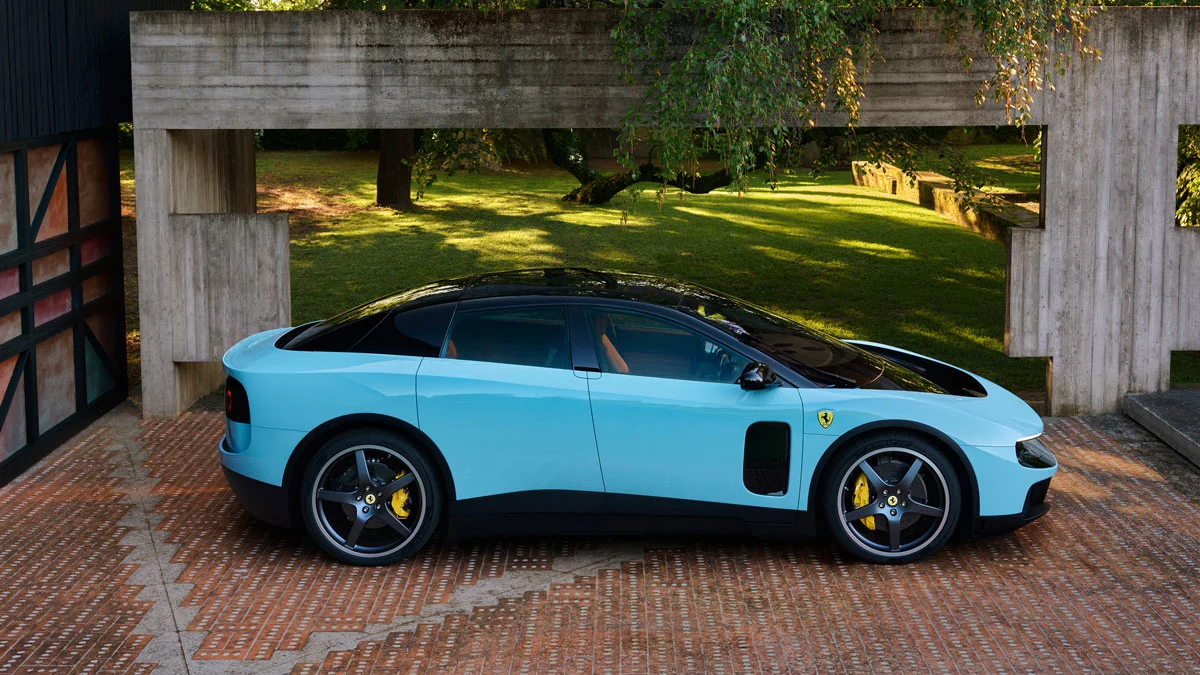
- Early 2026: The Unveiling: The global reveal of the Luce was intended to be a watershed moment for the company. Instead, it triggered an immediate, visceral reaction from the enthusiast community. The four-door configuration and the sleek, minimalist aesthetic were criticized as being too derivative, with some vocal detractors even drawing unflattering comparisons to the Nissan Leaf.
- Mid-2026: The "Troll" Narrative: As the digital age often dictates, the internet fixated on the price-to-design ratio. Comparisons between the $30,000 Nissan Leaf and the $600,000-range Ferrari became a popular meme, underscoring the divide between mass-market utility and ultra-luxury branding.
- Late 2026: Pricing Confirmation: The announcement of the $560,800 sticker price has served to stabilize the conversation. By undercutting initial, inflated estimates by nearly $80,000, Ferrari has signaled a desire to maintain market competitiveness despite the brand’s inherent prestige.
- Q2 2027 (Projected): The official U.S. market arrival. This will be the true test for the vehicle, as it transitions from a digital concept and showroom display to a real-world driving machine on American roads.
Supporting Data: Where the Luce Fits in the Ecosystem
To understand the magnitude of the Luce, one must look at the landscape of current automotive pricing. At $560,800, the Luce sits in a unique "no man’s land." It is significantly more expensive than the Purosangue, which serves as the brand’s entry point into the SUV/cross-over segment at approximately $438,610.
When positioned against the broader luxury market, the Luce lands at number 42 on the list of the world’s most expensive production vehicles. It effectively nests between the pinnacle of luxury, the Rolls-Royce Phantom, and the track-focused engineering of the McLaren 788HS.
| Vehicle Model | Starting Price (Approx.) | Segment |
|---|---|---|
| Ferrari Luce (EV) | $560,800 | Electric Grand Tourer |
| Rolls-Royce Phantom | $520,000+ | Ultra-Luxury Sedan |
| McLaren 788HS | $580,000+ | Supercar |
| Ferrari Purosangue | $438,610 | Luxury SUV |
The $130,000 premium over the Purosangue suggests that Ferrari is charging a significant "tech-premium" for its first foray into full electrification, accounting for battery research and development, software integration, and the premium cost of high-output electric motors.
Official Responses and Corporate Strategy
Ferrari has maintained a stoic, albeit defensive, posture regarding the reception of the Luce. In internal briefings, the company has emphasized that the design language was dictated by aerodynamics and the unique packaging requirements of a large-capacity battery array.

"We are not in the business of building retro-machines," a spokesperson noted in a recent interview. "The Luce is the vanguard of our next century."
The company’s leadership understands that for every purist alienated by the lack of a V-12, there is a new, tech-forward demographic interested in the brand’s prestige but seeking the convenience and instant torque of an electric powertrain. The pricing adjustment—from $640,000 down to $560,800—is widely interpreted as a tactical move to ensure high-end sales volume. It is a price that remains exclusive enough to preserve the "Ferrari mystique" while being accessible enough to capture the interest of early-adopter billionaires who currently split their garages between Teslas and Italian classics.
Implications: The Road Ahead
The implications of the Luce’s release are far-reaching. Firstly, it sets a precedent for the entire Ferrari lineup. If the Luce succeeds, it validates the company’s decision to move toward a hybrid and electric-heavy portfolio by 2030. If it fails, or if the market sentiment remains hostile, it could force a radical rethink of their electrification roadmap.
Secondly, the "Nissan Leaf" comparison highlights a broader industry problem: as electric vehicles become more aerodynamic, they are beginning to share a common silhouette, often described as a "jellybean" or "teardrop" shape. Ferrari’s challenge is to inject "soul" into this standardized design language—a task that is proving to be much harder than simply engineering a fast car.
Finally, the price of $560,800 is a statement of confidence. It asserts that despite the cultural shift away from combustion, the Ferrari brand name carries a value that transcends the powertrain itself. The fact that an early, pre-production example of the Luce recently fetched nearly $40 million at a private auction—driven by collectors seeking the historical significance of the "first Ferrari EV"—proves that while the masses may be skeptical, the collectors are already sold.

Conclusion: A Gamble on Legacy
As the 2027 delivery window approaches, the automotive world waits with bated breath. The Ferrari Luce is, perhaps, the most important car the company has launched since the F40. It carries the weight of a legendary history and the pressure of an uncertain, electrified future. Whether it is remembered as the moment Ferrari lost its way or the moment it secured its relevance for the next fifty years depends entirely on how the car feels from behind the wheel.
For the prospective buyer, the $560,800 price tag is an entry fee into a new kind of club. It is a club that trades the visceral scream of a redline engine for the silent, crushing acceleration of a battery-powered beast. In the end, the success of the Luce will not be determined by the critics, the trolls, or the comparisons to sub-$40,000 hatchbacks. It will be determined by the person who steps on the pedal for the first time, feels the 1,035 horsepower surge, and realizes that while everything has changed, the feeling of driving a Ferrari remains exactly as it should be.
 Ali Ikhwan
 Laily UPN
 Raul Delapena Setiawan
