

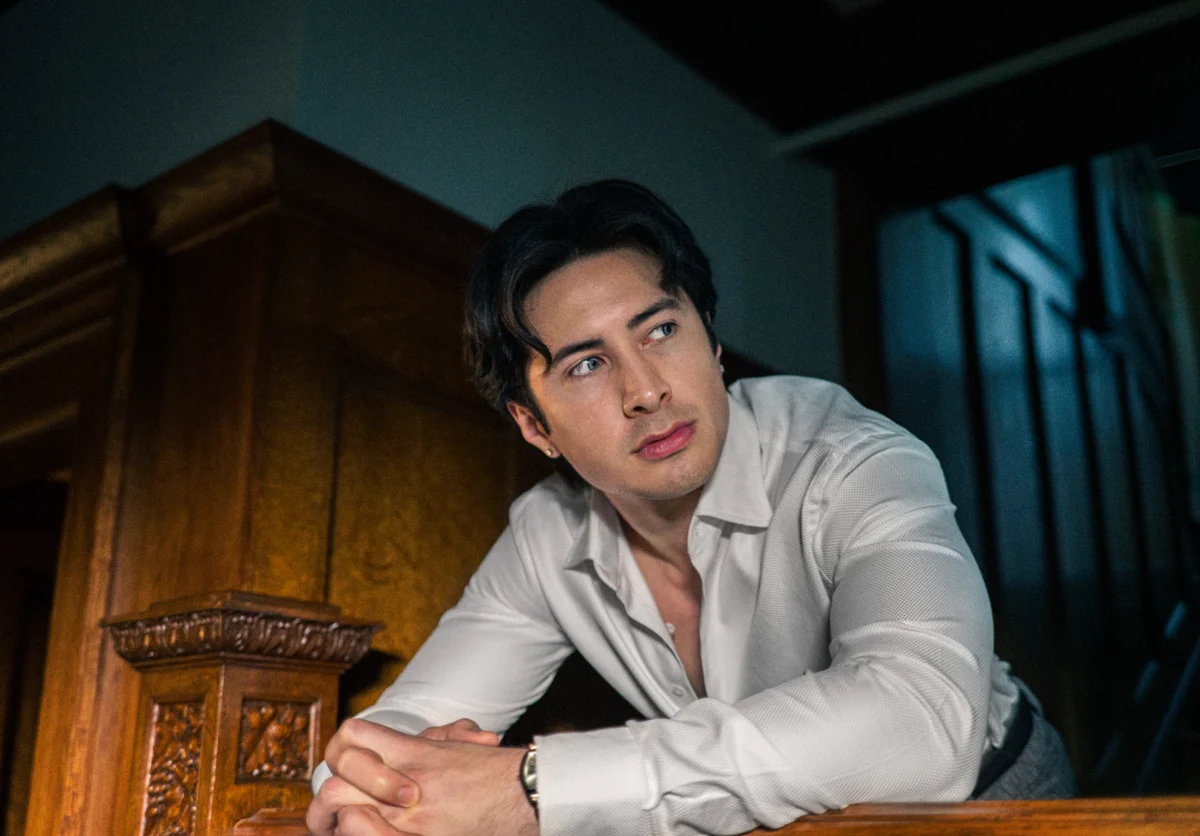
The Pacific Northwest has long been a breeding ground for atmospheric tension, but the latest thriller from AMC+, Yaga, brings a new level of supernatural dread to the rugged coastline. Adapted from series creator Kat Sandler’s acclaimed 2019 stage play, the series modernizes the ancient Russian folkloric legend of Baba Yaga, transforming a cautionary nursery tale into a sleek, psychological noir. At the center of this web sits industry veteran Carrie-Anne Moss, who portrays the enigmatic Professor Katherine Hargrove—a character who is as much a study in power dynamics as she is a manifestation of myth.
The Genesis of a Modern Myth
The series, which premiered its first two episodes to immediate critical intrigue, follows private investigator Charlie Rapp (played by Schitt’s Creek alum Noah Reid). A man who prides himself on his charm and his ability to navigate the complexities of social hierarchy, Rapp arrives at an isolated island community in the Pacific Northwest to investigate the disappearance of his friend, Henry Park (Hudson Williams).
What begins as a standard missing-persons case quickly devolves into a labyrinthine mystery. As Rapp digs deeper into the lives of the locals, he encounters Professor Hargrove, a university academic with a specialized interest in osteology and a penchant for leading younger, perhaps less intellectually equipped, men astray. The series operates on a razor-thin line between grounded investigative thriller and supernatural horror, constantly forcing the audience to question whether the dangers facing its characters are human, divine, or something more ancient.
Chronology: A Descent into the Woods
The narrative structure of Yaga mirrors the slow-burn pacing of classic noir, punctuated by sharp, jarring shifts into the surreal.

- The Catalyst: The series opens with the arrival of Charlie Rapp, whose bravado is immediately established. His search for the local Lothario, Henry Park, serves as the audience’s entry point into the isolated world of the island.
- The Encounter: The first major turning point occurs in a hotel bar, where Rapp attempts to deploy his practiced charms on Professor Hargrove. Instead of a conquest, he finds himself ensnared in a battle of wits he is woefully unprepared to win.
- The Escalation: As the search for Henry intensifies, the narrative introduces Logan Casey (also played by Hudson Williams), a stark contrast to the suave Henry. The revelation of Logan’s fate at a house party marks the transition from atmospheric drama to a darker, more volatile reality.
- The Supernatural Breach: The conclusion of the second episode shatters the ambiguity. As a chemically compromised Rapp wanders into the forest, he witnesses Hargrove appearing in a way that defies conventional physics—clad in shimmering white, suggesting a connection to forces far beyond the academic world.
Supporting Data: The Craft of Performance
Central to the series’ success is the chemistry—or lack thereof, depending on the intent—between Moss and her co-stars. For Moss, the role of Katherine Hargrove was a deliberate departure from the archetypal "femme fatale."
"Kat [Sandler] and I talked about that a lot," Moss explains during a recent interview. "She had all these ideas about femme fatales, and that was interesting for me, because I never want to play the idea of something. My way in is to work on the role, and then trust in the moment that it’ll unfold for me."
The production design further underscores this performance. Hargrove is almost exclusively seen in striking black ensembles, a visual shorthand for her status as a predator in the social ecosystem. However, the contrast of her final scene—a shift to ethereal white—serves as the ultimate visual pivot, signaling her metamorphosis from a professor into an avatar of folklore.
Hudson Williams also serves as a critical pillar for the show’s structure. By playing both the charismatic Henry and the socially awkward, acne-prone Logan, Williams provides a dual perspective on the influence Hargrove exerts over the men on the island. Moss notes, "Hudson’s a lovely person and a great actor, and he did a great job playing both roles. She really gets that the men in this story let their guard down when they feel they’re in control."

Official Responses and Creative Vision
The creative team behind Yaga has been clear about their intent to subvert genre expectations. By grounding the show in the Pacific Northwest and layering it with the intellectual rigor of a university setting, they provide a plausible foundation for what could otherwise be dismissed as simple fantasy.
The series also navigates the meta-commentary of its own existence. The recurring references to the John Wick franchise—which famously utilized the "Baba Yaga" moniker for its own protagonist—create a humorous, albeit tension-filled, layer of dialogue. Moss, who shares a storied history with John Wick star Keanu Reeves through The Matrix trilogy, admits she was initially skeptical of these nods.
"I’m always resistant to doing a nod to something that’s outside of the show," Moss admits. "I think it pulls you out sometimes. So originally I was like, ‘I don’t know about this.’ But we did it a few different ways and I think we arrived at a place where I don’t feel like I’m winking, which just isn’t my style."
Implications: The Duality of Truth
The central question—is she or isn’t she?—remains the driving force of the series. As Moss points out, the show is designed to keep the audience off balance.

"Is she a witch? Is she not? We don’t know yet, and I think the way they shot that scene leaves you unsure," Moss says. "Is she actually there? Is it some kind of astral projection? Or is [Rapp] so high that he can’t even see straight?"
This ambiguity has significant implications for the rest of the season. If Yaga confirms the supernatural elements, it shifts the genre entirely, turning a mystery into a folk-horror epic. If it remains grounded in psychological realism, it suggests that Hargrove is a master manipulator, capable of weaponizing the superstitions of others to maintain her dominance.
Analysis: Why ‘Yaga’ Resonates Now
The cultural fascination with the "Baba Yaga" myth has seen a resurgence, largely due to the character’s depiction as a figure of untamed, morally grey power. By placing this archetype in the modern world—a world obsessed with transparency and data—the series suggests that some mysteries are immune to modern scrutiny.
The casting of Carrie-Anne Moss is particularly astute. Her career, defined by roles that require a mixture of stoicism, intelligence, and hidden depths, provides the audience with a character they want to trust, even when every instinct screams that they shouldn’t. The "femme fatale" label, while accurate in terms of narrative function, feels insufficient for a character who is clearly operating on a different temporal or spiritual plane than her counterparts.

As the series continues its weekly rollout on AMC+, the audience is left to piece together the clues alongside Charlie Rapp. Whether the answers lie in the deep, dark woods of the Pacific Northwest or within the cold, calculating mind of Professor Hargrove, Yaga has successfully positioned itself as a must-watch for those who enjoy their mysteries served with a side of mythic darkness.
For now, the mystery remains: Is Katherine Hargrove a professor, a predator, or something that has existed since the first fires were lit in the Russian wilderness? As the show progresses, it seems increasingly likely that the answer is "all of the above."
 Asro
 Ammar Sabilarrohman
 Siti Muinah
