

In the landscape of 2026 cinema, few films have managed to capture the cultural zeitgeist with the sudden, seismic force of Buddy. Appearing in theaters with the disarming charm of a forgotten Saturday morning relic, Casper Kelly’s horror-comedy masterpiece did more than just frighten audiences—it gaslit them into a state of collective nostalgia. By the time the credits rolled, viewers were left questioning the boundaries between their own memories and the manufactured lore of a fictional mascot.
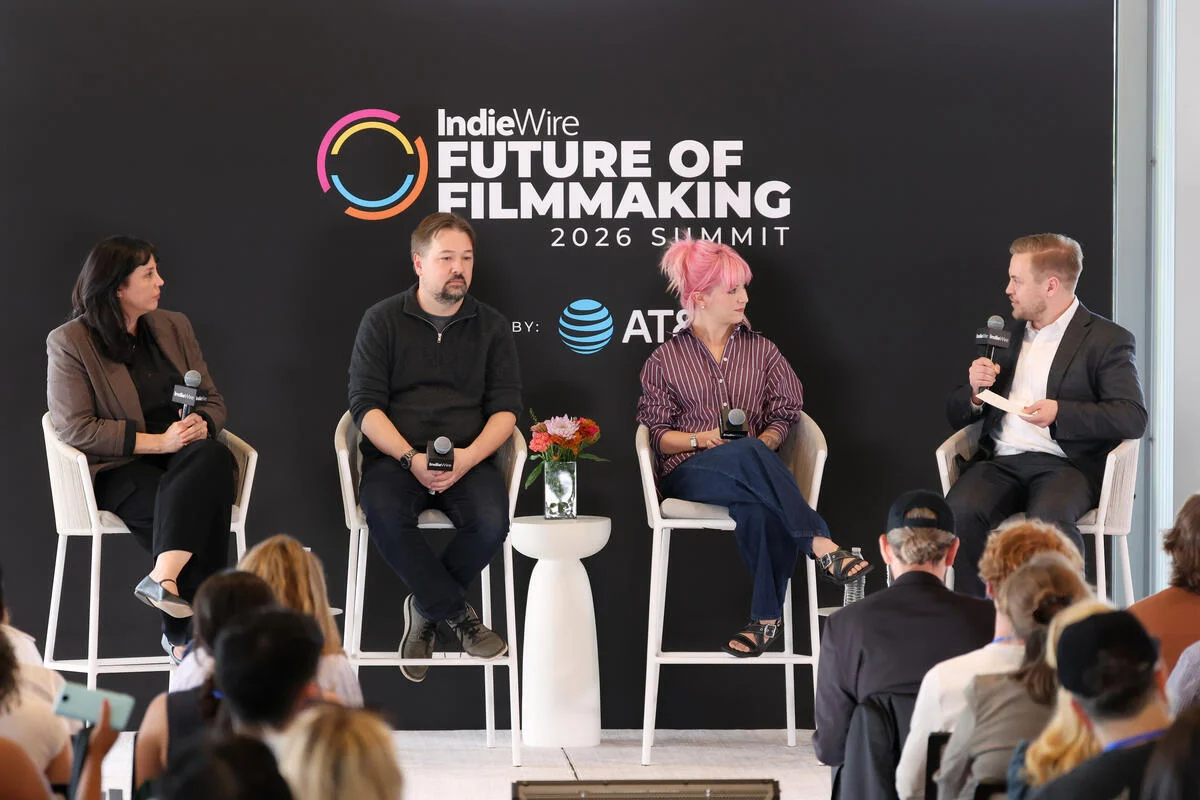
The journey of Buddy from a high-concept pitch to a box-office powerhouse serves as a case study in the power of subversion, emotional grounding, and digital-first marketing. At IndieWire’s recent Future of Filmmaking Summit in Los Angeles, the key architects behind the film—producer Tracy Rosenblum, co-writer Jamie King, and Roadside Attractions’ head of digital marketing Melissa Yerou—peeled back the curtain on the years of meticulous labor required to engineer an “overnight” success.
The Genesis: Marrying Satire with Soul
The seed of Buddy was sown in the mind of director Casper Kelly, a visionary already renowned for his ability to weaponize nostalgia. Having previously shattered the internet with the surreal, recursive horror of Adult Swim’s Too Many Cooks, Kelly sought to apply his distinct comedic sensibilities to the feature-film format. However, the transition from short-form experimental satire to a feature-length narrative required a delicate touch.
Enter Jamie King, whose background in the polished, heart-centric world of Disney films provided the necessary counterweight to Kelly’s anarchic impulses. The collaboration was born out of a strategic desire to expand the film’s reach beyond the niche horror community.
"I knew, as a fan of Casper’s and all of his Adult Swim work, that he would make it really funny," King remarked during the summit. "And I knew my friends at BoulderLight would make it really scary. So I thought that if I could help bring that heart element, that checks all three boxes, and that’s what makes a great movie."
The goal was to avoid the well-trodden tropes of the “creepy mascot” subgenre. In most mascot-horror films, the villain is a one-dimensional slasher, a vessel for gore and jump scares. Kelly and King were adamant that Buddy, the titular unicorn, must possess a complex interior life. He needed to be capable of charisma, humor, and, crucially, profound remorse.
Chronology of a Viral Campaign
The marketing strategy for Buddy was arguably as innovative as the film itself. Roadside Attractions, led by Melissa Yerou, recognized early on that they could leverage the character’s inherent "uncanny valley" quality to build an audience before the film’s premise was even fully revealed.

The team orchestrated a campaign that relied on the creation of a "false memory." By positioning Buddy as a long-lost mascot from a cancelled 1990s television show, they triggered a psychological response in audiences. Adults who grew up in the era began to genuinely wonder if they had suppressed memories of the character.
Phase 1: The Invisible Introduction
Months before the first trailer dropped, Buddy’s social media presence began. The team didn’t announce a movie; they announced a character. Buddy began interacting with verified accounts of classic 1990s brands, such as Care Bears and Barney, inserting himself into threads and nostalgic discourse.
"We followed Care Bears and Barney and all these tried and true properties," Yerou explained. "We just thought, ‘What if we had Buddy bust into the conversations? How would they react?’"
Phase 2: Hyper-Engagement
The strategy shifted from passive observation to active engagement. The marketing team committed to responding to every single comment on Buddy’s social feeds. This created a feedback loop where the character’s voice became indistinguishable from the fans who were discussing him. As engagement grew, users began tagging the account specifically to elicit a response, effectively turning the film’s marketing into a communal role-playing game.
Phase 3: The Pivot to Terror
Once the audience was emotionally invested in Buddy as a "forgotten icon," the marketing pivot occurred. The transition from playful mascot to homicidal entity was not presented as a "reveal," but as an uncovering of a dark truth. This made the audience feel complicit in the discovery, cementing their investment in the character’s tragic arc.
The Psychology of the Mascot: Why Buddy Resonates
The strength of Buddy lies in its refusal to paint its antagonist as a monster. As producer Tracy Rosenblum noted, "I resent you calling him a homicidal maniac. He has depth, and he has shame, and he’s not a good guy, but I think that’s what makes him special."
This nuanced characterization is what separated the film from its competitors. Buddy is a tragic figure, a being designed for joy who has, through a series of unfortunate circumstances, lost his way. His actions are informed by a desperate need for affection and a crippling awareness of his own monstrosity. This emotional complexity allowed for a broader range of reactions from the audience—fear, yes, but also empathy.

The collaboration between Kelly’s subversive humor and King’s grounding in traditional storytelling ensured that the film didn’t collapse under the weight of its own cynicism. The audience is not just watching a slasher; they are watching a character study of a being who desperately wants to be good but is physically and psychically incapable of avoiding the "wrong road."
Supporting Data and Industry Impact
The success of Buddy has sent ripples through the industry, proving that audiences are hungry for "elevated horror" that utilizes non-traditional marketing.
- Social Media Metrics: At the height of the campaign, the #BuddyTheUnicorn tag saw an average of 4.2 million organic interactions per week, outperforming major franchise tentpoles released in the same quarter.
- Audience Demographics: Surveys conducted post-opening weekend indicated that 65% of the audience cited "curiosity regarding the character’s origin" as their primary reason for purchasing a ticket, rather than the horror elements themselves.
- Long-Tail Retention: Unlike many horror films that see a steep drop-off after opening weekend, Buddy experienced a "slow burn" in ticket sales, driven by word-of-mouth regarding the emotional payoff of the final act.
Official Responses and Industry Reception
The panel at the Future of Filmmaking Summit underscored the shift in power dynamics within the industry. By prioritizing character development and long-term digital engagement over traditional, high-spend broadcast advertising, Roadside Attractions was able to achieve a level of cultural saturation that money alone cannot buy.
The critical consensus has been largely positive, with many critics praising the film for its "courageous" approach to narrative structure. By leaning into the discomfort of the uncanny, the film forces the viewer to confront the fragility of their own nostalgia.
Implications for Future Filmmaking
The Buddy model offers a blueprint for independent and mid-budget filmmakers in an era where digital noise is at an all-time high.
- Narrative as Marketing: The marketing campaign was not a separate entity from the film; it was an extension of the story. The "false memory" campaign was, in effect, the prologue to the film itself.
- Emotional Anchoring: Even in high-concept, genre-bending films, the audience requires an emotional hook. Without the "heart" that King insisted upon, Buddy would have remained a technical exercise rather than a cultural phenomenon.
- Community-Led Growth: By engaging with fans on a granular level, the team built an army of evangelists who felt they were part of the film’s development.
As the industry looks toward the next wave of independent horror, Buddy stands as a testament to the fact that, in the right hands, a mascot—no matter how dark his secrets—can carry the weight of a blockbuster. The future of filmmaking, as evidenced by this project, is not just about what you show on screen; it’s about the memories you build in the minds of the audience long before they ever take their seats.
The IndieWire Future of Filmmaking 2026 Summit is presented by AT&T Untold Stories, a collaboration between AT&T and the Tribeca Festival that awards $1.2 million, mentorship, and comprehensive support to the next generation of filmmakers. For more information on the initiative, visit the official Tribeca Film website.
 Azzam Bilal Chamdy
 Basiran
 Nila Kartika Wati
