

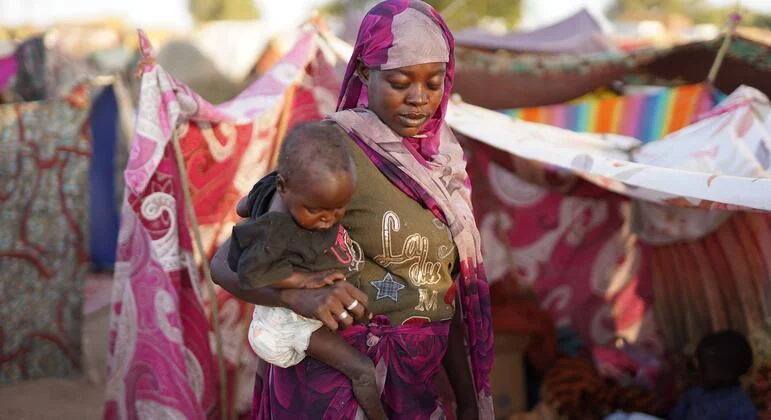
For millions of Sudanese, the catastrophic civil war that erupted three and a half years ago was not merely a political dispute between rival military factions; it was an existential rupture. For many, the conflict—the stuff of disaster cinema—suddenly became their reality, shattering the facade of normalcy and plunging the nation into one of the most harrowing humanitarian crises of the 21st century.
As the conflict between the Sudanese Armed Forces (SAF) and the Rapid Support Forces (RSF) intensified, the civilian population became the primary casualty. Yet, amidst the systematic destruction of infrastructure and the collapse of basic services, a resilient force has emerged: Sudanese women. Serving as the backbone of community survival, these women have transitioned from victims of siege warfare to frontline responders, providing life-saving aid where international institutions often struggle to reach.
The Siege of Khartoum: A Fight for Survival
The capital city of Khartoum became a microcosm of the national tragedy. For those trapped in neighborhoods caught between the crossfire of the SAF and the RSF, daily life devolved into a primitive struggle for existence.
Ms. Al-Numeiri, a journalist and activist, recalls the moment the city fell into a state of total isolation. "I never imagined my life would turn out just like in the movie," she recounts. As communication networks collapsed and the banking system vanished, the city was severed from the outside world. Food supplies dwindled to nothing, forcing families to survive on little more than boiled wheat. When fuel stocks ran out, residents resorted to burning their own furniture to stave off the biting cold.
The degradation of living conditions triggered a secondary health catastrophe. Contaminated water and a complete lack of medical infrastructure meant that minor illnesses became death sentences. Ms. Al-Numeiri herself reached the precipice of death. "My body was swollen, my skin was peeling, scabs were coming off. I had a severe fever, and there was blood in my eyes. I could not even see anyone next to me. My family had given up. They said I was going to die," she says. Her survival, which she describes as a miracle, became the catalyst for her transformation into a community leader.
Chronology of a Crisis
- The Outbreak (Early 2022/2023): Hostilities between the SAF and RSF erupted, quickly escalating from localized skirmishes in Khartoum to a full-scale national war.
- The Siege of Khartoum (2023–2025): The capital was subjected to intense blockades, leading to the total depletion of food, fuel, and medical resources.
- The Fall and Recovery (March 2025): Government forces retook control of Khartoum, revealing the skeletal remains of a city stripped of its infrastructure.
- The Siege of El Fasher (October 2025): Conflict shifted to the southwest, with the city of El Fasher coming under heavy RSF siege, replicating the humanitarian patterns seen earlier in the capital.
- Present Day: As some displaced populations attempt to return to Khartoum, they are met with empty, looted homes and a profound need for psychological and economic rehabilitation.
Women at the Frontline: The Case of El Fasher
While Khartoum has seen a tentative stabilization, the crisis has migrated to regions like North Darfur. In El Fasher, the situation is even more precarious. Amna Mohamed (a pseudonym), the president of a local women-led organization supported by the United Nations, remained in the city specifically to assist those unable to flee.
The demographic left behind is often the most vulnerable: the elderly, persons with disabilities, and those without the financial means to afford transportation. "Women were the first to suffer," Mohamed explains. The violence they face is intersectional and brutal. Beyond the starvation and lack of medical care, women are subjected to targeted looting, sexual violence, and forced displacement. "They may beat or rape you… they may kill your husband or brothers right before your eyes, or they may take your daughters right in front of you," she says.
Despite these horrors, these organizations—often led by women—have become the primary providers of meals and financial support. However, Mohamed points to a systemic flaw in international aid: "Our relationship with women is direct and close… but when it comes to funding, projects sometimes go to organizations led by men."
The Psychological Toll: Rebuilding a Shattered Society
As the conflict wanes in some sectors, a new crisis emerges: the return of the displaced to homes that no longer exist in any functional sense. Many women are returning to find their houses stripped of everything, including windows and doors. The psychological burden of returning to the scene of past trauma is immense.
Israa Hamid Khalil, a psychological support officer at the UN Women-supported East Nile Women’s Empowerment Centre, describes the challenge of post-conflict recovery. "Women returned to the place where they had experienced those painful memories and traumas. They can’t just stay at home and keep reliving those things," Khalil says.
The Centre’s approach is holistic. It combines traditional counseling with livelihood training, recognizing that economic independence is a vital component of psychological recovery. By teaching women skills to generate income, the center helps them reclaim their agency after years of total dependency.
Supporting Data: The Cost of War
The humanitarian data emerging from Sudan is staggering. According to UN Women and associated humanitarian agencies:
- Food Insecurity: Over 25 million people in Sudan are facing acute hunger, with women and children disproportionately affected by the breakdown of supply chains.
- Displacement: Millions have been forced into internal displacement or have fled to neighboring countries, losing all material assets in the process.
- Targeted Violence: Reports of gender-based violence have spiked significantly, with conflict-related sexual violence being used as a tactical tool to intimidate and displace civilian populations.
- Infrastructure Collapse: The destruction of 80% of medical facilities in conflict zones has made basic healthcare for maternal and child health virtually non-existent in besieged areas.
Implications for the Future
The role of Sudanese women in this conflict has profound implications for the future of the nation’s peacebuilding efforts. When the guns finally fall silent, the social fabric will need to be rewoven by those who held it together during the darkest hours.
1. The Necessity of Inclusive Aid
The current model of aid distribution often favors established, male-led NGOs. The resilience shown by organizations like those led by Amna Mohamed suggests that aid is most effective when it is localized and gender-sensitive. Moving forward, donors must pivot toward supporting grassroots women-led groups that have demonstrated an ability to operate under fire.
2. Prioritizing Reproductive and Mental Health
The psychological scarring of a generation of women is a long-term developmental hurdle for Sudan. Mental health services cannot be treated as an "add-on" to food security; they must be central to the reconstruction effort. The work being done by the East Nile Women’s Empowerment Centre serves as a blueprint for the kind of trauma-informed care that will be required nationwide.
3. Protection and Justice
The systematic use of violence against women in cities like El Fasher highlights the need for international accountability. Without a robust mechanism to document and prosecute war crimes specifically targeting women, the cycle of impunity will continue to fuel the conflict.
Conclusion: The Warrior’s Path
As Ms. Al-Numeiri documented the suffering of her neighbors in viral videos, she realized that her role as a journalist had evolved into that of a frontline warrior. "I feel like I am a warrior on the frontlines," she says.
Her sentiment is echoed by thousands of women across Sudan who, while facing the most dehumanizing conditions, have refused to be reduced to mere statistics. They are the keepers of the community, the providers of the final rations, and the architects of the coming recovery. The international community’s task is clear: to move beyond empathy and provide the structural, financial, and political support that these women require to transition from surviving the war to leading the peace. The future of Sudan rests not just in the hands of the negotiators in distant capitals, but in the hands of the women who refused to let their communities perish.
 Evan Lee Salim
 Iffa Jayyana
 Siti Muinah
