

By Sam Hill
Published October 24, 2026
Stephen King has spent decades shaping the cultural landscape of horror, transforming our most primal nightmares into cinematic touchstones. From the supernatural dread of The Shining to the grounded, small-town terrors of It, the master of horror’s bibliography continues to serve as an endless well for Hollywood filmmakers. Today, a fresh wave of high-profile adaptations is bringing King’s works to modern audiences with unprecedented momentum.
Yet, even as major projects like Mike Flanagan’s critically lauded Carrie series—which recently secured an early second-season renewal on Amazon Prime Video—and Francis Lawrence’s 2025 dystopian feature The Long Walk dominate conversations, a different sort of King renaissance is happening quietly in the background. Audiences diving deep into digital catalogs are rediscovering a more niche, psychologically twisting entry from the author’s filmography: the 2004 psychological thriller Secret Window.
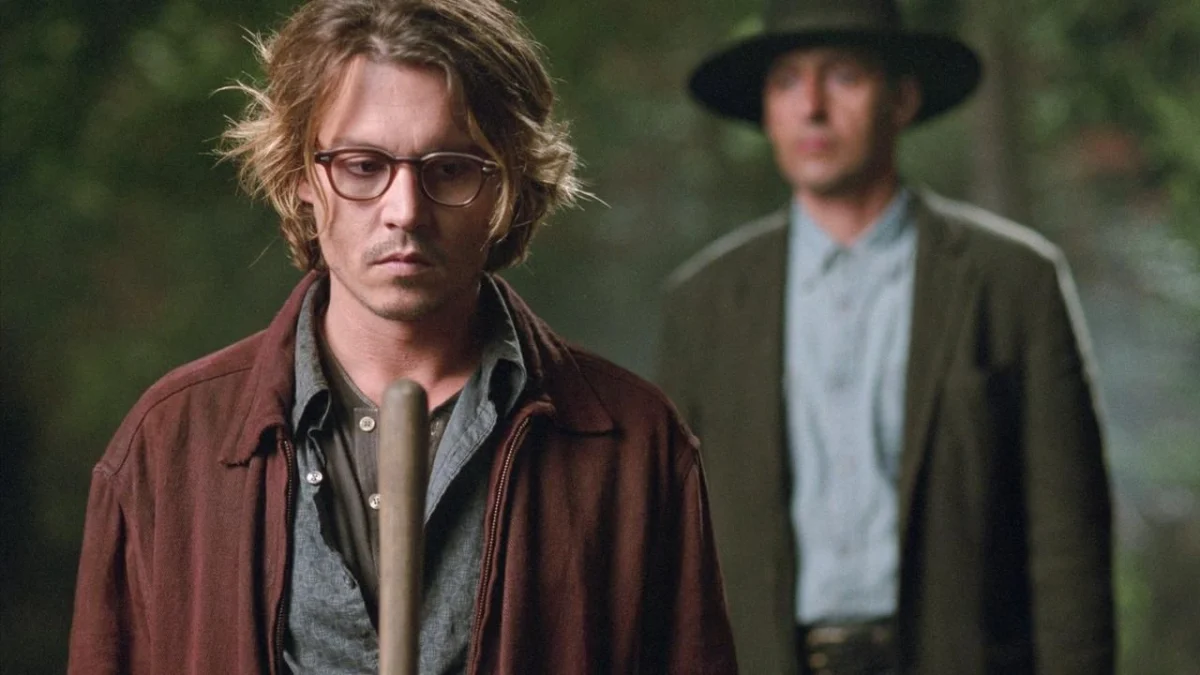
Starring Johnny Depp and directed by David Koepp, the film has climbed to the No. 4 spot on Max’s global movie charts, according to streaming data aggregator FlixPatrol. More than twenty years after its initial theatrical release, this claustrophobic descent into writer’s block, isolation, and psychological unraveling is finally getting its due.
Main Facts: A Deep Dive into Secret Window
At its core, Secret Window is an intimate, high-tension psychological horror film rather than a creature feature or a supernatural epic. Based on King’s novella Secret Window, Secret Garden (originally published in his 1990 collection Four Past Midnight), the film trades ghosts and ghouls for something far more terrifying: the deterioration of the human mind.
The narrative centers on Mort Rainey (Johnny Depp), a successful and wealthy fiction writer who retreats to his secluded cabin by Tashmore Lake in upstate New York. Mort is trying to pick up the pieces of his life following a bitter, messy divorce from his ex-wife, Amy (Maria Bello). Plagued by debilitating writer’s block and lingering emotional trauma, Mort’s primary goals are simple: find some peace, overcome his creative paralysis, and finish his next manuscript.
Those plans are derailed with the arrival of John Shooter (John Turturro). Donning a wide-brimmed hat, a plaid coat, and a chillingly calm, gravelly Mississippi drawl, Shooter confronts Mort at his isolated home with a devastating accusation: Mort has plagiarized his short story. Shooter claims that Mort’s story, "Secret Window," is an exact conceptual copy of a tale he wrote years earlier, simply changing the ending.
Initially, Mort dismisses Shooter as a deranged eccentric or a disgruntled crank. He attempts to find the magazine where his original story was published to prove his innocence and send Shooter packing. However, Shooter refuses to go away. As his demands for justice grow more urgent, the encounters turn menacing, escalating from verbal threats to the brutal poisoning of Mort’s dog and, eventually, arson.
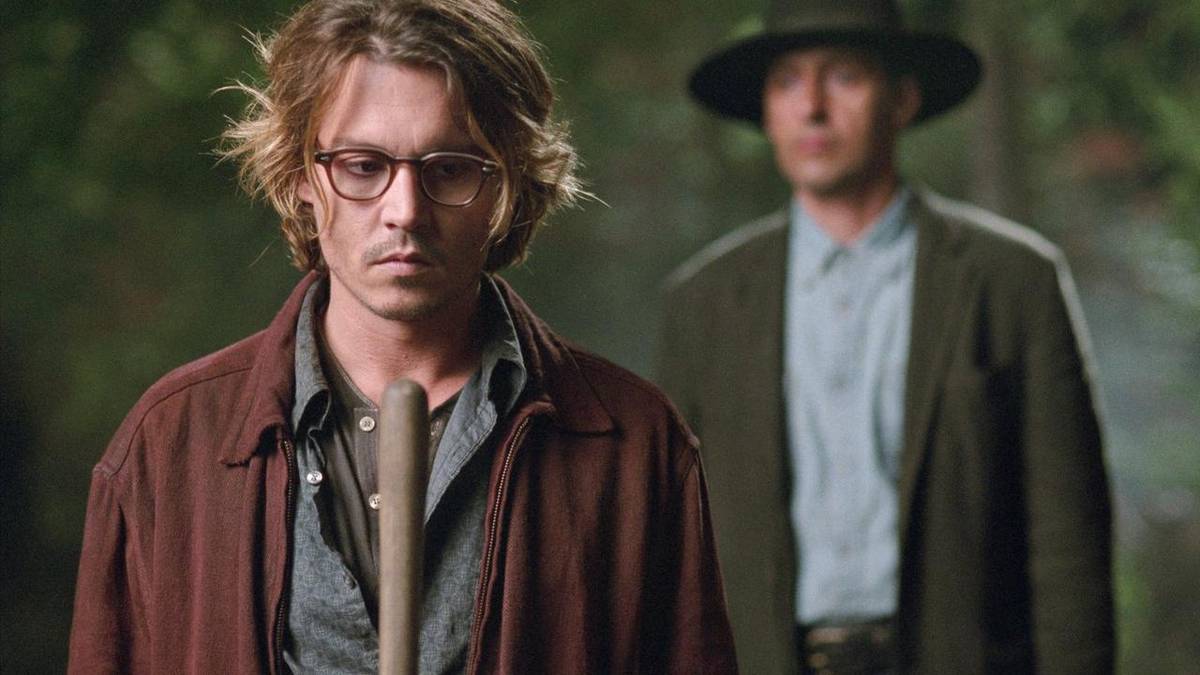
Directed with a tense, atmospheric precision by David Koepp—best known for writing blockbusters like Jurassic Park and directing thrillers like Stir of Echoes and Panic Room—Secret Window relies heavily on visual motifs and performance to build its dread. The central battle is less about physical survival and more about a desperate struggle to hold onto reality as the walls close in.
Chronology: From Novella to Cult Classic and Modern Streaming Hit
To understand how Secret Window arrived at its current cultural revival, it helps to trace its trajectory from the page to the screen, and through its evolving reception over the last two decades.
- 1990: Stephen King publishes Four Past Midnight, a critically acclaimed collection of four novellas. Among them is Secret Window, Secret Garden, which explores the darker psychological toll of the creative process and authorship.
- March 2004: Columbia Pictures releases Secret Window in theaters, directed by David Koepp and starring Johnny Depp at the height of his box-office dominance, arriving just months after his iconic turn in Pirates of the Caribbean: The Curse of the Black Pearl.
- 2004–2010s: Upon release, the film receives mixed reviews from professional critics who praise the central performances but critique its pacing and predictable third act. Over the years, however, it develops a dedicated cult following among physical media collectors and psychological thriller enthusiasts.
- Mid-2020s: A broader cultural resurgence of Stephen King adaptations takes hold, spearheaded by creators like Mike Flanagan (The Life of Chuck, The Dark Tower) and high-concept adaptations like The Long Walk. This renewed interest drives audiences back through streaming libraries to unearth overlooked gems.
- October 2026: Propelled by algorithm recommendations and nostalgic rediscovery, Secret Window surges up the charts, landing comfortably at No. 4 on Max’s movie rankings globally.
Supporting Data: Critical Reception vs. Audience Resurgence
When Secret Window premiered in the spring of 2004, it entered a crowded cinematic landscape. Despite starring one of the world’s most bankable actors and adapting one of its most popular authors, the film struggled to achieve unanimous critical acclaim.
On Rotten Tomatoes, Secret Window currently holds a 46% approval rating from critics, a figure that often surprises casual viewers discovering the film today. Reviewers at the time generally lauded Johnny Depp’s eccentric, disheveled portrayal of Mort Rainey—complete with a stained bathrobe and messy hair—and praised John Turturro’s chillingly subdued antagonist. However, many critics felt the film suffered from a familiar third-act twist that weakened the psychological ambiguity built up over the first hour.
Interestingly, audience sentiment has always been notably warmer. The film’s audience score on Rotten Tomatoes sits higher at 65%, reflecting a appreciation for its atmospheric tension, pitch-black humor, and cozy-yet-terrifying autumnal aesthetic.
Furthermore, its current placement at No. 4 on Max’s charts demonstrates that contemporary viewers are increasingly valuing mid-budget, character-driven thrillers over the hyper-CGI-heavy blockbusters that frequently saturate modern streaming ecosystems.
Official Responses and Creative Insights
Behind the scenes, the creation of Secret Window was a deliberate exercise in scaling down horror to focus on claustrophobia and interiority. Director David Koepp, who adapted King’s novella for the screen, spoke extensively during the film’s initial press rollout about the unique challenges of translating a story primarily told through internal monologue into a visual medium.
"When you read Stephen King’s work, so much of the terror happens inside the protagonist’s head," Koepp noted in promotional interviews for the film’s 2004 release. "With Mort Rainey, we had a guy who is completely isolated. He’s running away from a failed marriage, he’s running away from writer’s block, and then this physical manifestation of his guilt—John Shooter—shows up at his doorstep. My goal was to make the cabin itself feel like a prison cell."

Johnny Depp, reflecting on his role during the film’s press junkets, emphasized the dark comedy woven into the psychological distress. "Mort is a guy who is hanging on by his fingernails," Depp said. "He’s wearing his bathrobe all day, eating Doritos, and staring at a blinking cursor. There’s something deeply pathetic, yet darkly funny, about his absolute breakdown over a missing piece of punctuation."
John Turturro, discussing his role as the menacing John Shooter, highlighted the minimalist approach to his character’s terror. "Shooter doesn’t need to scream or jump out of closets," Turturro explained. "His power comes from his absolute certainty. He believes he has been wronged, and that single-minded obsession makes him dangerous."
Implications: What Secret Window’s Streaming Success Means for Hollywood
The unexpected chart dominance of Secret Window in late 2026 offers valuable insights into current entertainment consumption trends and the enduring viability of mid-tier catalog titles.
1. The Value of Mid-Budget Psychological Thrillers
In an era dominated by cinematic universes, massive franchise IP, and sprawling television series with multi-million-dollar per-episode budgets, Secret Window represents an older, leaner era of Hollywood filmmaking. Operating with a compact cast, a single primary location, and a tight runtime, the film proves that suspense often benefits from physical and narrative constraints. Its streaming resurgence suggests that audiences are actively craving grounded, adult-oriented thrillers that prioritize character work over spectacle.
2. The Continuing Goldmine of Stephen King’s Backlist
While Hollywood will always prioritize high-profile remakes of King’s titan properties—such as Flanagan’s upcoming iterations of The Dark Tower and Netflix’s upcoming Cujo adaptations—the success of Secret Window highlights the hidden value in lesser-known adaptations. King’s bibliography contains dozens of short stories and novellas that remain prime candidates for rediscovery, whether through direct streaming engagement or future screen adaptations.
3. The Power of Algorithmic Rediscovery
Streaming platforms have fundamentally changed the lifecycle of a film. Movies that were once dismissed as mixed critical reception or forgotten as box-office disappointments can find entirely new, highly appreciative generations of viewers overnight. For Secret Window, algorithmic curation paired with the autumnal appeal of its setting has given a 22-year-old thriller a second lease on life.
As viewers continue to stream Secret Window on Max, the film stands as a reminder that some of the scariest monsters aren’t hiding in the woods or crawling out of sewers—sometimes, they are sitting right across the desk, staring back at us from the blank page.
 Reynand Wu
 Jia Lissa
 Layla Zulfa
