When cultural shorthand takes over a franchise, the nuance of its foundational text is often lost to history. Just as George Lucas’ “May the Force be with you,” Arnold Schwarzenegger’s “I’ll be back,” and Roy Scheider’s “You’re gonna need a bigger boat” long ago transcended their cinematic origins to become global lexicons, Star Trek: The Original Series suffers—and benefits—from a similar phenomenon.
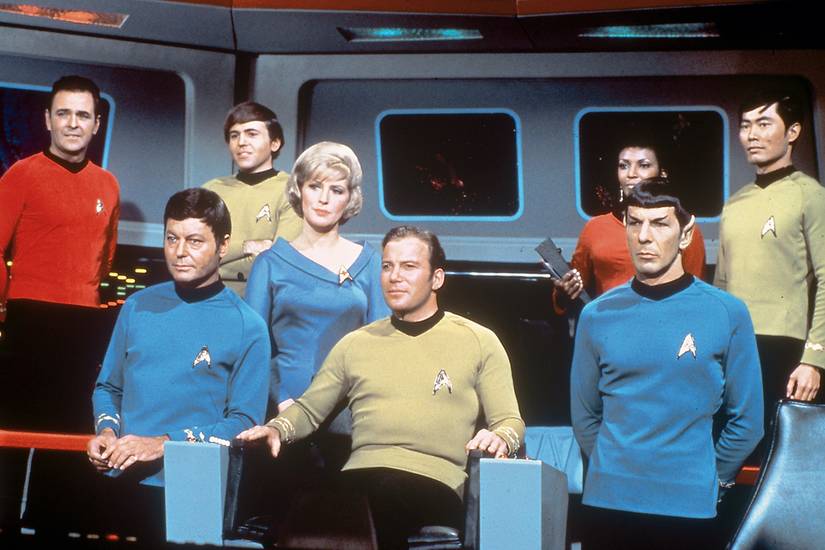
Spock’s wish that everyone to “live long and prosper” is arguably the most recognizable phrase in science fiction history. The Vulcan science officer also turned the simple word “fascinating” into a cultural meme simply by raising a single eyebrow. Meanwhile, Dr. McCoy (DeForest Kelley) spent three seasons reminding everyone that he was “a doctor, not a…” and, in our collective memory, declaring “He’s dead, Jim” while standing over yet another ill-fated redshirt.
Yet, when stripping away the pop culture caricatures, the parodies, and the T-shirt slogans, a deeper philosophical question remains: What single line of dialogue best encapsulates the ethos of Gene Roddenberry’s utopian vision?
According to critics and long-time franchise analysts, the answer is not etched into the opening crawl, nor is it a catchphrase repeated at sci-fi conventions. Instead, it is found in four simple words spoken by Captain James T. Kirk (William Shatner) halfway through season 2, episode 20: “Return to Tomorrow.”
Those four words—“Risk is our business”—do more than define a television captain; they outline the entire ideological framework of Starfleet.
Main Facts: Deconstructing the Myth of the Swaggering Captain
To understand why “Risk is our business” holds such profound weight, one must first deconstruct the pop-culture reductionism that has plagued Captain Kirk for decades.
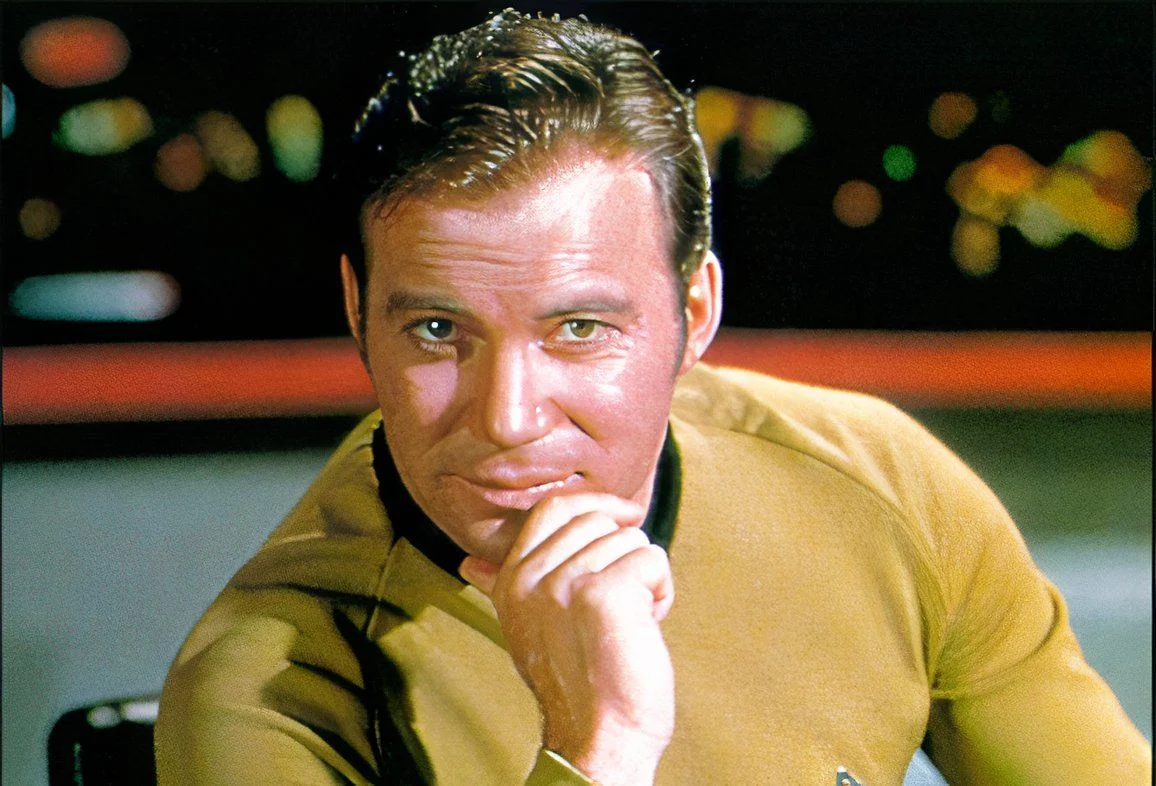
In the broader cultural zeitgeist, James T. Kirk is frequently remembered as an oversimplified caricature: a swaggering, space-faring lothario who punches first, flirts with every alien he encounters, and loses his gold-encrusted command tunic during nearly every away mission.
The reality of Star Trek: The Original Series paints a starkly different picture. The textual evidence across its 79 episodes reveals a deeply thoughtful, intellectual commander who weighs heavy moral quandaries, respects alien cultures, and approaches the unknown not with reckless abandon, but with calculated intellectual curiosity.
The distinction between being reckless and accepting risk in pursuit of discovery is the foundational pillar of Kirk’s leadership. When Kirk invokes the philosophy of risk, he is not arguing that danger is inherently thrilling or that safety should be recklessly discarded. Rather, he is asserting a core truth about human evolution: absolute safety and absolute progress are mutually exclusive.
This philosophy elevates Starfleet above standard military organizations or expansionist empires found in traditional science fiction. While other fictional powers explore for conquest, mercantilism, or mere survival, Starfleet ventures into the black abyss because the pursuit of knowledge is an intrinsic human good.
Chronology: The Anatomy of “Return to Tomorrow”
First broadcast on February 9, 1968, “Return to Tomorrow” serves as a quintessential specimen of late-1960s speculative television. Written by John T. Duganne (a pseudonym for John Kingsbridge) and directed by Ralph Senensky, the narrative unfolds as the U.S.S. Enterprise answers a mysterious, ancient distress call from a dead world.
Upon beaming down to the planet’s surface, Kirk, Spock, and Dr. Ann Mulhall (Diana Muldaur) discover Sargon, one of the last three survivors of a primordial civilization. Having existed as beings of pure energy for half a million years, Sargon’s species is fading into extinction. Sargon proposes a bold bargain: he, his wife Thalassa, and the ambitious Henoch request that Kirk, Spock, and Mulhall temporarily surrender their physical bodies so the entities can construct temporary android vessels and help rebuild their society.
Naturally, division quickly splits the landing party. Dr. McCoy, acting as the voice of medical pragmatism, strongly suspects the aliens are manipulating the crew, warning of the immense biological and psychological dangers of alien possession. Kirk, however, weighs the existential gamble: the opportunity to learn from a civilization hundreds of thousands of years more advanced than 23rd-century humanity is an opportunity too monumental to dismiss out of fear.
The episode is also a notable piece of Star Trek historical trivia for introducing Diana Muldaur to the franchise. Muldaur plays Dr. Ann Mulhall in this episode before returning as the psychologist Miranda Jones in season 3’s “Is There in Truth No Beauty?” Years later, she would cross over into the Berman era as a series regular on Star Trek: The Next Generation as Dr. Katherine Pulaski. Furthermore, the episode features classic technobabble that would become franchise staples, notably Spock describing Sargon and his kin as beings of “pure energy.”
Supporting Data and Context: The Shadow of Apollo 11
The historical and cultural context surrounding the production of “Return to Tomorrow” in early 1968 cannot be overstated. At the time of broadcast, the United States was locked in the frantic space race of the Cold War, hurtling toward the historic Apollo 11 moon landing just 17 months later.
American society was deeply entrenched in a real-world technological crusade to prove that human beings could break the bonds of Earth and survive on another celestial body. Yet, while NASA was preparing to set foot on the lunar dust, Star Trek was already peering light-years ahead, dramatizing the psychological leap required for humanity to face an infinite, unknown cosmos.
When faced with his crew’s hesitations regarding Sargon’s proposition, Kirk does not rely on executive fiat or authoritarian command. Instead, he delivers a short, brilliant rhetorical speech that grounds the mission in the grand historical lineage of human exploration:
"They used to say if man could fly, he’d have wings. But he did fly. He discovered he had to."
Kirk draws a direct line from humanity’s terrestrial evolution to its interplanetary future—comparing Sargon’s proposal to humanity’s journey from the Moon, to Mars, and eventually into interstellar space. He argues that the potential dividends of knowledge vastly outweigh the inherent dangers of the unknown.
It is right at the crescendo of this philosophical defense that Kirk utters the four words that define his captaincy: “Risk is our business.”
Official Responses and Critical Reassessment
Over the decades, television critics, sociologists, and Star Trek showrunners have frequently returned to “Return to Tomorrow” to dissect its thematic weight.
While network executives in the late 1960s viewed Star Trek primarily through the lens of episodic adventure and monster-of-the-week thrills, later critical analysis has championed the show as a vehicle for progressive humanism. In retrospective reviews by outlets like The Hollywood Reporter, Polygon, and The A.V. Club, critics have noted that Kirk’s speech serves as a meta-commentary on the mission of public broadcasting and science fiction storytelling itself.
Gene Roddenberry’s original conceptualization of Star Trek was explicitly designed as a secular, optimistic parable for a turbulent decade marked by the Vietnam War, civil rights unrest, and Cold War anxieties. By positioning risk not as a hazard to be avoided, but as a moral imperative for growth, the writers created a template for ethical leadership.
Modern stewards of the franchise—including creators behind modern iterations like Star Trek: Strange New Worlds—have frequently cited the Original Series’ philosophical episodes as guiding lights. The belief that humanity must constantly push past its comfort zones to achieve enlightenment remains the single most enduring thesis statement of the entire Star Trek canon.
Implications: Why the Quote Outshines the Opening Monologue
To fully appreciate the weight of “Risk is our business,” one must compare it to arguably the most famous spoken passage in the franchise: the iconic opening narration spoken by William Shatner at the beginning of every episode.
"Space, the final frontier. These are the voyages of the starship Enterprise. Its five-year mission: to explore strange new worlds, to seek out new life and new civilizations, to boldly go where no man has gone before."
While the opening narration tells the audience what the Enterprise does as a matter of operational procedure, Kirk’s speech in “Return to Tomorrow” explains why they do it.
The opening voiceover is declarative and grand. By contrast, “Risk is our business” is intimate, philosophical, and deeply psychological. It acts as a direct challenge to complacency. In an era where cultural narratives often default to dystopian caution, where safety and risk-aversion are prioritized above all else, Kirk’s declaration stands as a radical counter-cultural artifact.
Optimism in the Star Trek universe has never meant a naive belief that everything will effortlessly work out for the best. It is not blind faith or forced cheerfulness. Instead, true Star Trek optimism is the clear-eyed, courageous recognition that the universe is dangerous, uncertain, and vast—and that the unknown is still worth facing anyway.
Nearly 60 years after James T. Kirk first stepped onto the bridge of the U.S.S. Enterprise, television history has produced countless captains, commanders, and cosmic explorers. Yet, none have managed to distill the beating heart of space exploration into a phrase as economically potent as the four words that define the real Kirk: Risk is our business.



 Ali Ikhwan
 Reynand Wu
 Jia Lissa
