

Introduction: A Humanitarian Crisis Unfolding in Silence
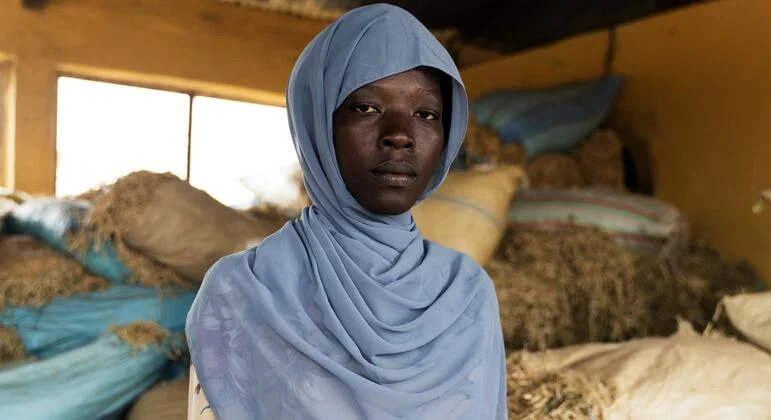
In the besieged city of El Obeid, the capital of North Kordofan, a quiet but devastating catastrophe is unfolding. For eighteen months, civilians have been trapped in a relentless cycle of conflict, enduring constant drone strikes and the looming threat of full-scale paramilitary offensives. As the conflict between the Sudanese Armed Forces (SAF) and the Rapid Support Forces (RSF) grinds on, the most vulnerable—displaced families who have fled to the city for safety—are finding that the sanctuary they sought is rapidly becoming a trap of starvation and scarcity.
Abdallah Alwardat, the Sudan Country Director for the World Food Programme (WFP), recently returned from a harrowing mission to El Obeid. His assessment is stark: the survival of the displaced is being sustained by a thread so thin it is fraying under the pressure of systemic resource shortages. "We are not even providing the full food ration to the people," Alwardat told journalists in Geneva, "but even that reduced food ration is being shared by the recipients with other families, because they know that they don’t have any other source of income."
Chronology of Collapse: From Transition to Turmoil
To understand the current desperation in El Obeid, one must look back at the trajectory of Sudan’s descent into chaos. Following the 2019 overthrow of long-time dictator Omar al-Bashir, the country embarked on a fragile, hopeful transition toward civilian rule. That dream was shattered more than three years ago when the two dominant military factions—the SAF and the RSF—turned their weapons on one another.
- Pre-2023: A fragile transition period characterized by power-sharing agreements between military and civilian leaders.
- April 2023: Outbreak of open conflict in Khartoum, which quickly spread across the country, transforming North Kordofan into a critical front line.
- Mid-2023 to Present: El Obeid has remained effectively under siege. UN human rights chief Volker Türk has repeatedly warned of the catastrophic conditions for civilians trapped within the city’s periphery, citing continuous aerial bombardment and the risk of ground-level military offensives.
- July-August 2024: The current operational window, where the WFP has managed to pre-position food supplies, though the logistical challenges remain Herculean.
The conflict has triggered the largest displacement crisis in the world today. More than 14 million people have been forced from their homes, turning vast swathes of Sudan into ghost towns and overflowing displacement camps.
Supporting Data: The Anatomy of Starvation
The scale of the food insecurity crisis in Sudan is difficult to overstate. Nearly 20 million people—almost half the nation—are classified as acutely food insecure. The WFP, which operates as a lifeline for the most desperate, is currently struggling to assist between three and five million of the most vulnerable.
In El Obeid specifically, the data points to a collapse of commercial infrastructure:
- Aid Reach: The WFP is currently supporting 100,000 people within city camps.
- Nutritional Needs: 17,000 children in these camps are receiving targeted nutrition support to stave off acute malnutrition.
- Logistics: The journey from Kosti to El Obeid spans 350 to 400 kilometers of contested and dangerous territory. On recent supply runs, WFP officials noted an alarming absence of commercial trucks, signaling that the local market economy has all but ceased to function.
- Resource Gap: While the WFP has the operational capacity and the humanitarian access to deliver aid, it is being throttled by a lack of global funding.
The Human Cost: Stories from the Tents
Statistics rarely capture the daily degradation of life in a war zone. During his visit, Mr. Alwardat met an elderly woman whose story encapsulates the exhaustion of the displaced. She had been waiting in line for her meager ration of food—a ration already reduced by the WFP to stretch limited resources further.
Her immediate concern was not just the food, but the logistics of survival: how to move the heavy sacks back to her tent. With no money for transport, she was forced to canvass other families to see if they could pool their limited resources to hire a tuk-tuk. This is the reality of life in El Obeid: a calculation of survival where even the effort to transport food is a communal burden, and where every meal represents a sacrifice made by a neighbor.
Official Responses: The Call for Sustained Funding
The international community’s response has been hampered by a lack of financial commitment. While the WFP has managed to deliver and pre-position enough food to cover the needs of their registered beneficiaries for the months of July and August, this is merely a temporary reprieve.
"We want to do more, for sure. But of course, we are also stretched on our resources," Mr. Alwardat admitted. He emphasized that the primary obstacle is no longer humanitarian access, but financial liquidity. "As long as we have the necessary financial support, I think we have the means and the capacity to sustain that lifeline."
The agency has been working actively to address the fuel shortages that have prevented local aid partners from distributing supplies. By securing fuel for humanitarian partners, the WFP has effectively "unlocked" the final mile of delivery. However, this is a stopgap measure. Without a consistent inflow of global aid, the lifeline will eventually snap.
Implications: A Strategic and Humanitarian Failure
The situation in El Obeid is a microcosm of the broader Sudanese disaster. The implications of allowing this city to succumb to starvation are profound:
1. The Erosion of Human Capital
With 17,000 children already requiring nutritional support, an entire generation in North Kordofan is facing stunted growth and long-term health complications. The psychological and physical toll of eighteen months of siege will leave deep scars on the social fabric of the region.
2. Regional Instability
The 14 million people uprooted by the war are not just a Sudanese problem; they represent a destabilizing force for the entire Horn of Africa. As countries like Chad, South Sudan, and Egypt struggle to manage the influx of refugees, the collapse of urban centers like El Obeid only serves to push more people across borders, escalating the regional humanitarian crisis.
3. The Failure of Diplomatic Pressure
The fact that civilians have remained under siege for 18 months despite international condemnation from the UN and human rights bodies highlights a massive failure in diplomatic and military containment. If the warring parties continue to use starvation as a weapon of war or a byproduct of their territorial struggles, the international community’s failure to enforce protection of civilians will be viewed as a historical indictment.
Conclusion: The Race Against Time
The WFP’s mission to El Obeid is a race against time, hunger, and a brutal military stalemate. While humanitarian workers are demonstrating immense courage in navigating the 400-kilometer gauntlet to deliver supplies, they are working in a vacuum of resources.
The story of the elderly woman looking for a way to transport her rations is a haunting reminder that behind every humanitarian headline is a person struggling to retain their dignity in the face of absolute ruin. As the WFP prepares for the August distribution cycle, the world must decide if it will provide the funding necessary to keep these lifelines open, or if it will stand by as the city of El Obeid—and thousands of its displaced families—are slowly erased by the twin forces of conflict and famine.
"We have the access," Mr. Alwardat concluded. "We can deliver the food, and we can be there. Resources are limiting us." The choice for the international community is now clear: provide the resources to sustain life, or accept the cost of a society falling into the abyss.
 Lina Hope
 Asro
Asro
 Layla Zulfa
